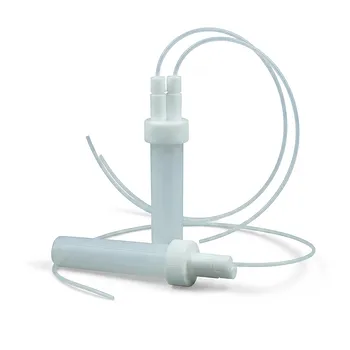
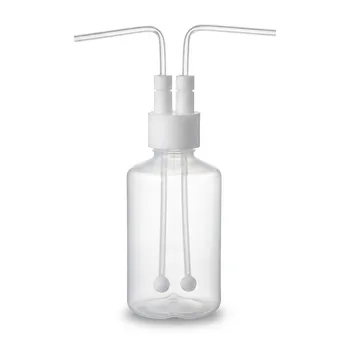
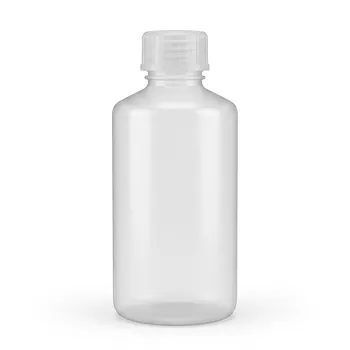
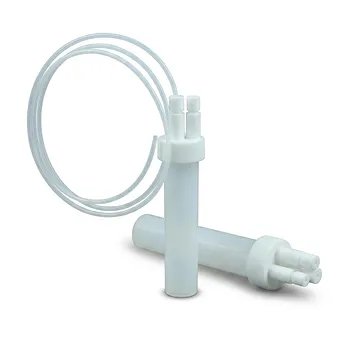
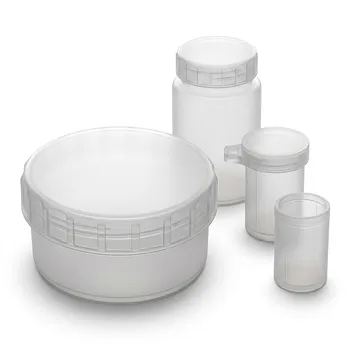
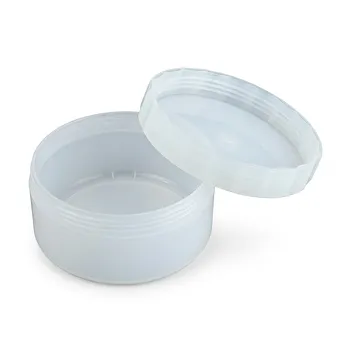
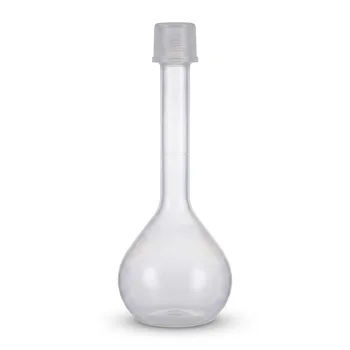
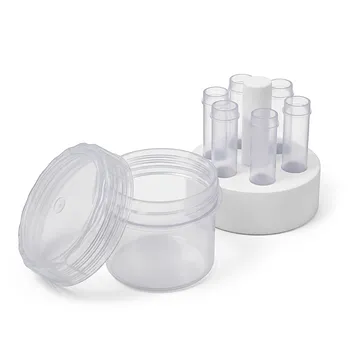
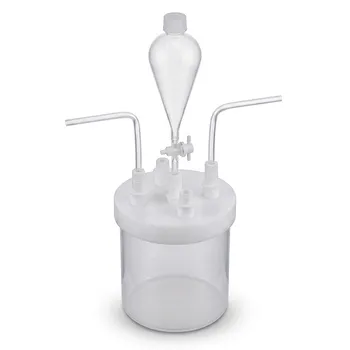
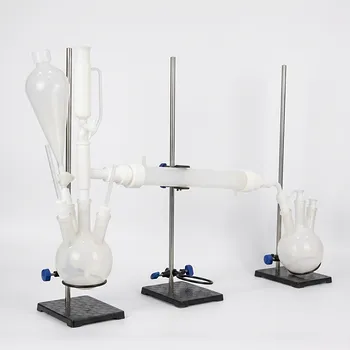
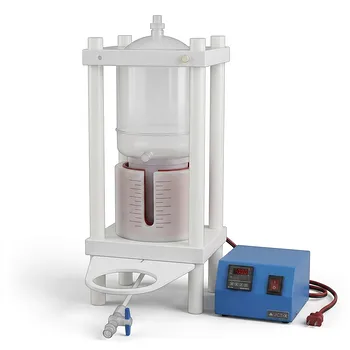
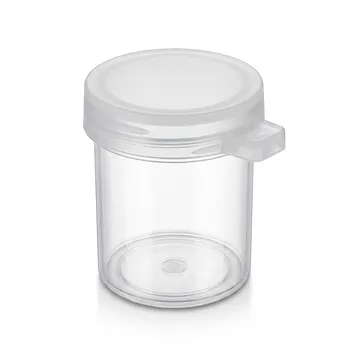
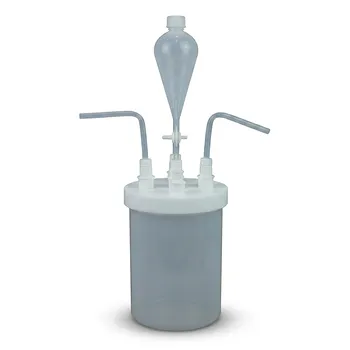
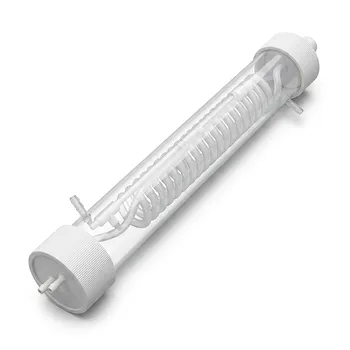
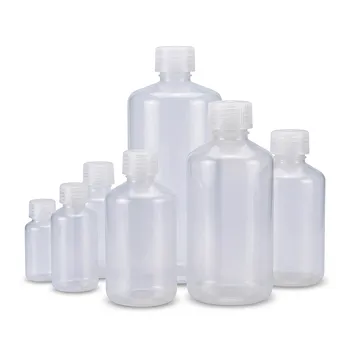
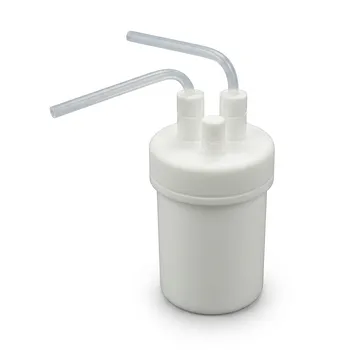
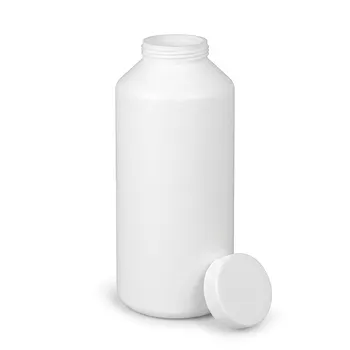
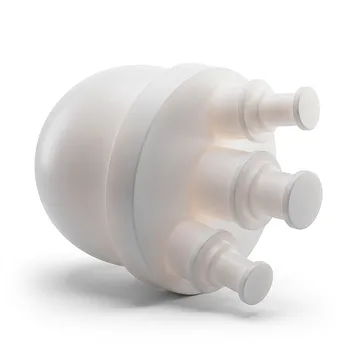
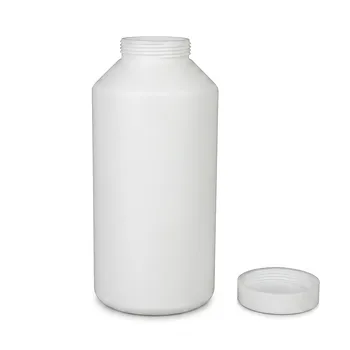
High-purity PFA (perfluoroalkoxy) reaction bottles are superior to glass in boride synthesis because they eliminate the risk of ionic contamination and product loss. While glass containers leach impurities like silicon, sodium, and boron in the strongly alkaline and reducing environments required for boride formation, PFA remains chemically inert. Furthermore, PFA’s extremely low surface energy prevents synthesized nanoparticles from adhering to the container walls, ensuring high yield and experimental repeatability.
Core Takeaway: PFA containers provide an ultra-clean, non-stick environment that protects the integrity of sensitive chemical reductions, preventing the leaching of glass-based contaminants and the unintended loss of nanoparticles to the vessel surface.
The Problem of Chemical Leaching in Glass
Glass is often perceived as inert, but it becomes reactive under the harsh conditions of aqueous chemical reduction.
Contamination from Structural Elements
Traditional borosilicate glass contains elements like silicon, sodium, and boron within its molecular structure. In the presence of strong reducing agents like sodium borohydride ($NaBH_4$) or strongly alkaline precursors, these elements can leach into the reaction mixture.
Interference with Nucleation
Leached silicates or metal ions from glass can interfere with the delicate nucleation and growth phases of boride nanoparticles. These impurities can act as unintended catalysts or capping agents, fundamentally altering the final product's size, shape, and purity.
Impact on Trace Analysis
For researchers performing ultra-trace analysis or developing semiconductor-grade chemicals, even parts-per-billion (ppb) levels of leached sodium or silicon can invalidate experimental results. PFA provides an exceptionally low metal-ion background that glass cannot match.
Surface Energy and Product Recovery
The physical interaction between the synthesized material and the container wall is as critical as the chemical environment.
Preventing Nanoparticle Adhesion
Synthesized boride nanoparticles are often highly reactive and prone to sticking to high-energy surfaces like glass. PFA’s extremely low surface energy and hydrophobic nature prevent these particles from anchoring to the bottle walls.
Ensuring Quantitative Recovery
Because the product does not adhere to the PFA surface, researchers can achieve near-total liquid and solid recovery. This is vital for high-precision quantitative analysis where every milligram of synthesized material must be accounted for.
Consistency and Repeatability
When particles stick to the walls of a glass vessel, they are removed from the active reaction environment, leading to batch-to-batch inconsistency. PFA ensures that the entire concentration of precursors remains in the bulk solution, leading to more predictable synthesis outcomes.
Understanding the Trade-offs
While PFA is the gold standard for high-purity synthesis, it is important to understand its limitations compared to glass.
Cost and Accessibility
High-purity PFA vessels are significantly more expensive than standard laboratory glassware. This higher entry cost must be weighed against the potential cost of failed experiments or contaminated batches.
Thermal and Visual Limitations
PFA is typically translucent rather than transparent, which can make it more difficult to observe subtle color changes or precipitate formation during a reaction. Additionally, while PFA has excellent thermal stability, it cannot withstand the extreme temperatures of a direct flame or some high-heat muffle furnaces.
Mechanical Rigidity
PFA is a fluoropolymer and is therefore softer and more flexible than glass. It can be susceptible to scratching if cleaned with abrasive tools, which could create small crevices that trap contaminants in future experiments.
How to Apply This to Your Project
Choosing the right vessel depends on the sensitivity of your synthesis and your analytical requirements.
- If your primary focus is high-purity catalyst synthesis: Use PFA reaction bottles to ensure that trace metals or silicates do not interfere with the catalytic activity of your boride nanoparticles.
- If your primary focus is quantitative yield and recovery: Opt for PFA to take advantage of its non-stick properties, ensuring you can recover the maximum amount of synthesized material.
- If your primary focus is standard screening or education: Traditional glass may be sufficient if your process is not sensitive to silicon or sodium contamination and cost is a primary constraint.
Switching to PFA ensures that your experimental results are a reflection of your chemistry, not your container.
Summary Table:
| Feature | Glass (Borosilicate) | High-Purity PFA |
|---|---|---|
| Chemical Leaching | Risk of Si, Na, and B contamination | Chemically inert; zero leaching |
| Surface Energy | High (nanoparticles stick to walls) | Extremely low (non-stick surface) |
| Product Recovery | Partial loss due to adhesion | Near-total liquid and solid recovery |
| Trace Analysis | Potential for ppb-level interference | Ideal for ultra-trace metal analysis |
| Durability | Rigid but brittle/breakable | Flexible and impact-resistant |
| Transparency | Fully transparent | Translucent (milky white) |
Elevate Your Lab's Precision with KINTEK PFA Solutions
Don't let container contamination compromise your research. KINTEK specializes in high-performance fluoropolymer labware designed for the most demanding chemical environments. Whether you need standard PFA reaction bottles, beakers, and centrifuge tubes or complex custom CNC-machined components, we provide the ultra-pure, non-stick environment your synthesis requires.
Our extensive range includes:
- Basic Labware: Beakers, measuring cylinders, crucibles, and reagent bottles.
- Fluid Transfer: High-purity tubing, fittings, and valves.
- Advanced Apparatus: Custom electrochemical cells, hydrothermal synthesis liners, and microwave digestion vessels.
From high-volume consumables to bespoke laboratory setups, KINTEK ensures your results are a reflection of your chemistry—not your container.
Ready to optimize your yield? Contact our fluoropolymer experts today!
References
- Tongzhou Hong, Zhong‐Shuai Wu. Fundamental Mechanisms, Synthesis Strategies and Key Challenges of Transition Metal Borides for Electrocatalytic Hydrogen Evolution. DOI: 10.1007/s41918-025-00255-y
This article is also based on technical information from Kintek Knowledge Base .
Related Products
- High Purity PFA Reaction Bottle with Tubing Connection for Corrosive Chemical Synthesis and Trace Analysis
- High Purity PFA Gas Washing Bottle Corrosion Resistant Gas Absorption Vessel PTFE Cap Customizable PFA Reaction Bottle
- Semiconductor Grade High Purity PFA Sampling Bottles for Ultra Pure Reagent Storage and Trace Analysis
- Custom PFA Reaction Bottles High Purity PTFE Reaction Vessels Corrosion Resistant Petrochemical Containers
- PFA Reaction Jar Corrosion Resistant Wide Mouth PTFE Lab Bottle High Purity Chemical Vessel
People Also Ask
- Why use high-purity PFA bottles for Carbon Quantum Dots? Ensure Ink Stability and Prevent Fluorescence Quenching
- How does thermal cooling rate affect PFA vessel crystallinity and toughness? Optimize for impact resistance
- Why is the chemical stability of polymer endgroups critical when selecting melt-processible fluoropolymers like PFA for high-purity laboratory apparatus? Choose Stable Endgroups for Reliable Performance
- What are the characteristics of PFA material? A Guide to Its High-Performance Balance
- Why is Perfluoroalkoxy alkane (PFA) preferred over glass or stainless steel in pharmaceutical process development? Pure Yield