Cooling rate is a direct lever on PFA vessel toughness. Rapid cooling of molten PFA suppresses polymer-chain folding and reduces crystallinity to approximately 48%, producing a tougher, less brittle material. Slower cooling gives chains more time to organize into crystals, increasing crystallinity and stiffness but generally reducing impact toughness and increasing brittleness.
For PFA laboratory vessels, faster cooling generally favors toughness and stress-crack resistance, while slower cooling favors rigidity, dimensional stability, and resistance to deformation. The best cooling cycle balances these properties with the vessel’s wall thickness, geometry, temperature, and mechanical loading.
How Cooling Changes PFA’s Structure
Rapid Cooling Creates More Amorphous Material
When molten PFA is cooled quickly from its processing temperature, polymer chains have less time to fold and pack into ordered crystalline regions. The final structure therefore contains more amorphous material and lower overall crystallinity.
For PFA, rapid cooling can reduce crystallinity to approximately 48%, with a reported specific gravity of 2.123. This structure is generally more flexible and less prone to brittle fracture.
Slow Cooling Promotes Crystal Formation
Slower cooling allows PFA chains to rearrange and fold progressively as the polymer passes through its crystallization range. The result is a higher proportion of ordered crystalline regions and a denser, more rigid structure.
PFA has a commercial melting point of approximately 305°C to 315°C, so the thermal history through and below this range is important. The longer the material remains able to reorganize, the greater the potential crystallinity.
PAVE Comonomer Content Moderates the Effect
PFA is not simply a fully crystallizing fluoropolymer. Its PAVE comonomer side chains disrupt perfect crystal packing, which helps preserve toughness even as crystalline regions form.
Cooling rate therefore adjusts the balance between crystalline stiffness and amorphous flexibility within a material whose chemistry already provides resistance to brittleness.
How Crystallinity Affects Mechanical Toughness
Lower Crystallinity Improves Impact Tolerance
Rapidly cooled PFA generally contains more amorphous regions, allowing the polymer to deform somewhat before cracking. This improves resistance to sudden impacts and reduces the likelihood of brittle failure.
That characteristic is valuable in digestion vessels, reagent bottles, and other labware exposed to handling shocks, thermal cycling, or localized mechanical loads.
Lower Crystallinity Supports Stress-Crack Resistance
A less crystalline structure can absorb and redistribute localized stress more effectively than a highly crystalline structure. This can improve resistance to stress cracking, especially around corners, threaded features, ports, and molded transitions.
However, the result depends on the complete design and processing history. Cooling rate alone cannot compensate for excessive residual stress, poor geometry, or unsuitable wall thickness.
Higher Crystallinity Increases Rigidity
Slower cooling increases the crystalline fraction, which raises flexural modulus and makes a PFA vessel more resistant to bending and deformation. This can help maintain shape under sustained loads and improve dimensional stability.
The benefit becomes more important at elevated temperature, where PFA naturally becomes more flexible. A more crystalline PFA grade retains greater rigidity across the operating temperature range, although its modulus still decreases as temperature rises.
What This Means for PFA Laboratory Vessels
Thin-Walled Vessels Can Prioritize Toughness
For thin-walled bottles, liners, and vessels where impact resistance and flexibility are more important than maximum rigidity, a relatively rapid and controlled cooling cycle can be advantageous.
The lower crystallinity helps reduce brittleness while preserving PFA’s chemical resistance and high-purity performance.
Thick-Walled Vessels Need Thermal Uniformity
Large or thick-walled vessels cool unevenly because PFA has low thermal conductivity. The outer wall may solidify while the interior remains hot, creating thermal gradients and residual stresses.
For these parts, cooling must be controlled carefully. Extremely rapid cooling can produce internal stress, distortion, or cracking even when the resulting material is intrinsically tougher.
Seals Require a Balanced Structure
Seal integrity depends on both flexibility and resistance to permanent deformation. A less crystalline PFA can conform more readily and resist brittle cracking, while a more crystalline structure can provide greater rigidity and dimensional retention.
The appropriate cooling rate therefore depends on whether the seal’s dominant requirement is compliance, repeated flexing, creep resistance, or long-term dimensional stability.
Understanding the Trade-offs
Toughness Versus Stiffness
Rapid cooling improves toughness and reduces brittleness, but the resulting lower crystallinity also reduces rigidity and may increase deformation under load.
Slow cooling provides higher stiffness and dimensional stability, but excessive crystallinity can make the component less tolerant of impact, notches, and sudden thermal or mechanical stresses.
Mechanical Performance Versus Processing Stress
A nominally desirable cooling rate can still be unsuitable if it creates a large temperature difference between the surface and core. This is particularly significant for thick vessels, billets, and components with uneven wall sections.
Controlled cooling may therefore be slower than the rate selected solely to achieve a target crystallinity. Avoiding internal stress and cracking is part of achieving the intended mechanical performance.
Crystallinity Is Not the Only Design Variable
PFA toughness also depends on comonomer content, molecular structure, wall thickness, geometry, residual stress, operating temperature, and chemical exposure. Crystallinity should be treated as one important design variable rather than a complete predictor of service life.
Higher crystallinity may also improve resistance to deformation and reduce chemical permeation, while lower crystallinity generally favors flexibility and impact tolerance. The correct balance is application-specific.
Making the Right Choice for Your Goal
The cooling cycle should be selected together with the vessel geometry and service conditions.
- If your primary focus is impact toughness and stress-crack resistance: Favor rapid or moderately controlled cooling that limits crystallinity while avoiding severe thermal gradients.
- If your primary focus is rigidity and dimensional stability: Favor slower, controlled cooling that promotes greater crystallinity and higher flexural modulus.
- If your primary focus is thick-wall vessel reliability: Prioritize gradual, thermally uniform cooling to limit internal stresses and cracking.
- If your primary focus is seal integrity: Balance lower-crystallinity flexibility against the higher-crystallinity resistance to creep and permanent deformation.
The most reliable PFA vessel is produced by controlling cooling rate to achieve the required balance between crystalline stiffness and amorphous toughness.
Summary Table:
| Cooling Rate | Crystallinity | Mechanical Toughness | Best For |
|---|---|---|---|
| Rapid | ~48%, more amorphous | Higher impact and stress-crack resistance | Thin-walled vessels, impact-prone labware |
| Slow | Higher crystalline fraction | Increased rigidity and dimensional stability | Thick-walled vessels, high-temperature applications |
| Controlled | Balanced | Optimal balance of toughness and stiffness | Seals, complex geometries, thick parts |
Optimize your PFA labware performance with KINTEK's precision processing. Our custom PTFE/PFA components are manufactured with controlled cooling to achieve the ideal balance of toughness and rigidity for your application. From standard beakers to complex electrochemical cells, we deliver parts that meet your exact requirements. Contact us today to discuss your custom PFA vessel needs and benefit from our end-to-end CNC machining expertise.
Related Products
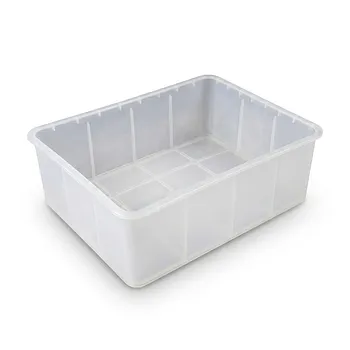
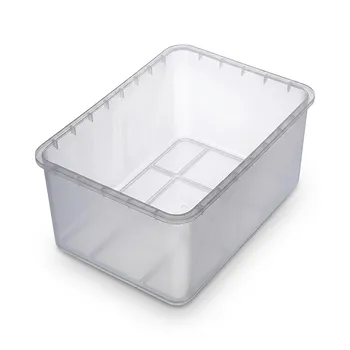
- Laboratory PFA Rectangular Acid Soaking Tank Silicon Wafer Cleaning Bath Corrosion Resistant High Purity Vessel
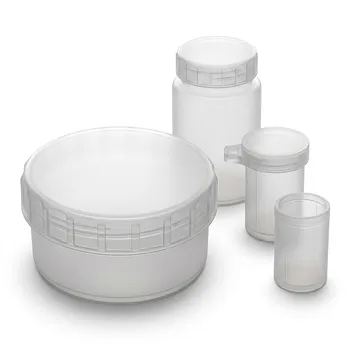
- PFA Reaction Jar Corrosion Resistant Wide Mouth PTFE Lab Bottle High Purity Chemical Vessel
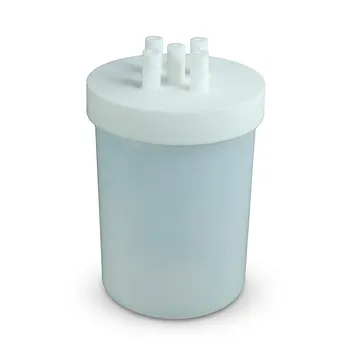
- High Purity PFA Reaction Vessel 4L Water Oxygen Separation Tank for Proton Exchange Membrane Electrolysis Experiments Customizable Laboratory Fluid Component
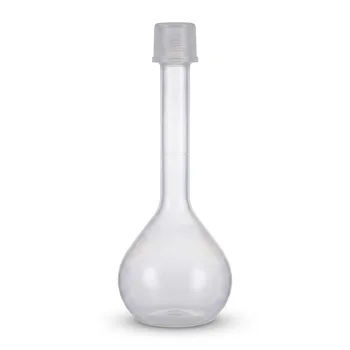
- High Purity PFA Volumetric Flask 1000ml 2000ml Constant Volume Bottle Acid Resistant Trace Analysis Custom Laboratory Labware
- Corrosion Resistant PFA Translucent Reaction Bottle with PTFE Screw Cap and Standard 19 24 Ground Joint Neck for High Temperature Lab Applications
People Also Ask
- How does surface reorganization in fluoropolymer materials affect water repellency and surface stability of PFA lab vessels? Explore molecular dynamics, temperature effects, and practical tips for optimal performance.
- What is the effective operating temperature range for PFA laboratory products? From -200°C to +260°C Versatility
- What is the operational temperature range for PFA laboratory products? Master Extremes from -200°C to +260°C
- What are the advantages of high-purity PFA labware for NiFe catalyst prep? Ensure Precision and Trace-Level Purity.
- Why is high-purity PFA laboratory equipment required for the trace analysis and species identification of polyoxometalates?