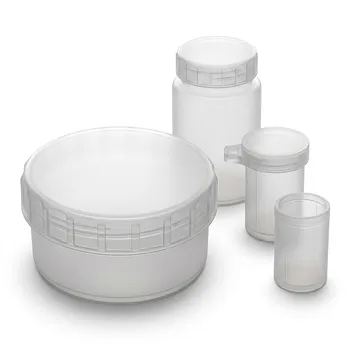
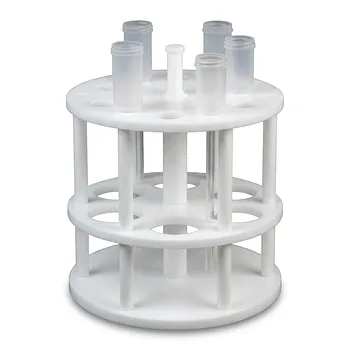
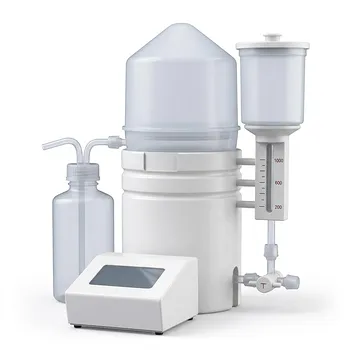
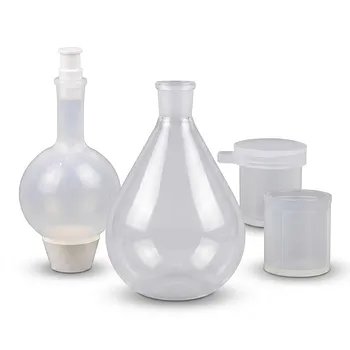
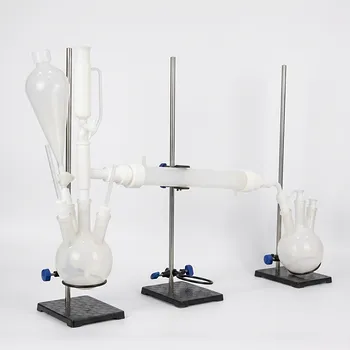
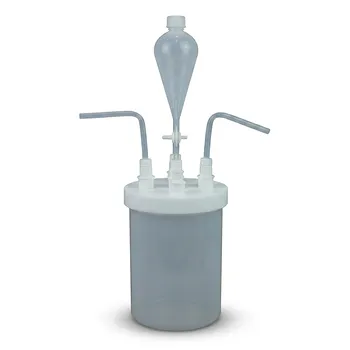
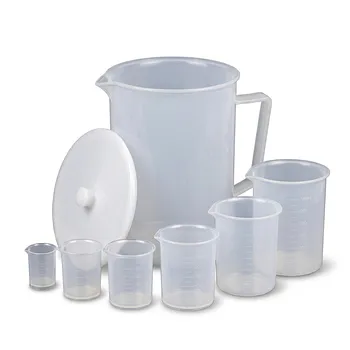
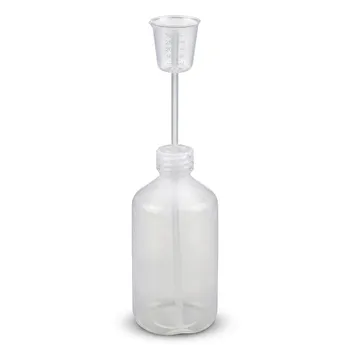
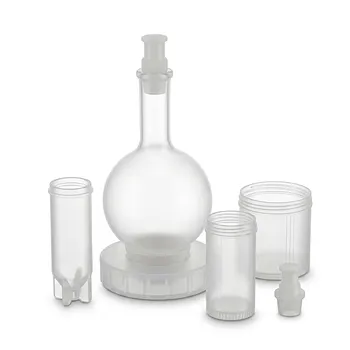
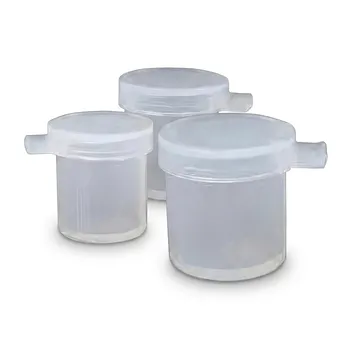
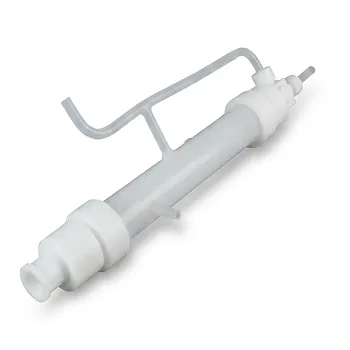
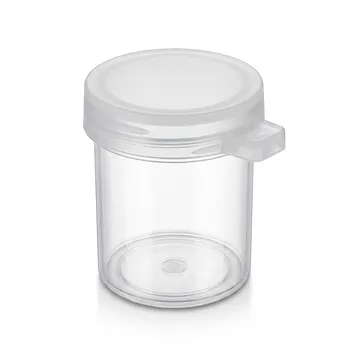
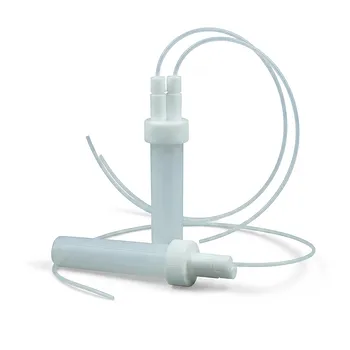
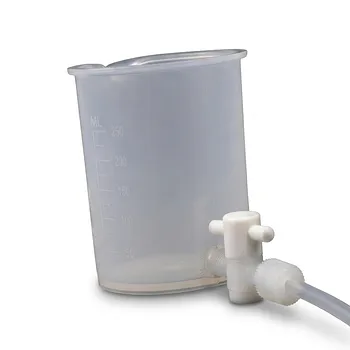
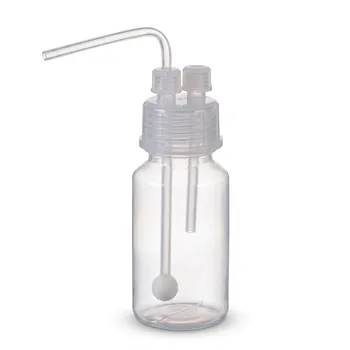
Perfluoroalkoxy alkane (PFA) laboratory products feature an exceptionally wide operational temperature range, typically spanning from -200°C to +260°C. This thermal versatility allows the same piece of labware to transition from cryogenic storage in liquid nitrogen to high-temperature applications like microwave-assisted acid digestion. While the material's melting point sits higher, at approximately 305°C to 315°C, the 260°C (500°F) limit is established to ensure long-term dimensional stability and performance.
PFA offers a rare combination of cryogenic flexibility and high-heat stability, making it the premier choice for extreme thermal environments where standard plastics would fail. Its wide service window is anchored by a rigid fluorocarbon backbone that resists both thermal degradation and mechanical embrittlement.
Thermal Resilience at the Extremes
Performance in Cryogenic Environments
PFA remains remarkably ductile and resistant to cracking at temperatures as low as -200°C. This makes it ideal for the long-term storage of sensitive biological or chemical samples in liquid nitrogen.
Unlike many other plastics that become brittle and shatter under thermal shock, PFA maintains its mechanical integrity. It can be moved directly from ultra-low temperature freezers to ambient environments without structural failure.
Stability During High-Heat Processes
The upper continuous service limit of 260°C allows PFA to be used in demanding heat-intensive tasks. It is frequently employed in hot-block digestion and solvent evaporation where lower-grade fluoropolymers might soften.
This heat resistance also supports repeated steam sterilization (autoclaving) and dry heat sterilization. The material’s high crystalline melting point ensures it does not lose its shape or contaminate samples during these cycles.
Material Stability and Physical Limits
Melting Point vs. Continuous Service Temperature
There is a critical distinction between the melting point (~305°C to 315°C) and the continuous service temperature (260°C). While the material can survive short-term excursions up to 300°C, doing so risks permanent deformation.
The 260°C limit is a safety threshold for dimensional stability. Operating within this range ensures that precisely molded components, such as bottle threads or airtight seals, maintain their fit and function over time.
Chemical Resistance Across the Temperature Spectrum
PFA's chemical inertness is maintained throughout its entire temperature range. It does not react with strong acids, bases, or organic solvents, even when those substances are heated to near-boiling points.
This makes PFA the gold standard for trace metal analysis. The lack of leachable additives or plasticizers ensures that sample purity is not compromised by the thermal stress of the procedure.
Understanding the Trade-offs
Load-Bearing Limitations at High Heat
While PFA resists melting, its tensile strength decreases as it approaches the 260°C threshold. If a PFA vessel is under significant mechanical stress or internal pressure at high temperatures, it may begin to creep or deform.
Users must be cautious when using PFA in high-pressure reactors or vacuum applications at the top of its temperature range. In these scenarios, the structural integrity of the vessel may be compromised before the actual melting point is reached.
Cost vs. Temperature Performance
PFA is a premium material, and its cost is significantly higher than that of PTFE or FEP. For applications that do not require the full -200°C to +260°C range, other fluoropolymers may be more cost-effective.
However, the "total cost of ownership" is often lower with PFA because it replaces the need for multiple types of specialized labware. Its ability to handle diverse thermal workflows reduces inventory complexity and the risk of operator error.
How to Apply This to Your Laboratory
Choosing the Right Strategy for Your Goal
- If your primary focus is cryogenic storage: PFA is excellent for -200°C environments, but ensure seals are compatible with the specific gases or liquids involved.
- If your primary focus is acid digestion: Limit your heating mantle or hot-block to 260°C to prevent the vessel from warping over repeated use cycles.
- If your primary focus is sterilization: Utilize PFA for parts that require frequent autoclaving at 121°C, as it will easily withstand thousands of cycles without degrading.
- If your primary focus is high-pressure heating: Consider using a secondary containment system or a metal-jacketed PFA liner if temperatures will exceed 200°C under pressure.
By respecting the 260°C continuous service limit, you can leverage PFA’s extraordinary thermal range to ensure both sample integrity and equipment longevity.
Summary Table:
| Thermal Parameter | Temperature Range | Key Laboratory Performance |
|---|---|---|
| Cryogenic Limit | -200°C (-328°F) | Maintains ductility; ideal for liquid nitrogen storage and thermal shock resistance. |
| Continuous Service | Up to +260°C (+500°F) | Ensures dimensional stability during hot-block digestion and repeated autoclaving. |
| Melting Point | 305°C – 315°C | High crystalline threshold; material softens but resists chemical degradation. |
| Chemical Stability | -200°C to +260°C | Maintains near-universal inertness and zero leaching across the entire thermal window. |
Elevate Your Lab's Thermal Performance with KINTEK
Are your experiments pushing the limits of standard labware? KINTEK specializes in high-performance fluoropolymer solutions designed to survive the most demanding thermal and chemical environments. From everyday basics like PFA beakers, centrifuge tubes, and reagent bottles to advanced microwave digestion vessels, electrochemical cells, and custom-machined reactor components, we provide the tools necessary for zero-contamination research.
Whether you require high-volume consumables or bespoke CNC-fabricated laboratory setups, KINTEK’s absolute focus on PTFE and PFA ensures your samples remain pure from -200°C to +260°C. Don't compromise on material integrity—leverage our end-to-end manufacturing expertise to secure your results.
Contact our specialists today to find your perfect fluoropolymer solution!
Related Products
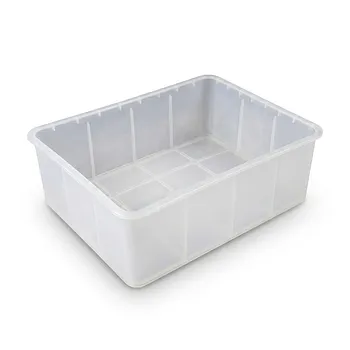
- Laboratory PFA Rectangular Acid Soaking Tank Silicon Wafer Cleaning Bath Corrosion Resistant High Purity Vessel
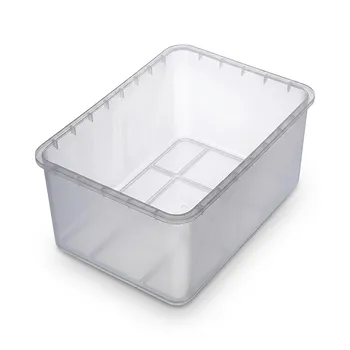
- High Purity PFA Laboratory Rectangular Tank Corrosion Resistant Acid Cleaning Bath for Silicon Wafer Processing and Trace Analysis
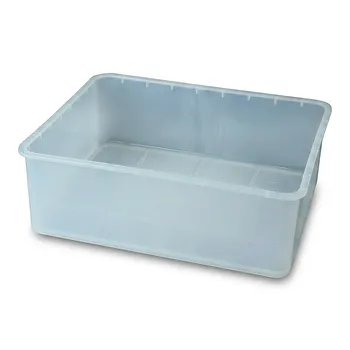
- High Purity PFA Rectangular Laboratory Acid Cleaning Tank Corrosion Resistant Silicon Wafer Washing Bath
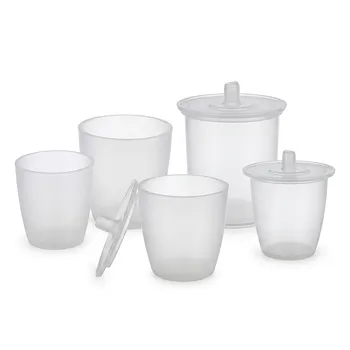
- High Purity PFA Crucible and Corrosion Resistant PTFE Beaker for Trace Analysis and Custom Laboratory Applications
- PFA Reaction Jar Corrosion Resistant Wide Mouth PTFE Lab Bottle High Purity Chemical Vessel
People Also Ask
- How does thermal cooling rate affect PFA vessel crystallinity and toughness? Optimize for impact resistance
- How does surface reorganization in fluoropolymer materials affect water repellency and surface stability of PFA lab vessels? Explore molecular dynamics, temperature effects, and practical tips for optimal performance.
- What is the effective operating temperature range for PFA laboratory products? From -200°C to +260°C Versatility
- What are the advantages of high-purity PFA labware for NiFe catalyst prep? Ensure Precision and Trace-Level Purity.
- Why is high-purity PFA laboratory equipment required for the trace analysis and species identification of polyoxometalates?