Surface reorganization can turn a highly water-repellent PFA surface into a liquid-retaining one. When mobile fluoropolymer chains contact aqueous liquids, polar or hydrophilic groups may rotate toward the water interface while fluorocarbon segments move away from it. This molecular rearrangement lowers the receding contact angle, increases contact angle hysteresis, and makes droplets more likely to remain on the vessel wall.
The key factor is surface-chain mobility. PFA maintains stable non-wetting behavior when its fluorinated surface groups remain oriented at the interface, but exposure to temperatures or conditions that enable molecular motion can promote aqueous reorganization and reduce droplet release.
Why Aqueous Liquids Change the Surface
The Initial PFA Surface
PFA has very low surface energy because fluorinated segments preferentially occupy the polymer-air interface. This gives untreated PFA vessels high water contact angles and weak adhesion to aqueous droplets.
In laboratory vessels, that low wettability helps liquids slide from the walls rather than spread across them. The practical benefits include reduced sample retention, easier rinsing, and improved recovery during trace analysis.
Molecular Reorientation at the Water Interface
When aqueous liquid contacts a mobile fluoropolymer surface, the interface can reorganize to reduce the system's interfacial energy. Polar or carbonyl-containing groups may orient toward the water, while hydrophobic fluorocarbon chains become less exposed.
This process is sometimes described as molecular flipping or surface rearrangement. It does not necessarily damage the bulk PFA, but it can change the chemistry and behavior of the outermost surface layers.
Why the Receding Contact Angle Matters
The advancing contact angle describes how a liquid initially spreads onto a surface. The receding contact angle describes how easily the liquid withdraws from that surface.
Surface reorganization tends to reduce the receding angle more strongly than the advancing angle. As a result, water may initially appear to bead normally but leave behind films, pinned droplets, or residual liquid when the vessel is tilted or drained.
How Repellency and Stability Are Affected
Increased Contact Angle Hysteresis
Contact angle hysteresis is the difference between the advancing and receding contact angles. A large hysteresis indicates that a droplet is strongly pinned even if its static contact angle remains relatively high.
For PFA vessels, increasing hysteresis means poorer droplet detachment. Liquid can cling to vessel walls, corners, seams, or surface irregularities instead of leaving the container completely.
Reduced Water Repellency
The exposed surface becomes more compatible with water as polar groups migrate toward the interface. Water then spreads more readily, and the surface no longer behaves as consistently non-wetting.
The change may be gradual or condition-dependent. Temperature, exposure time, polymer architecture, surface history, and the specific aqueous environment all influence the extent of reorganization.
Greater Risk of Sample Retention
Residual droplets can retain dissolved analytes after pouring, transfer, digestion, or rinsing. In trace analysis, even a small amount of retained liquid can affect recovery, blank control, and the reproducibility of subsequent measurements.
A vessel may therefore remain chemically inert in bulk while becoming less reliable for complete liquid displacement. Chemical resistance and stable non-wetting behavior are related but distinct performance requirements.
The Role of Temperature and Glass Transition
Below the Glass Transition Temperature
Below the polymer's glass transition temperature, molecular motion is comparatively restricted. Fluorinated side chains and the main polymer architecture are less able to rearrange in response to aqueous contact.
Under these conditions, perfluoroalkyl groups are more likely to remain stably oriented at the interface. PFA can therefore preserve high advancing and receding contact angles with lower droplet adhesion.
Above the Glass Transition Temperature
Above the relevant glass transition range, thermal activation increases main-chain and side-chain mobility. Aqueous exposure can then accelerate surface reorganization and make polar groups more likely to become exposed.
The resulting loss of water repellency is a surface-composition change rather than necessarily a failure of the entire vessel. However, it can still compromise performance in applications that depend on complete sample recovery.
Crystalline and Rigid Structures
Rigid polymer architectures and crystalline regions restrict the motion needed for large-scale surface rearrangement. They can improve the stability of fluorinated groups at the liquid interface.
Material selection should therefore consider more than nominal chemical compatibility. The relevant questions include the polymer's thermal operating range, chain mobility, crystallinity, and ability to preserve its surface composition during repeated aqueous exposure.
What This Means for PFA Laboratory Vessels
Droplet Detachment
Stable PFA surfaces allow aqueous droplets to detach cleanly during pouring, draining, or transfer. This limits the amount of liquid left on the vessel wall.
If reorganization increases hysteresis, the same vessel may show visible beading while still retaining droplets. Visual water repellency alone is therefore not a complete measure of transfer performance.
Trace-Analysis Reliability
For high-purity vessels, stable surface orientation helps reduce analyte retention and supports more complete sample recovery. This is especially important when analytes are present at very low concentrations.
A surface that reorganizes under operating conditions can introduce variability between the nominal vessel properties and its actual behavior during use. Testing under realistic temperature and aqueous-contact conditions is more informative than relying only on room-temperature contact-angle data.
Cleaning and Rinsing
Low-wetting PFA surfaces generally simplify cleaning because aqueous rinses are less likely to form persistent films. Surface reorganization can weaken this advantage by increasing liquid spreading and retention.
Repeated exposure may make cleaning behavior less predictable, particularly when combined with heat, long dwell times, or chemically active solutions.
Understanding the Trade-offs
Low Surface Energy Does Not Guarantee Permanent Repellency
Fluoropolymers naturally favor low-energy fluorinated interfaces, but the surface is not always static. Mobile chains can reorganize when thermal and interfacial forces are sufficient.
A high initial contact angle does not prove that the surface will maintain low adhesion after prolonged aqueous exposure or elevated-temperature operation.
Surface Modification Can Change the Objective
Plasma treatment, strong-base treatment, and other activation methods can intentionally introduce hydrophilic groups. These methods are useful when bonding, biomolecule immobilization, or patterned wettability is required.
They are counterproductive when the goal is maximum water repellency and complete droplet release. Surface treatments must therefore be selected according to the required function rather than applied as general improvements.
Roughness Can Help or Hurt
Micro- and nanoscale roughness can amplify hydrophobicity by reducing the effective liquid-solid contact area. In suitable fluoropolymer structures, this can produce very high apparent water contact angles.
However, roughness does not automatically prevent pinning. Surface chemistry, defects, contamination, and reorganization can still increase hysteresis and leave liquid trapped in features.
Contact Angles Need Context
Static contact angle measurements provide a useful indication of initial wettability, but they do not fully describe liquid retention. Advancing and receding angles, hysteresis, droplet sliding or roll-off behavior, and changes after aqueous aging should also be evaluated.
For laboratory vessels, the most relevant test is whether the actual liquid drains and rinses completely under the intended operating conditions.
How to Apply This to Your Project
Choose the material and operating conditions together, because PFA surface stability depends on both polymer mobility and aqueous exposure.
- If your primary focus is maximum water repellency: Operate below the material's relevant glass transition range and select PFA formulations or structures that restrict fluorinated-chain mobility.
- If your primary focus is trace-element recovery: Evaluate receding contact angle, hysteresis, and actual drain-down behavior after representative aqueous exposure rather than relying only on static contact angle.
- If your primary focus is elevated-temperature fluid handling: Select a fluoropolymer with a suitable thermal and crystalline structure, and verify that its surface composition remains stable at the intended temperature.
- If your primary focus is bonding or selective wettability: Use controlled plasma or chemical surface modification, recognizing that introduced polar groups will reduce the untreated material's non-wetting behavior.
- If your primary focus is long-term reproducibility: Test vessels after repeated thermal and aqueous cycles to identify surface changes that may increase droplet retention or alter sample recovery.
Maintaining PFA's water repellency requires controlling molecular mobility so that fluorinated surface groups remain stably exposed at the aqueous interface.
Summary Table:
| Factor | Effect on Water Repellency | Effect on Surface Stability | Practical Implication |
|---|---|---|---|
| Surface-chain mobility | Higher mobility increases reorganization, lowering receding angle and increasing hysteresis. | Mobile chains can reorient, reducing stable non-wetting behavior. | Choose PFA with restricted mobility for consistent droplet release. |
| Temperature | Above Tg, mobility increases, accelerating reorganization. | Surface composition changes, reducing stability. | Operate below Tg if maximum repellency is needed. |
| Polymer architecture | Rigid or crystalline structures limit reorganization. | Maintains stable fluorinated surface. | Select formulations with higher crystallinity for stable performance. |
| Aqueous exposure time | Longer exposure increases reorganization. | Gradual loss of repellency over time. | Test under realistic conditions to predict performance. |
| Surface roughness | Can enhance hydrophobicity but may increase pinning. | Roughness alone does not prevent reorganization. | Combine roughness with stable chemistry for best results. |
| Surface modification (e.g., plasma) | Introduces polar groups, reducing water repellency. | Alters surface chemistry permanently. | Use only if bonding or selective wettability is required. |
Optimize your lab's PFA vessel performance with KINTEK's high-purity PTFE/PFA products. Our custom-engineered labware is designed to resist surface reorganization, ensuring consistent water repellency and reliable sample recovery. From beakers to complex reaction apparatus, we deliver stability under demanding conditions. Contact us today to find the perfect solution for your application and enhance your lab's efficiency!
Related Products
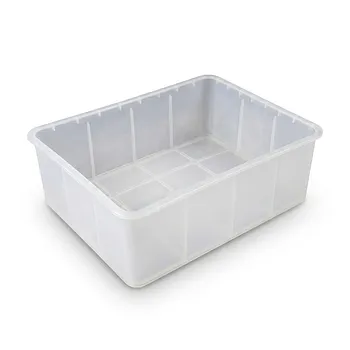
- Laboratory PFA Rectangular Acid Soaking Tank Silicon Wafer Cleaning Bath Corrosion Resistant High Purity Vessel
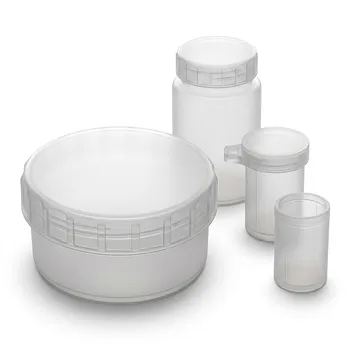
- PFA Reaction Jar Corrosion Resistant Wide Mouth PTFE Lab Bottle High Purity Chemical Vessel
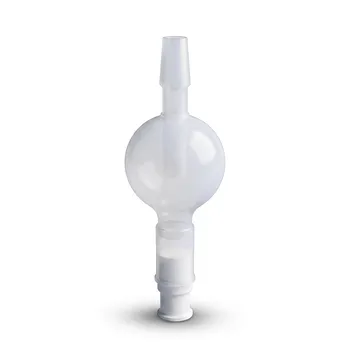
- PFA Anti Splash Ball High Temperature HF Resistant Laboratory Buffer Vessel for Distillation and Trace Analysis
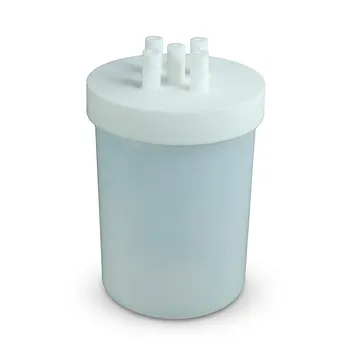
- High Purity PFA Reaction Vessel 4L Water Oxygen Separation Tank for Proton Exchange Membrane Electrolysis Experiments Customizable Laboratory Fluid Component
- High Purity PFA Volumetric Flask 1000ml 2000ml Constant Volume Bottle Acid Resistant Trace Analysis Custom Laboratory Labware
People Also Ask
- How does thermal cooling rate affect PFA vessel crystallinity and toughness? Optimize for impact resistance
- What is the effective operating temperature range for PFA laboratory products? From -200°C to +260°C Versatility
- What is the operational temperature range for PFA laboratory products? Master Extremes from -200°C to +260°C
- What are the advantages of high-purity PFA labware for NiFe catalyst prep? Ensure Precision and Trace-Level Purity.
- Why is high-purity PFA laboratory equipment required for the trace analysis and species identification of polyoxometalates?