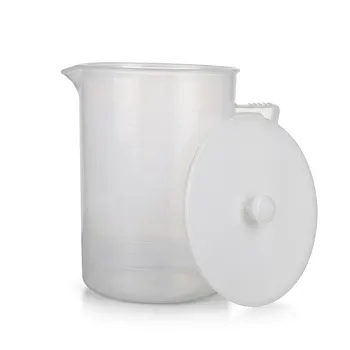
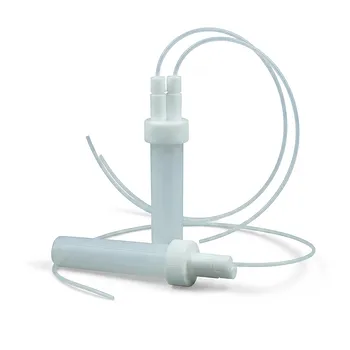
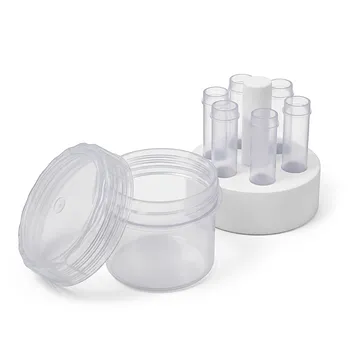
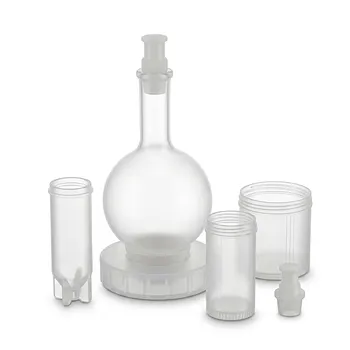
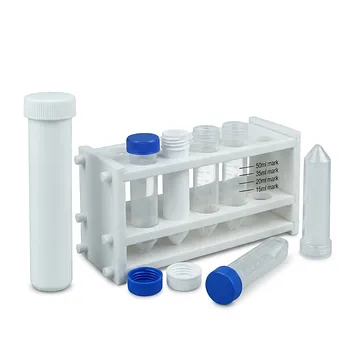
High-purity PFA labware is the gold standard for nickel nanoferrite characterization because it eliminates the contamination and sample loss inherent to glassware. When analyzing nanomaterials at trace levels, standard glassware leaches impurities like silicon and boron while simultaneously adsorbing nickel ions onto its surface. PFA (perfluoroalkoxy) ensures that the sample concentration remains precise and the chemical environment stays ultra-pure, directly improving the reliability of sensitive measurements like FTIR and UV-Vis.
The Central Takeaway: While standard glassware introduces background noise and alters sample stoichiometry through leaching and adsorption, high-purity PFA provides a chemically inert environment that preserves the integrity of nickel nanoferrite samples for high-precision analytical data.
Eliminating Background Contamination
The Risk of Glass Leaching
Standard laboratory glassware is composed of borosilicate, which contains silicon, boron, and alkali metals. These elements can leach into the sample solution during preparation or storage, especially when working with acidic or reactive reagents.
PFA’s Chemical Inertness
High-purity PFA is manufactured without organic additives or residual metal ions. Its exceptional chemical resistance ensures that no secondary contamination is introduced into the nickel nanoferrite sample, maintaining an environment suitable for ppb (parts per billion) or ppt (parts per trillion) level detection.
Impact on Characterization Techniques
In techniques like FTIR or UV-Vis, leached impurities can create false peaks or shift existing ones. By using PFA, researchers ensure that the observed infrared absorption peaks and bandgap energy measurements are reflective of the nanoferrite itself rather than container-borne contaminants.
Preserving Sample Concentration
Surface Adsorption in Glass
Glass surfaces possess active sites that can physically or chemically adsorb metal ions from a solution. For nickel nanoferrites, this means a portion of the nickel may "stick" to the vessel walls, leading to an underestimation of the actual sample concentration.
Low Surface Energy of PFA
PFA features an extremely smooth surface and low surface energy, which minimizes the physical and chemical adsorption of analytes. This non-stick property ensures that the total amount of nickel synthesized remains in the fluid phase for analysis.
Data Reproducibility
Consistency is critical in nanomaterial research. Because PFA prevents the loss of target ions to the container walls, it ensures repeatability across multiple experimental trials, a feat often impossible with aging or etched glassware.
Understanding the Trade-offs
Thermal and Cost Considerations
While PFA is superior for purity, it is significantly more expensive than standard glassware. Furthermore, while PFA has excellent thermal stability compared to other plastics, it cannot match the extreme high-temperature resistance of quartz or specialized glass for processes like high-heat fusion.
Maintenance and Cleaning
PFA requires specific cleaning protocols to maintain its trace-level purity. Because it is used for high-sensitivity work, any residue left from previous experiments can compromise its benefits, requiring dedicated acid-leaching procedures that are more rigorous than standard glass washing.
Making the Right Choice for Your Goal
When deciding between PFA and glassware for your nickel nanoferrite project, consider the specific requirements of your analytical phase:
- If your primary focus is trace-level characterization (UV-Vis, FTIR, or ICP-MS): Use high-purity PFA to ensure the accuracy of concentration-dependent data and to prevent elemental background interference.
- If your primary focus is bulk synthesis or high-temperature calcination: Standard borosilicate glass or quartz may be more cost-effective and thermally appropriate, provided the potential for minor leaching does not interfere with the final application.
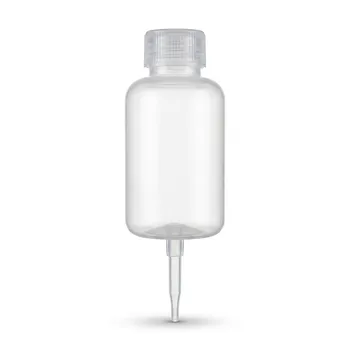
- If your primary focus is long-term sample storage: Choose PFA reagent bottles to prevent the gradual leaching of ions and the loss of nickel to the container walls over time.
Selecting high-purity PFA is a strategic investment that bridges the gap between experimental design and high-precision, publishable results in nanotechnology.
Summary Table:
| Feature | High-Purity PFA Labware | Standard Borosilicate Glassware |
|---|---|---|
| Chemical Purity | Inert; no metal leaching (ppb/ppt level) | Leaches silicon, boron, and alkali metals |
| Surface Interaction | Low energy; minimizes nickel ion adsorption | High energy; adsorbs ions to vessel walls |
| Data Accuracy | High precision for FTIR, UV-Vis, ICP-MS | Risk of false peaks and background noise |
| Durability | High chemical resistance; non-fragile | Vulnerable to etching and breakage |
| Best Use Case | Trace analysis and long-term storage | Bulk synthesis and high-heat processes |
Elevate Your Trace Analysis with KINTEK Fluoropolymer Excellence
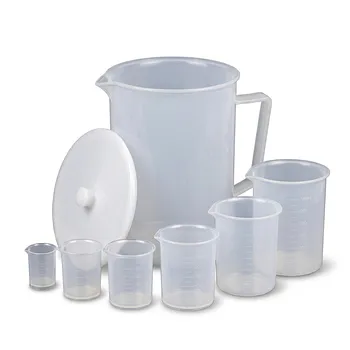
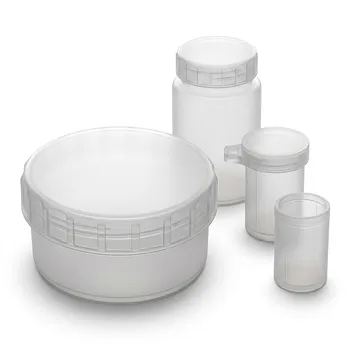
Precision in nanomaterial characterization demands an environment free from contamination. KINTEK specializes in high-performance fluoropolymer solutions designed to safeguard your most sensitive samples. From everyday basics like PFA beakers, reagent bottles, and digestion tubes to advanced bespoke laboratory setups and custom CNC-machined components, we provide the ultra-pure tools necessary for nickel nanoferrite research and beyond.
Our extensive range covers everything from fluid transfer components (tubing, valves) and filtration tools to specialized electrochemical cells and microwave digestion vessels. By focusing exclusively on high-performance materials like PTFE and PFA, KINTEK ensures your data remains accurate and reproducible.
Ready to eliminate background noise and sample loss in your lab? Contact us today to discuss your standard or custom fluoropolymer requirements!
References
- Amrutesh Kannolli, Suvidha P Hegde. Unveiling Hydrothermal Synthesis and Captivating Characteristics of Nickel Nanoferrites. DOI: 10.12723/mjs.74.8
This article is also based on technical information from Kintek Knowledge Base .
Related Products
- High Purity PFA Crucible and Corrosion Resistant PTFE Beaker for Trace Analysis and Custom Laboratory Applications
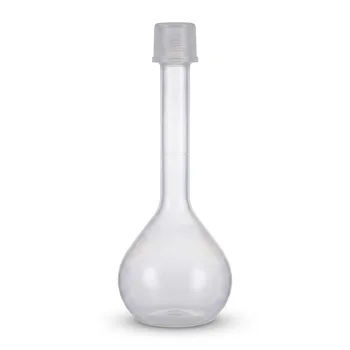
- High Purity PFA Volumetric Flask 1000ml 2000ml Constant Volume Bottle Acid Resistant Trace Analysis Custom Laboratory Labware
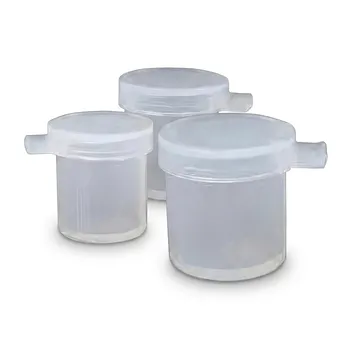
- High Purity PFA Sample Dissolution Cups Acid Resistant Chemical Digestion Vessels with Lids Trace Analysis Labware
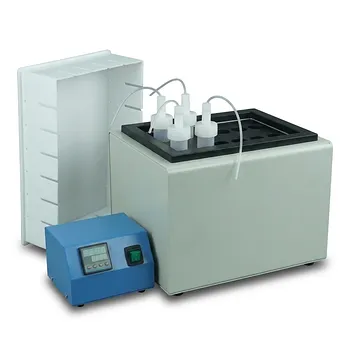
- High Purity PFA Laboratory Rectangular Tank Corrosion Resistant Acid Cleaning Bath for Silicon Wafer Processing and Trace Analysis
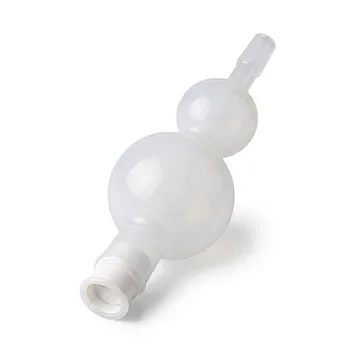
- PFA Distillation Flask for Water Quality Alkylmercury Determination and Laboratory Trace Analysis Heating Applications
People Also Ask
- Why are high-purity vessels critical for BiFeO3 synthesis? Ensuring Phase Purity
- Why is the use of high-purity PFA or PTFE labware critical during TiO2 nanoparticle purification? Protect Sample Purity
- Why is high-purity PFA labware necessary for Znx@LS-2 zeolite ICP-OES analysis? Ensure Trace-Level Precision
- Why is high-purity PFA trace analysis labware used for MXene? Ensure Superior Material Integrity in Research
- Why is high-purity PFA trace analysis labware used for sample processing when preparing Mo2CTx@MoS2? Ensure Material Purity