High-purity PFA (Perfluoroalkoxy) tubing maintains reagent purity through extreme internal smoothness and superior anti-permeation barriers. These properties work in tandem to prevent physical residue accumulation and the infiltration of environmental contaminants like moisture or atmospheric gases. By leveraging low surface energy, PFA ensures that chemical reagents do not adhere to or react with the transfer conduit.
Core Takeaway: PFA tubing provides a chemically inert, ultra-smooth fluid path that eliminates cross-contamination and environmental interference, making it the definitive standard for high-sensitivity analytical and corrosive fluid applications.
Minimizing Physical and Biological Residues
The Role of Internal Surface Smoothness
High-purity PFA tubing is manufactured to achieve an extremely high internal surface smoothness. This microscopic uniformity significantly reduces the surface area available for physical residue or biofilm accumulation.
Low Surface Energy and Adsorption
The material possesses low surface energy, which results in "oleophobic and hydrophobic" characteristics. These properties make it difficult for solutes to adsorb or adhere to the internal walls, ensuring that the full concentration of the reagent reaches its destination.
Efficiency in Rinsing and Multi-Component Switching
During continuous flow chemistry or multi-component switching, the non-stick nature of PFA allows for rapid cleaning. Standard rinsing procedures can achieve a high level of cleanliness quickly, effectively eliminating the risk of cross-contamination from previous experimental runs.
Securing the System Against External Contamination
Superior Anti-Permeation Properties
PFA acts as a robust barrier against the environment due to its anti-permeation properties. This prevents external gases or moisture from penetrating the tubing walls, which is a critical requirement for transporting air-sensitive or ultra-high-purity reagents.
Precision Sealing and CNC Machining
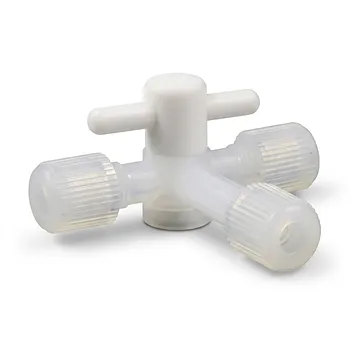
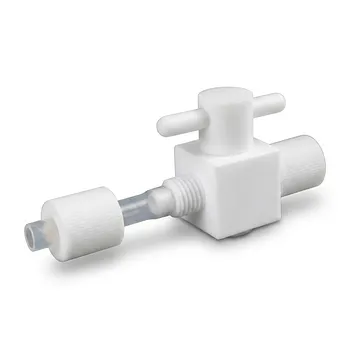
To maintain a closed system, PFA fittings and valves often undergo precision CNC machining. This ensures absolute sealing at connection points, preventing the infiltration of external air or the hazardous leakage of internal gases.
Zero-Contamination Characteristics
The material itself is chosen for its zero-contamination characteristics, meaning it does not leach metallic ions or organic impurities into the fluid stream. This preserves the chemical integrity of the reaction system even under prolonged exposure to aggressive solvents.
Enhancing Operational Safety and Monitoring
Chemical Stability Across Extremes
PFA offers nearly universal chemical corrosion resistance and a wide operating temperature range. It can safely transport strong acids, bases, and organic solvents without the risk of material degradation or structural failure.
Real-Time Fluid Monitoring
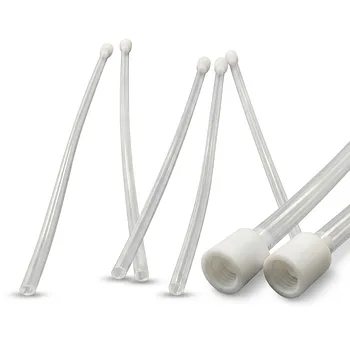
The high transparency of PFA tubing allows operators to monitor fluid status and liquid levels in real-time. This visibility is essential for identifying bubbles, precipitates, or color changes that might indicate a deviation in the experimental process.
Flexibility in Complex Routing
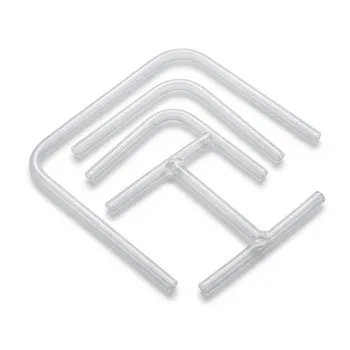
Despite its durability, high-precision PFA tubing remains flexible. This allows for versatile routing in confined laboratory spaces, facilitating the assembly of complex automated sampling workflows without compromising the fluid link purity.
Understanding the Trade-offs
Mechanical Limits and Pressure Constraints
While PFA is exceptionally inert, it has a lower mechanical strength compared to metallic alternatives like stainless steel. Under extreme pressure conditions, PFA tubing may require additional reinforcement or specific wall thicknesses to prevent deformation.
Cost and Material Investment
High-purity PFA is a premium material with a higher acquisition cost than standard fluoropolymers like PTFE or FEP. Users must weigh the initial investment against the long-term benefits of reduced contamination and extended component lifespan.
Thermal Expansion Considerations
PFA has a significant coefficient of thermal expansion. In systems subject to wide temperature fluctuations, connections must be designed to accommodate these changes to prevent the development of leak paths over time.
How to Apply This to Your Project
When integrating PFA tubing into your fluid transfer system, your choice should be dictated by your specific analytical or industrial requirements.
- If your primary focus is Ultra-Trace Analysis: Prioritize high-purity PFA with the lowest possible surface roughness to minimize solute adsorption and ensure repeatable results.
- If your primary focus is Corrosive Chemical Distribution: Select PFA fittings with CNC-machined threads to ensure a leak-proof seal that protects both the reagent purity and operator safety.
- If your primary focus is Automated Flow Chemistry: Utilize the transparency and flexibility of PFA to enable real-time visual monitoring and efficient routing within compact instrument housings.
By selecting high-purity PFA tubing, you are investing in a system that guarantees the chemical stability and purity required for the most demanding technical environments.
Summary Table:
| Key Feature | Functional Benefit | Ideal Application |
|---|---|---|
| Internal Smoothness | Eliminates physical residue & biofilm | Ultra-trace chemical analysis |
| Low Surface Energy | Prevents solute adsorption & sticking | Multi-component reagent switching |
| Anti-Permeation | Blocks environmental gases & moisture | Air-sensitive fluid transport |
| Chemical Inertness | Zero leaching of metallic/organic ions | Corrosive acid distribution |
| High Transparency | Enables real-time visual monitoring | Automated flow chemistry |
Elevate Your Lab’s Integrity with KINTEK’s Fluoropolymer Solutions
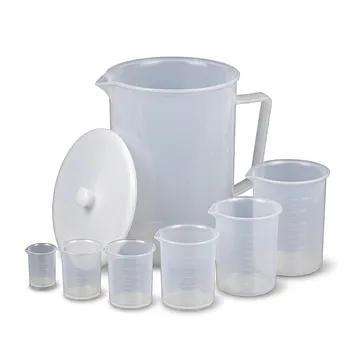
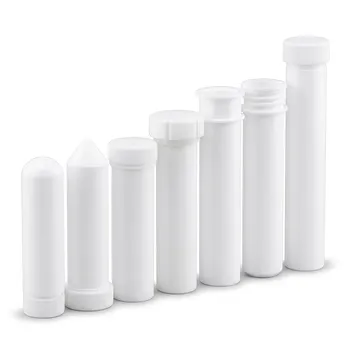
Don’t compromise your results with inferior fluid pathways. KINTEK specializes in high-performance laboratory supplies crafted exclusively from PTFE and PFA. From everyday basics like beakers, centrifuge tubes, and reagent bottles to precision-engineered PFA tubing, fittings, and valves, we ensure your chemical reagents remain untainted from source to sample.
Our expertise extends to advanced CNC-fabricated components, including custom electrochemical cells, battery testing fixtures, and microwave digestion vessels. Whether you need high-volume consumables or bespoke non-standard machined parts, we deliver end-to-end solutions for high-sensitivity analytical environments.
Ready to secure your fluid transfer system? Contact us today to discuss your specific requirements and discover the KINTEK advantage.
References
- Wenrui Sun, Ying Li. Modification of Nickel–Cobalt–Manganese Cathode Material Prepared Using Hydrothermal Method under Pulsed High Magnetic Field. DOI: 10.1002/cnma.202500015
This article is also based on technical information from Kintek Knowledge Base .
Related Products
- Custom PFA Tubing 1/4 Inch High Purity Corrosion Resistant Fluoropolymer Tube with Welding and Machining Services
- High Purity PFA Valves and Weldable Corrosion Resistant Transparent Tubing for Semiconductor Sensor Manufacturing Fluid Transfer
- Corrosion Resistant High Purity PFA Valve and Weldable Transparent Tubing for Semiconductor Fluid Transfer
- High Purity PFA NMR Sample Tubes with PTFE Caps Corrosion Resistant Fluoropolymer Labware
- High Purity PFA Coiled Tubing Custom PTFE Machining PFA Welding and Precision Bending Solutions
People Also Ask
- What are the primary processing considerations when manufacturing fluoropolymer tubing? Key factors for labs & chemical processes.
- How do 6F groups affect gas permeability in fluoropolymers? Unlock tailored tubing selection for your lab's gas control needs
- How does the incorporation of comonomers such as perfluoropropyl vinyl ether (PPVE) alter the molecular structure and processing characteristics of TFE-based fluoropolymers like PFA compared to standard PTFE?
- What are the key properties of PFA (PerFluoroAlkoxy)? A Guide to Extreme Chemical and Thermal Resistance
- Why is PFA often selected over traditional PTFE for manufacturing complex fluoropolymer fluid components, custom fittings, and sealed laboratory digestion vessels? Discover the key advantages for your lab.