The primary processing consideration is matching the extrusion method to the fluoropolymer. Fine-powder PTFE requires paste extrusion with a lubricant, followed by lubricant removal, baking, and sintering. Melt-processable materials such as PFA require high-temperature melt extrusion using corrosion-resistant equipment, carefully controlled rheology, temperatures, draw-down, and cooling to produce tubing with uniform dimensions, smooth surfaces, low contamination, and reliable pressure performance.
Fluoropolymer tubing quality depends on controlling the entire processing window—not simply forcing the resin through a die. Resin selection determines the manufacturing route, while equipment materials, thermal control, shear rate, dimensional control, and post-processing determine whether the finished tube performs reliably in demanding laboratory and chemical service.
Match the Processing Route to the Resin
Processing Fine-Powder PTFE
Fine-powder PTFE is generally not processed by conventional melt extrusion. Its high melt viscosity and processing behavior require paste extrusion or powder-metallurgy methods.
For tubing, the powder is blended with a suitable extrusion aid or lubricant. The lubricated powder is compacted and forced through a die, after which the lubricant must be removed before the material is fully sintered.
Baking and Sintering the PTFE
After paste extrusion, controlled baking removes volatile extrusion aids. The tube is then heated through a sintering cycle that allows the PTFE particles to coalesce into a continuous resin matrix.
The heating profile must be controlled carefully. Insufficient sintering can reduce mechanical strength and burst resistance, while excessive or poorly controlled heating can promote degradation, distortion, or dimensional instability.
Melt Extruding PFA and Similar Resins
Melt-processable fluoropolymers such as PFA can be extruded using high-temperature melt-extrusion equipment. The extruder must provide sufficient temperature capability, torque, pressure capacity, and material compatibility.
The die and flow path must be designed for the resin’s high melt viscosity and demanding processing temperatures. The objective is a stable, consistent melt stream rather than maximum throughput.
Control Temperature and Melt Rheology
Use a Controlled Barrel Temperature Profile
Fluoropolymer melts require carefully staged barrel and die temperatures. The profile must provide adequate melting and flow without creating excessive residence time or thermal degradation.
Temperature control affects viscosity, pressure, surface quality, dimensional stability, and the risk of generating corrosive degradation products. Local hot spots are particularly undesirable.
Manage Shear Rate and Extrusion Speed
Fluoropolymer melts can have a relatively low critical shear rate compared with conventional thermoplastics. Exceeding that limit can cause melt fracture, producing rough or irregular surfaces sometimes described as shark skinning.
Excessive shear may also create cloudy optical appearance, dimensional instability, and compromised surface integrity. A slower, stable process is often preferable to maximizing line speed.
Maintain Stable Melt Pressure
High-viscosity fluoropolymer melts can produce substantial pressure in the metering section and through the die. Screen packs and breaker plates must be appropriately reinforced and rated for the process.
Filtering is also important for removing particulate contamination before the melt reaches the die. However, filtration must be balanced against pressure buildup and excessive residence time.
Use Equipment That Resists Corrosion
Select Compatible Extruder Materials
Fluoropolymer processing can generate highly corrosive fluorinated degradation products when the material is overheated. These products may attack conventional steel surfaces and can contribute to equipment damage or product contamination.
Screws, barrels, dies, breaker plates, and other exposed components therefore require specialized corrosion-resistant alloys or protective construction. Equipment compatibility is a product-purity requirement as well as a maintenance concern.
Design for High Temperature and Torque
Processing equipment may need to operate at temperatures approaching 500°C, depending on the fluoropolymer and process conditions. The extruder must also provide sufficient torque because these resins are highly viscous.
Inadequate equipment capacity can cause unstable output, excessive pressure, premature wear, or an inability to maintain the required temperature profile.
Prevent Metal Contamination
Unlined or unsuitable steel equipment can degrade during processing and introduce metallic contamination into high-purity tubing. This is particularly important in laboratory fluid delivery, analytical systems, and chemical-transfer applications.
Material selection, equipment cleanliness, filtration, and preventive maintenance should be treated as part of the tubing’s contamination-control program.
Control Tube Dimensions During Extrusion
Maintain Uniform Wall Thickness
Wall-thickness uniformity is essential for pressure rating, flexibility, dimensional fit, and consistent thermal behavior. Uneven walls can create localized weak points or cause problems when the tube is installed in fittings.
The die design, melt stability, draw-down ratio, haul-off speed, and cooling conditions must work together to maintain a consistent cross-section.
Control Inner and Outer Diameters
Accurate inner and outer diameter control supports leak-tight connections with compression, flare, and other fitting systems. It also helps maintain predictable flow resistance and prevents unnecessary pressure drops.
Dimensional control should be verified continuously or at a defined inspection frequency rather than assumed from nominal machine settings.
Account for Thermal Expansion
Fluoropolymers have significant thermal expansion behavior, and the dimensions measured at the extrusion line may not represent the final dimensions at room temperature or operating temperature.
Cooling conditions, line speed, tube support, and measurement temperature must therefore be controlled. Final specifications should reflect the temperature range in which the tubing will be installed and used.
Manage Cooling and Surface Formation
Control Cooling Rate
Cooling determines how the extruded tube stabilizes dimensionally. Excessively rapid or uneven cooling can produce distortion, residual stress, ovality, or variations in wall thickness.
The cooling system should provide uniform heat removal around the tube while preserving the required inner and outer dimensions.
Protect the Internal Surface
Laboratory and chemical-process tubing often carries high-purity fluids, reactive chemicals, or analytical samples. A smooth, defect-free internal surface reduces sites for trapping contaminants and supports reliable fluid transfer.
Stable melt flow, appropriate die design, controlled shear, and clean processing conditions are central to achieving the required internal finish.
Prevent Micro-Cracks and Defects
Micro-cracks may result from poor sintering, excessive shear, thermal stress, contamination, or mechanical damage during handling. Although they may not be immediately visible, they can reduce pressure capability and accelerate failure under thermal or chemical cycling.
Inspection should therefore consider more than appearance. Dimensional checks, surface examination, and application-appropriate pressure or integrity testing may be necessary.
Protect Purity and Manufacturing Safety
Control Thermal Degradation
Fluoropolymer processing must prevent overheating, excessive residence time, and uncontrolled hot spots. Thermal degradation can create airborne hazards and corrosive compounds while also damaging product quality.
Manufacturing systems need appropriate ventilation, temperature monitoring, operating procedures, and emergency controls. The specific resin supplier’s processing and safety guidance should govern the operating limits.
Control Upstream Chemical Residues
Fluoropolymer performance is affected not only by extrusion but also by resin manufacture and cleaning. Modern fluoropolymer production has moved away from historically used persistent surfactants toward replacement chemistries and improved synthesis methods.
For laboratory applications, resin qualification should address extractables, ionic contamination, residual processing aids, and other purity requirements relevant to the fluid system.
Keep the Finished Tube Clean
Post-extrusion handling, cutting, packaging, and storage can introduce particles or residues even when the extrusion process is well controlled. High-purity tubing should be handled and packaged in a way that preserves its cleanliness.
The appropriate cleaning and packaging process depends on whether the tubing is intended for general chemical transfer, analytical instrumentation, semiconductor-related service, or another high-purity application.
Understanding the Trade-offs
Throughput Versus Surface Quality
Increasing extrusion speed can improve productivity, but it also increases shear, pressure, and the risk of melt fracture. The practical production limit is set by the point at which dimensional and surface requirements can no longer be maintained.
For critical laboratory tubing, consistent quality is usually more valuable than the highest possible line speed.
Flexibility Versus Pressure Capability
A thinner or smaller-wall tube may be easier to route and install, but it generally provides less mechanical margin than a thicker-wall design. Required pressure, temperature, chemical exposure, bending, and fitting loads must be evaluated together.
Nominal resin selection alone does not establish a safe pressure rating.
Thermal Performance Versus Dimensional Stability
Fluoropolymers tolerate demanding temperatures, but repeated heating and cooling can cause dimensional movement and stress. A tube that performs well chemically may still require careful support, allowance for expansion, or specialized connection methods.
Designers should evaluate the complete temperature cycle rather than relying only on the material’s maximum temperature designation.
Chemical Inertness Versus Processing Complexity
Fluoropolymers offer exceptional chemical resistance, low surface energy, and high purity potential. These benefits come with specialized equipment, narrow processing controls, difficult handling, and higher manufacturing complexity than ordinary thermoplastics.
The correct choice is therefore based on the application’s combined chemical, thermal, mechanical, and cleanliness requirements.
Making the Right Choice for Your Goal
The most reliable specification begins by defining the service conditions and then linking them to the resin and manufacturing route.
- If your primary focus is chemical resistance: Select a fluoropolymer grade and processing route that withstand the specific reagents, temperatures, and exposure duration rather than relying on a general “chemically resistant” designation.
- If your primary focus is high purity: Require corrosion-resistant processing equipment, effective contamination control, appropriate filtration, and documented extractables or cleanliness controls.
- If your primary focus is pressure performance: Prioritize uniform wall thickness, proper PTFE sintering or stable melt extrusion, controlled cooling, and application-specific pressure testing.
- If your primary focus is dimensional fit: Define inner diameter, outer diameter, wall tolerance, ovality, thermal expansion, and fitting compatibility at relevant installation temperatures.
- If your primary focus is production consistency: Control melt rheology, temperature profiles, draw-down ratio, extrusion speed, cooling rate, and inspection criteria as one integrated process.
Reliable fluoropolymer tubing is produced when resin behavior, equipment design, thermal control, dimensional control, purity, and safety are managed as a single manufacturing system.
Summary Table:
| Consideration | Key Points |
|---|---|
| Resin Selection | Choose PTFE (paste extrusion) or PFA (melt extrusion) based on application needs. |
| Extrusion Method | PTFE requires paste extrusion, lubricant removal, baking, and sintering; PFA uses high-temperature melt extrusion. |
| Temperature Control | Maintain staged barrel and die temperatures to avoid degradation and ensure uniform melt. |
| Shear Rate | Keep shear below critical limit to prevent melt fracture and surface defects. |
| Equipment Materials | Use corrosion-resistant alloys to withstand high temperatures and prevent contamination. |
| Dimensional Control | Monitor wall thickness, inner/outer diameters, and thermal expansion for consistent fit. |
| Purity & Safety | Prevent thermal degradation, control residues, and keep finished tube clean. |
| Trade-offs | Balance throughput vs. quality, flexibility vs. pressure, and chemical inertness vs. processing complexity. |
Need high-quality fluoropolymer tubing for your lab or chemical process? At KINTEK, we specialize in precision PTFE and PFA components, offering custom CNC machining and a full range of labware. Our expertise ensures reliable performance, high purity, and dimensional accuracy. Contact us today to discuss your requirements and discover how we can support your application. Get in touch with our team!
Related Products
- Custom PFA Tubing 1/4 Inch High Purity Corrosion Resistant Fluoropolymer Tube with Welding and Machining Services
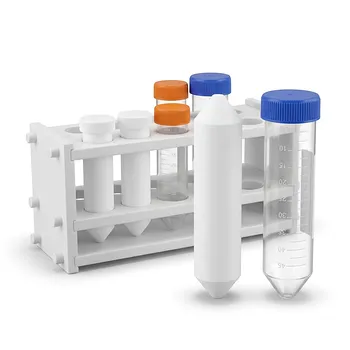
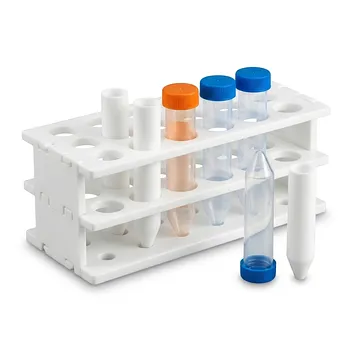
- Custom PTFE Test Tubes Corrosion Resistant Low Background Fluoropolymer Labware 50ml 30ml
- Corrosion Resistant High Purity PFA Valve and Weldable Transparent Tubing for Semiconductor Fluid Transfer
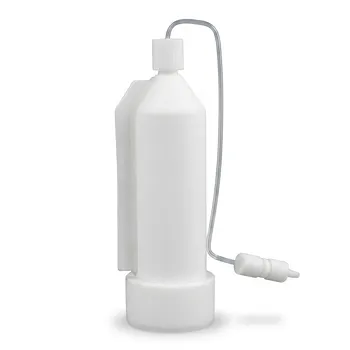
- Custom PTFE Condenser Tube 100ml Serpentine and Straight Fluoropolymer Laboratory Heat Exchanger with Flask Adapters
- High Purity PTFE Centrifuge Tubes for Trace Analysis Custom Laboratory Centrifugation Containers with Racks
People Also Ask
- What are the key properties of PFA (PerFluoroAlkoxy)? A Guide to Extreme Chemical and Thermal Resistance
- How do the mechanical properties of PFA compare to FEP and PTFE? PFA's Superior Flex Life and Toughness Explained
- What are the characteristics of PFA material? A Guide to Its High-Performance Balance
- Why is PFA superior for cleaning and preventing cross-contamination? The Gold Standard for Ultra-Trace Lab Hygiene
- Why is PFA often selected over traditional PTFE for manufacturing complex fluoropolymer fluid components, custom fittings, and sealed laboratory digestion vessels? Discover the key advantages for your lab.