6F groups generally make fluoropolymers more permeable to gases. Their bulky hexafluoroisopropylidene units disrupt close chain packing, increasing fractional free volume (FFV) and gas diffusivity relative to sulfone-linked structures. Reported effects include approximately a threefold increase in diffusivity and up to a fourfold increase in overall permeability for gases such as CO₂, O₂, N₂, and CH₄.
The key design consequence is that a 6F-containing fluoropolymer can provide faster gas transport, but it may provide a weaker gas barrier. Select tubing and fluid-transfer components by balancing the required chemical and mechanical performance against acceptable gas ingress, egress, outgassing, or permeation.
How 6F Groups Change Polymer Structure
Bulky groups disrupt chain packing
The 6F group, commonly represented as –C(CF₃)₂–, occupies substantial molecular volume within the polymer backbone. This steric bulk prevents neighboring chains from packing as tightly as they can in more compact or sulfone-linked structures.
The result is additional microscopic space within the polymer matrix. This space is described by the material’s fractional free volume, or FFV.
Higher FFV creates more pathways for gas motion
FFV represents the portion of a polymer’s volume that is not occupied by the polymer chains and can support molecular motion. When FFV increases, gas molecules generally have more opportunities to hop or diffuse through the material.
For 6F-containing structures, this increased free volume is accompanied by higher chain diffusivity. The primary reference reports roughly a threefold increase in gas diffusivity compared with sulfone-linked analogues.
Permeability reflects both solubility and diffusivity
Gas permeability is commonly understood as the product of two effects:
- Solubility: how readily the gas dissolves in the polymer.
- Diffusivity: how readily the dissolved gas moves through it.
Increasing FFV primarily raises the diffusivity component, although fluorinated chemistry can also alter gas and vapor affinity. Together, these changes can produce up to a fourfold increase in permeability for gases including CO₂, O₂, N₂, and CH₄.
What This Means for Different Gases
Larger penetrants can respond more strongly
The permeability increase is not necessarily identical for every gas. Smaller molecules can be less sensitive to moderate changes in free volume, while larger penetrants may benefit more from the additional transport space.
Consequently, gases such as methane can show a particularly pronounced permeability response in some high-FFV fluoropolymers. Actual performance still depends on polymer morphology, temperature, pressure, gas condensability, and the specific 6F-containing formulation.
Gas selectivity may change with permeability
A material that transports gases more quickly does not automatically separate them more effectively. In membrane applications, higher permeability often creates a trade-off with permselectivity, the material’s ability to favor one gas over another.
Bulky fluorinated groups can partly mitigate this trade-off because they increase FFV while also introducing steric rigidity. However, performance must be measured for the specific gas pair and operating conditions rather than inferred from the presence of 6F alone.
Implications for Laboratory Tubing and Components
High gas permeability can be useful
Higher permeability may be desirable when the component is intended to support controlled gas transport. Examples include specialized gas-separation membranes, degassing structures, or applications where rapid equilibration is more important than barrier performance.
The increased diffusivity can also reduce the material thickness or membrane area required for a target gas flux, subject to mechanical and chemical constraints.
High permeability can be harmful in transfer lines
For gas-sensitive liquid or gas-transfer systems, permeation can cause contamination or composition drift. Gas may enter through the tubing wall, escape from the line, or migrate into a sample during storage and transport.
This matters particularly for:
- Oxygen- or moisture-sensitive samples.
- Quantitative gas analysis.
- Volatile or dissolved-gas measurements.
- High-purity carrier-gas systems.
- Long residence times and low-flow operation.
- Vacuum lines or systems with strong pressure gradients.
In these cases, a 6F-rich, high-FFV formulation may be less appropriate if its increased permeability exceeds the allowable transport rate.
Tubing design is more than a resin decision
Permeation depends not only on polymer chemistry but also on wall thickness, exposed surface area, temperature, pressure differential, tubing length, and service time. A material with moderate permeability can still produce significant total gas transfer in a long, thin-walled line.
Fittings, seals, welds, and connection points must also be evaluated. A low-permeability tube does not prevent gas exchange if the system contains more permeable elastomeric seals or poorly controlled joints.
How to Compare 6F-Containing and Sulfone-Linked Structures
Use sulfone-linked structures when barrier performance dominates
Relative to 6F-linked structures, sulfone-linked polymers generally provide tighter chain packing and lower FFV. That can reduce gas diffusivity and permeability, making them better candidates when the primary objective is to limit gas ingress or loss.
This comparison is directional rather than universal. Polymer crystallinity, copolymer composition, processing history, and thermal conditioning can substantially modify the final transport behavior.
Use 6F-containing structures when transport is valuable
A 6F-containing fluoropolymer is attractive when the application benefits from high diffusivity, high gas flux, or controlled permeation. It may also be useful where the same polymer must combine fluoropolymer chemical resistance with tailored gas-transport properties.
The correct choice depends on whether the component is intended to block gas transport or enable gas transport. Those are different design objectives even when the required chemical resistance is identical.
Understanding the Trade-offs
Higher FFV can reduce barrier efficiency
The same free volume that improves gas transport can increase unwanted permeation. This can lead to sample exposure, gas loss, outgassing, or difficulty maintaining a stable composition over time.
A permeability increase of several-fold is operationally significant in analytical systems, even if the tubing remains chemically intact.
Permeability data are not directly interchangeable
Published permeability values may be measured using different film thicknesses, temperatures, gas pressures, conditioning procedures, and measurement methods. Results from a flat membrane should not be treated as an exact prediction of a finished tube or molded fitting.
Request data for the relevant gas, temperature, pressure range, and component geometry whenever the application is sensitive to gas transfer.
Chemical resistance does not guarantee dimensional performance
Fluoropolymers are widely selected for resistance to aggressive chemicals, but gas transport and mechanical behavior remain separate considerations. A formulation optimized for high FFV may have different stiffness, crystallinity, flexibility, or seal behavior from a denser formulation.
Component selection must therefore consider pressure rating, bending, creep, compression sealing, thermal cycling, and environmental stress—not permeability alone.
Fluorination does not remove all sorption effects
Fluorinated structures can reduce affinity for some hydrocarbons compared with non-fluorinated analogues, which may help limit hydrocarbon sorption. However, reduced sorption does not mean zero interaction, and it does not eliminate gas permeation through the polymer.
For trace analysis, both sorption-related contamination and diffusion-driven permeation should be assessed.
How to Apply This to Your Laboratory System
Begin by defining whether the tubing or component must act primarily as a gas barrier, a controlled gas-transfer medium, or a chemically resistant liquid-transfer path.
- If your primary focus is gas barrier performance: Favor denser, lower-FFV constructions over highly permeable 6F-rich materials, and verify permeability for the specific gas, temperature, pressure, wall thickness, and service time.
- If your primary focus is controlled gas transport or high flux: Consider 6F-containing fluoropolymers because their increased FFV and diffusivity can substantially improve gas movement through the material.
- If your primary focus is sample integrity: Evaluate oxygen, moisture, hydrocarbon, and volatile-compound transfer across the complete assembly, including tubing, fittings, seals, and storage duration.
- If your primary focus is chemical compatibility: Use 6F-related transport data as a secondary selection criterion, then confirm mechanical strength, flexibility, dimensional stability, and compatibility with the actual chemicals and operating temperature.
- If your primary focus is quantitative process control: Test the finished component under realistic pressure gradients and flow conditions rather than relying solely on resin-level permeability data.
Understanding how 6F groups increase FFV and gas diffusivity allows you to select fluoropolymer components based on measured transport requirements rather than chemical resistance alone.
Summary Table:
| Aspect | 6F-Containing Fluoropolymers | Sulfone-Linked Structures |
|---|---|---|
| Chain Packing | Disrupted due to bulky 6F groups | Tighter packing |
| Fractional Free Volume (FFV) | Higher | Lower |
| Gas Diffusivity | ~3x higher | Baseline |
| Gas Permeability | Up to ~4x higher for CO₂, O₂, N₂, CH₄ | Lower |
| Barrier Performance | Weaker gas barrier | Better gas barrier |
| Best For | Controlled gas transport, high flux applications | Gas barrier, sample integrity |
Ready to optimize your lab's gas permeability? With KINTEK's high-performance PTFE and PFA components, you can achieve the exact gas transport or barrier properties your application demands. Our expert team can help you select the ideal tubing, fittings, and custom machined parts to ensure sample integrity and system reliability—whether you need low-permeation lines for gas-sensitive analysis or high-flux components for controlled gas exchange. Leverage our custom CNC machining and OEM/ODM support to get tailored solutions. Contact us today and let's design the perfect solution for your lab.
Related Products
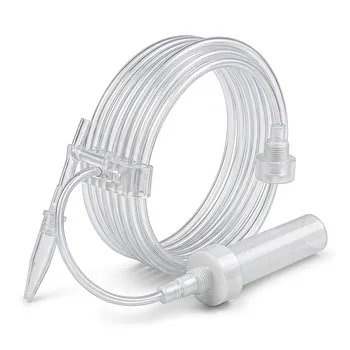
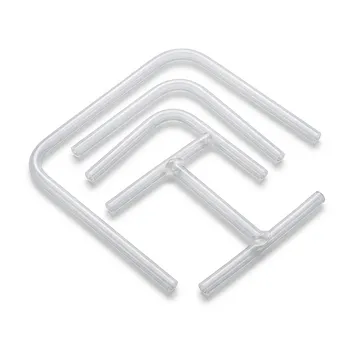
- Custom PFA Tubing 1/4 Inch High Purity Corrosion Resistant Fluoropolymer Tube with Welding and Machining Services
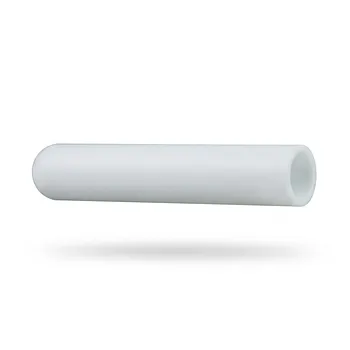
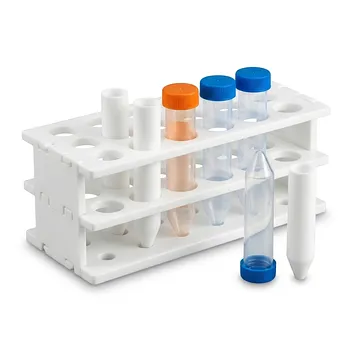
- Custom PTFE Test Tubes Corrosion Resistant Low Background Fluoropolymer Labware 50ml 30ml
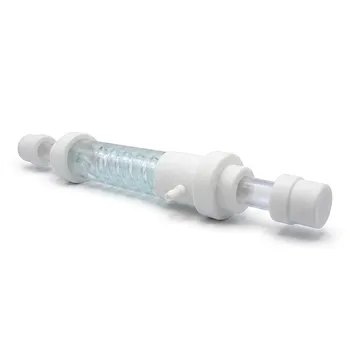
- Custom PTFE Condenser Tube 100ml Serpentine and Straight Fluoropolymer Laboratory Heat Exchanger with Flask Adapters
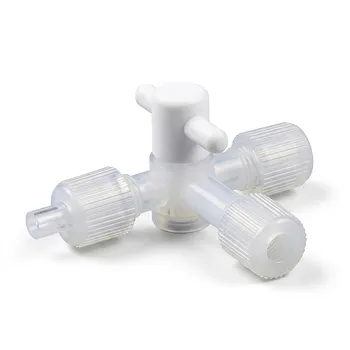
- Corrosion Resistant High Purity PFA Valve and Weldable Transparent Tubing for Semiconductor Fluid Transfer
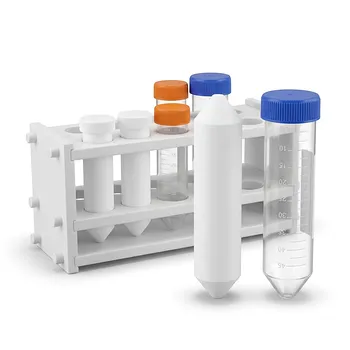
- High Purity PTFE Centrifuge Tubes for Trace Analysis Custom Laboratory Centrifugation Containers with Racks
People Also Ask
- What are the primary processing considerations when manufacturing fluoropolymer tubing? Key factors for labs & chemical processes.
- How does the incorporation of comonomers such as perfluoropropyl vinyl ether (PPVE) alter the molecular structure and processing characteristics of TFE-based fluoropolymers like PFA compared to standard PTFE?
- What are the key properties of PFA (PerFluoroAlkoxy)? A Guide to Extreme Chemical and Thermal Resistance
- Why is the chemical stability of polymer endgroups critical when selecting melt-processible fluoropolymers like PFA for high-purity laboratory apparatus? Choose Stable Endgroups for Reliable Performance
- How do the mechanical properties of PFA compare to FEP and PTFE? PFA's Superior Flex Life and Toughness Explained