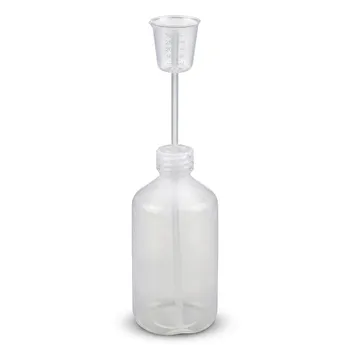
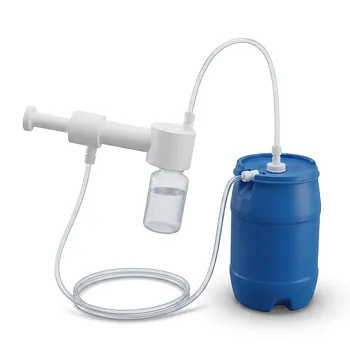
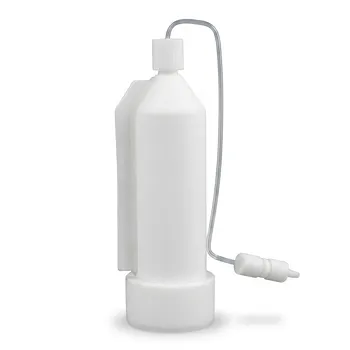
PTFE and PFA liquid-handling tools optimize phase separation by preserving chemical purity, minimizing wetting and product loss, and enabling controlled transfer of dense fluorinated and aqueous layers. Their resistance to swelling, solvent absorption, leaching, and degradation helps maintain a sharp liquid–liquid interface during extraction. This protects sensitive fluorinated intermediates from contamination or premature loss while improving recovery and repeatability across multi-step syntheses.
Core takeaway: PTFE and PFA do not change the underlying phase equilibrium; they make the separation and transfer more reliable. Their chemically inert, low-energy surfaces reduce contamination, adhesion, swelling, and interfacial disruption in fluorinated biphasic systems.
Why Phase Separation Is Difficult in Fluorinated Polymer Synthesis
Dense fluorinated layers require controlled handling
Fluorinated solvents can form a high-density phase beneath an aqueous or conventional organic layer. During settling, draining, or transfer, turbulence and residual liquid on the vessel wall can disturb the interface and carry valuable intermediates into the wrong fraction.
PTFE and PFA separatory funnels, valves, tubing, and fittings provide non-wetting surfaces that reduce liquid retention and make layer transfer more predictable.
Sensitive intermediates can be lost during workup
Fluorinated reaction intermediates may be unstable, highly soluble in fluorinated media, or susceptible to contamination from trace materials. Conventional rubbers and commodity plastics can swell, absorb solvent, release additives, or lose mechanical integrity.
High-purity fluoropolymers minimize these pathways, helping the intermediate remain in the intended phase and reducing uncontrolled exposure during extraction and transfer.
Surface effects matter at the interface
Liquid–liquid extraction depends on more than solvent selection. Surface energy, wetting, vessel geometry, valve design, and transfer velocity influence whether droplets cling to equipment or become entrained in the opposite phase.
The low surface energy and hydrophobicity of PTFE and PFA limit adhesion, making it easier to drain layers cleanly and recover material from vessel walls, funnels, and tubing.
How PTFE and PFA Improve Intermediate Extraction
They prevent solvent-induced swelling
Fluorinated solvents can cause swelling or degradation in standard laboratory plastics, particularly when combined with heat or aggressive organic reagents. Dimensional changes can affect valve seals, tubing connections, and controlled flow.
PTFE and PFA retain structural integrity across demanding solvent environments, supporting consistent flow paths and reducing the risk of leaks or unexpected hold-up volumes.
They reduce contamination and leaching
Extraction workups can be sensitive to trace plasticizers, metals, corrosion products, or other extractables. Such contaminants may interfere with catalysts, affect polymerization behavior, or complicate downstream purification.
Chemically inert PTFE and PFA contact surfaces reduce the likelihood that the equipment will introduce contaminants into the fluorinated phase or the recovered intermediate.
They support cleaner layer withdrawal
Separatory tools made from PTFE or PFA can be designed with chemically resistant valves, fittings, and tubing that tolerate repeated contact with fluorinated solvents and aqueous reagents. This allows the operator to withdraw the lower or upper phase gradually rather than relying on abrupt pouring.
Controlled withdrawal reduces interfacial mixing and lowers the chance of transferring droplets of the unwanted phase with the target fraction.
They minimize product hold-up
Fluorinated intermediates and crude fluoropolymers may be viscous, sticky, or difficult to rinse from conventional surfaces. Low-adhesion fluoropolymer surfaces help the material drain, wash, and transfer more completely.
This is especially useful during repeated extraction, precipitation, filtration, and solvent-washing cycles, where small losses at each step can accumulate.
PTFE Versus PFA for Liquid-Handling Systems
PTFE is suited to custom and heavy-duty components
PTFE provides excellent chemical inertness, thermal stability, low friction, and low surface energy. Because it is not conventionally melt-processible, it is commonly compression-molded, sintered, or CNC-machined.
That makes PTFE useful for machined valve bodies, custom fittings, gaskets, transfer tools, reaction accessories, and specialized apparatus where robust construction or a custom geometry is important.
PFA is suited to complex molded fluid paths
PFA retains the chemical resistance associated with fully fluorinated polymers but is melt-processible. It can therefore be injection-molded, extruded, or heat-welded into complex components.
PFA is particularly useful for tubing, molded bottles, transparent vessels, fittings, valves, and integrated fluid-transfer assemblies where optical inspection, weldability, or intricate geometry matters.
Selection should follow the process requirement
Both materials are appropriate for aggressive fluorinated and organic solvent systems when the grade and design are suitable. The practical choice depends less on basic chemical resistance than on geometry, flexibility, visibility, fabrication method, temperature, pressure, and sealing requirements.
A transparent PFA vessel can make interface observation easier, while a machined PTFE component may be preferable for a custom high-strength or high-temperature part.
Designing the Separation and Transfer Workflow
Let the phases settle before withdrawal
The equipment cannot compensate for inadequate settling time or excessive agitation. Allowing the phases to separate fully is essential for creating a stable interface before draining either layer.
PTFE and PFA help preserve that separation during handling, but they do not eliminate emulsions or resolve poor solvent-system selection.
Use gradual, low-turbulence transfer
A controlled valve, compatible tubing, or peristaltic-style transfer arrangement can reduce mixing at the interface. The operator should adjust the withdrawal rate as the interface approaches the outlet.
Fluoropolymer surfaces help because they resist wetting and adhesion, but flow control remains a process variable that must be managed directly.
Minimize dead volume
Fittings, valves, bends, and tubing connections can retain fluorinated liquid and intermediates. A compact fluid path with smooth transitions and appropriately sized tubing reduces hold-up and cross-contamination between fractions.
PFA’s ability to form complex molded or welded fluidic assemblies can be advantageous when minimizing joints and dead legs is a priority.
Use compatible seals and ancillary materials
A PTFE or PFA flow path does not guarantee a fully compatible system if elastomeric seals, valve seats, or connectors are made from unsuitable materials. These secondary materials may swell or extract into the process stream even when the main tubing is fluoropolymer.
Every wetted component should therefore be evaluated, including seals, O-rings, valve diaphragms, connectors, and sample containers.
Understanding the Trade-offs
Fluoropolymers do not guarantee perfect separation
PTFE and PFA reduce equipment-related losses, but they do not prevent emulsions, poor density contrast, excessive agitation, or unfavorable partition coefficients. Solvent composition, temperature, mixing history, and settling time remain central to extraction performance.
The correct interpretation is that fluoropolymer tools improve reproducibility and cleanliness, not that they alter the chemistry of partitioning.
PTFE and PFA have different fabrication constraints
PTFE is difficult to form into intricate melt-molded shapes, which can increase machining requirements or limit integrated designs. PFA is easier to mold and weld, but component selection must still account for mechanical demands, temperature, pressure, and dimensional stability.
Neither material should be selected solely because it is chemically resistant.
Low adhesion can complicate some operations
Non-stick surfaces improve product recovery, but they can also make droplets move quickly or reduce the visible retention of small volumes. This may require more deliberate control of valve operation, vessel orientation, and rinse procedures.
Transparent PFA can assist visual monitoring, whereas conventional PTFE is generally less suitable when direct observation through the vessel wall is required.
Cleanability still requires a validated procedure
Chemical inertness reduces contamination risk but does not replace proper cleaning. Residual fluorinated solvents, catalysts, monomers, or polymer deposits can remain in valves, tubing, and fittings if the system contains inaccessible volumes.
Cleaning, rinsing, drying, and inspection procedures should be defined according to the intermediate’s sensitivity and the next process step.
How to Apply This to Your Project
Choose the liquid-handling configuration according to the dominant failure mode in the extraction—not simply the solvent name.
- If your primary focus is sharp phase separation: Use low-wetting PTFE or PFA separatory components and controlled, gradual withdrawal to reduce interfacial mixing and entrainment.
- If your primary focus is intermediate purity: Use high-purity fluoropolymer wetted parts and verify that seals and connectors are equally compatible to limit leaching and trace contamination.
- If your primary focus is maximum recovery: Favor smooth, low-adhesion PTFE or PFA vessels, tubing, and transfer tools, followed by validated rinsing of the complete fluid path.
- If your primary focus is visual process control: Consider transparent PFA for vessels or tubing where observing the dense fluorinated layer and interface is important.
- If your primary focus is custom or high-temperature equipment: Consider machined PTFE for robust, specialized components, while checking its fabrication and dimensional requirements.
- If your primary focus is integrated fluid handling: Consider melt-processible PFA for complex molded, extruded, or welded assemblies with minimized dead volume.
With appropriate solvent selection, settling, flow control, and compatible seals, PTFE and PFA turn fluorinated-phase extraction into a cleaner, more reproducible, and lower-loss operation.
Summary Table:
| Aspect | PTFE | PFA |
|---|---|---|
| Chemical Inertness | Excellent | Excellent |
| Fabrication | CNC machined, compression molded | Injection molded, extruded, welded |
| Transparency | Opaque | Transparent possible |
| Best For | Custom/heavy-duty components | Complex molded fluid paths |
| Limitations | Difficult to mold intricate shapes | Lower mechanical strength than PTFE |
Optimize your fluoropolymer synthesis with high-purity PTFE and PFA liquid handling tools from KINTEK. Our labware is designed to minimize contamination and maximize recovery. Contact us today to discuss your application and get a custom solution — Contact KINTEK.
Related Products
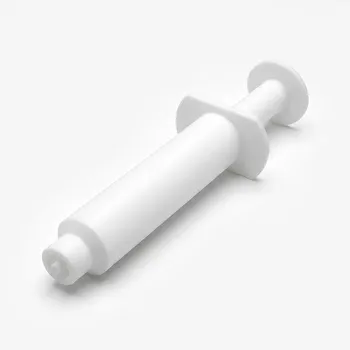
- High Purity Virgin PTFE Syringe 20ml Chemical Resistant Liquid Handling for Syringe Pumps and PFA Tubing Integration
- Corrosion Resistant PFA Bottle Top Dispenser Translucent Squeeze Liquid Extraction System for Ultra Pure Chemical Handling
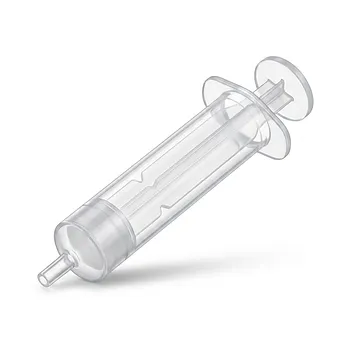
- Corrosion Resistant PFA Syringe Translucent Visual Fluoropolymer Labware 10ml Chemical Handling Tool
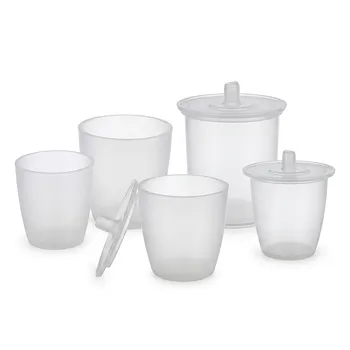
- High Purity PFA Crucible and Corrosion Resistant PTFE Beaker for Trace Analysis and Custom Laboratory Applications
- Custom PTFE Constant Pressure Separatory Funnel Corrosion Resistant Low Background Labware for PFA Flasks
People Also Ask
- In what medical devices is PTFE commonly used? Essential Components for Safety and Reliability
- What are the differences between virgin PTFE and mechanical PTFE? Select the Right Grade for Your Application
- What are the key properties of virgin PTFE? Unlock Extreme Chemical & Thermal Resistance
- What approvals does virgin PTFE have for use in food and pharmaceutical industries? FDA-Approved for Ultimate Purity & Safety
- What is the difference between virgin PTFE, reprocessed PTFE, and PTFE micropowders? Learn why virgin PTFE is critical for trace analysis laboratory supplies.