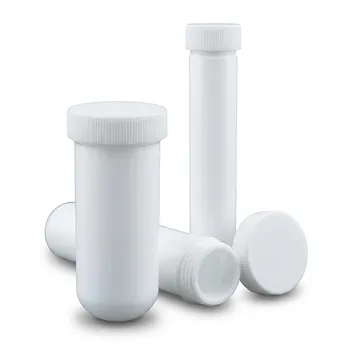
Virgin PTFE is the highest-purity and most consistent option for critical laboratory use. Virgin PTFE is manufactured from resin that has not previously undergone recycling or degradation, while reprocessed PTFE is recovered from previously sintered PTFE waste and mechanically or chemically treated for reuse. PTFE micropowders are intentionally reduced in molecular weight—often through thermal degradation or high-energy radiation—so they function primarily as low-friction additives rather than as a direct substitute for high-performance virgin PTFE labware.
For trace analysis, virgin PTFE minimizes contamination risk, extractable impurities, and variation in mechanical performance. Reprocessed PTFE and PTFE micropowders can be useful in less demanding applications, but their prior processing makes them unsuitable where analytical blanks, trace-element control, and structural reliability are critical.
How the Three PTFE Grades Differ
Virgin PTFE
Virgin PTFE is produced from new, unprocessed PTFE resin. It has not previously been used, recycled, thermally degraded, or exposed to unknown process contaminants.
The resin maintains PTFE’s highest practical molecular weight, chemical inertness, thermal stability, electrical insulation, and mechanical consistency. Finished laboratory components may still be molded, sintered, skived, or machined; “virgin” describes the resin history, not the absence of all manufacturing operations.
Reprocessed PTFE
Reprocessed PTFE—often called repro-PTFE or mechanical-grade PTFE—is made from previously processed PTFE scrap, such as sintered waste, machining remnants, or off-specification material.
The material may be cleaned, milled, chemically treated, thermally processed, and formed again. These steps can reduce molecular weight and introduce greater variation in purity, density, appearance, and mechanical performance.
Reprocessed PTFE is often suitable for less demanding mechanical applications, where lower cost is more important than maximum purity or consistency.
PTFE Micropowders
PTFE micropowders are not simply finely ground virgin PTFE. They are generally produced by reducing the molecular weight of PTFE, commonly through thermal degradation at elevated temperatures or high-energy radiation such as electron-beam treatment.
The resulting fine powder is designed to disperse into other materials. Its primary uses include friction-reducing additives in lubricants, plastics, coatings, and surface treatments.
Because its molecular structure and processing history differ from those of high-molecular-weight molding resin, PTFE micropowder should not automatically be treated as an equivalent feedstock for precision laboratory components.
Why Processing History Matters
Molecular Weight Affects Mechanical Strength
Repeated thermal exposure and other reprocessing steps can reduce PTFE molecular weight. This generally leads to lower tensile strength, elongation, impact resistance, and toughness.
The difference matters when a vessel, tube, fitting, or valve must withstand clamping, pressure, thermal cycling, machining stresses, or repeated chemical exposure.
Purity Is More Than Chemical Inertness
PTFE itself is highly chemically resistant, but a component’s total contamination profile also depends on its raw material and manufacturing history.
Reprocessed feedstock may carry residual inorganic or organic contaminants, processing residues, lubricants, or material from previous applications. Cleaning can reduce these risks, but it does not provide the same level of source control as new resin with a documented specification.
Material Consistency Supports Reliable Fabrication
Virgin PTFE provides more predictable behavior during molding, sintering, machining, sealing, and thermal use. Reprocessed material may show greater variation in density, surface finish, color, void content, and dimensional stability.
That variation can affect sealing surfaces, fluid dead volumes, vessel strength, and the repeatability of custom-machined parts.
Why Virgin PTFE Is Critical for Trace Analysis
It Reduces Sample Contamination Risk
Trace analysis measures extremely small concentrations. A contaminant that is insignificant in ordinary chemical handling can become a meaningful analytical blank when the target analyte is present at trace or ultratrace levels.
Virgin PTFE helps reduce the risk that the vessel or fluid path contributes trace elements, extractables, or residual process chemicals to the sample.
It Supports Low Background and Reproducible Blanks
Trace workflows depend on low and stable background signals. If the material releases variable contaminants from one component or batch to another, the laboratory may see elevated or inconsistent blanks.
Virgin PTFE does not guarantee zero contamination. Proper cleaning, handling, storage, and supplier qualification remain necessary, but virgin material provides the strongest starting point for controlling the material contribution.
It Maintains Structural Integrity Under Aggressive Conditions
Trace analysis supplies may be exposed to strong acids, oxidizing digestion mixtures, elevated temperatures, vacuum, pressure, or repeated thermal cycling.
Virgin PTFE’s higher molecular weight and more consistent physical properties help preserve vessel walls, threads, seals, fittings, and fluid-contact surfaces under these conditions.
It Is Better Suited to Precision Components
Applications such as trace analysis vessels, digestion tubes, fluid-transfer fittings, valves, and custom CNC-machined parts require more than chemical resistance alone.
They also require predictable tolerances, reliable sealing, low particle generation, and resistance to mechanical failure. Virgin PTFE is the appropriate baseline when both purity and performance are critical.
How the Materials Are Commonly Distinguished
Thermal Behavior
Reported evaluations commonly show a higher melting transition for virgin PTFE—approximately 342 °C—than for some reprocessed PTFE grades, which may be around 327 °C because of prior thermal history and reduced molecular weight.
These values should be treated as indicative rather than universal specifications. The exact result depends on resin history, processing, testing method, and grade.
Mechanical Testing
Tensile strength, elongation at break, impact resistance, and dimensional behavior can reveal meaningful differences between virgin and reprocessed material.
Laboratories should rely on documented supplier data and appropriate testing rather than visual inspection alone, particularly when qualifying material for regulated or trace-level work.
Appearance and Density
Reprocessed PTFE may show off-white discoloration, nonuniform surfaces, density variation, or small defects. These observations can indicate material history, but appearance cannot prove purity.
A visually clean component may still contain trace contaminants, while an off-white component is not automatically unsuitable. Certification and analytical verification are more reliable than appearance.
Understanding the Trade-offs
Reprocessed PTFE Costs Less
The main advantage of repro-PTFE is economic. It can provide useful PTFE-like chemical and friction performance for non-critical parts, industrial components, wear elements, and applications with generous safety margins.
The trade-off is reduced assurance regarding purity, consistency, mechanical properties, and traceability.
Virgin PTFE Does Not Eliminate Every Contamination Source
Virgin resin can still become contaminated during compounding, molding, sintering, machining, cleaning, packaging, or handling.
For trace analysis, specify the complete material and manufacturing requirements—not only “virgin PTFE.” Consider material certificates, lot traceability, cleaning procedures, packaging controls, extractables or leachables data, and blank testing where appropriate.
“Recycled,” “Reprocessed,” and “Micropowder” Are Not Interchangeable
Terminology varies among suppliers. Some distinguish physically recycled scrap from chemically or thermally reprocessed PTFE, while others use “recycled” broadly.
The buyer should request the resin history, processing route, intended grade, additives, and contamination-control documentation rather than relying on the label alone.
Micropowder Is Not a General-Purpose Replacement
PTFE micropowders are optimized for dispersion and friction modification. They may not provide the molecular weight, consolidation behavior, purity controls, or structural properties required for laboratory vessels and pressure-bearing components.
Using micropowder or an unspecified recycled grade in a critical part can create both analytical and mechanical risks.
Making the Right Choice for Your Goal
Choose the grade according to the consequence of contamination, failure, and measurement uncertainty.
- If your primary focus is trace-element or ultratrace analysis: Specify documented virgin PTFE with lot traceability, controlled manufacturing, suitable cleaning, and verified low-background performance.
- If your primary focus is chemical resistance in a non-critical industrial part: Reprocessed PTFE may be appropriate when its mechanical and purity limitations are acceptable.
- If your primary focus is friction reduction in a coating, lubricant, or polymer compound: Use a PTFE micropowder specifically characterized for dispersion, particle size, and additive performance.
- If your primary focus is precision machining or pressure-bearing laboratory hardware: Select virgin PTFE and verify mechanical, dimensional, and thermal requirements for the finished component.
For trace analysis, virgin PTFE is not merely a premium material choice—it is a fundamental part of controlling contamination, measurement uncertainty, and component reliability.
Summary Table:
| Property | Virgin PTFE | Reprocessed PTFE | PTFE Micropowders |
|---|---|---|---|
| Source | New resin | Recycled PTFE scrap | Reduced molecular weight PTFE |
| Purity | Highest | Variable, may contain contaminants | Not designed for purity |
| Molecular Weight | High and consistent | Reduced | Very low |
| Mechanical Strength | Excellent | Lower | Poor for structural use |
| Typical Use | High-purity labware, trace analysis | Non-critical industrial parts | Additives, lubricants |
Ensure your trace analysis results are reliable with virgin PTFE labware from KINTEK. Our high-purity PTFE and PFA products are manufactured to minimize contamination, providing you with the confidence you need. From beakers to custom CNC-machined parts, we have the solution. Contact us today to discuss your specific requirements and discover how KINTEK can enhance your lab's performance. Get in touch now.
Related Products
- High Purity Virgin PTFE Square Tank Corrosion Resistant Acid Soaking Vessel Custom Fluoropolymer Industrial Cleaning Tank
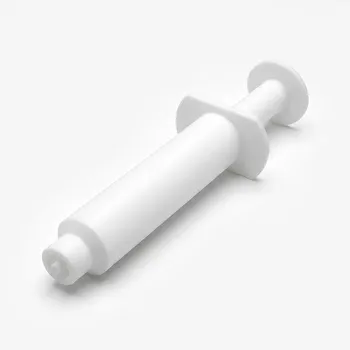
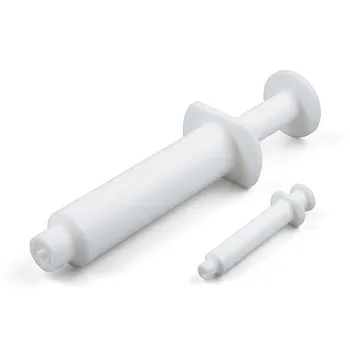
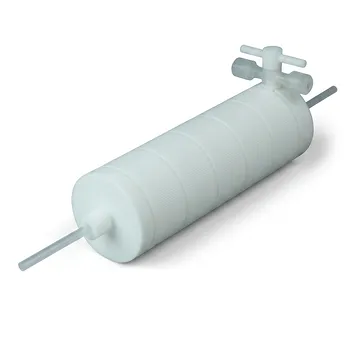
- High Purity Virgin PTFE Syringe 20ml Chemical Resistant Liquid Handling for Syringe Pumps and PFA Tubing Integration
- High Purity PTFE Syringe 20ml Virgin Fluoropolymer Syringe Pump Compatible Chemical Resistant Sample Injection Tool
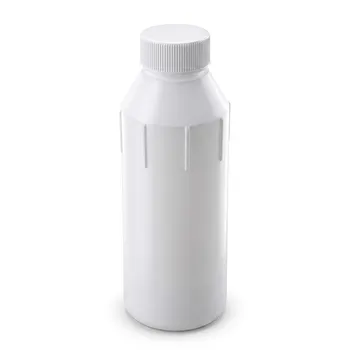
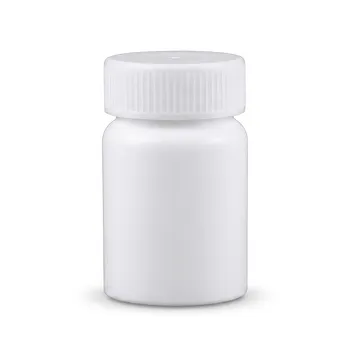
- High Purity PTFE Reagent Storage Bottle Chemical Resistant Teflon Plastic Low Background Virgin Material Vessel
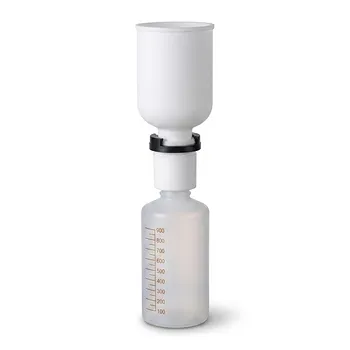
- Custom PTFE Vacuum Filter with Integrated Sieve Plate and Corrosion Resistant Particle Free Design for High Purity Water Quality Analysis
People Also Ask
- What distinguishes Virgin PTFE from Reprocessed PTFE? Choose the Right Material for Your Application
- What is the maximum continuous operating temperature for virgin PTFE, and what considerations are necessary at this temperature? Designing for High-Temp Performance
- Why is virgin PTFE particularly suitable for food and medical applications? Ensuring Purity and Safety
- How can virgin PTFE be prepared for bonding? Achieve a Permanent, High-Strength Bond
- What are the advantages of virgin PTFE for industrial applications? Unmatched Purity & Performance