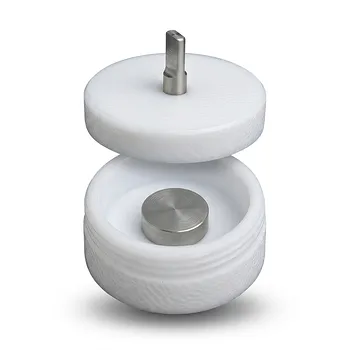
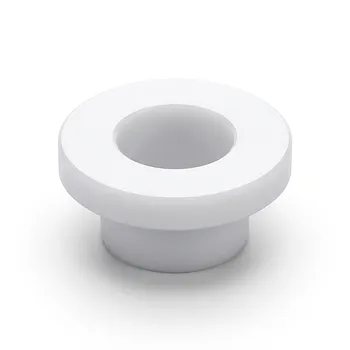
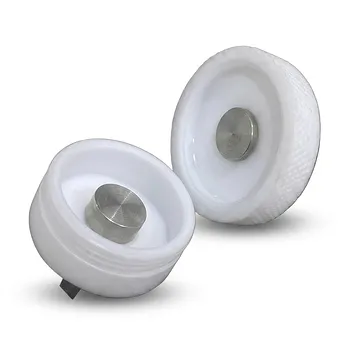
High-performance sealing gaskets are the silent sentinels of electrochemical testing. They are essential because they provide a robust physical barrier against gas crossover and external leakage while maintaining the chemical purity of the system. Beyond simple containment, these gaskets serve as precision mechanical spacers that regulate the compression of internal components, directly influencing the accuracy and repeatability of your experimental data.
Core Takeaway: High-performance gaskets ensure the safety and integrity of a single cell by preventing reactant gas leakage and chemical contamination, while simultaneously providing the mechanical precision necessary to optimize electrical contact resistance and gas transport.
Ensuring Structural and Chemical Integrity
Reliable Sealing Under Extreme Pressure Loads
Single cell test fixtures are often subjected to significant mechanical loads, sometimes reaching 4.0 kN or higher, to ensure proper assembly. High-performance gaskets are engineered to maintain an airtight seal under these conditions, preventing the dangerous external leakage of hydrogen and oxygen.
Preventing Gas Crossover and System Failure
Internal leakage, or gas crossover, can lead to localized "hot spots" and premature failure of the Membrane Electrode Assembly (MEA). By providing a reliable seal between the bipolar plates and the MEA, these gaskets ensure that reactants remain in their respective flow channels.
Preserving Catalyst Health via Chemical Inertness
Materials like Polytetrafluoroethylene (PTFE) or high-grade fluoroelastomers are chosen for their exceptional chemical stability at operating temperatures (typically 60°C and above). They do not leach pollutants or harmful substances into the system, which protects the catalyst’s lifespan and prevents performance degradation.
Optimizing Electrochemical Performance
Precise Control of GDL Compression
The thickness of the gasket is a critical variable that determines the compression rate of the Gas Diffusion Layer (GDL). Selecting a specific gasket thickness allows researchers to balance contact resistance with the stability of gas diffusion channels, ensuring pores in the carbon paper are not crushed.
Defining the Active Electrochemical Area
In high-precision testing, gaskets define the exact active area (e.g., 5 cm² or 1.43 cm²) where the electrode contacts the electrolyte. This consistency is fundamental for accurately calculating specific capacitance and other area-normalized performance metrics.
Protecting the Proton Exchange Membrane
Excessive local pressure can physically damage the thin, fragile proton exchange membrane. High-performance gaskets help distribute mechanical loads evenly across the cell, preventing structural failure while maintaining enough pressure for efficient electron and heat transfer.
Understanding the Trade-offs
The Risk of Improper Thickness Selection
If a gasket is too thick, the resulting insufficient compression leads to high contact resistance and poor electrical performance. Conversely, a gasket that is too thin causes over-compression, which closes the pores in the GDL and increases mass transport resistance.
Material Limitations and Cold Flow
While PTFE is prized for its chemical inertness, it is susceptible to "cold flow" or mechanical creep under sustained high pressure. Researchers must account for this by using high-strength variants or specific assembly torques to ensure the seal remains stable throughout long-term testing.
How to Apply This to Your Project
Selecting the right gasket is as important as the catalyst itself for obtaining high-quality data. Consider your primary objective when choosing your sealing strategy:
- If your primary focus is baseline material characterization: Use high-purity PTFE gaskets with precise thickness tolerances to ensure that your results reflect the material's properties rather than assembly variables.
- If your primary focus is long-term durability testing: Prioritize fluoroelastomer gaskets that offer superior mechanical elasticity and resistance to compression set over hundreds of thermal cycles.
- If your primary focus is high-power density optimization: Experiment with varied gasket thicknesses to find the "sweet spot" of GDL compression that minimizes electronic resistance without choking gas transport.
By treating the sealing gasket as a precision engineering component rather than a simple consumable, you ensure the integrity of your electrochemical environment and the validity of your research.
Summary Table:
| Key Benefit | Primary Function | Material Advantage |
|---|---|---|
| Leak Prevention | Blocks gas crossover and external hydrogen/oxygen leakage | High-purity PTFE/Fluoroelastomer stability |
| GDL Optimization | Regulates compression to balance contact resistance and gas flow | Precise thickness tolerances |
| Chemical Purity | Prevents catalyst poisoning and system contamination | Exceptional chemical inertness |
| Structural Safety | Evenly distributes 4.0 kN+ loads to protect fragile membranes | High-strength mechanical durability |
Elevate Your Electrochemical Research with KINTEK
Precision in the lab starts with the highest quality materials. KINTEK specializes in manufacturing high-performance fluoropolymer solutions tailored for rigorous testing environments. Whether you need standard labware like PTFE beakers and reagent bottles or advanced reaction apparatus such as custom electrochemical cells and battery testing fixtures, we deliver the chemical purity and mechanical precision your data demands.
Our expertise extends from essential consumables—including gaskets, O-rings, and high-purity tubing—to complex, custom CNC-fabricated components designed for non-standard laboratory setups. By choosing KINTEK, you gain a partner dedicated to high-performance PTFE and PFA materials that ensure system integrity and repeatable results.
Ready to optimize your test fixture performance? Contact our engineering team today to discuss your custom fabrication needs or to secure high-volume orders of precision-engineered laboratory supplies.
References
- Genevieve C. Moss, Rhiyaad Mohamed. Perchlorate Fusion–Hydrothermal Synthesis of Nano‐Crystalline IrO <sub>2</sub> : Leveraging Stability and Oxygen Evolution Activity. DOI: 10.1002/smll.202412237
This article is also based on technical information from Kintek Knowledge Base .
Related Products
- Acid Resistant PTFE Button Cell Battery Test Fixture Customizable Machining High Purity Electrochemical Testing Clamp
- Custom PTFE Insulating Gaskets Corrosion Resistant Teflon Seals Tailored Engineering Plastic Components
- Custom PTFE Insulating Gaskets and Corrosion Resistant Fluoropolymer Seals for Industrial Electrical Applications
- Customizable High Temperature Resistant Anti Static PTFE Insulating Gaskets Flame Retardant Corrosion Proof Industrial Seals
- Corrosion Resistant PTFE Coin Cell Battery Testing Clamps and Acid Proof Custom Fluoropolymer Battery Fixtures
People Also Ask
- How does the chemical inertness of PTFE benefit laboratory-scale battery testing? Ensure high-purity research results.
- In what ways do PTFE battery testing fixtures enhance laboratory throughput and reliability? Maximize Research Efficiency
- In what industrial manufacturing contexts are PTFE battery clamps or fixtures utilized? Optimize Battery Production.
- What is the thermal operating range for PTFE battery clamps in electrochemical research? Stability from -200°C to +260°C
- What are the primary functions and material compositions of PTFE battery clamps? Ensure Precision & Chemical Resistance