PTFE-based industrial gaskets are primarily configured as sheet gaskets, envelope gaskets, spiral-wound gaskets, and constant-seating-stress gaskets. These designs are engineered to leverage PTFE’s exceptional chemical inertness while addressing its inherent mechanical limitations, such as its tendency to "creep" or "cold flow" under pressure.
The optimal PTFE gasket configuration is determined by the balance between chemical compatibility and mechanical stability. While virgin PTFE offers the highest purity, structural enhancements like expanded fibers, fillers, or metallic carriers are often required to maintain a seal in high-pressure or fluctuating temperature environments.
Material-Based Sheet Configurations
Virgin PTFE Gaskets
These are fabricated from 100% pure PTFE resin without any additives. They are the standard choice for general-purpose applications where maximum chemical resistance and high purity are required, such as in food and pharmaceutical processing.
Filled PTFE Gaskets
To improve mechanical properties, PTFE is often blended with fillers like glass, carbon, or graphite. These additives reduce cold flow, increase wear resistance, and improve thermal conductivity, making them suitable for more demanding mechanical loads.
Expanded PTFE (ePTFE) Gaskets
Expanded PTFE features a unique multidirectional fibrous structure that provides superior conformability. This design is ideal for sealing irregular or fragile flanges, as it requires lower bolt torque to create a tight seal compared to rigid sheets.
Hybrid and Composite Structures
Envelope Gaskets
This configuration consists of a PTFE outer sheath (the envelope) wrapped around a resilient core material, such as synthetic rubber or non-asbestos fiber. The PTFE protects the core from chemical attack, while the core provides the elasticity and "spring-back" that pure PTFE lacks.
Spiral-Wound Gaskets
In this design, PTFE is utilized as a soft filler material sandwiched between V-shaped metallic windings. The metal provides structural integrity and high-pressure resistance, while the PTFE filler ensures a gas-tight seal against corrosive media.
Constant-Seating-Stress Gaskets
These advanced gaskets house an ePTFE sealing element within a rigid metal carrier. The carrier prevents the PTFE from over-compressing or extruding, ensuring that uniform seating stress is maintained even during thermal cycling or pressure surges.
Dimensional and Industry Standards
Nominal Sizing and Pressure Ratings
Standard configurations are manufactured to meet global specifications such as ASME B16.20, EN1514-1, and DIN2690. They are available in nominal sizes ranging from DN15 to DN2000 and can accommodate pressure ratings from PN2.5 up to PN100.
Specialized Geometries
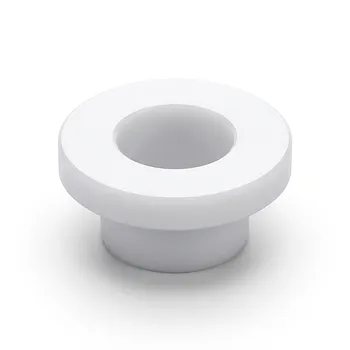
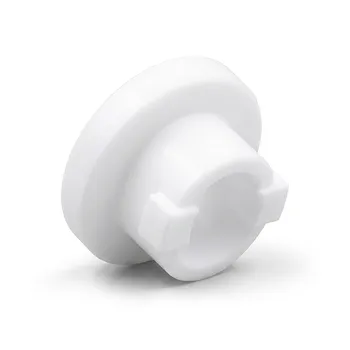
Beyond standard rings, PTFE gaskets are produced in specialized structures like Reedy types or custom-fabricated shapes. Manufacturers can water-jet or die-cut these materials into complex geometries to fit specific pump housings, reactors, or valves.
Understanding the Trade-offs
The Challenge of Cold Flow
Solid PTFE (virgin or filled) is susceptible to creep, where the material physically moves away from the sealing surface over time. If the flange is not regularly re-torqued, this can lead to a loss of seal integrity and eventual leakage.
Elastic Recovery Limitations
Unlike elastomeric gaskets, PTFE has low memory and does not naturally return to its original shape after compression. This makes simple PTFE sheets less effective in applications with high vibration or frequent thermal cycling unless a hybrid design like a spiral-wound or envelope gasket is used.
Cost vs. Performance Longevity
While virgin PTFE is cost-effective for static, low-pressure applications, it often fails in dynamic environments. Investing in expanded PTFE or constant-seating-stress designs increases upfront costs but significantly reduces long-term maintenance by preventing blowouts and fugitive emissions.
Selecting the Configuration for Your Application
How to Apply This to Your Project
Choosing the right design requires matching the gasket's mechanical structure to your system's operational stress.
- If your primary focus is maximum chemical purity: Use Virgin PTFE gaskets to ensure no contaminants leach into the process media.
- If your primary focus is sealing uneven or glass-lined flanges: Use Expanded PTFE (ePTFE) because its high conformability fills surface irregularities without damaging fragile equipment.
- If your primary focus is high-pressure chemical processing: Use Spiral-wound gaskets with PTFE filler to combine metallic strength with chemical resistance.
- If your primary focus is preventing cold flow in standard flanges: Use Filled PTFE or Constant-seating-stress gaskets to maintain structural stability under load.
By aligning the specific configuration of PTFE with the mechanical demands of your hardware, you ensure a safe, long-lasting, and leak-free industrial seal.
Summary Table:
| Gasket Configuration | Key Material Feature | Primary Advantage / Application |
|---|---|---|
| Virgin PTFE | 100% Pure Resin | Maximum purity for food and pharmaceutical use. |
| Filled PTFE | Glass, Carbon, or Graphite additives | Reduced cold flow and increased wear resistance. |
| Expanded (ePTFE) | Multidirectional fibrous structure | Highly conformable for fragile or irregular flanges. |
| Envelope Gaskets | PTFE sheath with resilient core | Combines chemical resistance with elastic recovery. |
| Spiral-Wound | Metallic windings with PTFE filler | High-pressure resistance for corrosive media. |
| Constant-Seating-Stress | ePTFE element in metal carrier | Maintains seal integrity during thermal cycling. |
Elevate Your Lab Performance with KINTEK’s Fluoropolymer Expertise
Need high-performance sealing or custom-engineered components? KINTEK specializes in the absolute focus on high-performance fluoropolymer materials, providing everything your laboratory needs to maintain a leak-free and chemically inert environment.
From everyday basic labware (beakers, crucibles, reagent bottles, and digestion tubes) to high-purity trace analysis instruments and cleaning tanks, we cover the full spectrum of your needs. Our capabilities extend to comprehensive fluid transfer components (tubing, valves), sample prep tools (filters, pipettes, tweezers), and advanced reaction apparatus like custom electrochemical cells, battery testing fixtures, and microwave digestion vessels.
Backed by end-to-end custom CNC fabrication, KINTEK can deliver absolutely everything from complex non-standard machined parts to high-volume orders. Ensure your project’s success with the durability of PTFE and PFA.
Contact KINTEK today to discuss your custom project or high-volume needs!
Related Products
- Custom PTFE Insulating Gaskets and Corrosion Resistant Fluoropolymer Seals for Industrial Electrical Applications
- Customizable High Temperature Resistant Anti Static PTFE Insulating Gaskets Flame Retardant Corrosion Proof Industrial Seals
- Custom PTFE Insulating Gaskets Corrosion Resistant Teflon Seals Tailored Engineering Plastic Components
- High Corrosion Resistant PTFE Faucet Polytetrafluoroethylene Valve for Chemical Storage Drums and Fluid Transfer Systems Customizable Industrial Grade
- Customizable PTFE Rods for Advanced Industrial Applications
People Also Ask
- What are the three primary types of PTFE available for gaskets and seals? Choose the Right Material for Your Application
- Why is PTFE an ideal material choice for sealing gaskets, valves, and fluid transfer tubing exposed to extremely aggressive chemicals? Discover Its Superior Chemical Resistance and Reliability
- How is PTFE utilized in seals and gaskets? Leverage Its Chemical & Temperature Resistance
- What are the key properties of PTFE that make it suitable for seals and gaskets? Unlock Superior Sealing Performance
- How are custom PTFE parts used in the automotive sector? Enhance Vehicle Performance & Durability