Expanded PTFE (ePTFE) is the premier solution for fragile or irregular flanges because it creates a high-integrity seal at exceptionally low bolt loads. Its unique fibrillated microstructure allows the material to conform to surface imperfections, pits, and warpage that would cause other materials to fail. By densifying into a strong, interlocking network under compression, it provides a reliable seal without requiring the mechanical force that would crack glass-lined, plastic, or ceramic components.
Core Takeaway: ePTFE bridges the gap between extreme conformability and mechanical strength. It allows operators to achieve a tight seal on delicate or damaged equipment by utilizing a nonlinear compression path that protects the hardware while resisting long-term creep.
The Mechanics of Conformability
Microstructure and Surface Adaptability
Unlike standard PTFE, ePTFE features a fibrillated microstructure created through a specialized expansion process. This results in a soft, "marshmallow-like" consistency that allows the gasket to flow into irregularities, scratches, and pits on the flange surface.
Because it is so conformable, it achieves a watertight seal at low pressure. This is critical for worn or older equipment where the sealing surfaces are no longer perfectly flat or smooth.
Low Seating Stress Requirements
Fragile flanges, such as those made of glass-lined steel, ceramic, or FRP (Fiber Reinforced Plastic), have very low torque limits. If a gasket requires high bolt loads to "seat," the flange itself may crack or deform before a seal is achieved.
ePTFE is specifically engineered to seat at very low seating stresses. This ensures the integrity of the flange is maintained while providing a level of tightness usually reserved for high-pressure metallic systems.
Structural Integrity and Longevity
Managing the Nonlinear Compression Curve
One of the most significant technical advantages of ePTFE is its nonlinear compression curve. Initially, the material is highly porous and soft, allowing it to take the shape of the flange easily.
As load is applied, the material densifies into a high-strength network. This transformation ensures that once the gasket is seated, it becomes a solid, tough barrier that can withstand internal system pressures without further deformation.
Resistance to Creep and Cold Flow
Standard virgin PTFE is notorious for "cold flow," where the material slowly squeezes out of the flange over time under pressure. ePTFE’s multidirectional strength eliminates this structural weakness.
The expanded fibers create an interlocking web that resists creep and extrusion. This means the gasket maintains its thickness and seal over long periods, even during thermal cycling or changing loads.
Chemical and Thermal Versatility
Universal Chemical Inertness
ePTFE retains the total chemical resistance of virgin PTFE, making it inert to nearly all chemicals (pH 0-14). This makes it a "universal" gasket material that simplifies inventory and prevents the risk of installing an incompatible material in a corrosive process.
Temperature and Purity Standards
The material remains stable at temperatures up to 260°C (500°F) and is UV resistant. Furthermore, it is non-toxic and hygienic, making it safe for use in food, beverage, and pharmaceutical applications where contamination must be avoided.
Understanding the Trade-offs
Cost and Pressure Limitations
While ePTFE is highly versatile, it typically carries a higher initial cost than standard PTFE or elastomeric gaskets. Its specialized manufacturing process makes it a premium product designed for specific problem-solving scenarios rather than commodity use.
In extremely high-pressure metallic flange applications, ePTFE may be overly soft compared to semi-metallic gaskets like spiral wounds. While it densifies well, it does not provide the same mechanical "spring-back" or blow-out resistance found in metal-reinforced sealing solutions at high-pressure classes.
How to Apply This to Your Project
Recommendations for Success
- If your primary focus is protecting fragile hardware: Utilize ePTFE to ensure a tight seal is achieved well below the maximum allowable bolt load of your glass or plastic flanges.
- If your primary focus is sealing damaged or pitted metal: Choose ePTFE sheets or tapes to "fill" surface defects that would otherwise require expensive flange resurfacing.
- If your primary focus is reducing maintenance in chemical processes: Implement ePTFE to eliminate leaks caused by the cold flow and creep typically associated with standard PTFE gaskets.
By choosing expanded PTFE, you ensure that even the most delicate systems remain leak-free without compromising the structural integrity of your equipment.
Summary Table:
| Feature | Technical Benefit | Ideal Application |
|---|---|---|
| Fibrillated Microstructure | Conforms to pits, scratches, and surface warpage | Worn or damaged metal flange surfaces |
| Low Seating Stress | Achieves a seal without high mechanical force | Glass-lined, plastic, and ceramic components |
| Multidirectional Strength | Resists creep, cold flow, and extrusion | Systems with thermal cycling and changing loads |
| Universal Inertness | Chemically resistant across the full pH range (0-14) | Corrosive chemical and pharmaceutical processing |
| Thermal Stability | Maintains integrity up to 260°C (500°F) | High-temperature fluid transfer and reactions |
Elevate Your Laboratory Performance with KINTEK’s Fluoropolymer Expertise
Don't let fragile hardware or irregular seals compromise your critical research and production. KINTEK specializes in high-performance fluoropolymer solutions, offering an exhaustive range of laboratory supplies crafted from premium PTFE and PFA.
Whether you require everyday essentials like beakers, crucibles, and reagent bottles, or specialized tools such as high-purity trace analysis instruments and fluid transfer components (tubing, valves, fittings), we provide the durability your lab demands. Our capabilities extend to advanced apparatus, including custom electrochemical cells, battery testing fixtures, and microwave digestion vessels.
Why choose KINTEK?
- Custom Fabrication: We offer end-to-end custom CNC machining for complex, non-standard parts tailored to your unique specifications.
- Total Solutions: From general consumables like O-rings and stirring bars to bespoke laboratory setups, we are your one-stop shop for fluoropolymer excellence.
- Quality Focus: Every product is engineered to withstand extreme chemical and thermal environments, ensuring maximum safety and precision.
Contact KINTEK today to discuss your custom project or high-volume needs, and let our experts help you find the perfect high-performance solution for your delicate equipment.
Related Products
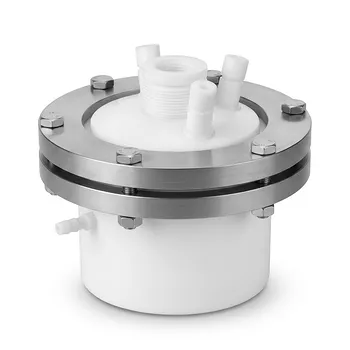
- Custom PTFE Reaction Apparatus Flange Sealed Corrosion Resistant Jacketed Vessel with Stirring Bar and Thermometer Ports
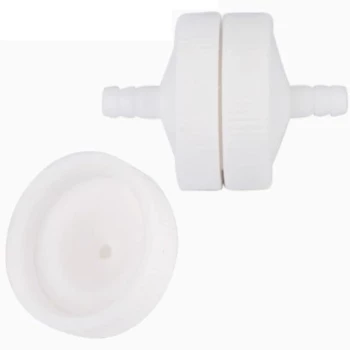
- Customizable PTFE Seals Filter Holders for Versatile Applications
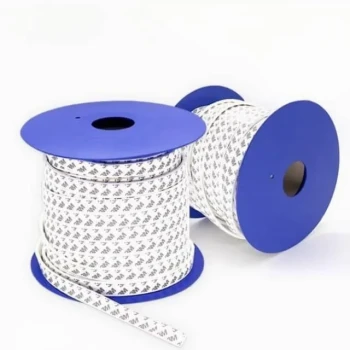
- Custom PTFE Sealing Tapes for Industrial and High Tech Applications
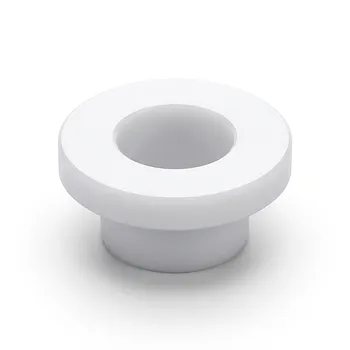
- Custom PTFE Insulating Gaskets and Corrosion Resistant Fluoropolymer Seals for Industrial Electrical Applications
- Customizable High Temperature Resistant Anti Static PTFE Insulating Gaskets Flame Retardant Corrosion Proof Industrial Seals
People Also Ask
- Why are high-purity PTFE or PFA reaction vessels recommended for the synthesis of PANI-TiC hybrid materials? - Guide
- Why are fluoroplastic (PTFE) reaction vessels recommended for Methylene Blue (MB) adsorption kinetic experiments?
- Why is a PTFE reaction vessel required for Ti3C2Tx MXene synthesis? Ensure Safe HF Etching & High Purity
- What reaction vessel and fluid handling considerations are necessary for living cationic polymerization of fluorinated monomers involving Lewis acid catalysts? Key design and safety tips
- Ion Activation Reaction Vessel Requirements: Why PTFE is Critical for Membrane Performance