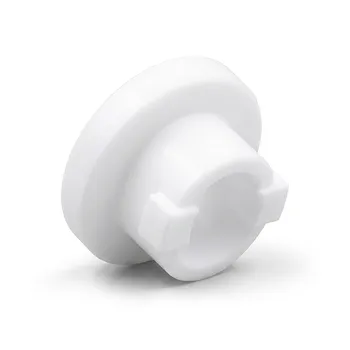
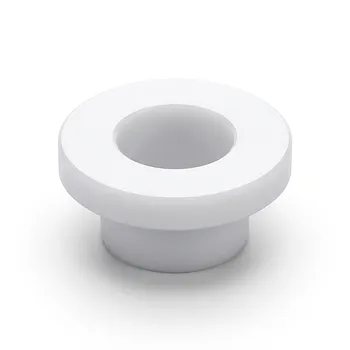
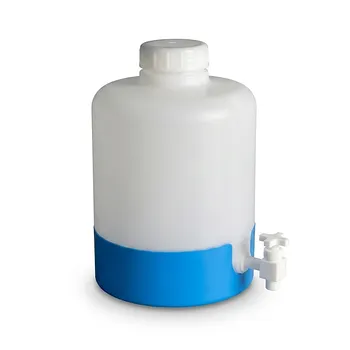
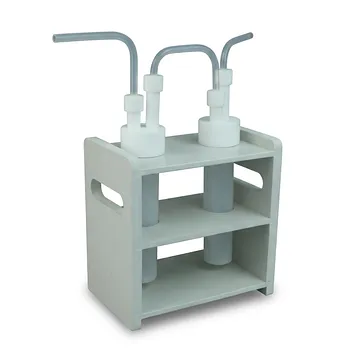
PTFE gaskets are the gold standard for chemical processing due to their near-total chemical inertness and extreme temperature resilience. These components provide a "zero-attack" seal against aggressive media, including halogens and mixed corrosive streams, while operating reliably from cryogenic temperatures up to 260°C (500°F).
PTFE (Polytetrafluoroethylene) gaskets eliminate the risk of chemical degradation and leakage in volatile environments, providing a universal sealing solution that protects equipment integrity and ensures operator safety.
Unmatched Resistance to Aggressive Media
Total Chemical Immunity
PTFE is virtually unaffected by the vast majority of industrial chemicals, including concentrated acids, alkalis, and solvents. This prevents the "chemical attack" that typically causes standard gaskets to brittle, soften, or disintegrate.
Reliability in Mixed Corrosive Streams
In complex processing environments where chemical compositions can shift, PTFE offers a "universal" safety net. It maintains a tight seal even when exposed to fluctuating reactive streams or aggressive halogens that would destroy traditional elastomers.
Preventing Environmental and Safety Incidents
The primary goal of chemical resistance is the prevention of leaks. By resisting corrosion, PTFE gaskets mitigate the risk of hazardous spills, ensuring compliance with safety regulations and preventing costly unplanned downtime.
Thermal Stability and Mechanical Adaptability
Extreme Temperature Versatility
These gaskets maintain their structural integrity across a massive thermal spectrum, from -200°C to +260°C. This allows them to transition seamlessly between cryogenic gas applications and high-heat reactive processes.
Conforming to Flange Imperfections
Variants such as expanded PTFE (ePTFE) are highly compressible and flexible. They can "flow" into surface irregularities and pits on old or damaged flanges, creating a tight seal where rigid materials would fail.
Low Bolt Torque Requirements
Unlike harder materials, ePTFE conforms to surfaces without requiring excessive bolt torque. This reduces the mechanical stress on reactor vessels and heat exchangers, preventing the warping or distortion of expensive equipment.
Enhancing Operational Efficiency
Non-Stick and Anti-Adhesion Properties
The naturally low coefficient of friction prevents materials from "baking" onto the gasket surface. This non-stick quality simplifies maintenance during turnarounds, as the gasket can be removed cleanly without scraping or damaging the flange face.
Electrical and Wear Insulation
PTFE provides excellent electrical insulation, which is critical for preventing galvanic corrosion in specific piping configurations. Its high wear and fatigue resistance ensure that the seal remains stable over long-term operational cycles.
Longevity and Reduced Total Cost
While the initial cost may be higher than rubber alternatives, the extended service life significantly reduces the frequency of gasket replacements. This longevity directly translates to lower labor costs and higher plant throughput.
Understanding the Trade-offs
The Risk of "Cold Flow" (Creep)
Standard (virgin) PTFE has a tendency to "creep" or deform under a constant load over time, which can lead to a loss of seal tightness. To mitigate this in high-pressure applications, engineers often specify filled PTFE or ePTFE, which are designed to resist this deformation.
Pressure and Temperature Interdependency
While PTFE handles high heat and high pressure independently, their combined effect can be a limitation. As temperatures approach the 260°C limit, the maximum pressure the gasket can safely contain typically decreases.
Precision in Installation
Because PTFE is a specialized material, it requires precise handling. Over-compressing a standard PTFE gasket can lead to permanent deformation, while under-compressing can result in a path for gaseous bypass.
How to Apply This to Your Project
To maximize the benefits of PTFE gaskets, you must align the material grade with your specific operational goals.
- If your primary focus is sealing damaged or fragile flanges: Utilize expanded PTFE (ePTFE) to achieve a high-quality seal with minimal bolt load.
- If your primary focus is preventing seal "creep" in high-pressure systems: Specify filled PTFE (reinforced with glass or carbon) to improve mechanical stability and reduce cold flow.
- If your primary focus is high-purity or food-grade processing: Ensure the material is FDA-compliant virgin PTFE to prevent contamination and ensure non-toxicity.
- If your primary focus is extreme cryogenic storage: Stick with unfilled virgin PTFE, which remains ductile and effective at temperatures near absolute zero.
By selecting the correct PTFE variant, you ensure a robust, long-lasting seal that stands up to the most demanding chemical environments on earth.
Summary Table:
| Advantage | Key Feature | Primary Benefit |
|---|---|---|
| Chemical Immunity | Resists acids, alkalis, and solvents | Prevents gasket degradation and hazardous leaks |
| Thermal Range | Operates from -200°C to +260°C | Reliable performance in cryogenic and high-heat tasks |
| Sealability | High compressibility (ePTFE variants) | Conforms to damaged flanges with low bolt torque |
| Maintenance | Non-stick surface properties | Easy removal during turnarounds without flange damage |
| Longevity | High wear and fatigue resistance | Reduces replacement frequency and total operational cost |
Maximize Your Lab’s Performance with KINTEK Fluoropolymer Expertise
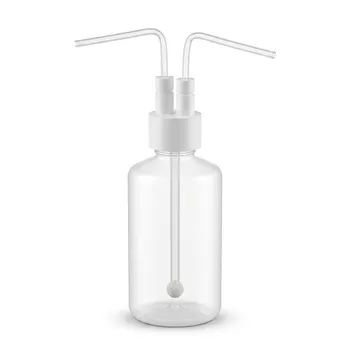
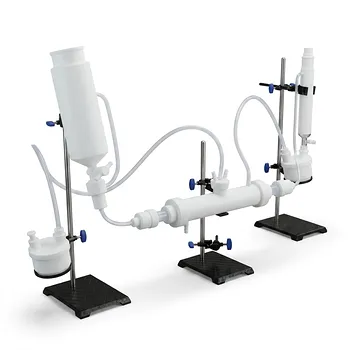
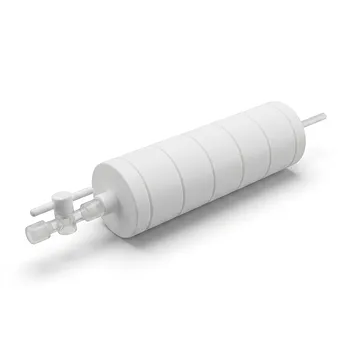
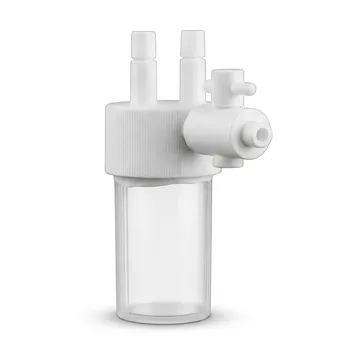
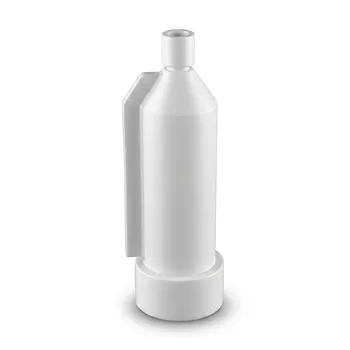
From everyday basic labware like beakers, crucibles, and reagent bottles to advanced reaction apparatus including electrochemical cells and microwave digestion vessels, KINTEK manufactures virtually all imaginable laboratory supplies crafted from high-performance PTFE and PFA.
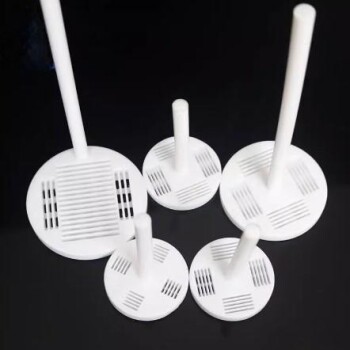
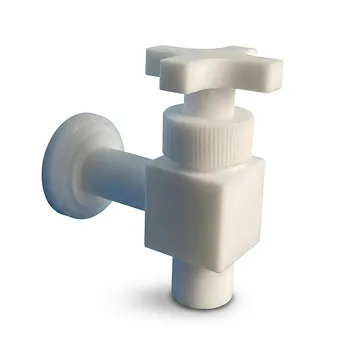
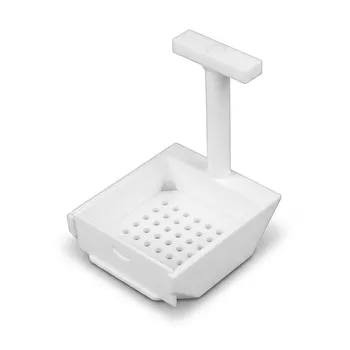
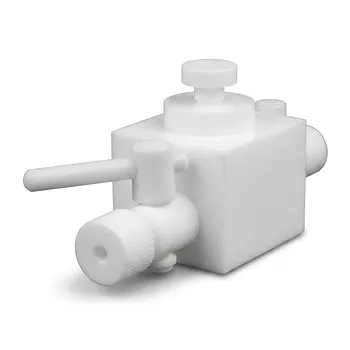
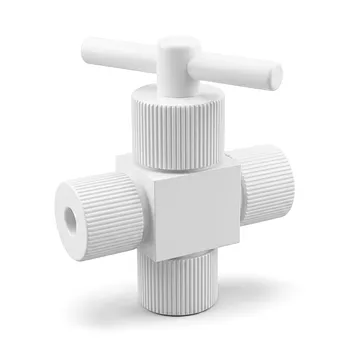
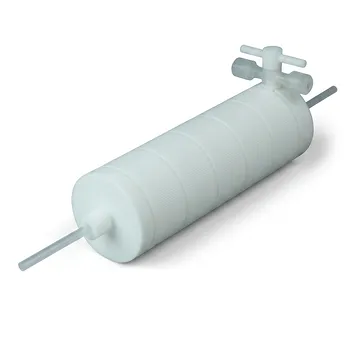
Whether you require high-volume consumables or complex, non-standard machined parts, our end-to-end custom CNC fabrication ensures every component meets your exact specifications. We provide our target customers in the chemical and research sectors with unmatched durability and chemical resistance across our entire range, including tubing, valves, filtration tools, and bespoke reactor setups.
Don't let corrosive media compromise your results. Contact KINTEK today to discuss your custom project or high-volume needs and experience the safety and efficiency of precision-engineered fluoropolymer solutions.
Related Products
- Custom PTFE Insulating Gaskets Corrosion Resistant Teflon Seals Tailored Engineering Plastic Components
- Customizable High Temperature Resistant Anti Static PTFE Insulating Gaskets Flame Retardant Corrosion Proof Industrial Seals
- Custom PTFE Insulating Gaskets and Corrosion Resistant Fluoropolymer Seals for Industrial Electrical Applications
- High Corrosion Resistant PTFE Faucet Polytetrafluoroethylene Valve for Chemical Storage Drums and Fluid Transfer Systems Customizable Industrial Grade
- Custom PTFE Acid Resistant Support Rack Multi Hole PFA Hydrogen Absorption System Bracket
People Also Ask
- How are custom PTFE parts used in the automotive sector? Enhance Vehicle Performance & Durability
- Why is PTFE an ideal material choice for sealing gaskets, valves, and fluid transfer tubing exposed to extremely aggressive chemicals? Discover Its Superior Chemical Resistance and Reliability
- How do PTFE gaskets prevent the transfer of grit into gearboxes? Create an Impermeable Barrier Against Contaminants
- What thickness options are available for PTFE gaskets? Select the Right Seal for Your Application
- What is the temperature range that PTFE gaskets can withstand? A Guide from -200°C to +260°C