All Questions
What Are The Primary Uses Of Ptfe Polymer-Plastic Ball Bearings? Ideal For Harsh & Sensitive Environments
Learn the key applications of PTFE ball bearings, from chemical processing to medical devices, where chemical resistance and self-lubrication are critical.
What Are The Common Product Forms Of Teflon? A Guide To Ptfe Sheets, Tapes, Coatings & More
Explore common Teflon (PTFE) forms like sheets, tapes, coatings, and tubing. Learn how their chemical resistance and non-stick properties solve industrial challenges.
Why Is Ptfe More Expensive Than Other Sealing Materials? Superior Performance Justifies The Cost
Explore why PTFE's extreme chemical resistance, wide temperature tolerance, and low friction make it a premium, cost-effective sealing solution for critical applications.
What Are The Different Forms Of Ptfe Used For Manufacturing Gaskets And Seals? Choose The Right Material For Your Application
Compare virgin, filled, and expanded PTFE (ePTFE) for gaskets and seals. Learn which type offers the best chemical resistance, strength, or conformability.
How Is Ptfe Processed Into Usable Shapes? From Powder To Precision Parts
Learn how PTFE is shaped without melting. Discover the unique compression, sintering, and machining process used to create seals, liners, and labware.
What Forms Can Ptfe Be Manufactured Into? Explore Versatile Shapes From Seals To Complex Parts
Discover the manufacturing versatility of PTFE: sheets, tubes, seals, bearings, coatings, and advanced forms like ePTFE and filled grades for specialized applications.
Why Is Ptfe Commonly Used As A Sealing Material? Superior Chemical & Temperature Resistance
Discover why PTFE seals are ideal for extreme conditions, offering unmatched chemical inertness, temperature resilience from -200°C to +260°C, and low friction.
Why Are Ptfe Sliding Bearings Considered Premium Products? They Are Custom-Engineered Solutions
PTFE sliding bearings are premium due to bespoke engineering for unique structural loads, not off-the-shelf parts. Learn about custom design and safety.
What Challenges Do Manufacturers Face When Designing Ptfe Sliding Bearings? Navigating Custom Engineering For Structural Safety
Explore the key challenges in PTFE sliding bearing design: late-stage project integration, severe site constraints, and the critical PTFE bonding process.
How Is Rotation Accommodated In Ptfe Sliding Bearings? Solutions For Structural Movement
Learn how PTFE sliding bearings manage rotation using elastomeric pads or mechanical bearings for bridges and buildings.
How Are Uplift Loads Addressed In Ptfe Sliding Bearings? Mechanical Anchoring Solutions Explained
Learn how T-pins and brackets are used to mechanically anchor PTFE sliding bearings against uplift forces from wind or seismic events.
How Is Lateral Movement Restricted In Ptfe Sliding Bearings? Guide Plates And Dowel Pins Explained
Learn how mechanical guides like side plates and dowel pins restrict lateral movement in PTFE bearings, ensuring precise, single-axis structural motion.
What Role Does Longitudinal Movement Play In Ptfe Sliding Bearing Design? A Key To Managing Structural Stress
Learn how PTFE sliding bearings are engineered for controlled longitudinal movement to prevent structural stress from thermal expansion in bridges and pipelines.
How Is Vertical Load Accommodated In Ptfe Sliding Bearings? Design For High Load & Movement
Learn how PTFE sliding bearings use precise load distribution and assembly design to support immense vertical weight while allowing horizontal movement.
What Design Parameters Are Specified For Ptfe Sliding Bearings? Ensure Structural Safety And Performance
Learn the key design parameters for PTFE sliding bearings, including vertical/ uplift loads, translational movement, and rotational capacity.
What Are The Primary Components Of A Ptfe Sliding Bearing? A Guide To The Low-Friction Assembly
Learn about the core components of a PTFE sliding bearing: the PTFE pad, polished stainless steel plate, and structural steel backing plates.
What Is The Best Choice For Thinner Dielectric Layers In Ptfe-Based Materials? Ceramic-Filled Composites For High-Frequency Stability
Discover why ceramic-filled PTFE is the superior choice for thin dielectric layers, offering unmatched electrical consistency and mechanical stability for high-performance circuits.
What Properties Can Ceramics Provide In Ptfe-Based Laminates? Enhance Thermal, Mechanical & Electrical Performance
Discover how ceramic fillers improve PTFE laminates' thermal conductivity, dimensional stability, CTE, and dielectric consistency for high-performance electronics.
What Are The Benefits Of Using Unreinforced Ptfe Materials? Unmatched Purity And Electrical Performance
Explore the advantages of unreinforced PTFE: superior chemical inertness, high-purity, excellent dielectric properties, and low friction for demanding applications.
When Should Glass-Reinforced Ptfe Materials Be Avoided? Critical Insights For Mmwave Applications
Learn why glass-reinforced PTFE causes signal distortion above 30 GHz and discover alternative materials for reliable high-frequency performance.
What Additional Materials Are Used In Ptfe Laminate Materials And Why? Enhance Performance For Demanding Applications
Discover why glass fiber, ceramics, and resins are added to PTFE laminates to improve mechanical strength, thermal control, and electrical properties for high-performance PCBs.
What Are The Advantages Of Ceramic Fillers Over Glass Reinforcements? Superior Thermal & High-Frequency Performance
Discover why ceramic fillers outperform glass reinforcements in PCBs for thermal management and high-frequency signal integrity, eliminating fiber weave effects.
Why Are Ceramic-Reinforced Laminates Preferred In Rf Systems? Superior Signal Integrity & Thermal Management
Discover why ceramic-reinforced laminates are essential for high-frequency RF systems, offering unmatched dielectric stability and thermal performance.
What Are The Three Types Of Reinforcements In Ptfe-Based Materials? Choose The Right Material For Your Application
Learn about glass-reinforced, ceramic-filled, and unreinforced PTFE materials to optimize your design's mechanical, thermal, and electrical performance.
What Is The Primary Filler Used In Ptfe-Based Materials And Why? A Guide To Choosing The Right Reinforcement
Discover why PTFE requires fillers like ceramics, glass, and carbon to overcome its weaknesses and achieve specific performance goals for your application.
What Are The Two Main Types Of Additives In Ptfe-Based Materials? Reinforcements Vs. Fillers Explained
Learn the key differences between PTFE reinforcements and fillers, their materials, and how to choose the right one for your application's needs.
How Do Additives And Fillers Specialize Ptfe-Based Pcb Materials? Tailor High-Frequency Circuit Performance
Discover how additives like glass and ceramic fillers transform PTFE for enhanced rigidity, thermal management, and tailored electrical properties in PCBs.
What Are Ptfe-Based Materials Composed Of For Rf Pcb Stackups? A Guide To Engineered Composites
Learn how PTFE-based RF PCB materials are engineered composites of PTFE, ceramic fillers, and reinforcements for superior high-frequency performance.
Why Is Ptfe Considered Important In Rf Pcb Applications? Ensure Superior Signal Integrity
Discover why PTFE's low dielectric constant and loss tangent are critical for high-frequency RF PCB performance, signal integrity, and reliability.
What Is Unique About The Design Of Ptfe Bearings For Different Projects? Custom-Engineered For Your Specific Application
PTFE bearings are custom-engineered solutions tailored to unique project loads, movements, and environments. Learn how they deliver precision performance.
What Design Codes Are Used For Ptfe Structural Bearings? A Guide To Aashto, Bs:5400 & Irc:83
Learn about the key design codes (AASHTO, BS:5400, IRC:83) for PTFE structural bearings, including load, movement, and material specifications.
What Are The Typical Working Conditions For Pot-Ptfe Bearings? Key Parameters For High-Load Structural Applications
Learn the standard operating limits for POT-PTFE bearings, including temperature range, load capacity, and rotational movement for structural projects.
What Are Pot-Ptfe Bearings, And How Do They Function? Manage Massive Loads With Precision Movement
Learn how POT-PTFE bearings combine steel pots, rubber pads, and PTFE surfaces to handle extreme vertical loads with controlled rotation and sliding.
How Often Should Ptfe Sliding Bearings Be Lubricated? A 3-Year Guide To Structural Integrity
Learn why PTFE sliding bearings need lubrication every 3 years to prevent structural damage and maintain low friction as designed.
How Do Ptfe Sliding Bearings Work? Support Heavy Loads With Minimal Friction
Learn how PTFE sliding bearings support immense vertical loads while allowing horizontal movement, with design parameters and limitations explained.
What Are The Two Common Types Of Ptfe Structural Bearings? Sliding Vs. Pot Bearings Explained
Learn the differences between PTFE sliding and POT-PTFE bearings for structural engineering, including their design, applications, and load capacities.
What Temperature Range Can Ptfe Operate Within? From Cryogenic -200°C To High-Temp +260°C
Learn the practical PTFE temperature range: -200°C to +260°C. Understand performance at extremes for sealing, labware & industrial applications.
What Are The Load-Bearing Capabilities Of Ptfe Sheets? A Guide To Its Unique Strengths And Limitations
Understand PTFE sheet load-bearing (130-140 kg/cm²), its low friction, and key limitations like creep for effective engineering use.
How Does Ptfe Perform Against Stainless Steel In Terms Of Friction? Discover Unmatched Low-Friction Performance
PTFE vs. stainless steel offers an ultra-low coefficient of friction (0.03-0.04), often outperforming lubricated steel. Ideal for self-lubricating seals, bearings, and valves.
What Are The Key Properties Of Ptfe That Make It Suitable For Structural Bearings? Unlock Superior Load Support & Movement
Discover how PTFE's low friction, high compressive strength, and self-lubrication solve structural engineering challenges for bridges and buildings.
What Factors Should Be Considered When Choosing Between Ptfe And Conventional Oil Seals? Optimize Performance And Cost
Compare PTFE vs. conventional oil seals on temperature, chemical resistance, pressure, and cost to select the right seal for your application.
What Are The Key Advantages Of Ptfe Oil Seals Over Conventional Oil Seals? Superior Performance For Extreme Conditions
Discover the key advantages of PTFE oil seals: superior chemical resistance, high-pressure tolerance, low friction, and extended service life for demanding applications.
In Which Industries Are Ptfe Oil Seals Commonly Used? Ensuring Reliability In Extreme Conditions
PTFE oil seals are critical in aerospace, automotive, chemical, pharmaceutical, and heavy industry for extreme temperature, chemical, and pressure resistance.
What Is The Pressure Resistance Capability Of Ptfe Oil Seals Compared To Conventional Oil Seals? Discover The High-Performance Advantage
PTFE oil seals withstand 1-3 MPa, far exceeding conventional seals. Learn why their chemical & heat resistance makes them ideal for demanding applications.
How Do Ptfe Oil Seals And Conventional Oil Seals Differ In Terms Of Lubrication Requirements? Unlock Superior Performance
Discover the key differences between PTFE and conventional oil seals. Learn how PTFE's low-friction design enables operation with minimal lubrication for greater reliability.
What Are The Differences In Service Life Between Ptfe Oil Seals And Conventional Oil Seals? Achieve Superior Durability In Harsh Environments
PTFE oil seals offer significantly longer service life than conventional seals due to superior heat, chemical, and wear resistance. Learn the key differences.
How Does The Friction Performance Of Ptfe Oil Seals Compare To Conventional Oil Seals? Boost Efficiency & Durability
PTFE oil seals offer ultra-low friction (0.02) vs. conventional seals, reducing energy loss, heat, and wear for demanding applications.
What Is The Temperature Range For Ptfe Oil Seals And Conventional Oil Seals? A Guide To Extreme Vs. Standard Performance
PTFE oil seals operate from -200°C to +300°C, while conventional seals are limited to -40°C to +120°C. Learn which is right for your application.
How Does The Chemical Stability Of Ptfe Oil Seals Compare To Conventional Oil Seals? Superior Performance In Harsh Environments
Learn why PTFE oil seals offer superior chemical resistance, temperature tolerance, and pressure handling compared to conventional seals for demanding applications.
What Are The Main Materials Used In Conventional Oil Seals And Ptfe Oil Seals? Choose The Right Seal For Your Application
Compare Nitrile Rubber (NBR) vs. PTFE oil seals: key differences in temperature, chemical resistance, friction, and durability for optimal performance.
Why Are Ptfe Oil Seals Considered A Solution For 'Forbidden Sealing Areas'? Conquer Extreme Environments
Discover how PTFE seals solve sealing problems in aggressive chemical, extreme temperature, and oil-free environments where traditional seals fail.
How Does The Lifespan Of Ptfe Oil Seals Compare To Other Types? Achieve 10,000-50,000 Hours Of Reliability
PTFE oil seals last 10,000-50,000 hours, far outperforming rubber and metal seals in harsh conditions with high heat and chemicals.
What Future Advancements Are Expected For Ptfe Oil Seals? From Smart Seals To 3D Printing
Explore the future of PTFE seals: smart sensors, 3D-printed custom parts, nano-composites for strength, and sustainable materials for enhanced performance.
What Are The Limitations Of Ptfe Oil Seals, And How Are They Addressed? Overcome Material Challenges With Engineered Solutions
Explore the limitations of PTFE oil seals, including low elasticity and poor thermal conductivity, and learn how engineered solutions overcome these challenges.
How Do Ptfe Oil Seals Perform In Terms Of Cleanliness And Compliance? Ensure Purity In Critical Applications
PTFE oil seals offer superior cleanliness, FDA/USP Class VI compliance, and chemical resistance for pharmaceutical, food, and semiconductor industries.
In What Applications Are Ptfe Oil Seals Particularly Advantageous? Superior Performance In Extreme Conditions
Discover why PTFE oil seals excel in high-speed, extreme temperature, and chemical-resistant applications where traditional elastomer seals fail.
What Are The Typical Structural Designs Of Ptfe Oil Seals? A Guide To Spring-Energized, Filled, And Multi-Lip Seals
Explore the three main PTFE oil seal designs: spring-energized, filled, and multi-lip. Learn their unique benefits for extreme temperatures, chemicals, and pressure.
How Do Ptfe Oil Seals Compensate For The Material's Low Elasticity? Achieve Superior Sealing In Harsh Environments
Learn how spring-energized PTFE seals use a mechanical spring to overcome low elasticity, providing reliable sealing in extreme conditions.
What Material Properties Make Ptfe Suitable For Oil Seals? Superior Performance In Extreme Conditions
Learn why PTFE's thermal stability, chemical inertness, and low friction make it the ideal material for demanding oil seal applications.
What Are The Main Advantages Of Ptfe Oil Seals? Superior Performance In Extreme Conditions
Discover the key benefits of PTFE oil seals vs. rubber: extreme temperature resistance, chemical inertness, low friction, and a longer lifespan.
What Are The Benefits Of Ptfe Seals In Terms Of Prototyping And Production? Accelerate R&D And Ensure Elite Performance
Explore how PTFE seals offer rapid, tool-less prototyping and superior performance in harsh chemical, high-temperature, and high-pressure environments.
What Are Some Common Applications For Ptfe Rotary Seals? Sealing Solutions For Extreme Environments
Discover key applications for PTFE rotary seals in aerospace, oil & gas, food processing, and more. Learn why they excel in extreme conditions.
How Can The Bore Design Of A Ptfe Seal Be Modified For Higher Speed Or Pressure? Optimize For Extreme Conditions
Learn how to modify PTFE seal bore design with flanged or extended heel geometries to prevent rotation at high speeds and extrusion under high pressure.
What Spring Options Are Available For Ptfe Seals? A Guide To Cantilever, Canted Coil, And Helical Springs
Compare Cantilever, Canted Coil, and Helical Ribbon spring options for PTFE seals. Learn which energizer is best for your application's motion and pressure.
What Lip Style Options Are Available For High-Pressure Ptfe Seals? Choose The Right Seal For Extreme Conditions
Compare scraper vs. tapered PTFE seal lip styles for high-pressure applications. Learn how to optimize for sealing, friction, and wear resistance.
What Are The Specifications Of A High-Pressure, Low-Speed Ptfe Seal Profile? Handle 3,000 Psi With Confidence
Learn the key specs for high-pressure PTFE seals: up to 3,000 psi pressure handling, 1,000 sfpm speed limit, and the critical design trade-offs.
What Modifications Can Be Made To A Ptfe Seal To Handle Slight Shaft Runout? Compensate For Dynamic Movement
Learn how spring energizers and specialized lip designs modify PTFE seals to handle shaft runout, ensuring reliable sealing in dynamic applications.
How Can The High-Speed, Low-Pressure Ptfe Seal Profile Be Modified For Higher Pressure? Boost Seal Performance & Reliability
Learn how to modify PTFE seal profiles for higher pressure using metal bands or extended heel designs to prevent extrusion and ensure reliability.
What Are The Characteristics Of A High-Speed, Low-Pressure Ptfe Seal Profile? Maximize Performance At 5,000 Sfpm
Learn the key design traits of high-speed PTFE seals for low-pressure applications, including flexible lips, dual-lip design, and operational limits.
What Is The Temperature Range For Virgin Ptfe Seals? Withstand -328°F To 500°F
Virgin PTFE seals operate from -328°F to 500°F (-200°C to 260°C). Learn how to select the right seal for high-temp, cryogenic, and chemical applications.
What Are The Advantages Of Using Ptfe Rotary Seals Over Rubber Elastomer Seals? Superior Performance In Extreme Conditions
Discover why PTFE seals outperform rubber in extreme temperatures, high speeds, and harsh chemicals. Learn the key differences for demanding applications.
What Are The Technical Advantages Of Ptfe Slide Bearings? Achieve Maintenance-Free, Long-Lasting Structural Movement
Discover the key technical benefits of PTFE slide bearings: extremely low friction, zero maintenance, chemical inertness, and elimination of stick-slip motion.
What Are The Key Steps In Designing Ptfe Slide Bearings For A Specific Application? Achieve Optimal Performance And Reliability
Learn the essential steps for designing PTFE slide bearings, from calculating loads and temperatures to selecting the right material grade and mating surface.
What Are The Installation Methods For Ptfe Slide Bearings? Bolting, Welding & Mortar Embedment
Learn the 4 standard PTFE slide bearing installation methods: bolting, tack-welding, full welding, and mortar embedment for steel and concrete structures.
What Is The Recommended Method For Bonding Ptfe To Its Support? Achieve A Permanent, High-Strength Bond
Learn the step-by-step method for bonding PTFE, including chemical etching and epoxy selection, for a durable bond in demanding applications.
How Does Temperature Affect Ptfe Slide Bearing Performance? Ensure Reliability Under High Heat
Learn the 200°C service limit for PTFE slide bearings and how to manage heat for optimal performance in demanding applications.
What Non-Standard Options Are Available For Ptfe Slide Bearings? Customize For Temperature, Load, And Movement
Explore custom PTFE slide bearing options for extreme temperatures, high loads, complex movements, and unique installation requirements.
What Are The Standard Bearing Assembly Configurations For Ptfe Slide Bearings? Choose The Right Ptfe Bearing For Your Project
Learn about the 3 standard PTFE slide bearing configurations—bonded, recessed, and graphite—for thermal expansion and high-temperature applications.
What Are The Key Advantages Of Ptfe Slide Bearings? Achieve Maintenance-Free, High-Load Movement
Discover the core advantages of PTFE slide bearings: low friction, self-lubrication, and durability for long-term reliability in structural and industrial applications.
How Does Bearing Pressure Affect The Coefficient Of Friction In Ptfe Slide Bearings? Maximize Performance With Higher Loads
Discover why PTFE's coefficient of friction decreases under pressure. Learn the science behind this unique property for optimal bearing design.
What Materials Are Used In Ptfe Slide Bearing Plates? Choose The Right Bearing For Your Application
Compare virgin PTFE, glass-filled PTFE, and graphite slide bearing materials for low friction, high load, or high-temperature applications.
What Are The Advantages Of Ptfe Slide Bearings Over Conventional Supports? Achieve Frictionless Movement For Durable Structures
Discover the key benefits of PTFE slide bearings: low friction, self-lubrication, and elimination of stick-slip for more economical and durable structural designs.
What Are The Main Applications Of Ptfe Slide Bearing Plates? Manage Structural Movement Safely
Learn how PTFE slide bearings accommodate thermal expansion, seismic forces, and settling in bridges, pipelines, and heavy machinery.
Describe The Ptfe Injection Molding Process And Its Optimization Strategies. Master Complex Ptfe Part Production
Learn the specialized multi-stage process for injection molding PTFE, including compounding, debinding, sintering, and key optimization strategies for high-quality parts.
What Are The Steps Involved In Ptfe Isostatic Pressing? A Guide To Uniform, Complex Parts
Learn the 3 key steps of PTFE isostatic pressing: mold filling, uniform hydrostatic pressure, and sintering for high-density, complex components.
How Is Ptfe Extrusion Molding Performed And What Are Its Applications? The Definitive Guide To High-Performance Components
Learn the specialized PTFE extrusion process for tubing, rods, and wire insulation. Achieve superior chemical resistance and thermal stability for demanding applications.
What Is The Process Flow For Ptfe Compression Molding? A 4-Step Guide To Durable Ptfe Preforms
Learn the 4 key stages of PTFE compression molding: powder filling, cold pressing, sintering, and controlled cooling for stable, machinable parts.
What Are The Primary Challenges In Molding Ptfe? Overcome High Melt Viscosity And Sintering Complexities
Learn the key PTFE molding challenges: extreme melt viscosity, sintering process control, density variations, and managing internal stresses for consistent quality.
How Do Ptfe Lip Seals Perform In Turbocharger Applications? Superior Sealing For Extreme High-Speed Environments
Discover why PTFE lip seals excel in turbochargers, offering unmatched high-speed performance, thermal stability, and low friction for long-term reliability.
What Makes Ptfe Lip Seals Suitable For Aerospace Applications? Unmatched Performance In Extreme Conditions
Discover why PTFE lip seals excel in aerospace with superior temperature resistance, low friction, and chemical inertness for critical systems.
What Other Machinable Plastics Are Used For Lip Seals Besides Ptfe? Explore High-Performance Alternatives
Learn about UHMW Polyethylene, PEEK, TPE, and PCTFE as machinable plastic alternatives to PTFE for lip seals in demanding applications.
What Are The Key Advantages Of Ptfe Lip Seals? Superior Performance In Extreme Conditions
Discover the key advantages of PTFE lip seals: extreme temperature & pressure resilience, chemical inertness, and high-speed capability for demanding applications.
What Are The Primary Applications For Ptfe Lip Seals? Reliable Sealing For Extreme Conditions
Discover where PTFE lip seals excel, from high-speed compressors and chemical pumps to aerospace systems, for unmatched reliability in demanding environments.
What Are The Manufacturing Differences Between Ptfe And Elastomer Lip Seals? A Guide To Performance And Cost
PTFE seals are machined & press-fit; elastomer seals are molded. Learn how manufacturing dictates cost, speed, and chemical resistance for your application.
How Do Ptfe Lip Seals Compare To Traditional Elastomer Lip Seals? A Guide To High-Performance Sealing
Compare PTFE vs. elastomer lip seals for extreme temperatures, speeds, and chemical resistance. Learn which seal is right for your application.
What Are The Key Properties That Make Ptfe An Effective Sealing Material? Unlock Superior Performance In Harsh Environments
Discover how PTFE's chemical inertness, extreme temperature range, and low friction create durable, reliable seals for demanding industrial applications.
What Are The General Advantages Of Using Teflon Coating In Industrial Applications? Boost Efficiency & Protect Equipment
Discover how Teflon coatings provide non-stick surfaces, chemical resistance, and thermal stability to extend equipment life and reduce industrial maintenance.
How Is Teflon Coating Utilized In Security And Detection? Enhancing Reliability In Demanding Environments
Explore how Teflon coatings ensure mechanical reliability and protect sensitive detection equipment from corrosion and wear in security applications.
What Are The Automotive Applications Of Teflon Coating? Boost Performance And Durability
Explore how Teflon (PTFE) coatings reduce friction, resist heat & corrosion in engines, chassis, brakes, and exteriors for enhanced automotive performance.
How Is Teflon Coating Applied In The Construction Industry? Enhancing Safety And Durability In Building Components
Learn how Teflon (PTFE) coatings are used in construction for electrical insulation, structural bearings, and corrosion-resistant piping systems.
Related Products
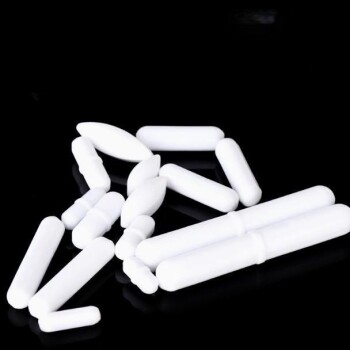
Custom PTFE Teflon Parts Manufacturer PTFE Magnetic Stirring Bar
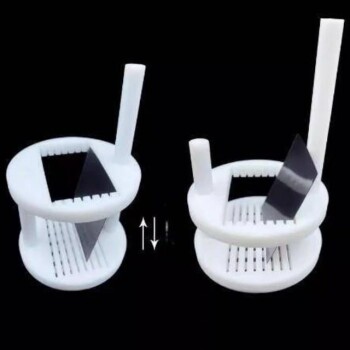
Custom PTFE Teflon Parts Manufacturer Adjustable Height Flower Basket
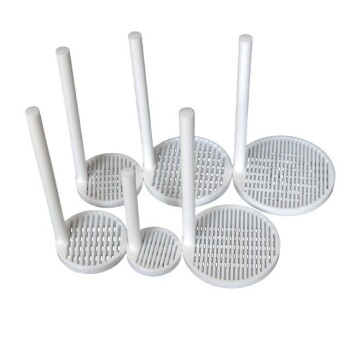
Custom PTFE Teflon Parts Manufacturer PTFE Cleaning Rack
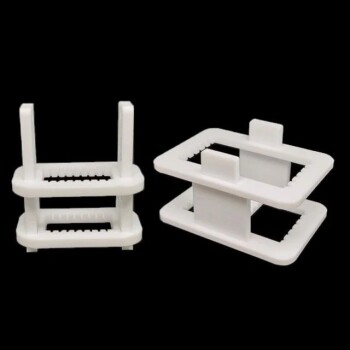
Custom PTFE Teflon Parts Manufacturer Conductive Glass Substrate Cleaning Rack
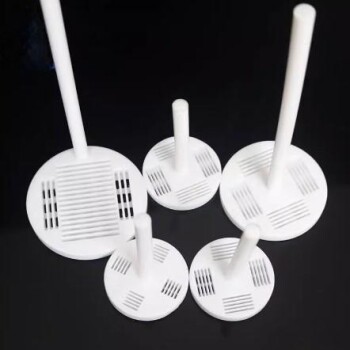
Custom Machined Molded PTFE Teflon Parts Manufacturer for Laboratory ITO FTO Conductive Glass Cleaning Flower Basket
