The standard configurations for slide bearing assemblies are primarily defined by the material, its thickness, and the operating temperature it can withstand. The three common configurations are a 3mm bonded PTFE for standard temperatures, a 5mm recessed PTFE for elevated temperatures, and a 5mm recessed graphite assembly for high-temperature industrial applications.
Choosing the right slide bearing isn't just about the material; it's about matching the specific assembly configuration—bonded, recessed, or high-temperature graphite—to your project's precise temperature and installation constraints.
Understanding the Standard Assembly Configurations
Each standard configuration is engineered for a specific performance envelope, primarily related to temperature resistance.
Bonded PTFE Assembly (Standard Temperature)
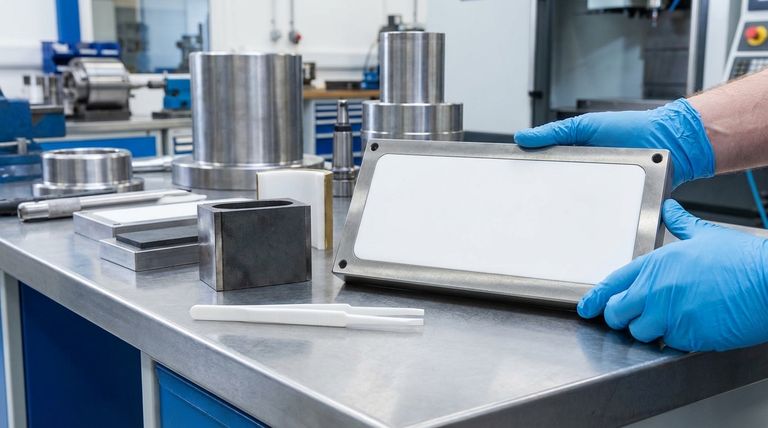
This is the most common configuration, consisting of a 3mm thick layer of PTFE bonded directly to an 8mm steel backing plate.
This assembly is suitable for continuous operating temperatures up to 130°C (266°F), making it ideal for managing thermal expansion in commercial buildings, bridges, and general steel constructions.
Recessed PTFE Assembly (Elevated Temperature)
For applications with higher heat, a 5mm thick layer of PTFE is used. Crucially, it is set into a recessed steel backing plate.
Recessing the PTFE protects its edges and provides superior stability under load at continuous temperatures up to 200°C (392°F). This is common in pipelines and industrial structures.
Recessed Graphite Assembly (High Temperature)
When temperatures exceed the limits of PTFE, graphite becomes the material of choice. This assembly uses a 5mm thick graphite insert within a recessed backing plate.
This configuration is designed for extreme heat environments, capable of withstanding temperatures from 400°C to 500°C (752°F to 932°F).
Key Installation Methods and Considerations
The bearing's backing plate is designed to accommodate several standard installation methods, making them versatile for both new construction and retrofitting.
Mechanical Fastening (Bolting)
Bearings can be supplied with pre-drilled holes for bolting directly to the support structure. This method allows for straightforward placement and potential replacement.
Welded Connections (Tack or Full)
The steel backing plate is designed to be tack-welded or fully welded into place for a permanent, integral connection with the steel structure.
Mortar Embedment
In concrete structures, the bearing assembly can be positioned and secured by embedding the backing plate in mortar, creating a solid connection with the substructure.
The Mating Surface
A complete slide bearing assembly requires a second component: a polished stainless steel plate. The PTFE or graphite pad slides against this surface to achieve a low coefficient of friction.
Understanding the Trade-offs and Limitations
While highly effective, it's critical to understand the operational limits and potential failure points of these bearings to ensure proper specification and installation.
The Risk of Material Creep
PTFE, by its nature, can "creep" or slowly deform under sustained, heavy loads. Using dimpled PTFE or recessing the material into a backing plate helps confine the material and mitigate this effect.
Protecting the Sliding Surface
The low-friction properties of the bearing are entirely dependent on a clean interface. The PTFE surface must be protected from weld spatter, paint, metal filings, and other construction debris during installation.
Rotational Constraints
Standard flat slide bearings are designed primarily for linear movement (translation). They can only accommodate very minor rotations. For structures requiring significant rotational capacity (over 5 degrees), specially designed curved or spherical bearings are required.
Selecting the Right Configuration for Your Application
Use these guidelines to match the bearing type to your project's primary goal.
- If your primary focus is general thermal expansion in standard structures: The bonded 3mm PTFE assembly is the most common and cost-effective choice.
- If your application involves elevated process temperatures from pipelines or equipment: The recessed 5mm PTFE configuration is necessary to handle heat up to 200°C.
- If you are dealing with extreme heat from industrial processes or exhausts: You must move beyond PTFE to a recessed graphite assembly for reliable performance.
- If your installation method involves extensive on-site welding: Ensure your chosen bearing is designed for this and that strict protection protocols are in place for the sliding surface.
By matching the bearing assembly to the specific thermal and structural demands of your project, you ensure long-term, maintenance-free performance.
Summary Table:
| Configuration | PTFE/Graphite Thickness | Max Operating Temperature | Key Applications |
|---|---|---|---|
| Bonded PTFE | 3mm | Up to 130°C (266°F) | Commercial buildings, bridges, general steel structures |
| Recessed PTFE | 5mm | Up to 200°C (392°F) | Pipelines, industrial structures with elevated heat |
| Recessed Graphite | 5mm | 400°C to 500°C (752°F to 932°F) | Extreme heat environments, industrial processes |
Need a Custom PTFE Slide Bearing Solution?
KINTEK specializes in manufacturing high-performance PTFE components, including seals, liners, and custom labware for the semiconductor, medical, laboratory, and industrial sectors. Our precision production ensures your slide bearings meet exact thermal and structural requirements.
Whether you need a standard configuration or a custom-fabricated solution from prototype to high-volume orders, we deliver reliability and performance.
Contact us today to discuss your project's specific needs and get a quote!
Visual Guide

Related Products
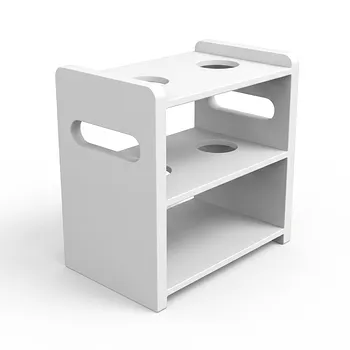
- Custom PTFE Acid Resistant Support Rack for PFA Hydrogen Absorption Systems Multi Hole Configurations
- White PTFE Electrolytic Cell with Movable Slider and Insulated Lid for Fluorine Corrosion Resistance
- High Temperature Resistant Insulating TFM Separator and Ultra Clean Laboratory PTFE Baffle Plate with Customizable Pore Size and Hole Configuration
- Customizable PTFE Heat Insulation Plate High Temperature Corrosion Resistant Laboratory Support Layered Multi Tier Stand
- Custom PTFE Sleeves and Hollow Rods for Advanced Applications
People Also Ask
- What are the benefits of integrating PTFE into piping support systems? Reduce Friction, Corrosion & Maintenance
- What structural and chemical features make PTFE and PFA laboratory equipment exceptionally resistant to harsh chemical attack and high temperatures? Discover the molecular shield of fluorine.
- What safety precautions and health considerations should be managed regarding polymer fume fever during the high-temperature use of PTFE and PFA laboratory equipment? Prevent fluoropolymer fume fever with proper thermal control and ventilation.
- How do perfluoropolymers such as PTFE and PFA compare to partially fluorinated polymers in terms of thermal stability, mechanical hardness, and chemical inertness for laboratory equipment? Discover key differences to select the right material for your lab.
- What unique material properties make fluorinated polymers like PTFE and PFA essential for high-performance laboratory equipment and chemical containment? Key advantages explained