Beyond the standard catalog, PTFE slide bearings offer a wide range of non-standard options that allow for significant engineering flexibility. The most common customizations involve specifying alternative PTFE grades, using different backing plate materials and thicknesses, designing unique shapes, and engineering for higher loads or greater movements.
The core principle to understand is that a "standard" PTFE bearing is simply a pre-engineered solution for a common problem. Nearly every component—from the sliding material to the steel plate—can be customized to solve specific and demanding structural challenges related to temperature, load, movement, or geometry.
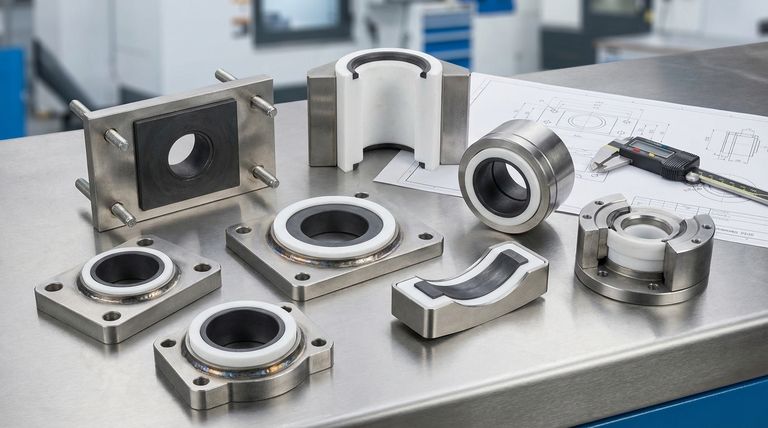
Defining the "Standard" Bearing
To understand non-standard options, we must first define the baseline. A standard configuration is designed to meet the most frequent industry needs efficiently and cost-effectively.
The Typical Configuration
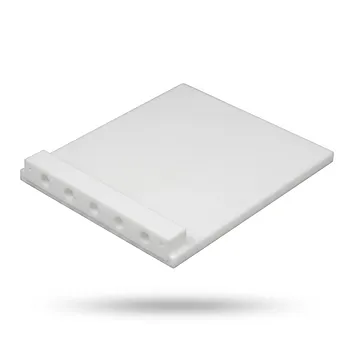
A common off-the-shelf slide bearing consists of 3mm thick PTFE bonded directly to an 8mm thick carbon steel backing plate. This design is generally suitable for service temperatures up to 130°C.
High-Temperature Standards
For higher heat environments, two other configurations are considered standard: 5mm thick PTFE recessed into a backing plate for temperatures up to 200°C, and a 5mm thick graphite insert for extreme temperatures between 400-500°C.
Key Areas for Customization
When standard options are insufficient, you can modify the bearing's design in several key ways to meet the specific demands of your project.
Modifying the Sliding Material
While pure PTFE is common, alternative grades can be specified. For extreme heat applications, graphite is a proven alternative. Other filled PTFE grades can also be used to enhance properties like compressive strength or wear resistance.
Altering the Backing Plate
The backing plate can be customized in both thickness and material. Thicker plates are specified to handle higher structural loads, while using materials like stainless steel instead of carbon steel provides superior corrosion resistance.
Accommodating Complex Geometries
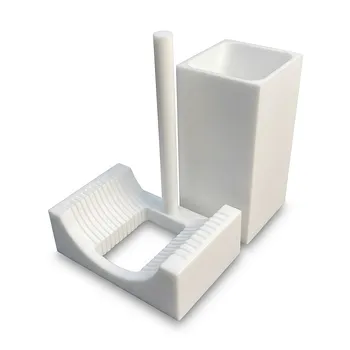
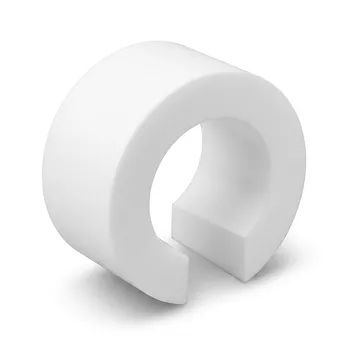
Bearings are not limited to flat, rectangular shapes. They can be fabricated into custom shapes or designed with curved surfaces to permit rotational movements that a standard flat bearing cannot accommodate. They can also serve as thermal breaks, washers, or separators.
Engineering for Higher Performance
Beyond material changes, bearings can be engineered for higher loadings or greater movement capacity. This often involves a combination of thicker PTFE, recessed designs to prevent material creep, and more robust backing plates.
Understanding the Trade-offs
Customization provides tailored solutions but also introduces important considerations that are not present with standard, off-the-shelf components.
Cost and Lead Time
Any deviation from a standard design will almost certainly increase both the cost per unit and the manufacturing lead time. This must be factored into project budgets and timelines.
Design Complexity
Specifying a non-standard bearing requires a more thorough engineering analysis to ensure it meets all performance requirements safely. This places a greater responsibility on the design team.
Installation Demands
Custom bearings may require special handling during installation. The PTFE surface is vulnerable and must be protected from weld spatter, paint, and construction debris to ensure its low-friction properties are not compromised.
Specifying for Your Installation Method
The bearing's design must be compatible with its intended installation method, which often requires customization of the backing plate.
Custom Bolting Configurations
While bolting is a common installation method, the size, location, and pattern of bolt holes can be customized to match the specific requirements of the supporting structure.
Designing for Welding
If the bearing will be permanently attached by full welding or tack welding, the backing plate material and thickness must be suitable for the specified welding procedure.
Integrating with Concrete
For applications involving concrete, the bearing can be designed for mortar embedment. This typically involves specifying a plate with welded studs or other features to ensure a robust mechanical lock into the structure.
Making the Right Choice for Your Goal
By understanding the available variables, you can specify a bearing that moves beyond a generic component and becomes an engineered solution.
- If your primary focus is extreme temperature: Look into recessed graphite or specialized high-temperature PTFE grades.
- If your primary focus is complex movement or rotation: Specify bearings with curved surfaces or custom shapes that match your structural geometry.
- If your primary focus is accommodating very high loads: Focus on specifying thicker backing plates and recessed PTFE to manage material creep.
- If your primary focus is seamless installation: Ensure the backing plate is explicitly designed for your chosen method, whether it's a unique bolt pattern, welding, or mortar embedment.
By thinking of a slide bearing as a customizable system, you can engineer a precise solution for your unique structural challenge.
Summary Table:
| Customization Area | Key Options | Primary Benefit |
|---|---|---|
| Sliding Material | Graphite, Filled PTFE Grades | Extreme Heat Resistance, Enhanced Wear/Strength |
| Backing Plate | Thicker Plates, Stainless Steel | Higher Load Capacity, Corrosion Resistance |
| Geometry | Custom Shapes, Curved Surfaces | Complex/Rotational Movements |
| Performance | Recessed Designs, Robust Engineering | Manage Creep, Greater Movement Capacity |
Need a PTFE slide bearing engineered for your specific challenge?
KINTEK specializes in custom fabricating high-performance PTFE components, including slide bearings, for the semiconductor, medical, laboratory, and industrial sectors. We can tailor the sliding material, backing plate, and geometry to solve your unique problems with temperature, load, movement, or installation.
Contact our engineering team today to discuss your project requirements—from prototype to high-volume production.
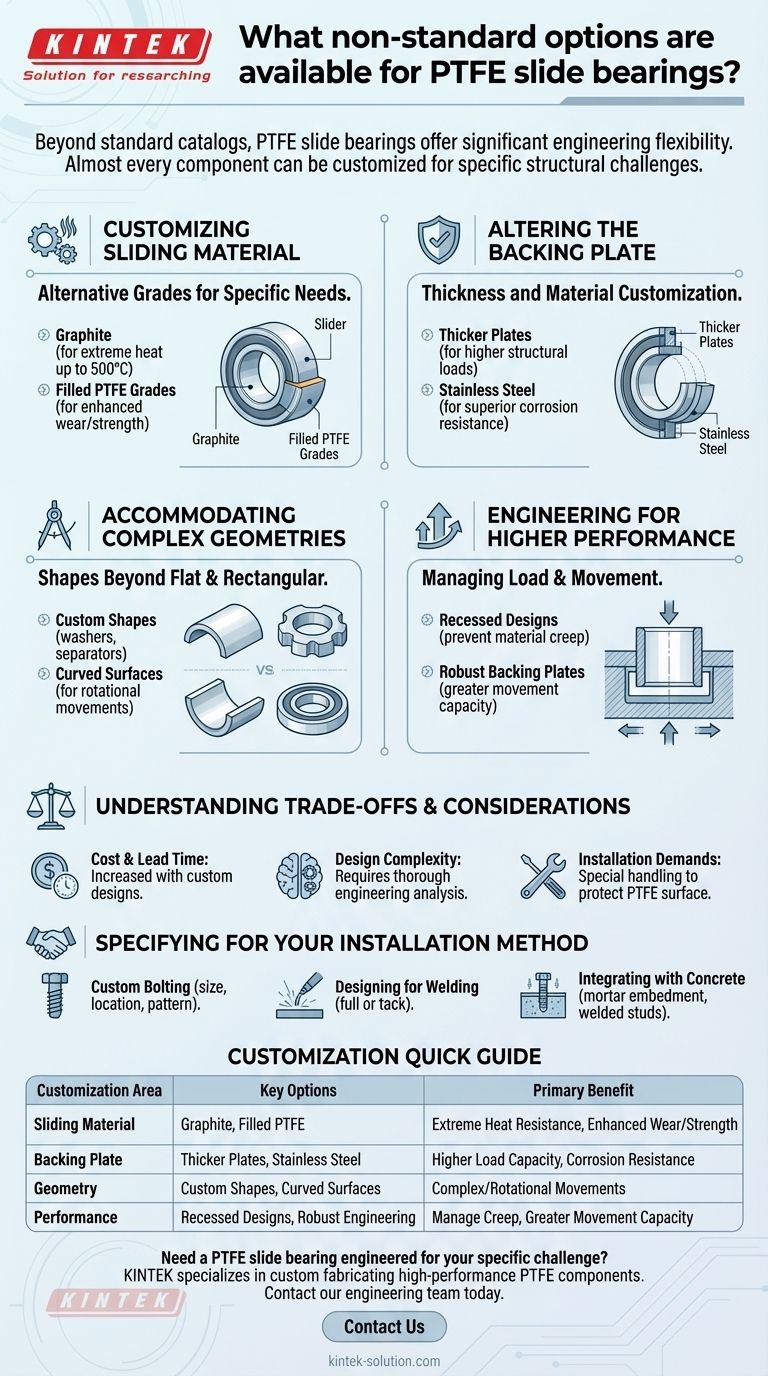
Visual Guide
Related Products
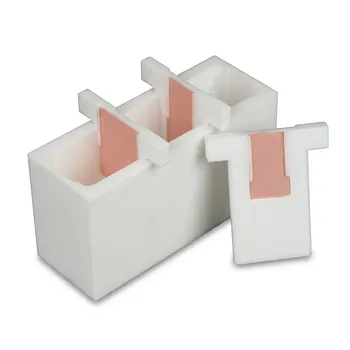
- White PTFE Electrolytic Cell with Movable Slider and Insulated Lid for Fluorine Corrosion Resistance
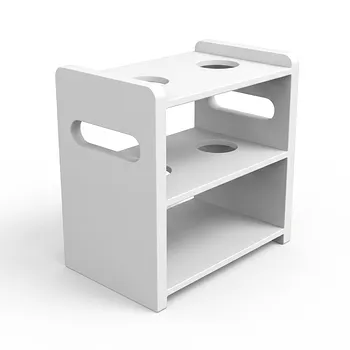
- Customizable PTFE Heat Insulation Plate High Temperature Corrosion Resistant Laboratory Support Layered Multi Tier Stand
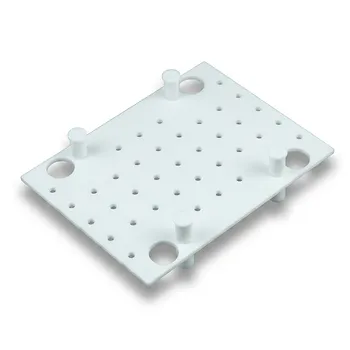
- Custom PTFE Acid Resistant Support Rack for PFA Hydrogen Absorption Systems Multi Hole Configurations
- Customizable PTFE Rods for Advanced Industrial Applications
- Custom PTFE Sleeves and Hollow Rods for Advanced Applications
People Also Ask
- What makes PTFE an ideal construction material for custom electrochemical cells and electronic analytical instrumentation housings? Discover superior chemical resistance and electrical insulation
- How do custom PTFE electrochemical cells improve the accuracy of stability testing for alkaline catalysts compared to glass cells?
- How does the hydrophobicity of PTFE benefit electrochemical measurements? Enhance Stability and Precision in Your Lab
- How are electrolytic cells utilized in the Hall-Héroult process? Optimizing Purity and Energy Efficiency
- What are the primary components required for the construction of a standard electrolytic cell? Essential Hardware Guide