All Questions
What Safety Precautions And Health Considerations Should Be Managed Regarding Polymer Fume Fever During The High-Temperature Use Of Ptfe And Pfa Laboratory Equipment? Prevent Fluoropolymer Fume Fever With Proper Thermal Control And Ventilation.
Learn key controls to prevent polymer fume fever: temperature limits, exhaust ventilation, PPE, and emergency procedures for safe PTFE/PFA use.
How Do Extreme Temperatures And Harsh Chemical Environments Affect Ptfe And Pfa Lab Apparatus? Achieve Reliable Performance In Demanding Conditions
Learn how PTFE and PFA resist extreme heat and chemicals, ensuring lab apparatus reliability. Discover key differences and selection tips.
Why Are Fully Fluorinated Polymers Such As Ptfe And Pfa Essential For Fluid Handling And Sample Containment In Halogenated Reaction Synthesis? Discover The Key To Chemical Resistance And Purity.
Learn why PTFE and PFA are critical for handling aggressive halogenated reagents, ensuring sample purity, and preventing corrosion.
What Are The Thermal Stability Limits Of Fluorocarbon Intermediates Like Hexafluoropropylene (Hfp), And Why Are These Limits Critical When Selecting Fluoropolymer Laboratory Apparatus? Understand Decomposition Thresholds And Safe Operating Ranges.
Learn HFP thermal stability limits (400-500°C, decomposition at 600°C) and why PTFE/PFA labware must operate below 260°C for safety and performance.
What Chemical Conditions Are Required For The Post-Polymerization Sulfonation Of Pfcb Aryl Ether Polymers, And How Do Ptfe And Pfa Laboratory Supplies Support These Processes?
Learn the aggressive reagents needed for PFCB sulfonation and how PTFE/PFA labware ensures safety, purity, and efficiency.
How Do The Atomic And Chemical Characteristics Of Fluorine Contribute To The Extreme Chemical Stability Of Perfluorinated Fluoropolymer Laboratory Supplies And Fluid Components? Understanding The Molecular Shield Behind Ptfe And Pfa
Learn how fluorine's unique properties make PTFE and PFA chemically stable, ensuring reliability in lab equipment and fluid components.
How Does Achieving High Iodide Chain-End Functionality (>95%) Impact Fluoropolymer Block Copolymerization? Achieve Precise Block Architectures With Superior End-Group Fidelity.
Learn how >95% iodide functionality enhances block copolymer synthesis and why PTFE/PFA fluid handling preserves reaction purity.
What Key Material Limitations Do Fluoropolymers Exhibit? Discover How They Shape Specialized Lab Component Manufacturing.
Explore fluoropolymer limitations in lab manufacturing, including melt processability, adhesion, and machining solutions.
What Inherent Physical And Chemical Properties Make Fluoropolymers Ideal For High-Performance Laboratory Equipment And Reaction Apparatus? Discover The Key To Durability & Purity
Explore the unique combination of chemical inertness, thermal stability, low friction, and non-stick surfaces that make fluoropolymers perfect for labs.
How Do Processing Requirements Differ Between Ptfe And Melt-Processible Fluoropolymers Like Pfa Or Fep? Discover Key Manufacturing Differences For High-Purity Lab Equipment.
Explore the key differences in manufacturing PTFE vs PFA/FEP, including molding, extrusion, and machining, to choose the best material for your lab equipment.
What Reaction Challenges In Multi-Step Fluoropolymer Monomer Preparation Necessitate Chemically Resistant Fluoropolymer Fluid Handling Systems And Reaction Apparatus?
Learn why PTFE/PFA systems are essential for fluoropolymer monomer synthesis, addressing contamination, corrosion, and sensitive intermediates.
How Does Thermal Cross-Linking In Multifunctional Fluoropolymer Monomers Affect Chemical Resistance And Thermal Stability, And Why Is High-Purity Fluoropolymer Labware Essential During Their Processing? Discover Key Insights For Robust Lab Practices.
Explore thermal cross-linking in TFVE monomers, its effects on chemical resistance and thermal stability, and the necessity of high-purity PTFE/PFA labware.
When Synthesizing Tfve Monomers Involving Reactive Organometallic Reagents And Aggressive Polar Solvents, What Material Performance Characteristics Are Required? Ensure Purity With Ptfe/Pfa.
Discover key material requirements for TFVE synthesis: inertness, purity, non-wetting, thermal stability, and mechanical reliability. Learn why PTFE/PFA components excel.
What Key Material Characteristics Make Ptfe And Pfa Suitable For High-Purity Laboratory Labware, Trace Analysis Containers, And Medical Microporous Tubing? Discover The Essential Properties That Ensure Purity.
Learn why PTFE and PFA excel in high-purity labware: chemical inertness, low surface energy, low extractables, and thermal stability.
How Do Thermoplastic Fluoropolymers Contribute To High-Purity Fluid Handling And Precision Laboratory Component Manufacturing? Explore Key Properties, Benefits, And Selection Tips.
Learn how PFA and PTFE ensure purity and precision in lab components. Discover key benefits and selection criteria.
What Are The Primary Functional And Temperature Differences Between Pfa And Fep When Selecting Melt-Processible Fluoropolymers For Custom Laboratory Apparatus?
Discover key differences between PFA and FEP: continuous use temperature, mechanical stability, and processing, to choose the right material for your lab apparatus.
What Is The Swelling Trend Of Pvdf In Carbonate Solvents? Choose Ptfe/Pfa For Hot Dmc Service.
PVDF swells in carbonate solvents (DMC > PC ≈ EC > DEC). For hot or aggressive carbonates, PTFE/PFA are safer for fluid handling.
How Do Different Organic Solvents Affect Pvdf Swelling And Dissolution? Choose Fluoropolymer Labware Wisely For Polar Aprotic Environments.
Learn how DMF, DMSO, NMP, and carbonates affect PVDF. Discover why PTFE/PFA are safer for aggressive solvents.
What Advantages Do Ipns Offer In Fluoropolymer Design? Achieve Durable Low-Adhesion Surfaces For Fluid Handling And Labware.
Discover how interpenetrating polymer networks enhance fluoropolymer toughness and low adhesion for reliable fluid handling and analytical labware.
How Does Fluorination Prevent Chemical Permeation In Plastic Reagent Bottles And Sample Storage Containers? Discover Key Mechanisms And Material Choices.
Learn how fluorination reduces chemical permeation in plastic containers, protecting samples and ensuring safety in storage.
What Key Material Properties Make Fluoropolymers Ideal For Critical Components Like Extreme-Temperature O-Rings, Pipe Liners, And Fuel Cell Membranes? Discover The Essential Traits For High-Performance Applications.
Explore fluoropolymers' thermal stability, chemical inertness, and durability for O-rings, pipe liners, and fuel cell membranes. Learn selection trade-offs.
How Do Fully Fluorinated Perfluoropolymers (Such As Ptfe And Pfa) Differ From Partially Fluorinated Polymers In Terms Of Laboratory Suitability? Discover Key Differences For Choosing The Right Lab Material
Learn how PTFE and PFA outperform partially fluorinated polymers in chemical resistance, thermal stability, and purity for demanding lab applications.
What Chemical And Structural Characteristics Give Ptfe Its Extreme Chemical Inertness And Thermal Resistance In Laboratory Applications? Discover The Science Behind Its Durability.
Explore why PTFE resists chemicals and heat up to 260°C, and how it ensures purity in lab equipment.
How Do Melt-Processable Fluoropolymers Like Pfa Compare To Standard Ptfe In Terms Of Processing And Suitability For High-Purity Laboratory Vessels And Fluid Transfer Components?
Discover how PFA and PTFE differ in processing and purity. PFA offers melt-processability for complex, seamless labware, while PTFE remains robust for custom machining.
How Can Post-Polymerization Side-Group Exchange Modify Fluoropolymer Surfaces? Achieve Tailored Surface Properties Without Changing Bulk Performance.
Learn how controlled side-group exchange alters wettability, surface energy, and chemical resistance while preserving bulk strength.
What Key Thermal, Optical, And Hydrophobic Characteristics Make Trifluoroethoxy-Functionalized Fluoropolymers Suitable For High-Durability Laboratory Coatings And Protective Components?
Discover the properties—low surface energy, broad thermal range, UV stability, and toughness—that make these fluoropolymers ideal for durable lab coatings.
How Do Side-Group Selection And Substitution Patterns Dictate Whether A Fluoropolymer Exhibits Semicrystalline Thermoplastic Or Solvent-Resistant Elastomeric Properties For Specialized Engineering And Lab Applications?
Learn how side-group choice and substitution pattern control fluoropolymer properties: ordered thermoplastics vs. flexible, solvent-resistant elastomers.
How Do The Low Surface Energy And Non-Stick Characteristics Of Ptfe Fluoropolymers Enhance Trace Analytical Labware And Liquid Handling Tools? Improve Sample Recovery And Accuracy
Discover how PTFE's non-stick, low-friction surface boosts sample recovery, reduces contamination, and simplifies cleaning in trace analysis.
Why Are Fluoropolymers Such As Pvdf Preferred For Components Requiring Resistance To Harsh Cleaning Chemicals, Sterilizing Agents, And Extreme Environmental Exposure? Unrivaled Durability.
Discover why PVDF's stable carbon-fluorine bonds resist chemicals, UV, and heat, ensuring long life in demanding environments.
How Do Fluoropolymers Like Ptfe And Pfa Ensure High Purity And Electrical Insulation In Fluid Handling? Discover Key Benefits.
Learn how PTFE and PFA provide chemical inertness and dielectric properties essential for high-purity semiconductor and lab applications.
What Performance Benefits Do Polyaryletherketone (Paek/Peek) Polymers Bring When Blended With Fluoropolymers For High-Wear Laboratory Components? Discover Enhanced Durability
Learn how PAEK/PEEK strengthens fluoropolymer components, boosting load capacity, wear life, and thermal stability for demanding lab applications.
What Performance Factors Should Laboratory Engineers Consider When Evaluating Polysulfone And Polyphenylenesulfone Versus Ptfe And Pfa For Fluid Transfer Components And Reusable Sterilizable Labware?
Compare PSU/PPSU vs PTFE/PFA for labware: thermal, chemical resistance, sterilization, and more.
How Do Pes, Pfa, And Ptfe Compare For Steam-Sterilizable Lab Apparatus?
Compare PES, PFA, and PTFE for steam sterilization and high heat: rigidity, chemical resistance, and purity trade-offs for labware.
What Molecular Properties Grant Ptfe Labware Its Low Dynamic Friction Coefficient And Non-Stick Sample Release Capabilities? Discover The Fluorine-Rich Surface Science.
Explore PTFE's low friction and non-stick properties: low surface energy, weak interactions, and low shear for easy sample release.
How Does Ptfe's Room-Temperature Phase Transition Affect Dimensional Tolerance? Key Insights For Precision Parts
Learn how PTFE's 19°C phase shift impacts precision part dimensions and how to manage tolerances.
Are Ptfe Laboratory Containers And Fluid Fittings Resistant To All Chemical Solvents? Discover Key Exceptions And Safe Handling Tips
PTFE resists most solvents but not all. Learn which substances degrade it and how to ensure safe lab use.
What Reaction Hazards And Side Reactions Occur During Fluoroalkoxide Substituent Synthesis, And How Can Inert Ptfe/Pfa Apparatus Mitigate These Risks? Learn How To Safely Handle Hf, Cross-Linking, And Corrosive Conditions.
Discover fluoroalkoxide synthesis hazards and how PTFE/PFA apparatus resists corrosion, ensures purity, and enhances safety.
Why Is Strict Moisture Control Critical During Nucleophilic Substitution Of Chlorophosphazenes? Discover Essential Apparatus Requirements.
Learn why moisture control is vital in chlorophosphazene substitution and the PTFE/PFA equipment needed for moisture-free setups.
What Material Considerations Are Critical For Laboratory Apparatus When Performing Cage-Opening Reactions On Fluorinated Silsesquioxanes Using Strong Superacids? Choose Ptfe/Pfa For Inertness And Purity
Learn why PTFE/PFA apparatus is essential for superacid reactions on fluorinated silsesquioxanes to ensure chemical resistance and low contamination.
What Are The Fundamental Dielectric Differences Between Nonpolar Fluoropolymers Such As Ptfe And Ferroelectric Fluoropolymers, And Why Is Ptfe Selected For Low-Loss Insulating Labware? Explore The Key Distinctions In Dielectric Behavior And Their Practical Implications.
Understand why PTFE is chosen for low-loss labware due to its non-polar, hysteresis-free dielectric properties vs. ferroelectric PVDF.
How Do Ptfe's Dielectric Properties And Nonpolar Structure Enhance Its Performance In High-Performance Lab Components And Electrical Insulation?
Discover how PTFE's nonpolar molecular structure delivers low dielectric constant, minimal loss, and excellent insulation for lab and electrical applications.
How Does Ptfe's Melting Behavior Affect Custom Lab Apparatus? Key Insights For Manufacturing.
Discover how PTFE's unique gel-like melt impacts custom lab apparatus manufacturing, from sintering to CNC machining.
Why Is Ptfe Considered An Ideal Material For High-Purity Laboratory Vessels And Fluid Transfer Components Handling Harsh Acids And Corrosive Gases?
Discover PTFE's chemical inertness and low contamination risk for handling harsh acids and gases in lab vessels and fluid systems.
How Does Resin Stratification Occur During The Curing Of Fluoropolymer Coatings, And Why Might Solid Fluoropolymer Laboratory Apparatus Be Preferred Over Surface Coatings For Aggressive Chemical Applications?
Learn about resin stratification in fluoropolymer coatings and why solid PTFE/PFA apparatus is ideal for aggressive chemical use.
How Do Hydrogen-Containing And Halogenated Solvents Differ In Their Ability To Cause Swelling In Ptfe Laboratory Vessels? Key Differences Explained
Discover how PTFE swelling varies with solvent type. Hydrogen-containing solvents cause <1% gain, while non-hydrogenated halogenated types can cause up to 11%.
What Ptfe Chemical Properties Make It Safe For Hydrofluoric Acid? Discover Inertness & High-Temp Stability.
Explore PTFE's chemical inertness and melt stability, making it ideal for HF labware, digestion vessels, and more.
Why Are High-Purity Fluoropolymer Vessels And Tubing Critical For Trace Analysis? Prevent Contamination Reliably
Discover how PTFE/PFA vessels, digestion tools, and tubing minimize contamination in trace analysis and biopharma. Ensure accurate results.
Why Do Fluoropolymer Materials Like Ptfe And Pfa Exhibit Superior Chemical Resistance And Thermal Stability When Used In High-Purity Fluid Handling Components And Chemical Vessels Compared To Standard Hydrocarbon Plastics? Unlock Superior Performance With Kintek's High-Purity Ptfe/Pfa Solutions
Discover the science behind PTFE and PFA's superior chemical resistance and thermal stability for high-purity applications. Enhance reliability with KINTEK.
What Atomic And Structural Characteristics Give Ptfe Fluoropolymer Labware Superior Thermal Stability And Chemical Inertness Compared To Conventional Polyethylene (Pe)?
Discover why PTFE labware outperforms PE: stronger C-F bonds and a fluorine shield enhance thermal and chemical resistance.
How Does The Helical Macromolecular Structure Of Ptfe Contribute To The Performance Of High-Purity Trace Analysis Labware? Discover The Molecular Safeguards For Contamination-Free Results.
PTFE's helical fluorine-shielded structure minimizes contamination and adsorption, ensuring accurate trace analysis. Learn why it's ideal for labware.
How Does Low Surface Energy In Fluorinated Polymers Contribute To Non-Stick Behavior And Abrasion Resistance? Discover Key Benefits For Lab Equipment
Learn how low surface energy in PTFE/PFA reduces adhesion, enhances sample recovery, and supports durability in lab fluid handling.
What Structural Factors Give Fluoropolymers A Low Dielectric Constant And Low Moisture Absorption, And Why Are These Properties Vital For High-Precision Components? Explore The Science And Applications.
Fluoropolymers' low dielectric constant and moisture resistance stem from C-F bonds and hydrophobicity, ensuring signal integrity and dimensional stability.
How Do Trace Metal Residues Impact The Electrical Performance Of High-Purity Fluoropolymers Used In Dielectric Applications? Key Insights For Low-Loss Insulation
Learn how trace metals increase dielectric loss and broaden hysteresis in fluoropolymers, and why purity matters for high-performance insulation.
What Is The Significance Of Increased Fractional Free Volume And Oxidative Stability In Fluoropolymer Components? Optimize Transport & Durability
Discover how fractional free volume and oxidative stability affect permeability, barrier, and chemical resistance in PTFE/PFA components for fluid handling.
How Do -Cf3 Groups Influence Fluoropolymer Trace Analysis Containers? Achieve Minimal Contamination And High Recovery.
Learn how -CF3 groups reduce surface energy, adsorption, and droplet retention in fluoropolymer labware for reliable trace analysis.
What Structural Characteristics Of Fluoropolymers Explain Their Low Moisture Absorption And Low Dielectric Constant? Discover How Fluorinated Groups And Free Volume Ensure Stable Performance In High-Precision Electronic And Electrochemical Equipment.
Explore the molecular features of fluoropolymers—hydrophobic surfaces, C-F bonds, and free volume—that yield low moisture uptake and low dielectric constant for precision lab equipment.
Why Are Fluoropolymer Storage Vessels Effective? Find Out How Ptfe/Pfa Bottles Prevent Chemical Permeation And Reagent Loss.
Learn why fluoropolymer vessels prevent chemical permeation and reagent loss, ensuring purity and safety in demanding labs.
What Performance Changes Occur When Increasing The Fluorine Content In Fluoropolymer Materials Used For Specialized Laboratory Supplies?
Discover how higher fluorine content enhances chemical, thermal, and electrical properties in fluoropolymers for lab supplies.
How Does The Atomic Structure And Carbon-Fluorine Bonding Mechanism Contribute To The Chemical Inertness And Thermal Stability Of Ptfe Laboratory Equipment?
Discover how PTFE's C-F bonds and fluorine shielding create unmatched chemical inertness and thermal stability for lab equipment.
How Does F-Poss Enhance Water Vapor Barrier And Moisture Resistance In Fluoropolymers? Achieve Superior Protection
Discover how F-POSS improves moisture resistance via interfacial enrichment and nanoscale blocking for durable fluoropolymer performance.
How Do Hybrid Fluoropolymer Systems, Such As Fluorosiloxanes And Metalized Fluoropolymer Composites, Enhance Material Performance For High-Demand Lab And Industrial Components?
Discover how hybrid fluoropolymers like fluorosiloxanes and metalized composites enhance flexibility, conductivity, and durability for demanding lab and industrial components.
How Is Volume Solids Used To Calculate Substrate Coverage? Master Coating Calculations For Pfa/Ptfe Vessels
Learn how volume solids calculates substrate coverage and why it's critical for metering coatings in PFA/PTFE lab vessels.
How Does Thixotropic Flow Behavior Affect Liquid Formulation Storage In Ptfe Chemical Storage Tanks And Containers? Maximize Stability With Ptfe
Discover how thixotropic behavior impacts storage in PTFE tanks. Learn key benefits for suspension, purity, and handling.
How Do Fluoropolymers Benefit Fluid Transfer Systems And Sample Prep Containers? Non-Stick Performance For Improved Recovery, Reduced Contamination, And Easier Cleaning.
Discover the non-stick and low-surface-energy advantages of PTFE/PFA for fluid handling: complete delivery, less carryover, and simpler cleaning.
How Do Ptfe's Dielectric And Insulation Properties Enhance Specialized Lab Instruments? Achieve Precise, Reliable Measurements With Superior Electrical Isolation.
Discover how PTFE's low dielectric constant, high resistivity, and breakdown strength improve performance in electrochemical cells and analytical instruments.
What Molecular Structural Characteristics Of Ptfe Give Fluoropolymer Laboratory Apparatus And Fluid Transfer Lines Their Chemical Inertness And Low Surface Energy? Fluorine-Shielded Backbone For Superior Resistance.
Learn how PTFE's fluorine-jacketed carbon backbone provides exceptional chemical inertness and low surface energy for lab equipment.
What Chemical Conditions Or Reagents Can Compromise The Integrity Of Ptfe Chemical Containers And Laboratory Equipment? Avoid Alkali Metals, Fluorinating Gases, Extreme Conditions
Learn which reagents like alkali metals and fluorinating gases can attack PTFE, plus conditions that increase risk. Ensure lab safety.
What Structural Characteristics Give Fluoropolymer Lab Consumables Their Non-Stick Surface And Low Friction? Discover The Molecular Secrets Behind Ptfe's Easy-Release And Smooth-Slide Performance.
Explore how PTFE's fluorine-rich molecular structure creates non-stick, low-friction surfaces in labware. Key insights for lab efficiency.
Why Is Ptfe Selected Over Polyethylene (Pe) For High-Temperature And Corrosive Lab Apparatus?
PTFE offers superior chemical resistance and thermal stability compared to PE. Learn why it's chosen for demanding lab components.
How Do The Surface Energy And Nonpolarity Of Ptfe And Pfa Labware Benefit High-Purity Trace Analysis And Sample Preparation? Reduce Sample Loss And Contamination.
Learn how PTFE and PFA nonpolar surfaces reduce retention, adsorption, and contamination for accurate trace analysis.
Why Is Pfa Frequently Specified Over Standard Ptfe For Custom-Machined Fluid Transfer Valves, Fittings, And Complex Laboratory Reaction Vessels? Discover The Key Advantages.
Learn why PFA is preferred over PTFE for complex fluid handling: melt-processability, dimensional stability, and purity. Enhance your lab components with PFA.
How Do Fully Fluorinated Perfluoropolymers (Ptfe/Pfa) Compare To Partially Fluorinated Polymers (Etfe/Pvdf) For Laboratory Fluid Handling Components?
Compare PTFE/PFA vs ETFE/PVDF: chemical resistance, temperature limits, mechanical strength, and purity for lab fluid handling.
What Structural And Chemical Features Make Ptfe And Pfa Laboratory Equipment Exceptionally Resistant To Harsh Chemical Attack And High Temperatures? Discover The Molecular Shield Of Fluorine.
Learn how PTFE and PFA's fluorinated structure resists chemicals and heat up to 260°C. Explore their features and selection tips.
How Does The Chemical Stability Of Carbon-Fluorine Bonds Make Fluoropolymer Labware Superior? Discover Why Pfa/Ptfe Is Ideal For Trace Analysis.
Learn how carbon-fluorine bonds enhance chemical stability, reduce contamination, and make fluoropolymer labware superior for high-purity trace analysis.
What Fundamental Chemical Properties Explain The Non-Stick Behavior And Low Sample Retention Observed In Ptfe And Pfa Fluid Transfer Components And Storage Vessels? Discover Low Surface Energy & Weak Adhesion
Explore the chemistry behind PTFE and PFA: low surface energy, weak adhesion, and high inertness reduce sample retention.
What Are The Structural Characteristics Of Pvdf Α, Β, And Γ Phases, And Why Use Ptfe/Pfa Tools In Casting?
Learn about PVDF's α, β, γ phases and why inert PTFE and PFA labware are essential for solution casting.
How Does The Radical Homopolymerization Of Vdf Proceed Under High-Pressure Conditions, And What Role Do High-Performance Fluoropolymer Laboratory Apparatus Play During Peroxide-Initiated Synthesis And Purification? Discover The Essential Equipment For Reproducible Pvdf.
Learn about VDF polymerization and why fluoropolymer apparatus is critical for purity and safety in PVDF synthesis.
What Material Characteristics Make Ptfe And Pfa Indispensable For High-Purity Trace Analysis Labware And Biopharmaceutical Vessels? Discover How Their Chemical Inertness, Low Leachables, And Non-Stick Surfaces Ensure Sample Integrity.
Learn why PTFE and PFA are essential for trace analysis and biopharma: chemical resistance, low contamination, and non-stick surfaces.
How Do Ptfe Fluoropolymer Labware's Surface Energy And Coefficient Of Friction Improve Sample Recovery And Lab Safety?
Discover how PTFE's low surface energy and friction reduce sample retention and enhance lab safety.
What Structural And Chemical Properties Of Ptfe And Pfa Fluoropolymer Labware Ensure Zero Sample Contamination In High-Purity Trace Analysis?
Discover how PTFE and PFA labware minimize contamination with fluorine shielding, low surface energy, and minimal metal background.
Why Is Full Perfluorination Essential For Chemical Storage Bottles, Tubing, And Fluid Handling Components Used With Volatile Or Aggressive Reagents? Discover How Ptfe/Pfa Ensure Purity.
Learn why fully fluorinated PTFE/PFA provide superior chemical resistance, low permeation, and high purity for demanding fluid handling.
Why Are Fluoropolymers Such As Ptfe And Pfa Specifically Required For Semiconductor Manufacturing And High-Purity Trace Analysis Labware? Achieve Ultra-Low Contamination And Chemical Resistance
Discover why PTFE and PFA are essential for semiconductor and trace analysis: low extractables, chemical inertness, and thermal stability.
How Do Ptfe And Pfa Compare? Choose The Right Fluoropolymer For Your Lab
Explore key differences between PTFE and PFA in purity, temperature, fabrication, and application to make an informed choice.
What Are The Structural And Recycling Differences Between Virgin Ptfe/Pfa And Filled Ptfe?
Learn how virgin PTFE/PFA and filled PTFE differ in structure and recyclability for high-purity lab applications.
What Key Material Properties Make Fluoropolymers Valuable For Specialized Laboratory Components And Functional Applications, And How Does Crystalline Structure Affect Their Performance? Discover The Crucial Role Of Crystallinity In Optimizing Labware For Chemical Resistance, Precision, And Durability.
Explore how fluoropolymers resist chemicals and heat, and how crystalline structure impacts rigidity, toughness, and electrical behavior for lab components.
Why Are Ptfe And Pfa Preferred Over Other Fluoropolymers For Manufacturing Specialized Laboratory Apparatus And Custom Machined Components? Discover The Key Advantages And How To Select The Right Material For Your Lab Needs.
Learn why PTFE and PFA outperform other fluoropolymers for lab apparatus and custom parts, offering superior chemical resistance, purity, and high-temperature stability.
What Fundamental Chemical Mechanism Makes Ptfe And Pfa Fluoropolymer Materials Suitable For Aggressive Chemical Handling And Trace Analysis Equipment? Discover The Key To Superior Chemical Resistance
Learn how PTFE and PFA's strong carbon-fluorine bonds ensure chemical inertness, purity, and durability for trace analysis and aggressive chemical handling.
How Does Increasing Fluorine Content In High-Performance Fluoropolymers Affect Laboratory Labware And Fluid Transfer Components? Enhance Chemical Resistance And Purity.
Learn how higher fluorine content boosts chemical, thermal, and electrical performance, making PTFE and PFA ideal for labware and fluid systems.
Why Are Pfa And Ptfe Fluoropolymers Specifically Chosen For Chemical Storage Tanks, Wafer Carriers, And High-Purity Fluid Transfer Components? Discover Their Inertness And Purity Benefits.
Learn why PFA and PTFE are ideal for high-purity applications: chemical inertness, low extractables, thermal stability, and non-stick surfaces.
What Key Material Properties Make Ptfe And Pfa Fluoropolymer Labware Essential? Achieve Ultra-Pure, Contamination-Free Results
Discover why PTFE & PFA labware is vital: chemical resistance, low extractables, thermal stability, and non-wetting for ultra-trace and semiconductor use.
Pfa Vs Ptfe: How Do They Compare In Thermal Performance And Processability?
Compare PFA and PTFE for high-purity lab use: both withstand 260°C, but PFA excels in molding, PTFE in machining and non-stick.
Why Is Ptfe Considered An Ideal Material For High-Purity Laboratory Apparatus And Seals Exposed To Aggressive Chemicals Or Strong Acids? Explore Its Unique Chemical Inertness And Low Contamination Benefits
Discover why PTFE is ideal for high-purity lab ware and seals: exceptional chemical resistance, low extractables, and reliable performance in aggressive environments.
What Reaction Vessel And Fluid Handling Considerations Are Necessary For Living Cationic Polymerization Of Fluorinated Monomers Involving Lewis Acid Catalysts? Key Design And Safety Tips
Learn about reactor materials, moisture control, temperature, and fluid handling for living cationic polymerization of fluorinated monomers.
How Do The Distinct Solubility Characteristics Of Multi-Segment Fluorinated Block And Star Polymers Influence Sample Preparation Container Selection? Choose Ptfe/Pfa For Reliable Recovery
Learn how fluorinated block/star polymers' solubility affects labware choice, and why PTFE/PFA containers ensure complete recovery and compatibility.
Why Is Specialized Eluent Selection Critical For Sec Of Fluoropolymers, And How Do Ptfe/Pfa Labware Components Support This?
Learn why special eluents like HFIP are essential for SEC of fluoropolymers, and how high-purity PTFE/PFA labware ensures accurate results.
How Do The Low-Temperature Performance Characteristics Of Ptfe And Pfa Benefit Cryogenic Chemical Containers And Fluid Transfer Systems? Explore Key Advantages For Reliable Cryogenic Operations.
Discover how PTFE and PFA maintain toughness and chemical resistance at cryogenic temperatures, preventing leaks and cracking in containers and fluid systems.
How Does The Standard Specific Gravity (Ssg) Of Ptfe Resin Relate To The Mechanical Properties And Durability Of Fluoropolymer Laboratory Products? Lower Ssg, Stronger Labware: Choose Right Ptfe For Lasting Performance.
Discover how PTFE resin SSG affects labware strength and durability. Lower SSG means higher molecular weight, leading to better resistance to creep and cracking.
How Do Fluoropolymer Materials Like Ptfe, Pfa, And Perfluoropolyethers Maintain Structural Integrity And Chemical Resistance Against Aggressive Acids, Bases, And Mechanical Wear In Laboratory Environments? Discover The Key To Durable Lab Equipment.
Learn how PTFE, PFA, and PFPE resist harsh chemicals and wear, ensuring long-lasting performance in demanding labs.
What Are The Differences Among Granular Ptfe, Fine-Powder Ptfe, And Ptfe Dispersion? Choose The Right Form For Your Labware And Fluid Transfer Needs.
Learn the key differences between granular, fine-powder, and dispersion PTFE to select the right material for rigid, flexible, or coated labware.
Why Is Ptfe Considered An Ideal Material Choice For Sealing Components And Reaction Apparatus Used In Ultra-Corrosive Chemical Environments? Discover Key Benefits
Learn why PTFE excels in ultra-corrosive environments, offering chemical inertness, low friction, high purity, and reliable sealing.
Related Products
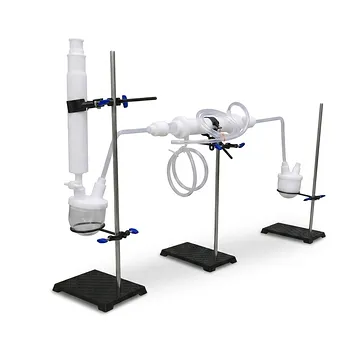
Custom PTFE Condensation Device Reflux Condenser Tube Fluoropolymer Heat Exchanger Chemical Resistant Laboratory Apparatus
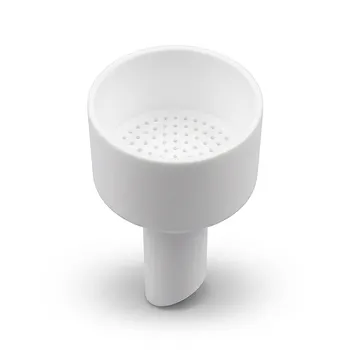
Corrosion Resistant PTFE Buchner Funnel Vacuum Filtration Device for Solid Liquid Separation Shatterproof Customizable Laboratory Apparatus
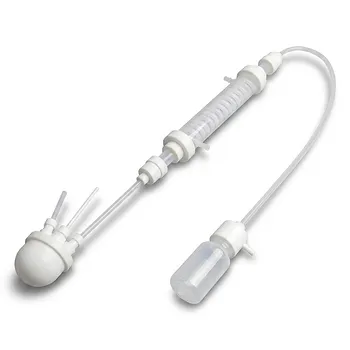
Corrosion Resistant Hydrogen Fluoride Reflux Apparatus PTFE Flask Condenser Separatory Funnel Collection Bottle High Temperature Laboratory System
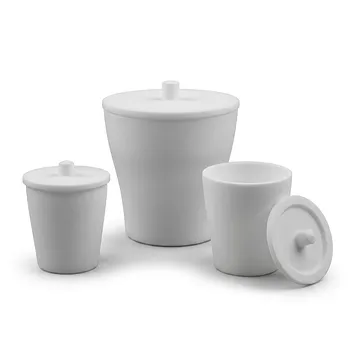
Custom PTFE Laboratory Crucibles High Purity Chemical Resistant White Labware for Hot Plate Heating

Custom Thickened PTFE Laboratory Beaker for High Temperature Hot Plate Applications