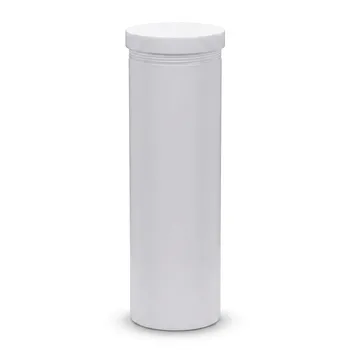
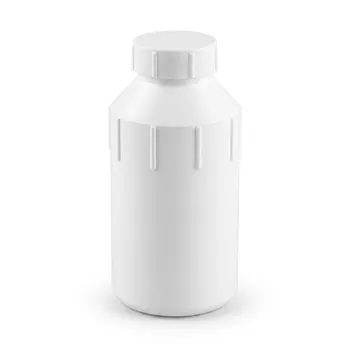
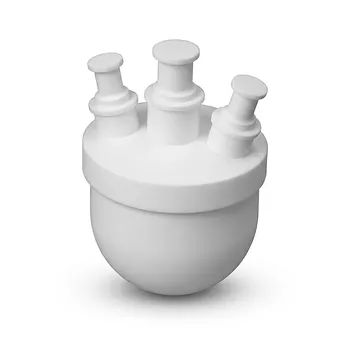
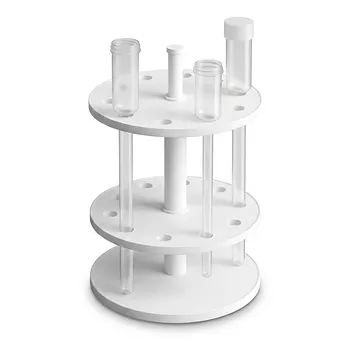
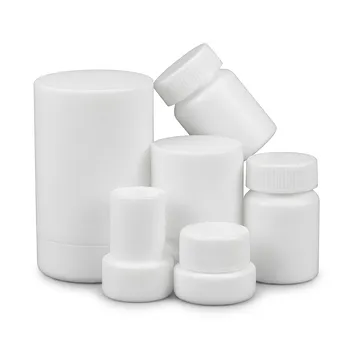
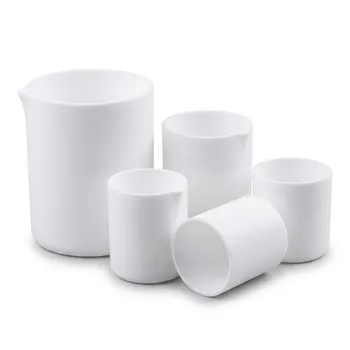
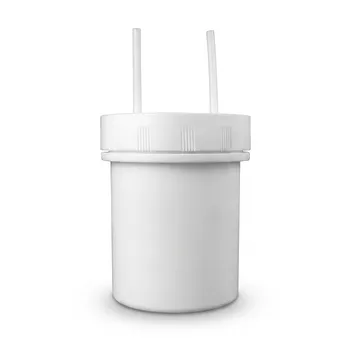
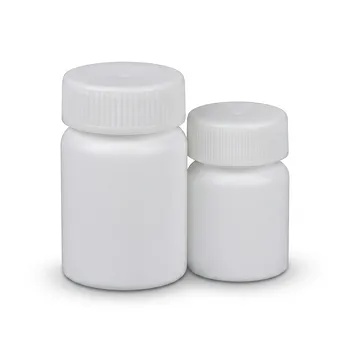
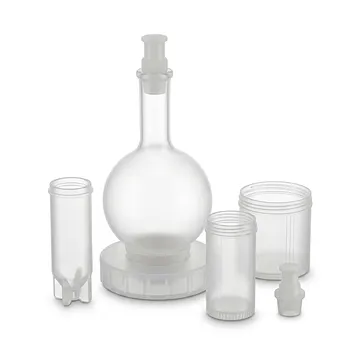
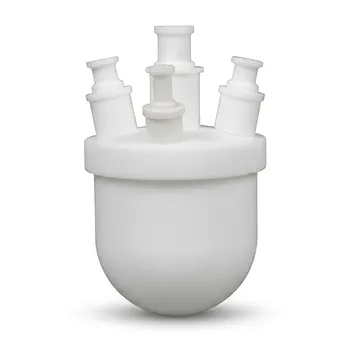
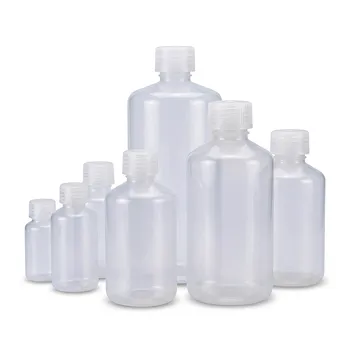
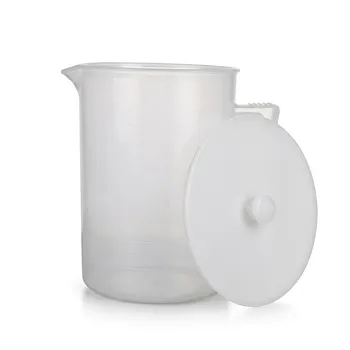
Fluoropolymer components provide the chemically controlled handling environment needed to process sulfonated fluorinated poly(arylene ether) polymers in NMP, DMSO, DMF, and DMAc. PTFE and PFA bottles, vessels, tubing, fittings, valves, and filtration hardware help prevent solvent attack, swelling, extractables, and metal or plastic contamination during dissolution, purification, filtration, storage, and membrane casting. Their role is not to improve the polymer chemically, but to preserve the polymer solution’s composition and integrity until it is processed.
The central value of PTFE and PFA labware is contamination control. By keeping aggressive polar aprotic solvents and polymer solutions away from vulnerable plastics and reactive hardware, fluoropolymer systems help ensure that measured polymer properties and final membrane performance reflect the material itself rather than the handling system.
Why These Polymer Solutions Require Specialized Hardware
Polar aprotic solvents are operationally demanding
Sulfonated fluorinated aromatic polymers used for proton exchange membranes often require solvents such as NMP, DMSO, DMF, and DMAc for synthesis, purification, dissolution, and casting. These solvents can stress conventional laboratory plastics, seals, tubing, and vessel materials through swelling, softening, extraction, or chemical degradation.
A component that appears intact may still release trace substances into the solution or absorb part of the solvent. Either effect can alter polymer concentration, viscosity, ionic behavior, or film formation.
The polymer solution must remain chemically consistent
Membrane performance depends on more than the polymer’s nominal chemical structure. Contamination or solvent loss can affect properties such as glass transition temperature, tensile strength, ionic conductivity, and casting behavior.
Fluoropolymer fluid paths reduce the risk that measurements will be influenced by the container or transfer system. This is especially important when comparing polymer batches or correlating processing conditions with membrane properties.
How PTFE and PFA Support the Processing Workflow
Dissolution and reaction vessels
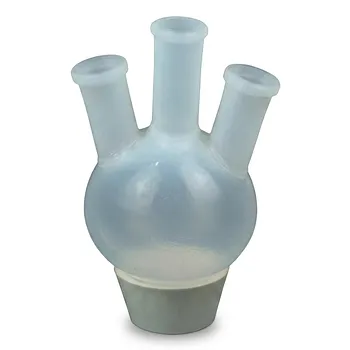
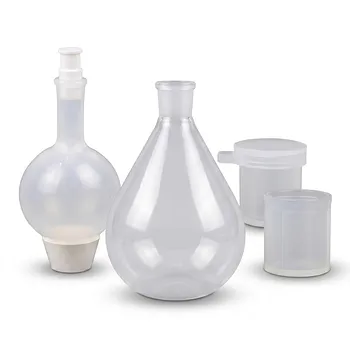
PTFE and PFA vessels can be used for polymer dissolution, digestion, reaction support, and intermediate holding. Their resistance to the relevant polar aprotic solvents helps maintain vessel integrity while the polymer is heated, mixed, or left in contact with the solvent.
PFA is particularly useful for bottles and other labware requiring a transparent or relatively flexible fluoropolymer format. PTFE is commonly selected for mechanically robust vessels, closures, valve parts, and specialized machined components.
Storage bottles and wash bottles
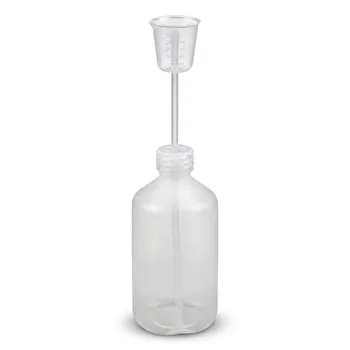
High-purity PFA reagent bottles and fluoropolymer wash bottles provide low-contamination storage for solvents and polymer solutions. They also reduce the risk of solvent interaction with conventional bottle materials, caps, liners, and dispensing components.
Storage design still matters. Closures, gaskets, labels, and any non-fluoropolymer accessories can become the actual source of contamination or chemical incompatibility even when the bottle itself is suitable.
Tubing, fittings, and valves
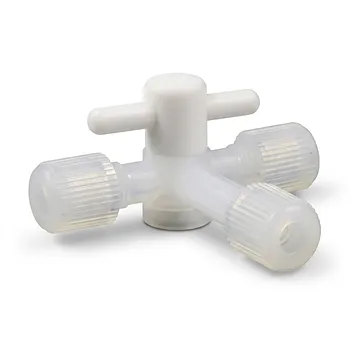
PTFE and PFA tubing create a chemically stable transfer path between dissolution vessels, filters, storage containers, and casting equipment. Fluoropolymer fittings and valves help maintain that compatibility at connection points, where leaks, swelling, and extractables often become significant risks.
These components are particularly valuable when the solution must be transferred repeatedly or held in a recirculating system. A chemically compatible tube is not sufficient if the valve seat, pump diaphragm, O-ring, or fitting insert is made from a vulnerable material.
Filtration hardware
Filtration can remove undissolved polymer, particulates, and process debris before membrane casting. Fluoropolymer filtration apparatuses and wetted components help prevent the filtration step from introducing substances that could affect film morphology or electrical performance.
The membrane filter itself must also be compatible with the solvent and polymer solution. A PTFE housing does not automatically make an incompatible filter media, support, or seal suitable.
Why Purity Matters for Membrane Performance
Preventing trace contamination
Trace leachables from standard plastics can enter the polymer solution during storage or transfer. Depending on their identity and concentration, they may affect polymer characterization, solution stability, membrane morphology, or ionic transport.
High-purity PTFE and PFA are therefore used as part of a broader materials-control strategy, not simply as corrosion-resistant plumbing.
Preserving mechanical and thermal measurements
Properties such as Tg and tensile strength are sensitive to polymer composition, residual solvent, plasticization, and impurities. If the handling system absorbs solvent or releases contaminants, the resulting measurements may not represent the intrinsic material.
A chemically stable fluid path improves confidence that differences in measured properties arise from polymer synthesis or processing rather than laboratory hardware.
Supporting consistent solution casting
Solution casting requires control over polymer concentration, solvent composition, filtration, and drying. Stable vessels and transfer components help preserve these variables from dissolution through deposition.
This consistency is important because membrane tensile strength, ionic conductivity, and morphology can be affected by small changes in solution history.
Designing the Complete Wetted System
Evaluate every wetted material
Compatibility must be assessed for the entire fluid path, including:
- Tubing and rigid piping
- Fittings and valve bodies
- Pump heads and diaphragms
- Seals, O-rings, and gaskets
- Filter housings and membranes
- Bottle closures and liners
- Mixing shafts and vessel accessories
The strongest fluoropolymer component cannot compensate for a weak seal or incompatible elastomer elsewhere in the system.
Match the material to the actual conditions
Resistance depends on solvent identity, temperature, exposure time, concentration, mechanical stress, and component geometry. PTFE and PFA are generally strong choices for NMP, DMSO, DMF, and DMAc service, but the specific grade and operating conditions should still be verified with the supplier.
Thin tubing, stressed fittings, and highly loaded seals may behave differently from unstressed bulk material. Dimensional stability and permeation can matter even when there is no visible chemical attack.
Use custom-fabricated parts where standard hardware fails
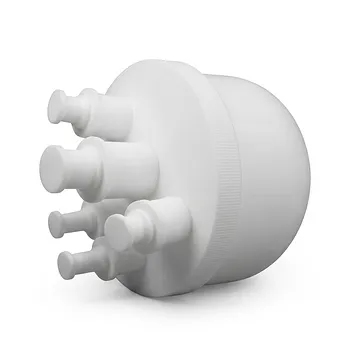
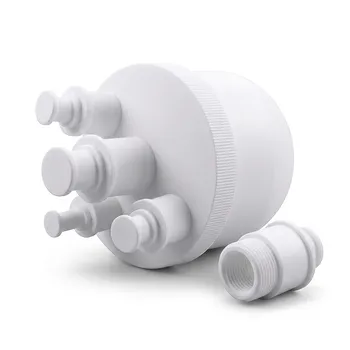
Precision CNC fabrication can produce non-standard PTFE and PFA fittings, valves, reaction components, and transfer manifolds. This is useful when the process requires unusual port geometry, specialized sealing, or integration with an existing dissolution or filtration pathway.
Custom fabrication addresses fit and routing problems, but it does not remove the need for compatibility testing. Machining quality, surface finish, tolerances, and cleaning procedures remain important for contamination-sensitive applications.
Understanding the Trade-offs
Fluoropolymers are not universally inert
The references correctly emphasize strong resistance to many aggressive chemicals, but “fluoropolymer” is not a guarantee of compatibility with every solvent or additive. Some formulations and conditions can experience absorption, swelling, softening, permeation, or chemical attack.
Strong bases, amines, ammonia, ketones, and certain other polar organic solvents deserve specific review. The exact behavior varies by fluoropolymer type, formulation, temperature, and exposure duration.
PTFE and PFA have different practical strengths
PTFE is highly chemically resistant and mechanically useful for seals, valve components, machined parts, and robust laboratory hardware. PFA offers comparable chemical resistance in many relevant applications while providing advantages for certain bottles, vessels, and transparent labware designs.
Selection should be based on the component’s function rather than a general assumption that one fluoropolymer is always superior.
Cleanliness must be managed deliberately
Fluoropolymer labware can still carry manufacturing residues, particulates, or contaminants from previous use. Cleaning, rinsing, drying, and segregation procedures are necessary when polymer purity and reproducibility are priorities.
Reuse also requires caution. A vessel that held another chemical may transfer residues into a high-value polymer solution even if the fluoropolymer itself was not damaged.
Temperature and pressure affect reliability
Heating can accelerate solvent permeation, swelling, extraction, and degradation of auxiliary materials. Pressure, bending, and repeated assembly can also compromise tubing and seals even when the polymer material remains chemically stable.
System designers should verify operating temperature, pressure, exposure duration, and mechanical loading rather than relying only on a room-temperature compatibility chart.
How to Apply This to Your Project
The appropriate hardware depends on whether the priority is purity, throughput, flexibility, or long-term process reliability.
- If your primary focus is solution purity: Use high-purity PTFE or PFA for vessels, bottles, tubing, fittings, and filtration components, and audit every seal, liner, and filter material for extractables.
- If your primary focus is reproducible polymer characterization: Keep the wetted path chemically stable and consistent so Tg, tensile strength, viscosity, and related measurements are not distorted by solvent loss or contamination.
- If your primary focus is membrane casting: Use compatible dissolution vessels, filtration hardware, and transfer lines to preserve polymer concentration and solvent composition from dissolution through casting.
- If your primary focus is a complex or customized process path: Consider CNC-machined PTFE or PFA components, but verify tolerances, sealing materials, cleaning, and solvent compatibility under actual conditions.
- If your primary focus is long-term system reliability: Evaluate temperature, exposure time, pressure, permeation, swelling, and chemical compatibility for the complete assembly rather than for fluoropolymer parts alone.
A well-designed PTFE/PFA handling system protects the polymer solution’s integrity, enabling more reliable processing and more defensible membrane-performance results.
Summary Table:
| Component | Role in Processing | Key Benefit |
|---|---|---|
| PTFE/PFA Vessels & Bottles | Dissolution, reaction, storage | Resistant to solvent attack, low extractables |
| Tubing, Fittings, Valves | Transfer and flow control | Chemically stable, prevents leaks and contamination |
| Filtration Hardware | Particle removal before casting | Maintains solution purity and consistency |
| Custom CNC-machined Parts | Non-standard geometries and manifolds | Precise fit and integration |
Ensure your polymer solutions remain pure and reliable. KINTEK offers a full range of high-performance PTFE and PFA labware—from bottles and vessels to custom CNC-machined components—designed to withstand polar aprotic solvents and prevent contamination. For membrane research and production, trust our chemically resistant solutions. Contact us today to discuss your specific needs and enhance your processing workflow!
Related Products
- Corrosion Resistant High Purity PFA Valve and Weldable Transparent Tubing for Semiconductor Fluid Transfer
- Custom High Purity PTFE Storage Barrel with Corrosion Resistant Threaded Sealing Lid and Low Background Properties 15L
- Custom PTFE Wide Mouth Reagent Reaction Bottle Corrosion Resistant High Temperature Large Capacity Straight Body Laboratory Vessel
- Custom PTFE Flask Large Volume 18L Corrosion Resistant Low Background High Purity Chemical Vessel
- Custom PFA Micro Column Rack and PTFE Machined Storage Solutions for Trace Analysis
People Also Ask
- Why are high-purity PFA fluid transfer components required for OSDAs and silica? Ensure Precision in Zeolite Synthesis
- Why are high-purity PFA fluid transfer components preferred for battery electrolytes? Ensure Purity & Data Accuracy
- How does high-purity PFA tubing maintain reagent purity? Achieve Ultra-Smooth, Zero-Contamination Fluid Transfer
- How do high-precision PFA fluid transfer components, such as tubing and fittings, affect the results of continuous-flow synthesis?
- How do PFA fluid transfer components contribute to chemical research precision? Achieve high-purity results today.