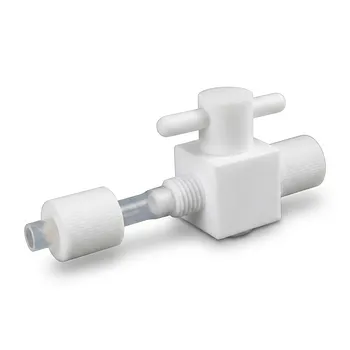
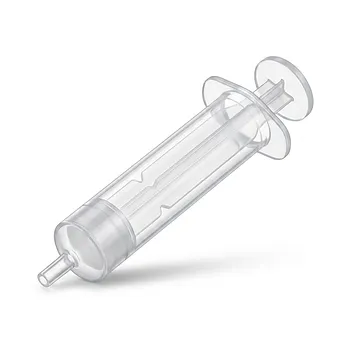
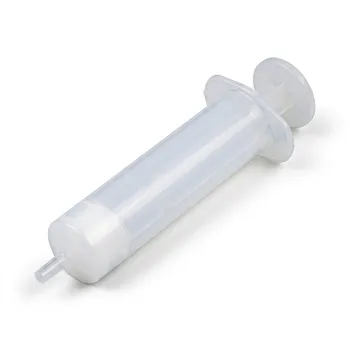
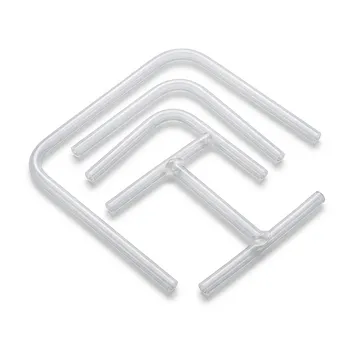
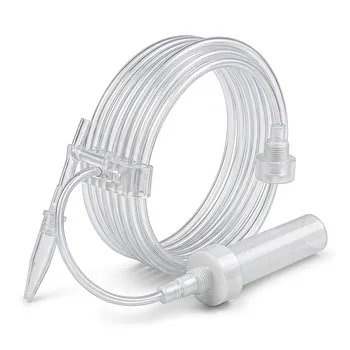
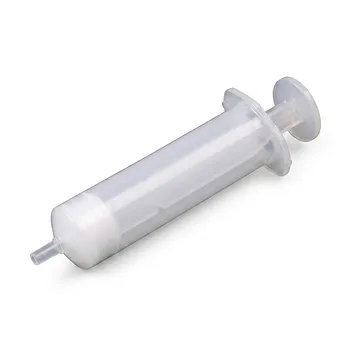
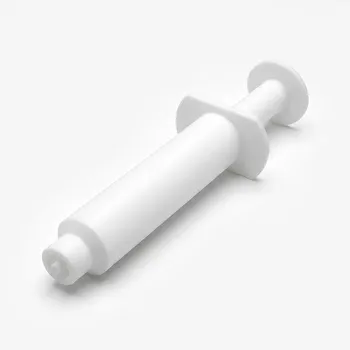
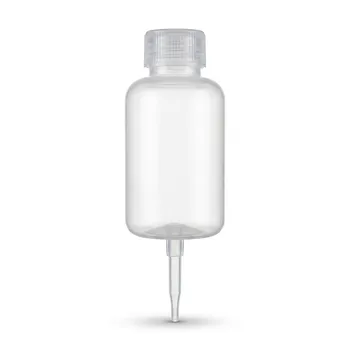
High-precision PFA (perfluoroalkoxy) components serve as the critical infrastructure for continuous-flow synthesis, ensuring that chemical reactions occur within a strictly controlled and predictable environment. These components regulate flow rate and residence time, which are the primary determinants of product quality, such as particle size and doping uniformity. By providing an ultra-pure, chemically inert fluid path, PFA minimizes contamination and reagent loss, leading to highly reproducible experimental outcomes.
High-precision PFA components enable superior control over continuous-flow synthesis by maintaining constant flow rates and eliminating chemical interference. Their extreme surface smoothness and chemical inertness ensure that precursor delivery remains consistent, directly dictating the precision of the resulting material properties.
The Role of Flow Rate and Residence Time
Maintaining Consistent Residence Times
Continuous-flow synthesis relies on precise timing to ensure chemical precursors react for the exact duration required. PFA components provide a stable, low-friction environment that allows solutions to reach reaction zones at a constant flow rate. This stability prevents fluctuations in residence time, which is vital for controlling complex chemical kinetics.
Influencing Particle Size and Doping
Consistent timing directly affects the particle size distribution of synthesized materials, preventing unwanted variations between batches. In advanced material synthesis, this precision ensures uniformity of doping concentrations across the entire product. Without high-precision tubing and fittings, irregular flow patterns could lead to non-equilibrium states that compromise material integrity.
Preserving Fluid Purity Through Material Science
Minimizing Adsorption and Contamination
PFA material possesses extremely low surface energy, which prevents the adsorption of trace elements or active ingredients onto the tubing walls. This ensures that the composition of sensitive reagents, including strong acids and oxidizing agents, remains stable during transmission. By minimizing the loss of precursors, researchers can maintain the exact stoichiometry required for the reaction.
Preventing Cross-Contamination
The ultra-smooth inner walls of PFA tubing reduce reagent residue and prevent chemicals from adhering to the internal surfaces of the system. This "anti-adhesion" property is critical for maintaining data consistency in experiments involving complex reagent proportions or rapid material changes. Reduced retention also allows for faster cleaning cycles and lower risk of carry-over between different experimental runs.
System Integrity and Visual Feedback
Real-Time Monitoring via Transparency
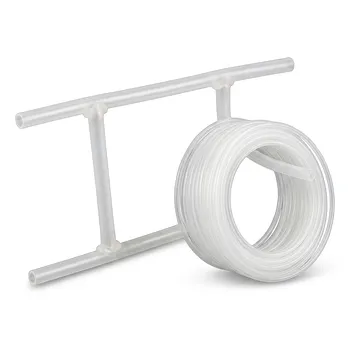
The high transparency of PFA allows operators to visually monitor fluid states, liquid levels, and phase changes in real-time. This provides an immediate visual check for bubbles, precipitates, or blockages within the lines that could disrupt the synthesis. This transparency is a significant advantage over opaque fluoropolymers like PTFE when troubleshooting complex automated setups.
Zero-Leakage Connection Channels
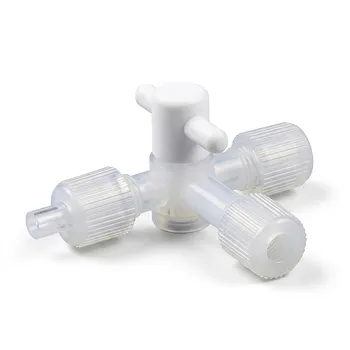
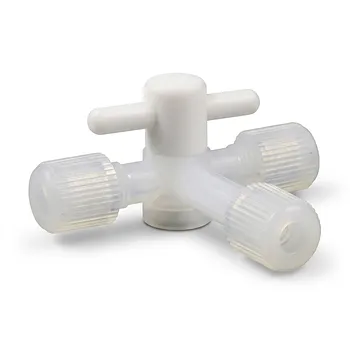
High-performance PFA fittings create zero-leakage connection channels, maintaining a fully enclosed environment essential for air-sensitive reactions. These components offer excellent flex life and pressure resistance, ensuring the system remains stable even under demanding synthesis conditions. Secure connections prevent the ingress of moisture or oxygen, which is decisive for the long-term stability of specialized chemical processes.
Understanding the Trade-offs
Mechanical and Pressure Limits
While PFA is highly flexible and chemically resilient, it has lower burst pressure ratings compared to metallic tubing like stainless steel or Hastelloy. In high-pressure continuous-flow applications, operators must carefully balance the need for chemical purity with the mechanical limits of the plastic.
Thermal Expansion and Softening
PFA has a wide operating temperature range, but it is subject to mechanical softening as it approaches its upper thermal limits. This can lead to fitting loosening or tubing deformation if the system is not properly supported or if temperature fluctuations are extreme.
Cost vs. Performance
The high cost of high-purity PFA components can be a significant factor for large-scale industrial processes that do not require high levels of cleanliness. However, for precision laboratory synthesis, the investment is typically justified by the reduction in failed batches and the increase in data reproducibility.
Optimizing Your Fluid Path for Synthesis Goals
How to Apply This to Your Project
To achieve the best results in continuous-flow synthesis, select your fluid transfer components based on your specific reaction requirements.
- If your primary focus is Material Consistency: Prioritize high-precision PFA tubing with tight inner-diameter tolerances to ensure perfectly stable residence times.
- If your primary focus is Trace Analysis and Purity: Utilize ultra-high-purity PFA fittings to eliminate dead volumes where reagents could stagnate and cause cross-contamination.
- If your primary focus is Real-Time Process Control: Opt for high-transparency PFA lines to allow for integrated optical sensors or manual visual inspection of the flow state.
Selecting the right PFA components transforms the fluid path from a simple conduit into a precise tool for chemical discovery.
Summary Table:
| Feature of PFA Components | Impact on Synthesis Process | Resulting Advantage |
|---|---|---|
| Stable Flow Rate | Constant residence time control | Uniform particle size and doping |
| Chemical Inertness | Prevents reagent adsorption | High stoichiometry and purity |
| Smooth Inner Walls | Minimizes residue and cross-contamination | Reproducible, high-consistency data |
| High Transparency | Real-time visual monitoring | Rapid detection of blocks or bubbles |
| Zero-Leak Fittings | Enclosed reaction environment | Safe handling of air-sensitive agents |
Elevate Your Research with Precision Fluoropolymer Engineering
Achieving perfection in continuous-flow synthesis requires a fluid path that is as precise as your chemistry. KINTEK specializes in high-performance fluoropolymer solutions tailored for the most demanding laboratory environments. From everyday basic labware like beakers, measuring cylinders, and centrifuge tubes to high-purity PFA tubing, fittings, and valves, we ensure your reagents remain uncontaminated and your flow rates stay stable.
Our expertise extends beyond the basics; we provide advanced derivative apparatus, including custom electrochemical cells, hydrothermal synthesis liners, and microwave digestion vessels. Backed by end-to-end custom CNC fabrication, KINTEK can deliver everything from high-volume standard consumables to complex, non-standard machined parts designed to your exact specifications.
Ready to optimize your synthesis results? Contact us today to discover how KINTEK’s absolute focus on PTFE and PFA excellence can transform your laboratory workflow.
References
- Akira Yoko, Tadafumi Adschiri. Nonequilibrium Process for Doping Under Continuous-Flow Hydrothermal Synthesis of Cerium Oxide-Based Nanoparticles. DOI: 10.1021/prechem.5c00004
This article is also based on technical information from Kintek Knowledge Base .
Related Products
- Corrosion Resistant High Purity PFA Valve and Weldable Transparent Tubing for Semiconductor Fluid Transfer
- High Purity PFA Valves and Weldable Corrosion Resistant Transparent Tubing for Semiconductor Sensor Manufacturing Fluid Transfer
- Corrosion Resistant PFA Tubing 1/4 Inch Custom Molded Welded Fluid Transfer Components
- High Purity PFA Reaction Vessel 4L Water Oxygen Separation Tank for Proton Exchange Membrane Electrolysis Experiments Customizable Laboratory Fluid Component
- High Corrosion Resistant PTFE Faucet Polytetrafluoroethylene Valve for Chemical Storage Drums and Fluid Transfer Systems Customizable Industrial Grade
People Also Ask
- Why are high-purity PFA fluid transfer components preferred for battery electrolytes? Ensure Purity & Data Accuracy
- How do PFA fluid transfer components contribute to chemical research precision? Achieve high-purity results today.
- What role do PFA tubing and valves play in high-precision laboratory fluid transfer systems? Ensure Ultra-Pure Results
- Which material characteristics of fluoropolymers are most critical for high-purity fluid transfer and labware? Key factors: chemical inertness, low extractables, thermal stability.
- Why do fluoropolymer materials like PTFE and PFA exhibit superior chemical resistance and thermal stability when used in high-purity fluid handling components and chemical vessels compared to standard hydrocarbon plastics? Unlock Superior Performance with KINTEK's High-Purity PTFE/PFA Solutions