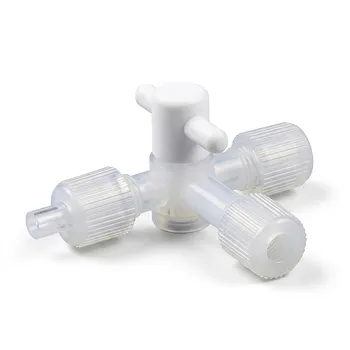
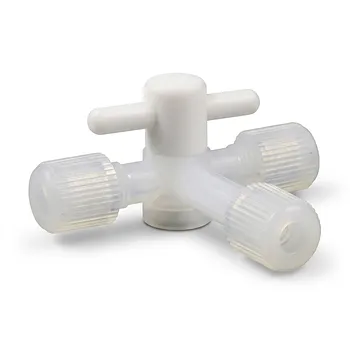
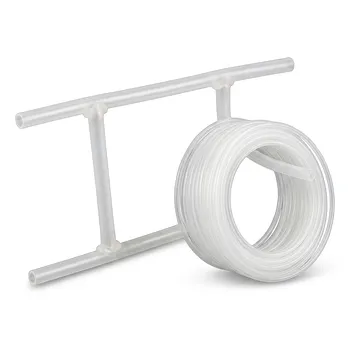
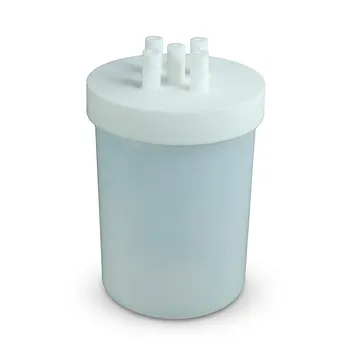
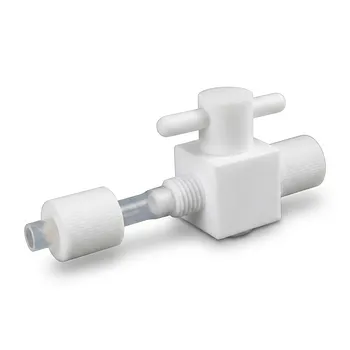
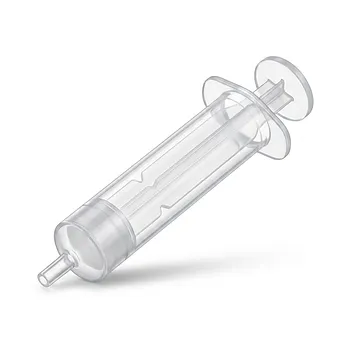
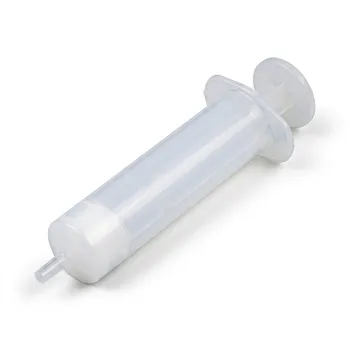
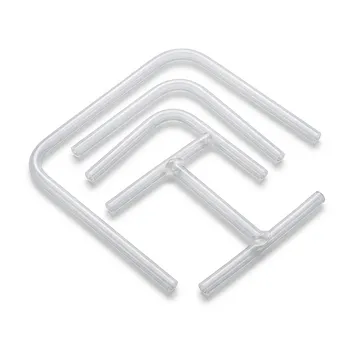
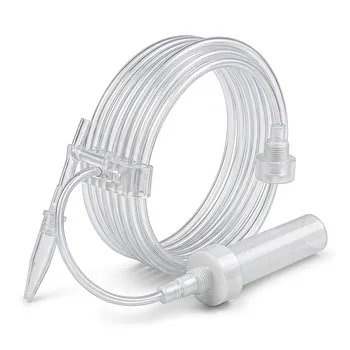
PFA (Perfluoroalkoxy) fluid transfer components are the fundamental safeguard for chemical precision in high-stakes research environments. These components—including high-purity tubing, valves, and fittings—provide an chemically inert, ultra-smooth pathway that prevents the contamination or adsorption of sensitive precursors. By eliminating unintended chemical reactions and maintaining the exact stoichiometry of reagents, PFA ensures that the electronic and structural properties of advanced materials, such as semiconductors and battery electrolytes, are produced with absolute consistency.
PFA fluid transfer systems enable experimental precision by combining extreme chemical inertness with superior physical properties, ensuring that the chemical composition of a fluid at the point of delivery is identical to its composition at the source.
Maintaining Chemical Stoichiometry and Purity
Protection of Sensitive Precursors
In semiconductor research, maintaining the exact stoichiometry of dopants is critical. For instance, when synthesizing ZGGO lattices, the precise concentration of cobalt must be preserved to achieve specific crystal structures and electronic defects. PFA’s chemical resistance allows for the delivery of metal salt solutions and pH-adjusting reagents without the material of the tubing reacting with the fluid, which would otherwise alter the experimental outcome.
Stability of Complex Formulations
In the new energy sector, minor changes in electrolyte formulations—such as trace amounts of trimethyl phosphate (TMP) for flame retardancy—can drastically alter performance. High-grade PFA ensures these sensitive chemical components are not adsorbed into the tubing walls during automated feeding. This preservation of the "recipe" is what allows researchers to achieve repeatable data in long-term cycling tests.
Engineering Reliability and Flow Dynamics
Minimizing Residue and Resistance
PFA components feature extremely smooth inner walls and low surface energy, which significantly reduces fluid resistance and friction. This "anti-adhesion" property prevents reagents from adhering to internal surfaces, which is a common cause of cross-contamination in automated sampling. Furthermore, the smooth surface minimizes the risk of crystallization or clogging in continuous flow chemistry applications.
Integrity Under Dynamic Conditions
Unlike standard plastics, PFA maintains its mechanical strength and sealing integrity across a wide operating temperature range. It is completely inert to electrolytes and strong oxidizing agents, meaning fluid channels will not undergo deformation or chemical degradation during dynamic transport. This structural stability is essential for maintaining the accuracy of electrochemical test data over long durations.
Advanced Design for Laboratory Efficiency
Visual Monitoring and System Routing
The transparency of PFA tubing allows researchers to visually monitor fluid states, detect bubbles, or observe liquid level changes in real-time. This visibility, combined with the material’s flexibility, enables complex routing in confined laboratory spaces. These features speed up the assembly of intricate experimental setups without sacrificing the high-pressure bearing capacity required for precision delivery.
Eliminating Dead Volume
Precision-engineered PFA fittings are designed to create leak-proof connections with minimal dead volume. By reducing areas where fluid can stagnate, the system ensures that the entire volume of a reagent is flushed through the circuit. This is particularly vital in automated chemical analysis, where even a microliter of "carry-over" from a previous sample can invalidate results.
Understanding the Trade-offs
Material Cost and Selection
While PFA offers unmatched purity, it carries a higher initial cost compared to other fluoropolymers like PTFE or FEP. Researchers must weigh the necessity of PFA’s superior translucency and smoothness against their project's budget. However, in semiconductor and new energy sectors, the cost of a failed experiment due to contamination often far outweighs the investment in high-quality PFA.
Permeability and Gas Diffusion
Although PFA has excellent anti-permeability properties compared to most plastics, it is not an absolute barrier to all gases. In extremely sensitive anaerobic experiments, users must be aware that trace amounts of atmospheric gases could theoretically permeate the tubing over extended periods. For most high-purity fluid transfers, however, PFA remains the industry gold standard.
How to Apply This to Your Project
When integrating PFA components into your research infrastructure, consider your primary objective to select the correct grade and configuration.
- If your primary focus is Stoichiometric Precision: Prioritize PFA valves and tubing with the lowest surface energy to ensure zero reagent adsorption and precise dopant delivery.
- If your primary focus is Long-Term Reliability: Select precision-engineered PFA fittings with high pressure-bearing ratings to prevent leaks and maintain system vacuum during extended cycling.
- If your primary focus is Automated Analysis: Opt for high-transparency PFA tubing to facilitate visual monitoring and ensure the smooth inner walls prevent carry-over contamination between samples.
By utilizing PFA's unique molecular stability, you transform your fluid delivery system from a potential source of error into a controlled, ultra-pure environment for discovery.
Summary Table:
| Feature | Key Benefit | Research Application |
|---|---|---|
| Chemical Inertness | Prevents reagent adsorption and contamination | Semiconductor dopant synthesis |
| Ultra-Smooth Walls | Minimizes residue and cross-contamination | Automated sampling and analysis |
| High Transparency | Enables real-time visual monitoring of fluids | Detecting bubbles or level changes |
| Mechanical Stability | Maintains sealing integrity under pressure | Long-term battery cycling tests |
| Minimal Dead Volume | Eliminates fluid stagnation and carry-over | Precision flow chemistry systems |
At KINTEK, we understand that precision starts with purity. We manufacture virtually all imaginable laboratory supplies crafted from PTFE and PFA, ranging from basic labware like beakers, measuring cylinders, and crucibles to high-performance fluid transfer components including tubing, fittings, and valves. Whether you need everyday consumables like stirring bars and gaskets or advanced reaction apparatus like custom electrochemical cells and microwave digestion vessels, our end-to-end CNC fabrication delivers the consistency required for semiconductor and new energy sectors. Empower your research with high-performance fluoropolymer materials—contact our experts today to discuss your project!
References
- Yaqi Zhu, Zhen Lei. Crystal lattice site occupation-based optical properties in Co2+-doped ZGGO persistent luminescence nanoparticles. DOI: 10.1038/s41598-025-23381-5
This article is also based on technical information from Kintek Knowledge Base .
Related Products
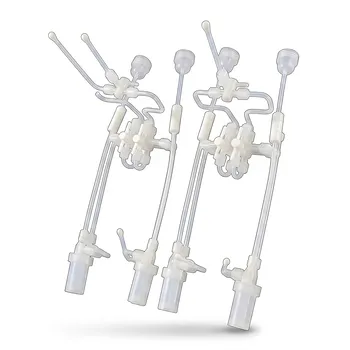
- Corrosion Resistant High Purity PFA Valve and Weldable Transparent Tubing for Semiconductor Fluid Transfer
- High Purity PFA Valves and Weldable Corrosion Resistant Transparent Tubing for Semiconductor Sensor Manufacturing Fluid Transfer
- Corrosion Resistant PFA Tubing 1/4 Inch Custom Molded Welded Fluid Transfer Components
- High Purity PFA Reaction Vessel 4L Water Oxygen Separation Tank for Proton Exchange Membrane Electrolysis Experiments Customizable Laboratory Fluid Component
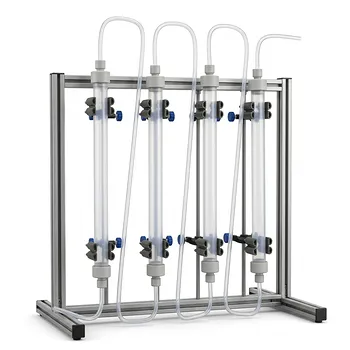
- High Purity PFA Chromatography Columns Series Filtration Resin Ion Exchange System with Sieve Plate Rack Customizable Corrosion Resistant Laboratory Fluid Handling
People Also Ask
- Why are high-purity PFA fluid transfer components preferred for battery electrolytes? Ensure Purity & Data Accuracy
- How do high-precision PFA fluid transfer components, such as tubing and fittings, affect the results of continuous-flow synthesis?
- What role do PFA tubing and valves play in high-precision laboratory fluid transfer systems? Ensure Ultra-Pure Results
- Which material characteristics of fluoropolymers are most critical for high-purity fluid transfer and labware? Key factors: chemical inertness, low extractables, thermal stability.
- Why do fluoropolymer materials like PTFE and PFA exhibit superior chemical resistance and thermal stability when used in high-purity fluid handling components and chemical vessels compared to standard hydrocarbon plastics? Unlock Superior Performance with KINTEK's High-Purity PTFE/PFA Solutions