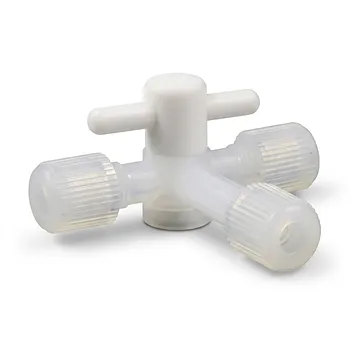
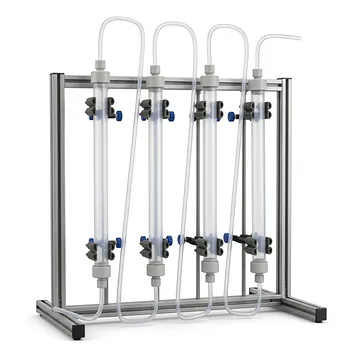
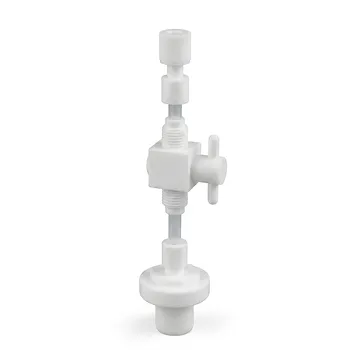
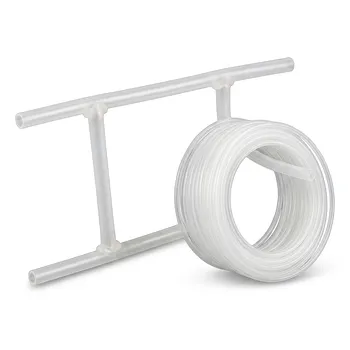
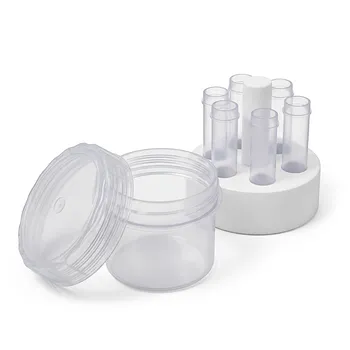
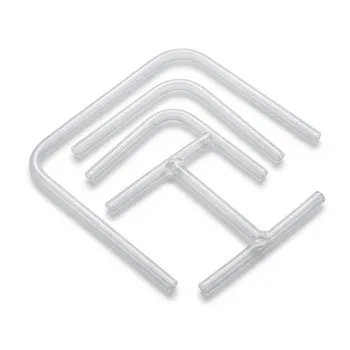
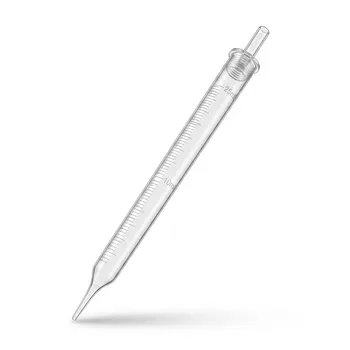
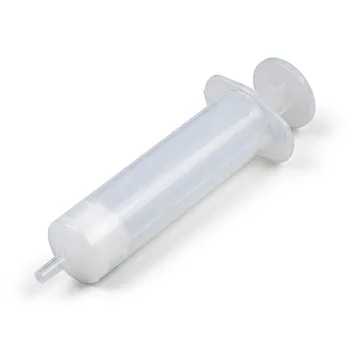
High-purity PFA components are essential for the phosphidization and selenization of MOF-derived catalysts because they provide total chemical inertness against highly reactive precursors while preventing trace metal contamination. During these gas-phase reactions, precursors like phosphine or selenium vapor can corrode standard materials, introducing impurities that poison sensitive catalytic sites. PFA’s extremely low permeability and negligible leaching rates ensure the final catalyst maintains its intended elemental composition and structural integrity.
The use of high-purity PFA fluid transfer systems acts as a critical barrier against chemical degradation and impurity leaching. This ensures that the atomic-level active sites of MOF-derived electrocatalysts remain uncontaminated and chemically precise during high-temperature modifications.
Resistance to Corrosive Gas-Phase Precursors
Handling Reactive Phosphine and Selenium Vapors
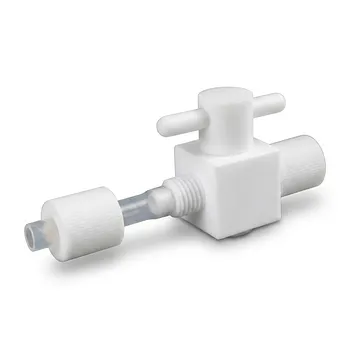
Phosphidization and selenization involve the use of phosphine (PH₃) or selenium vapor, both of which are highly reactive and corrosive. High-purity PFA (Perfluoroalkoxy) tubing and valves are required because they exhibit exceptional chemical stability that prevents the material from degrading when exposed to these harsh precursors.
Importance of Low Permeability
PFA is characterized by its extremely low permeability, which is vital for gas-phase reactions. This property prevents the ingress of external atmospheric impurities and ensures that the reactive gases remain contained within the fluid path, maintaining the safety and efficiency of the synthesis process.
Prevention of Catalyst Poisoning and Contamination
Eliminating Trace Metal Leaching
MOF-derived catalysts, particularly those featuring M-N-C (Metal-Nitrogen-Carbon) structures, are hypersensitive to trace metal impurities. Unlike metal or lower-grade plastic components, high-purity PFA has virtually no ion leaching, preventing background metals from contaminating the catalyst’s atomic-level active sites.
Ensuring Elemental Purity
The performance of electrocatalysts depends on the precise elemental ratio of phosphorus or selenium incorporated into the MOF precursor. By using PFA fittings and containers, researchers eliminate the risk of unwanted chemical species interfering with the nucleation and growth of the desired catalytic phases.
Achieving Reproducibility in Complex Synthesis
Maintaining Consistent Reaction Environments
The transition from a Metal-Organic Framework to a functional electrocatalyst requires a highly controlled environment. PFA components provide a contamination-free fluid transfer process, which is essential for achieving high levels of reproducibility across different synthesis batches.
Durability in Harsh Electrochemical Contexts
Electrocatalysts are often tested in highly acidic or alkaline electrolytes that can be just as corrosive as the synthesis precursors. PFA’s ability to withstand strong oxidizing acids like perchloric acid ensures that the fluid delivery system does not introduce errors during the subsequent electrochemical performance testing.
Understanding the Trade-offs
Material Cost and Mechanical Limits
While PFA offers superior chemical resistance, it is significantly more expensive than standard fluoropolymers like PTFE or FEP. Additionally, PFA is a semi-rigid material, meaning it may require specific heating techniques or specialized fittings for complex routing compared to more flexible, less resistant tubing options.
Thermal Considerations
Although PFA has a high thermal ceiling, it is not invincible; exceeding its service temperature during gas-phase reactions can lead to mechanical failure. Users must ensure that the PFA components are positioned in the fluid path where temperatures remain within the manufacturer's specified operating range.
How to Apply This to Your Project
When integrating PFA components into your MOF-derived catalyst synthesis workflow, focus on the specific purity requirements of your target application.
- If your primary focus is atomic-level catalyst precision: Prioritize high-purity PFA for all components in direct contact with precursors to prevent trace metal poisoning of active sites.
- If your primary focus is system longevity in corrosive environments: Utilize PFA valves and seals to minimize the maintenance cycle caused by the degradation of standard fluoropolymer parts.
- If your primary focus is experimental reproducibility: Standardize on PFA fluid paths to eliminate variables related to leaching or gas permeability that could skew your data.
By utilizing high-purity PFA, you safeguard the chemical integrity of your synthesis, ensuring that your MOF-derived electrocatalysts achieve their theoretical performance limits.
Summary Table:
| Key Feature | Benefit for MOF-Derived Catalysts | Impact on Electrocatalysis |
|---|---|---|
| Chemical Inertness | Resists reactive PH₃ and Se vapors | Prevents precursor-induced degradation |
| Low Permeability | Minimizes atmospheric ingress | Ensures precise gas-phase reaction environments |
| Zero Ion Leaching | Eliminates trace metal contamination | Protects sensitive M-N-C catalytic active sites |
| Corrosion Resistance | High stability in acidic/alkaline media | Reliable performance during electrochemical testing |
Elevate Your Catalyst Synthesis with KINTEK’s High-Performance PFA Solutions
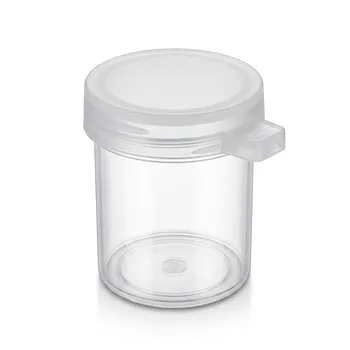
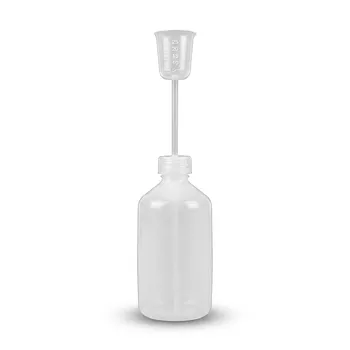
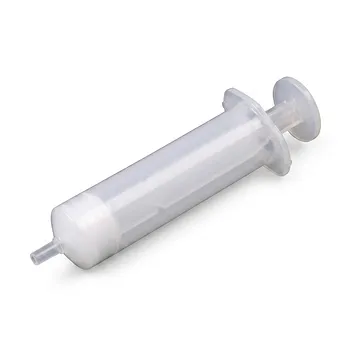
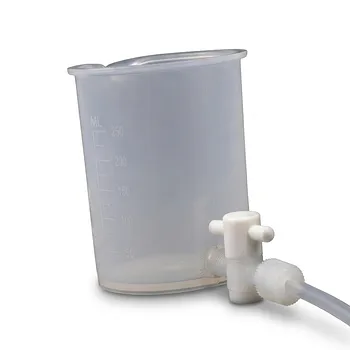
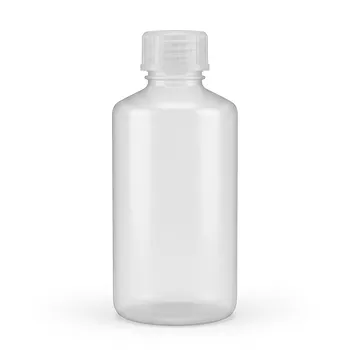
At KINTEK, we understand that atomic-level precision requires an uncompromisingly pure environment. We manufacture a comprehensive range of high-performance fluoropolymer laboratory supplies—from everyday PFA beakers, reagent bottles, and centrifuge tubes to critical fluid transfer components like high-purity tubing, fittings, and valves.
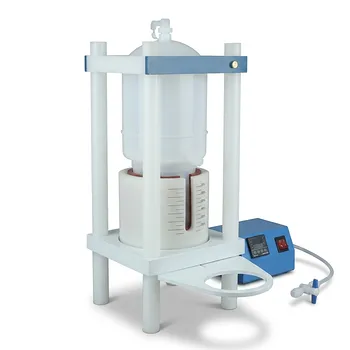
Our expertise extends to advanced reaction apparatus, including custom electrochemical cells, hydrothermal synthesis liners, and microwave digestion vessels, all crafted with an exclusive focus on PTFE and PFA. Backed by end-to-end custom CNC fabrication, we deliver everything from standard consumables to complex, bespoke laboratory setups tailored to your specific research needs.
Contact KINTEK today to secure the chemical integrity of your next project and ensure your catalysts reach their theoretical performance limits.
References
- E. S. Sowbakkiyavathi, Subramania Angaiah. Recent advances in MOFs, MOF-derived materials and their composites as electrocatalysts for hydrogen production. DOI: 10.1039/d5su00199d
This article is also based on technical information from Kintek Knowledge Base .
Related Products
- Corrosion Resistant High Purity PFA Valve and Weldable Transparent Tubing for Semiconductor Fluid Transfer
- High Purity PFA Valves and Weldable Corrosion Resistant Transparent Tubing for Semiconductor Sensor Manufacturing Fluid Transfer
- High Purity PFA Chromatography Columns Series Filtration Resin Ion Exchange System with Sieve Plate Rack Customizable Corrosion Resistant Laboratory Fluid Handling
- High Purity PFA PTFE Flare Stop Valves Customizable 2-Way 3-Way Reducing Fluoropolymer Fluid Control Solutions
- Corrosion Resistant PFA Tubing 1/4 Inch Custom Molded Welded Fluid Transfer Components
People Also Ask
- Why are high-purity PFA fluid transfer components required for OSDAs and silica? Ensure Precision in Zeolite Synthesis
- Why are high-purity PFA fluid transfer components preferred for battery electrolytes? Ensure Purity & Data Accuracy
- How does high-purity PFA tubing maintain reagent purity? Achieve Ultra-Smooth, Zero-Contamination Fluid Transfer
- How do high-precision PFA fluid transfer components, such as tubing and fittings, affect the results of continuous-flow synthesis?
- How do PFA fluid transfer components contribute to chemical research precision? Achieve high-purity results today.