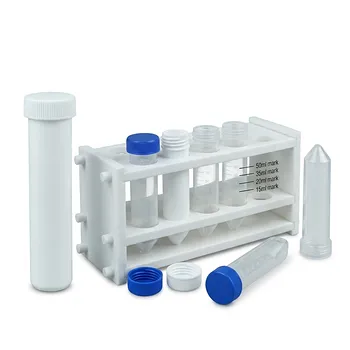
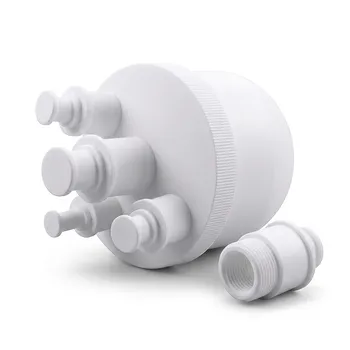
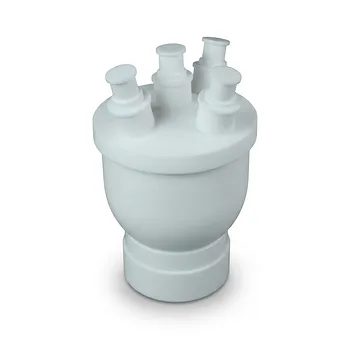
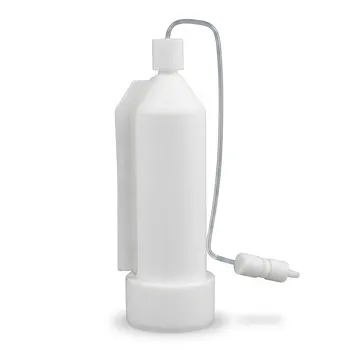
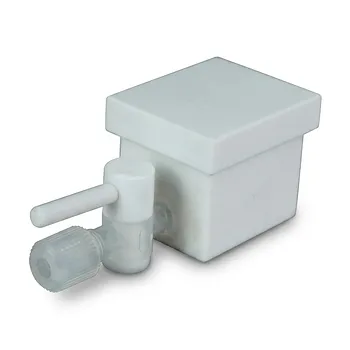
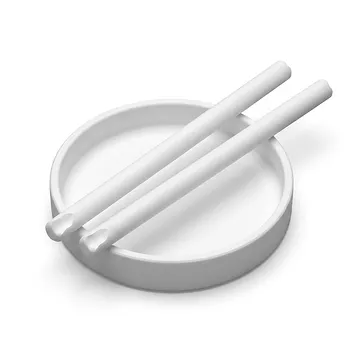
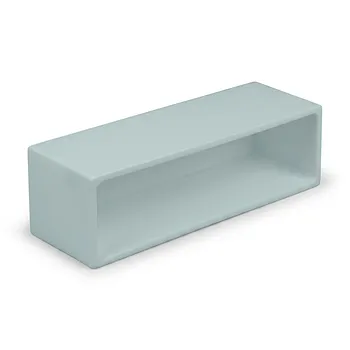
PTFE and PFA are ideal for high-purity laboratory vessels and fluid-handling components because they combine exceptional chemical inertness, thermal stability, and low surface adhesion. Their fully fluorinated polymer backbones are protected by strong carbon-fluorine bonds, allowing them to resist concentrated acids, strong bases, oxidizing agents, and most organic solvents at temperatures approaching 260°C. They also minimize contamination, sample loss, leaching, and material degradation during demanding analytical procedures.
The central advantage of PTFE and PFA is chemical isolation: aggressive fluids remain contained without significantly attacking the material, while the non-wetting surfaces help preserve sample purity and improve liquid recovery.
Why Their Chemistry Resists Aggressive Fluids
Strong carbon-fluorine bonds
The carbon-fluorine bond has a dissociation energy of approximately 116 kcal/mol, substantially higher than the roughly 99.5 kcal/mol energy of a carbon-hydrogen bond.
This strength makes the polymer backbone difficult for acids, bases, oxidizers, and solvents to attack under normal laboratory operating conditions.
A protective fluorine sheath
PTFE and PFA are fully fluorinated along their polymer backbones. Fluorine atoms form a protective outer layer around the carbon chain, limiting access by reactive chemicals.
The result is near-universal chemical resistance across common laboratory media, including concentrated acids, strong bases, aggressive oxidizing agents, and many organic solvents.
Resistance to dissolution and degradation
Unlike many conventional plastics, PTFE generally does not dissolve, swell significantly, or chemically degrade when exposed to most laboratory reagents.
This helps vessels, tubing, valves, fittings, seals, and storage containers maintain their mechanical integrity instead of becoming brittle, soft, cracked, or permeable.
How They Protect Sample Purity
Low extractables and leachables
High-purity analytical work can be compromised by trace contaminants released from a vessel or fluid path.
PTFE and PFA are chemically stable and have very low tendency to leach impurities into samples, which is especially important in trace-element analysis, digestion procedures, and other contamination-sensitive applications.
Non-wetting surfaces
Their exceptionally low surface energy gives PTFE and PFA non-stick and non-wetting characteristics.
Liquids are less likely to adhere to vessel walls or remain trapped in tubing and fittings. This supports more complete sample transfer, more accurate volumetric delivery, and improved recovery.
Easier cleaning and reduced carryover
Because residues adhere less strongly, PTFE and PFA components can be cleaned more effectively between uses.
That reduces the risk of cross-contamination when the same laboratory equipment is used for multiple reagents or samples.
Why They Perform Well at High Temperatures
Thermal stability during aggressive processing
PTFE and PFA can provide continuous service at temperatures around 260°C, depending on the specific grade, design, and operating conditions.
This makes them suitable for demanding applications such as high-temperature chemical treatment and microwave-assisted acid digestion, where both chemical attack and heat can challenge ordinary plastics.
Stable containment
A material that resists chemicals but loses strength rapidly at elevated temperature would provide limited value in laboratory processing.
PTFE and PFA retain useful chemical and thermal performance together, helping vessels and fluid-handling components contain reactive media without premature material failure.
PTFE and PFA Serve Different Manufacturing Needs
PTFE for maximum chemical resistance and established labware
PTFE is widely used for beakers, crucibles, digestion vessels, reagent bottles, tubing, seals, and valves.
It offers outstanding chemical inertness and thermal stability, but it cannot be processed like ordinary thermoplastics because it forms a stiff, non-flowing gel above its melting point. PTFE components are therefore commonly made through molding techniques followed by machining or other specialized processing.
PFA for complex molded components
PFA retains the core chemical and thermal advantages of PTFE while being melt-processable through extrusion and injection molding.
That makes PFA particularly useful for complex high-purity vessels, fittings, valves, and fluid paths where intricate geometries, consistent dimensions, low permeability, and reduced contamination risk are important.
A practical selection principle
The choice is often driven by part geometry and manufacturing requirements, rather than chemical resistance alone.
PTFE is well suited to formed or machined components, while PFA is advantageous when a complex shape must be melt-molded without giving up fluoropolymer-level purity and chemical resistance.
Understanding the Trade-offs
Chemical resistance is not literally unlimited
PTFE and PFA resist virtually all chemicals encountered in standard laboratory work, but they are not immune to every possible substance or condition.
Important exceptions include molten alkali metals, elemental fluorine under elevated temperature or pressure, and specialized fluorinating compounds such as chlorine trifluoride.
Temperature, pressure, and mechanical load still matter
A fluoropolymer may tolerate a chemical at a stated temperature but perform differently under pressure, cyclic loading, abrasion, or long-term mechanical stress.
Component design, wall thickness, temperature, pressure, exposure time, and the exact chemical mixture should therefore be evaluated together.
Low adhesion does not eliminate every cleaning concern
Non-wetting surfaces reduce residue retention, but they do not guarantee that every contaminant will be removed without an appropriate cleaning procedure.
Laboratories handling trace-level samples should still validate cleaning methods and consider the prior contents of the component.
PTFE and PFA are not interchangeable in every design
PTFE may be preferable for specific mechanical, dimensional, or cost considerations, while PFA may be preferable for complex molded shapes and lower permeability.
Material selection should account for fabrication method, tolerances, flexibility, pressure requirements, purity specifications, and the intended chemical exposure.
How to Apply This to Your Project
The right choice depends on whether the priority is chemical containment, sample recovery, thermal performance, or manufacturability.
- If your primary focus is maximum chemical resistance: Choose PTFE or PFA for contact with concentrated acids, strong bases, oxidizers, and most organic solvents, while checking the compatibility of any exceptional chemicals.
- If your primary focus is trace-analysis purity: Use high-purity PTFE or PFA components with low extractables, non-wetting surfaces, and validated cleaning procedures to reduce contamination and sample carryover.
- If your primary focus is complex molded geometry: Favor PFA because it can be extruded or injection-molded while retaining fluoropolymer-level chemical and thermal performance.
- If your primary focus is high-temperature digestion or chemical treatment: Select a grade and component design rated for the required temperature, pressure, exposure time, and chemical combination.
PTFE and PFA give laboratories a reliable barrier between aggressive chemistry and sensitive samples, provided their specific operating limits are respected.
Summary Table:
| Property | PTFE | PFA |
|---|---|---|
| Chemical resistance | Outstanding; resists almost all chemicals | Outstanding; similar to PTFE |
| Max continuous service temperature | ~260°C | ~260°C |
| Surface energy | Very low (non-stick) | Very low (non-stick) |
| Extractables/leachables | Very low | Very low |
| Processability | Requires molding/machining (not melt-processable) | Melt-processable (extrusion/injection molding) |
| Typical applications | Beakers, crucibles, digestion vessels, seals, valves | Complex molded components, fittings, valves, tubing |
Ready to enhance your lab's performance with high-purity PTFE and PFA components?
At KINTEK, we specialize in crafting labware and fluid handling solutions from PTFE and PFA. Whether you need standard beakers or custom-machined parts, our products deliver exceptional chemical resistance, thermal stability, and purity for even the most demanding applications.
Contact us today to discuss your specific requirements and discover how our high-performance fluoropolymer products can improve your laboratory's efficiency and reliability.
Related Products
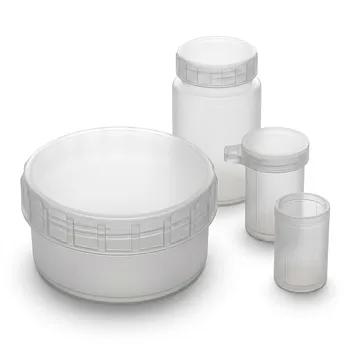
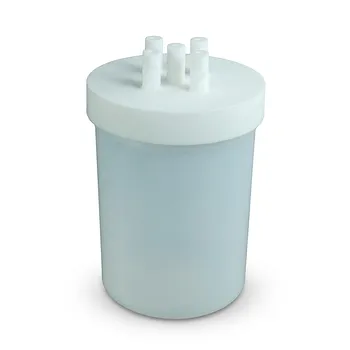
- PFA Reaction Jar Corrosion Resistant Wide Mouth PTFE Lab Bottle High Purity Chemical Vessel
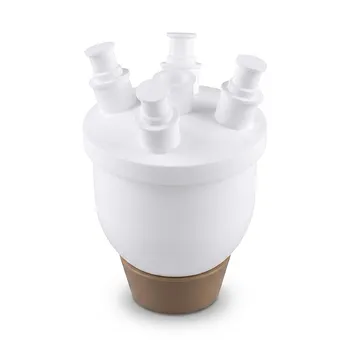
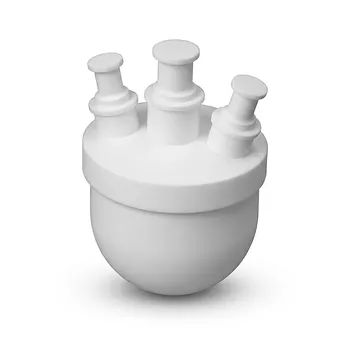
- High Performance Customizable PTFE Reaction Vessel and Corrosion Resistant Polytetrafluoroethylene Flask for Chemical Laboratory Use
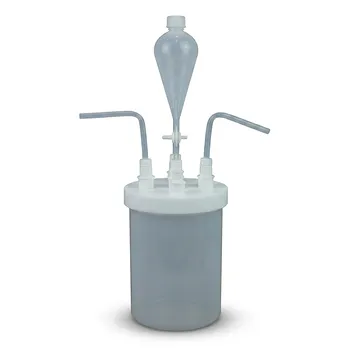
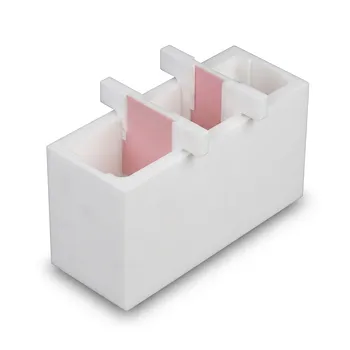
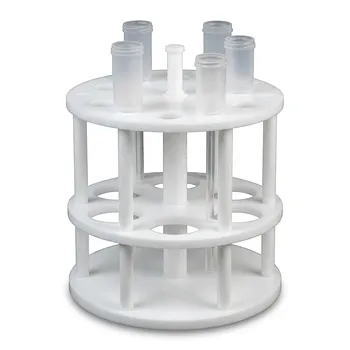
- Corrosion Resistant PTFE Support with PFA Transparent Reaction Tank and High Purity PFA Sampling Tube for Trace Analysis
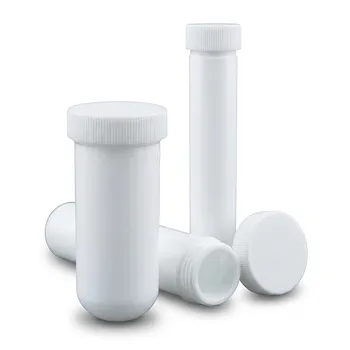
- Corrosion Resistant PFA Translucent Reaction Bottle with PTFE Screw Cap and Standard 19 24 Ground Joint Neck for High Temperature Lab Applications
- Custom PFA Reaction Bottles High Purity PTFE Reaction Vessels Corrosion Resistant Petrochemical Containers
People Also Ask
- Role of reaction vessels in alkali treatment for oil palm waste: Achieve High-Purity Cellulose with PTFE Vessels
- Why are well-sealed reaction vessels necessary for superacid-promoted Friedel-Crafts polycondensation? Optimize Synthesis
- How do specialized reaction vessels facilitate floating transfer for graphene? Achieve Uniform 4-SBD Functionalization
- Why are corrosion-resistant vessels needed for alkaline cellulose extraction? Ensure Purity and Process Safety
- How do the material choice and sealing integrity of the reaction vessel affect the growth of NiFe-LDH? Optimize Synthesis