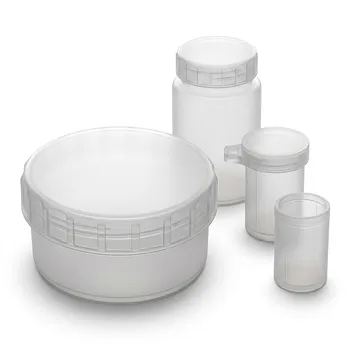
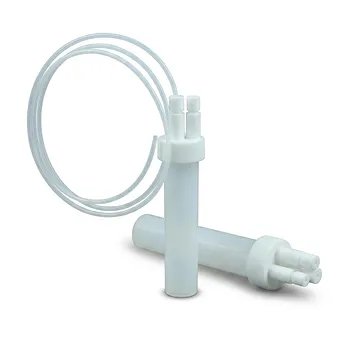
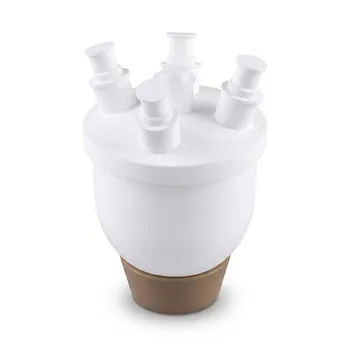
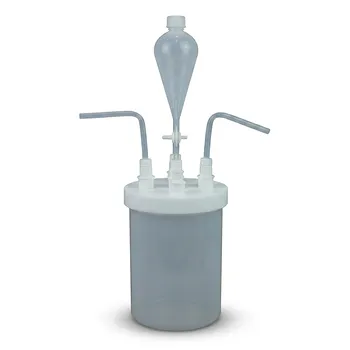
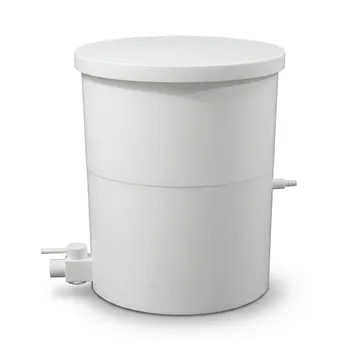
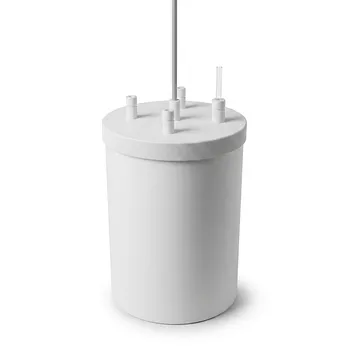
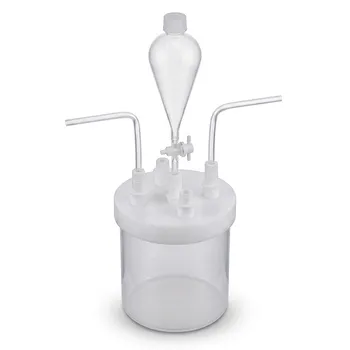
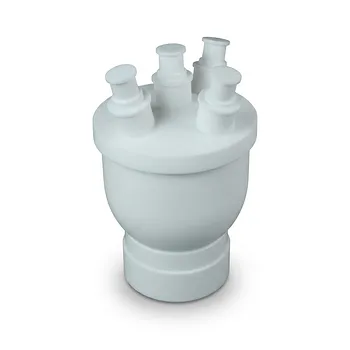
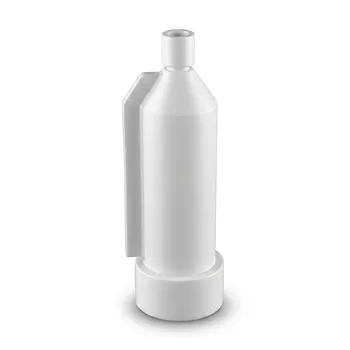
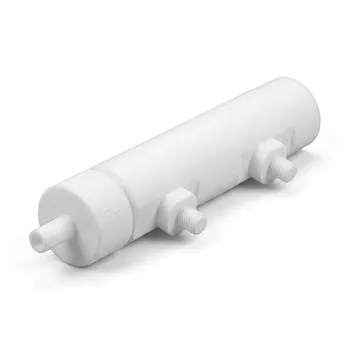
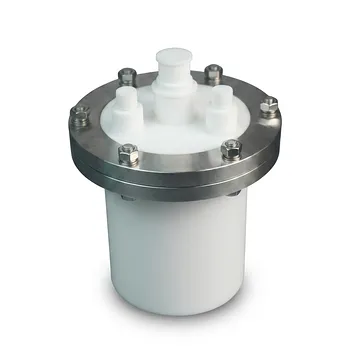
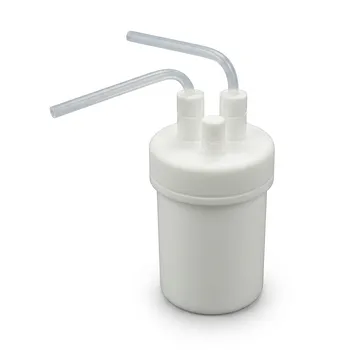
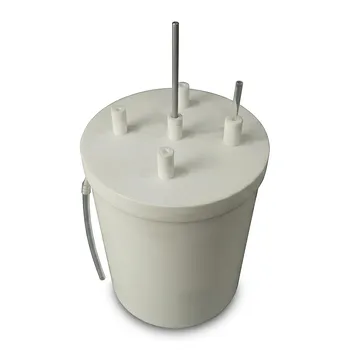
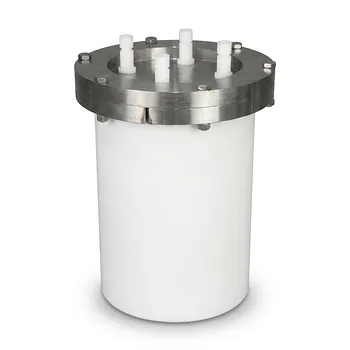
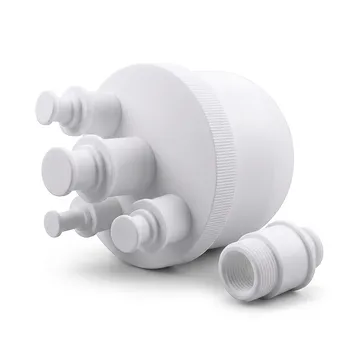
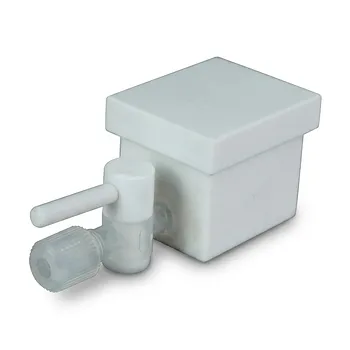
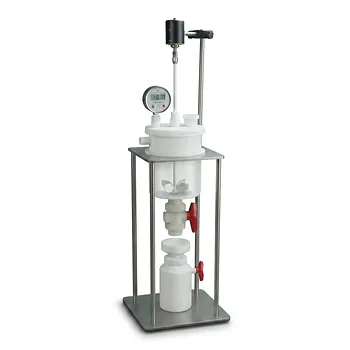
Specialized reaction vessels enable precise surface functionalization by providing a stable environment that allows a graphene and perfluorosulfonic acid polymer stack to float atop a 4-sulfobenzenediazonium tetrafluoroborate (4-SBD) solution. This "floating transfer" method utilizes the water-air interface to facilitate uniform covalent grafting across the graphene surface while eliminating the risk of mechanical damage associated with traditional clamping.
The floating transfer method leverages specialized vessels to maintain a stable liquid interface, ensuring that 4-SBD functionalization occurs uniformly without inducing mechanical strain. By utilizing chemically inert materials like PFA or PTFE, these vessels also protect the reaction from contamination and degradation caused by highly corrosive reagents.
The Mechanics of Floating Transfer
Harnessing the Water-Air Interface
The reaction vessel is designed to hold the 4-SBD solution in a way that creates a consistent water-air interface. The graphene/polymer stack sits on this surface, allowing the 4-SBD molecules to interact with the graphene from the bottom up.
Ensuring Uniform Covalent Grafting
Because the stack floats freely, the chemical contact is governed by surface tension rather than forced pressure. This results in a highly consistent distribution of functional groups across the entire membrane, which is essential for centimeter-scale applications.
Eliminating Mechanical Stress
Traditional functionalization often requires pinning or clamping the graphene, which can cause micro-tears or uneven strain. The floating method removes these mechanical intermediaries, preserving the structural integrity of the delicate graphene lattice.
Material Integrity and Chemical Resistance
Resilience Against Corrosive Reagents
The synthesis of 4-SBD involves aggressive chemicals, such as 48% concentration fluoroboric acid and sodium nitrite. Specialized vessels must be constructed from Perfluoroalkoxy (PFA) or Polytetrafluoroethylene (PTFE) to withstand these conditions without degrading.
Preventing Impurity Leaching
High-purity vessel materials ensure that no metallic or organic contaminants leach into the reaction environment. This is critical because even trace impurities can interfere with the covalent bonding process or degrade the electronic properties of the graphene.
Maintenance of Precursor Purity
By using inert materials, the vessel maintains the high purity of the 4-SBD precursor salt. This stability ensures that the functionalization process remains predictable and repeatable across different batches.
Understanding the Trade-offs
Sensitivity to Surface Disturbance
The primary limitation of the floating transfer method is its sensitivity to vibration and surface contamination. Any disruption to the liquid interface can cause the graphene stack to submerge or tilt, leading to non-uniform grafting.
Scalability and Surface Tension
While excellent for centimeter-scale work, scaling this method to industrial sizes requires complex management of fluid dynamics. As the surface area increases, maintaining a perfectly flat and stable floating interface becomes significantly more difficult.
Optimizing Your Functionalization Workflow
To achieve the best results when functionalizing graphene with 4-SBD, your choice of vessel and environment must be tailored to your specific technical requirements.
- If your primary focus is material purity: Utilize high-purity PFA vessels to ensure that corrosive acids do not leach contaminants into your 4-SBD solution.
- If your primary focus is structural integrity: Prioritize the floating transfer method over mechanical clamping to prevent damage to the graphene lattice.
- If your primary focus is uniform distribution: Ensure the reaction vessel is placed on a vibration-isolated surface to maintain a stable water-air interface throughout the grafting process.
By integrating chemically resistant materials with floating interface techniques, you can achieve uniform, damage-free graphene functionalization at a professional standard.
Summary Table:
| Feature | Benefit to Functionalization | Technical Requirement |
|---|---|---|
| Floating Interface | Uniform 4-SBD grafting without mechanical stress | Stable water-air interface |
| Material Inertness | Prevents contamination from corrosive 48% HBF4 | High-purity PFA or PTFE |
| Surface Tension | Consistent distribution across centimeter-scale | Vibration-isolated environment |
| No Clamping | Eliminates micro-tears and lattice damage | Free-floating graphene stack |
Elevate Your Material Research with KINTEK Precision
Looking to optimize your advanced material synthesis? KINTEK provides high-performance fluoropolymer solutions tailored for delicate processes like graphene functionalization. From high-purity PFA labware (beakers, reagent bottles, digestion tubes) and fluid transfer components (tubing, fittings, valves) to custom-machined PTFE reaction vessels and electrochemical cells, our end-to-end CNC fabrication ensures your setup meets the most rigorous chemical resistance standards.
Whether you need standard consumables like stirring bars and O-rings or bespoke reaction apparatus for high-purity trace analysis, KINTEK delivers the precision your research demands. Contact our experts today to discuss your custom laboratory needs!
References
- Weizhe Zhang, Grégory F. Schneider. Sulfophenylated centimeter-sized graphene membrane in a direct methanol fuel cell. DOI: 10.1038/s41467-025-65507-3
This article is also based on technical information from Kintek Knowledge Base .
Related Products
- PFA Reaction Jar Corrosion Resistant Wide Mouth PTFE Lab Bottle High Purity Chemical Vessel
- Custom PFA Reaction Bottles High Purity PTFE Reaction Vessels Corrosion Resistant Petrochemical Containers
- High Performance Customizable PTFE Reaction Vessel and Corrosion Resistant Polytetrafluoroethylene Flask for Chemical Laboratory Use
- Corrosion Resistant PFA Translucent Reaction Bottle with PTFE Screw Cap and Standard 19 24 Ground Joint Neck for High Temperature Lab Applications
- Large Scale PTFE Double Layer Reaction Tank with Integrated Filter Plate High Purity Polytetrafluoroethylene Chemical Vessel 25L
People Also Ask
- Role of reaction vessels in alkali treatment for oil palm waste: Achieve High-Purity Cellulose with PTFE Vessels
- Why are well-sealed reaction vessels necessary for superacid-promoted Friedel-Crafts polycondensation? Optimize Synthesis
- How do the material choice and sealing integrity of the reaction vessel affect the growth of NiFe-LDH? Optimize Synthesis
- How is volume solids used to calculate substrate coverage? Master coating calculations for PFA/PTFE vessels
- Why is the choice of reaction vessel material critical during B-NiBDC synthesis? Optimize MOF Purity & Performance