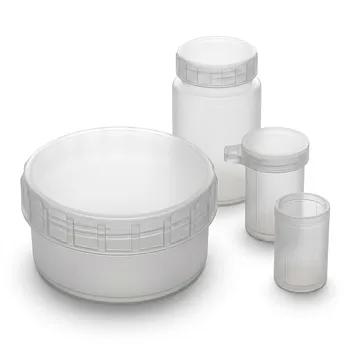
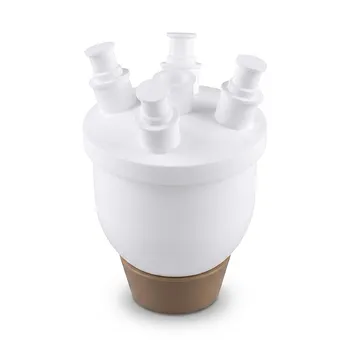
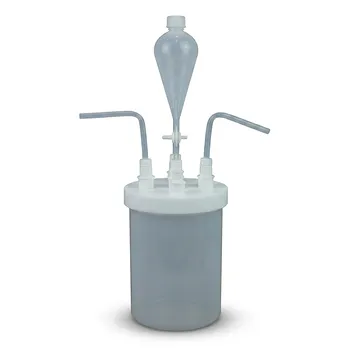
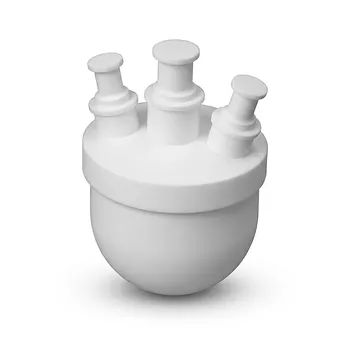
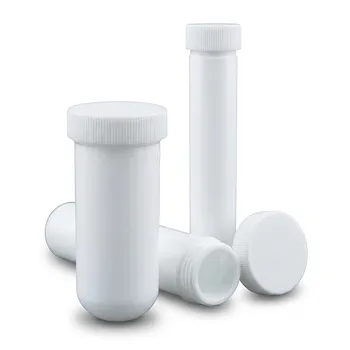
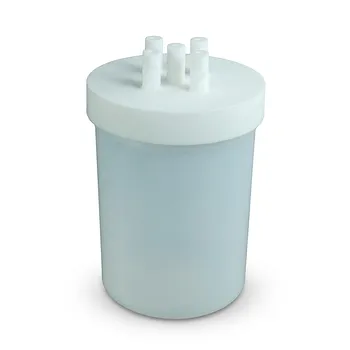
Strong C–F bonds make fluorinated ionomer membranes unusually resistant to oxidative attack. Their high bond dissociation energy—approximately 485–490 kJ/mol—and the shielding effect of fluorine atoms help protect the polymer backbone and side chains from radicals. As a result, well-designed membranes can retain more than 95% of their original weight after oxidative tests lasting over 100 hours. PTFE and PFA vessels are essential because they resist the test chemicals and do not readily leach metal ions that could artificially accelerate radical degradation.
The membrane must be resistant to oxidation, while the test vessel must not participate in it. PTFE and PFA provide chemically inert test environments, preventing container-derived contamination from distorting measurements of membrane degradation.
How C–F Bonds Improve Oxidative Stability
High bond strength resists radical cleavage
The C–F bond is among the strongest common single bonds in organic chemistry. Breaking it requires substantially more energy than breaking many C–H or C–O bonds, making fluorinated structures less susceptible to direct attack by highly reactive species.
This resistance is especially important in oxidative tests involving hydroxyl radicals and other reactive oxygen species. These radicals can attack vulnerable polymer sites, but the fluorinated backbone presents fewer easily cleaved bonds.
Fluorine shields the carbon backbone
Fluorine atoms surround and electronically protect the carbon atoms to which they are bonded. This creates a dense, sterically shielded structure that limits access by oxidizing species and reduces the chemical reactivity of the polymer surface.
The result is not complete immunity to oxidation. Defects, chain ends, non-fluorinated groups, porous regions, and chemically vulnerable ionomer side chains can still serve as initiation points for degradation.
Stable architecture helps preserve membrane function
Oxidative durability is not only a matter of retaining mass. The membrane must also preserve its mechanical integrity, ion-conducting pathways, dimensional stability, and low permeability.
A strong fluorinated backbone helps maintain this structure under aggressive conditions. In some membrane systems, additional covalent cross-linking reinforces the polymer network and further suppresses oxidative weight loss.
Why Fenton Testing Is Especially Sensitive
Fenton chemistry generates aggressive radicals
Fenton-type assays commonly combine hydrogen peroxide with iron ions to generate highly reactive hydroxyl radicals. These radicals are intentionally used to accelerate the conditions that a membrane may experience during oxidative operation.
Because the test is designed to measure chemical durability, even small uncontrolled changes in radical concentration can affect the result.
Trace metals can alter the reaction
Metal ions released from ordinary glass, metal fixtures, contaminated tools, or degraded container components may participate in redox reactions. They can increase, decrease, or otherwise change radical generation and therefore alter the apparent degradation rate.
This creates a central testing problem: the vessel itself can become an unrecognized experimental variable.
Weight loss is an important but incomplete metric
Membrane mass retention provides a practical indicator of oxidative damage. However, a membrane may suffer chemical changes before substantial mass is lost, including side-chain cleavage, ion-exchange-capacity loss, fluoride release, or mechanical weakening.
For reliable conclusions, weight change should ideally be considered alongside chemical and functional measurements.
Why PTFE and PFA Vessels Are Essential
They resist aggressive reagents
PTFE and PFA are fluoropolymers whose backbones are protected by strong C–F bonds. They resist attack from many strong acids, oxidizing environments, organic solvents, and other reagents used in chemical durability testing.
This allows the vessel to remain structurally stable rather than swelling, cracking, dissolving, or reacting with the test solution.
They minimize metal-ion leaching
High-purity PTFE and PFA labware contains no intentional metal vessel surface in contact with the sample. It therefore minimizes the introduction of ions such as sodium, potassium, calcium, or unwanted transition metals.
That matters particularly in Fenton testing, where uncontrolled iron or other redox-active contaminants can change the radical chemistry.
They reduce sample contamination
A chemically inert vessel is less likely to release extractables or react with membrane degradation products. This helps preserve the original composition of the test solution and improves the accuracy of measurements such as fluoride loss, ion release, and mass change.
They improve reproducibility
Using the same high-purity vessel material across experiments reduces one source of variation between samples. The resulting data more closely reflect differences in membrane formulation, cross-linking, porosity, or exposure time rather than differences in laboratory hardware.
The Relationship Between Membrane and Vessel Stability
The membrane is the object being tested
The fluorinated ionomer should be the primary source of chemical change in the experiment. Its degradation should result from the defined oxidative environment, not from reactions with the container.
PTFE or PFA helps isolate the membrane’s intrinsic durability by providing a comparatively nonreactive boundary.
The vessel protects the test chemistry
The vessel does not make the membrane more oxidation-resistant. Instead, it preserves the intended chemistry by preventing uncontrolled vessel corrosion, contamination, and reagent consumption.
This distinction is important: fluorinated labware improves the validity of the test, not the underlying durability of the sample.
PFA and PTFE serve similar but not identical roles
Both materials are widely used for chemically aggressive testing. PFA is often selected where greater transparency, melt-processability, or complex molded shapes are useful, while PTFE is valued for broad chemical resistance and established performance in vessels and components.
The appropriate choice still depends on temperature, mechanical demands, purity requirements, and the specific reagents involved.
Understanding the Trade-offs
Strong C–F bonds do not eliminate all degradation
Oxidation can proceed through weaker structural features rather than by directly cleaving the strongest C–F bonds. Side chains, defects, chain ends, residual impurities, and high-surface-area regions may degrade even when the main fluorinated backbone remains relatively stable.
Therefore, a high fluorine content should not be treated as a guarantee of unlimited service life.
Porosity can increase apparent vulnerability
A porous membrane has greater internal surface area and exposes more polymer to the oxidizing solution. This can increase radical access and produce greater weight loss than in a denser membrane with the same nominal chemistry.
Comparisons should therefore control for morphology, thickness, porosity, and exposed area.
Inert labware cannot correct poor experimental design
PTFE or PFA vessels reduce contamination risks, but they cannot compensate for uncontrolled temperature, reagent concentration, exposure time, sample geometry, or inadequate cleaning.
The vessel must be paired with appropriate blanks, controls, replicate samples, and consistent handling procedures.
Temperature and pressure limits still apply
Chemical inertness does not mean that PTFE and PFA can be used under every thermal or mechanical condition. Their dimensional stability and pressure capability depend on temperature, vessel design, and the test setup.
The selected container must be rated for the actual operating conditions, especially during heated or closed-vessel digestion.
How to Apply This to Your Project
The most reliable oxidative-stability experiment treats both polymer chemistry and test-environment control as essential.
- If your primary focus is membrane durability: Examine backbone fluorination, vulnerable side chains, porosity, cross-linking, mass retention, fluoride release, and retained ion-conducting performance rather than relying on C–F bond strength alone.
- If your primary focus is accurate Fenton testing: Use high-purity PTFE or PFA vessels, control the iron and peroxide chemistry deliberately, and prevent uncontrolled metal-ion contamination.
- If your primary focus is reproducibility: Standardize vessel material, cleaning, temperature, sample geometry, exposure time, and analytical methods across all experiments.
- If your primary focus is contamination control: Use fluoropolymer components wherever the sample contacts the apparatus, while verifying that seals, tools, and auxiliary parts do not introduce extractables.
Strong C–F bonds protect the membrane, while inert PTFE and PFA vessels protect the credibility of the measurement.
Summary Table:
| Factor | Role in Oxidative Stability | Testing Implications |
|---|---|---|
| C-F Bond Strength | High dissociation energy (~485 kJ/mol) resists radical attack | Membranes retain >95% weight after 100h oxidative tests |
| Fluorine Shielding | Steric and electronic protection of backbone | Reduces direct radical access; defects remain vulnerable |
| Fenton Testing | Generates hydroxyl radicals to accelerate degradation | Requires controlled conditions; trace metals distort results |
| PTFE/PFA Vessels | Chemically inert, low leaching | Prevent contamination, improve reproducibility |
Ensure reliable oxidative testing of fluorinated membranes with high-purity PTFE/PFA labware from KINTEK. Our chemically inert vessels minimize contamination and preserve test integrity. For membrane producers and researchers, trust KINTEK for precise, contamination-free results. Contact us today to select the right PTFE/PFA vessel for your application and enhance your experimental accuracy. Contact Us
Related Products
- PFA Reaction Jar Corrosion Resistant Wide Mouth PTFE Lab Bottle High Purity Chemical Vessel
- High Performance Customizable PTFE Reaction Vessel and Corrosion Resistant Polytetrafluoroethylene Flask for Chemical Laboratory Use
- Corrosion Resistant PFA Translucent Reaction Bottle with PTFE Screw Cap and Standard 19 24 Ground Joint Neck for High Temperature Lab Applications
- Custom PTFE Flask Large Volume 18L Corrosion Resistant Low Background High Purity Chemical Vessel
- Large Capacity PTFE Reaction Flask 20L Custom Multi Neck Laboratory Boiling Flask Fluoropolymer Chemical Processing Vessel
People Also Ask
- Role of reaction vessels in alkali treatment for oil palm waste: Achieve High-Purity Cellulose with PTFE Vessels
- Why are well-sealed reaction vessels necessary for superacid-promoted Friedel-Crafts polycondensation? Optimize Synthesis
- How do specialized reaction vessels facilitate floating transfer for graphene? Achieve Uniform 4-SBD Functionalization
- Why are corrosion-resistant vessels needed for alkaline cellulose extraction? Ensure Purity and Process Safety
- How do the material choice and sealing integrity of the reaction vessel affect the growth of NiFe-LDH? Optimize Synthesis