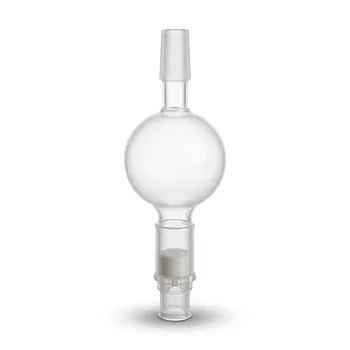
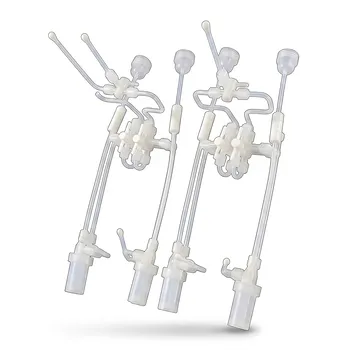
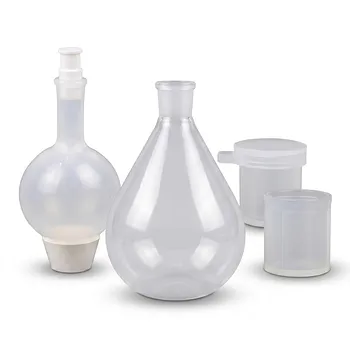
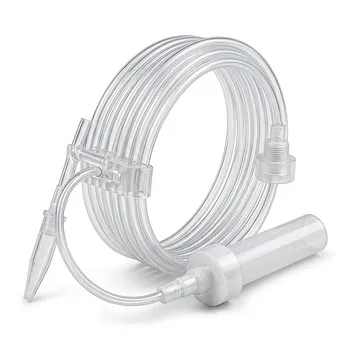
PFA is often selected because it combines PTFE-level temperature and chemical resistance with FEP-like melt-processability. PTFE can withstand continuous temperatures around 260°C, but its extremely high melt viscosity prevents conventional injection molding of intricate parts. FEP is melt-processible, but its continuous-use temperature is generally limited to about 200–205°C; PFA bridges both gaps, enabling complex molded apparatus that can operate at temperatures up to approximately 260°C.
The central advantage of PFA is the combination of processability and performance: it can be injection molded or extruded into intricate, smooth, low-porosity laboratory components while retaining thermal stability and chemical inertness comparable to PTFE.
Why Complex Laboratory Geometry Matters
PTFE cannot be conventionally melt-molded
Above its melting point, standard PTFE develops an extremely high melt viscosity—reported at approximately 10¹⁰ to 10¹² poise at 380°C. It therefore does not flow like a conventional thermoplastic during injection molding.
PTFE components typically require sintering, compression molding, or CNC machining. These methods can produce high-performance parts, but they are less efficient and less flexible for intricate vessels, fittings, valves, and integrated fluid paths.
PFA supports conventional melt processing
PFA’s copolymer structure substantially lowers its melt viscosity while preserving the underlying fluoropolymer characteristics. Manufacturers can therefore use injection molding and melt extrusion to create complex shapes with greater dimensional consistency.
This is particularly valuable for parts containing threads, internal channels, valve bodies, tubing connectors, narrow passages, and integrated sealing surfaces.
Molded surfaces can improve cleanliness and sealing
Melt-processed PFA can produce smooth, non-porous, seamless surfaces with fewer potential micro-voids than heavily machined or assembled alternatives. In high-purity applications, this helps reduce sample retention, carryover, contamination, and leakage risks.
Why PFA Outperforms FEP at Higher Temperatures
FEP’s temperature ceiling is lower
FEP is a genuine melt-processible fluoropolymer, making it easier to mold than PTFE. However, its mechanical properties deteriorate at higher temperatures, limiting its maximum continuous service temperature to approximately 200–205°C.
That limitation can exclude FEP from applications involving aggressive heating, prolonged elevated-temperature exposure, or thermal cycling.
PFA retains a PTFE-like thermal range
PFA is generally rated for continuous use up to approximately 260°C, comparable to standard PTFE. This makes it more suitable for high-temperature laboratory operations such as heated chemical containment, digestion procedures, and demanding fluid-transfer applications.
PFA therefore provides a wider operating margin than FEP when the apparatus must remain mechanically reliable at elevated temperatures.
PFA offers better resistance to mechanical deterioration
Compared with FEP, PFA generally provides better mechanical robustness, creep resistance, flex-crack resistance, and stress-crack resistance under demanding conditions. These properties matter when fittings, tubing, valves, or vessels experience pressure, repeated flexing, or thermal cycling.
Why PFA Fits High-Purity Laboratory Apparatus
Chemical resistance remains a primary advantage
PFA retains the broad chemical inertness associated with PTFE. It is well suited to contact with aggressive acids, strong bases, organic solvents, and other demanding reagents.
This makes it appropriate for high-purity chemical handling where material degradation or extractables could compromise the process or analytical result.
Low permeability supports containment
PFA offers low permeability and chemically inert surfaces, which are important when the apparatus must contain volatile, reactive, or contamination-sensitive fluids. The material’s non-wetting behavior also helps minimize adhesion and residue.
Complex components can be made as integrated parts
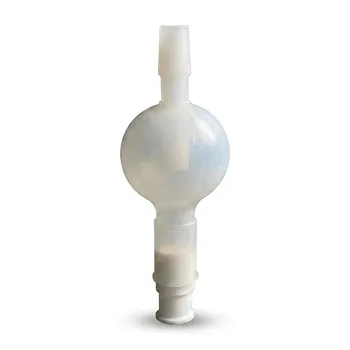
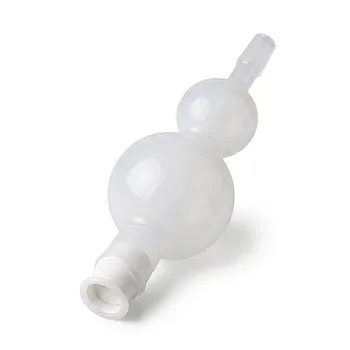
PFA’s processability allows designers to consolidate features into a molded component rather than relying on multiple machined or assembled pieces. Fewer joints can mean fewer potential leak paths and less opportunity for contamination.
Typical examples include:
- Trace-analysis vessels
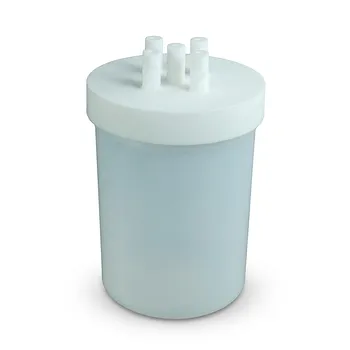
- Microwave digestion vessels
- High-purity fluid fittings
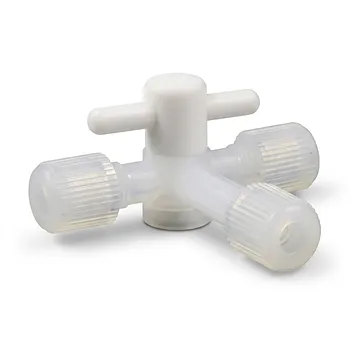
- Valves and valve bodies
- Tubing connectors
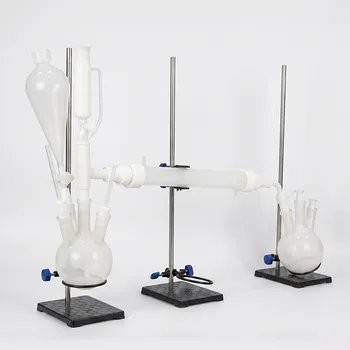
- Specialized reaction apparatus
Understanding the Trade-offs
PFA is not automatically superior in every application
PTFE remains an excellent choice when the geometry is relatively simple, machining or sintering is practical, and the primary requirements are maximum chemical inertness, low friction, and high-temperature performance.
For uncomplicated seals, gaskets, liners, or machined components, PTFE may be more economical or technically sufficient.
FEP may be preferable below its temperature limit
FEP can be appropriate when the operating temperature remains comfortably below approximately 200°C and the design benefits from melt processing. It may provide a practical balance of chemical resistance, transparency, and manufacturability for less thermally demanding components.
Choosing PFA solely for its higher temperature capability can add cost without providing a meaningful benefit if the application never approaches FEP’s service limit.
Processing still requires specialized control
PFA’s melt-processability does not make it equivalent to ordinary engineering thermoplastics. Processing requires appropriately high temperatures and careful control of mold design, shrinkage, dimensional tolerances, and contamination.
The final selection should also consider pressure, thermal cycling, mechanical loading, permeability, required purity, and regulatory or analytical requirements.
Making the Right Choice for Your Goal
The material decision should be based on the combination of geometry, temperature, chemistry, purity, and mechanical loading.
- If your primary focus is complex molded geometry: Choose PFA because it can be injection molded or extruded into intricate, seamless laboratory components.
- If your primary focus is maximum continuous operating temperature with simple geometry: Consider PTFE, particularly where machining or sintering is acceptable.
- If your primary focus is melt-processability at moderate temperatures: Consider FEP when continuous service temperatures remain around or below 200–205°C.
- If your primary focus is high-purity chemical handling at elevated temperatures: PFA is often the strongest overall choice because it combines PTFE-like inertness and thermal stability with precision molding capability.
PFA is selected when the application cannot afford to sacrifice either complex-shape manufacturability or high-temperature chemical performance.
Summary Table:
| Property | PFA | PTFE | FEP |
|---|---|---|---|
| Melt processability | Excellent (injection molding, extrusion) | Poor (requires sintering/machining) | Good (melt-processable) |
| Max continuous service temp | ~260°C | ~260°C | ~200–205°C |
| Chemical resistance | Excellent | Excellent | Good |
| Mechanical strength | High | Moderate | Lower |
| Surface smoothness | Excellent (molded) | Good (machined) | Good (molded) |
| Typical lab applications | Complex vessels, valves, fittings, high-purity components | Simple gaskets, seals, liners | Moderate-temperature tubing and parts |
Need a custom PFA lab apparatus that withstands high temperatures and complex geometries? KINTEK specializes in precision PTFE and PFA components, from intricate molded parts to complete lab setups. Our advanced CNC machining and melt-processing expertise ensure your exact specifications are met. Contact us today for a consultation and discover how we can enhance your lab’s performance and reliability. Get in touch now!
Related Products
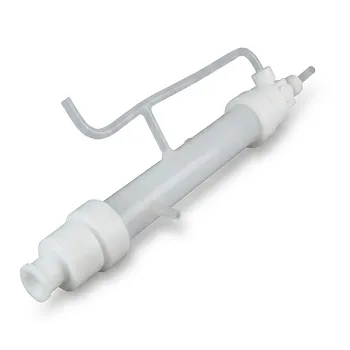
- High Purity PFA Chromatography Column with Collection Bottle Corrosion Resistant Fluoropolymer Filtration System for Trace Analysis
- High Purity PFA Chromatography Columns and Collection Bottles Corrosion Resistant Fluoropolymer Filtration Systems for Trace Analysis
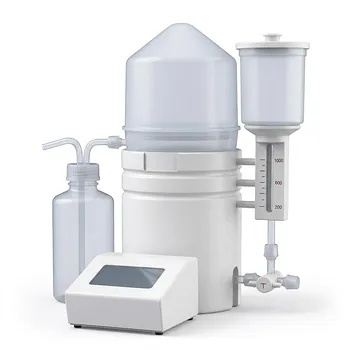
- PFA Sub Boiling Acid Purifier Electronic Grade Distillation System Laboratory Trace Analysis Equipment
- High Purity PFA Chromatography Column Double Layer Constant Pressure Filtration System with Sieve Plate for Strong Acid Resistance
- High Purity PFA Chromatography Column and Collection Bottle System Corrosion Resistant Filter Column with Sieve Plate Glass Alternative
People Also Ask
- What are the primary functional and temperature differences between PFA and FEP when selecting melt-processible fluoropolymers for custom laboratory apparatus?
- How does PPVE modify PTFE to make melt-processable PFA? Discover key benefits and applications.
- Why is the chemical stability of polymer endgroups critical when selecting melt-processible fluoropolymers like PFA for high-purity laboratory apparatus? Choose Stable Endgroups for Reliable Performance
- What are the characteristics of PFA material? A Guide to Its High-Performance Balance
- Why is Perfluoroalkoxy alkane (PFA) preferred over glass or stainless steel in pharmaceutical process development? Pure Yield