Polymerization temperature strongly influences the dimensional stability and internal density of molded PTFE. Low-temperature suspension polymerization—below approximately 30°C—generally produces softer resin particles with lower specific surface area (SSA), often around 1.5 m²/g and typically no more than 3.5 m²/g. After molding and sintering, this resin tends to produce lower void content and lower mold shrinkage than PTFE polymerized above 30°C, improving the reliability of precision laboratory apparatus.
Core takeaway: For molded PTFE labware requiring low absorption and tight dimensional tolerances, lower-temperature polymerized resin is generally advantageous. However, polymerization temperature is only one control variable; particle processing, molding conditions, and sintering must also be optimized to achieve low porosity and high mechanical performance.
How Polymerization Temperature Changes PTFE Resin
Low-temperature polymerization produces lower-SSA resin
Suspension polymerization below approximately 30°C produces PTFE powder with a lower specific surface area and relatively softer particles. The primary reference associates this material with an SSA of ≤3.5 m²/g, while representative low-temperature resin may be near 1.5 m²/g.
Lower surface area generally means fewer fine surface features and less resistance to particle packing and coalescence during molding and sintering.
Higher-temperature polymerization produces higher-SSA resin
Polymerization above approximately 30°C produces resin with a higher specific surface area, commonly reported as ≥3.5 m²/g in the reference material. Representative high-temperature resin may be near 3.0 m²/g, depending on the specific process and resin grade.
Higher-SSA powder can behave differently during compaction and sintering because its particle morphology and packing characteristics promote greater dimensional change during processing.
The comparison is relative, not a universal specification
The exact SSA, particle size, and shrinkage values depend on the polymerization recipe, molecular weight, powder classification, molding pressure, and thermal cycle. Therefore, values such as 1.5 m²/g or 3.0 m²/g should be treated as representative rather than guaranteed limits for every PTFE grade.
Why Porosity Changes After Molding and Sintering
Lower-temperature resin tends to produce fewer voids
Molded and sintered parts made from lower-temperature polymerized PTFE generally exhibit lower void content. The softer, lower-SSA particles can pack and consolidate more effectively before and during sintering.
When the part is heated above PTFE’s melting point—approximately 342°C, typically with processing temperatures around 360–380°C—the particles coalesce into a continuous matrix. Better initial packing supports a denser final structure.
Porosity affects chemical and analytical performance
Internal voids can retain liquids, vapors, dissolved chemicals, or analytical residues. For trace-analysis containers, reaction vessels, and fluid-handling components, this can cause:
- Sample retention and carryover
- Greater chemical absorption or permeation
- More difficult cleaning and validation
- Increased risk of contamination in subsequent tests
Lower porosity therefore supports cleaner fluid contact surfaces and more predictable behavior in high-purity laboratory applications.
Sintering remains a critical control point
Resin selection alone cannot guarantee a non-porous component. Insufficient heating, inadequate hold time, poor compaction, or nonuniform temperature distribution can leave incompletely coalesced regions even when the resin itself is well suited to low-void molding.
For thick parts, an appropriately controlled hold near the upper sintering range may be required to develop strength and density throughout the section. Excessive temperature or dwell time must be avoided because it can reduce molecular weight and increase brittleness.
How Polymerization Temperature Influences Mold Shrinkage
Low-temperature resin generally shrinks less
The reference associates low-temperature polymerized PTFE with lower mold shrinkage, with representative standard resin shrinkage around 1.5–2.0%. This lower shrinkage is especially valuable for thick billets that will later be machined into vessels, valve bodies, fittings, and analytical components.
Reduced shrinkage improves the ability to predict final dimensions after molding and sintering.
High-temperature resin generally shrinks more
High-temperature polymerized resin is associated with greater post-molding dimensional change. Representative shrinkage may exceed 3.0%, although the actual value depends on processing and geometry.
The increased shrinkage must be incorporated into mold dimensions and machining allowances. If it is underestimated, the finished apparatus may fall outside tolerance or develop distortion during cooling.
Thick sections amplify the dimensional challenge
Large or thick PTFE components cool and sinter less uniformly than thin parts. Differences in thermal history can produce variations in crystallinity, density, and shrinkage through the part.
Lower-shrinkage resin does not eliminate these effects, but it reduces one important source of dimensional uncertainty and can make subsequent CNC machining more predictable.
How Final Performance Is Affected
Dimensional accuracy improves with lower shrinkage
Lower shrinkage supports closer control of:
- Vessel volume
- Port and fitting locations
- Valve-seat geometry
- Wall thickness
- Sealing surfaces
- Machined interfaces
This is important because PTFE has extremely high melt viscosity and is not processed like a conventional flowing thermoplastic. Many laboratory components are formed by compression molding and sintering, then brought to final dimensions by precision machining.
Mechanical integrity depends on density and thermal history
Lower porosity generally improves structural uniformity and reduces internal defects. This supports the strength and reliability of custom PTFE vessels, fluid-handling valves, and containment components.
Sintering above the melting point allows particle coalescence, while controlled holding at the maximum temperature can improve tensile strength, elongation, and dielectric strength. However, temperatures above roughly 380–385°C, or unnecessarily long holds, can cause thermal degradation and embrittlement.
Chemical performance benefits from a dense structure
PTFE is selected for laboratory apparatus partly because of its chemical resistance and low surface reactivity. A dense, well-sintered structure helps preserve these advantages by limiting pathways for fluid penetration and reducing the amount of material that can remain trapped inside the component.
The practical benefit is not merely a stronger part; it is a part that is easier to clean and less likely to compromise trace-level measurements.
Temperature-dependent toughness still matters
PTFE undergoes a significant phase transition near 19°C. Below this temperature, reduced molecular mobility can make the material more susceptible to brittle crack propagation; above it, PTFE behaves more ductilely and can dissipate energy through localized deformation.
This operating-temperature effect is separate from polymerization temperature, but it must be considered when specifying apparatus for cold rooms, cryogenic-adjacent environments, or low-temperature testing.
Do Not Confuse Polymerization and Milling Temperature
Polymerization temperature sets the base resin morphology
The polymerization temperature primarily influences the resin’s SSA, particle softness, and subsequent shrinkage and porosity behavior. This is the main temperature effect when comparing low- and high-temperature suspension-polymerized PTFE.
Milling temperature can modify the result further
PTFE’s behavior changes near 19°C, and grinding above this transition can produce more elongated or dendritic particles. Milling at approximately 40–50°C, for example, may produce particles that lower bulk density, increase volumetric shrinkage, and increase tensile strength relative to resin milled closer to 25°C.
Consequently, a nominally low-temperature polymerized resin can still show different molding behavior if it is processed under different comminution conditions.
Particle morphology creates a performance trade-off
Dendritic particles may improve tensile strength and filled-compound characteristics, but they can also pack less densely and increase shrinkage. This means that the resin with the highest potential strength is not automatically the best choice for a precision, low-absorption laboratory component.
Understanding the Trade-offs
Lowest porosity is not the only design objective
A dense, low-shrinkage resin is usually preferable for precision labware, but some applications may prioritize tensile strength, filled-compound performance, or a particular machining response.
Material selection should therefore begin with the component’s dominant requirement: dimensional precision, chemical cleanliness, mechanical load, electrical performance, or a combination of these.
Lower shrinkage does not remove mold-design requirements
Even low-temperature resin requires validated shrinkage allowances. Mold geometry, compaction pressure, heating rate, cooling rate, wall thickness, and anisotropy all influence the final dimensions.
Prototype testing and dimensional inspection are essential for critical vessels, valve interfaces, and sealing surfaces.
More sintering is not always better
A longer or hotter sintering cycle can improve coalescence in thick sections, but excessive thermal exposure can degrade the PTFE molecular structure. The result may be lower molecular weight, increased brittleness, and reduced long-term mechanical integrity.
The correct objective is complete and uniform sintering without thermal overexposure.
Making the Right Choice for Your Goal
Select the resin and process based on the dominant performance requirement of the apparatus.
- If your primary focus is low porosity and chemical cleanliness: Favor lower-temperature polymerized PTFE with low SSA, then validate compaction and sintering to minimize voids and sample retention.
- If your primary focus is dimensional accuracy: Favor the lower-shrinkage resin range and include measured shrinkage allowances in mold design, especially for thick billets and precision-machined parts.
- If your primary focus is mechanical strength: Evaluate particle morphology and milling temperature as well as polymerization temperature, because dendritic particles may increase strength while also increasing shrinkage.
- If your primary focus is thick-section reliability: Use a carefully controlled sintering cycle that provides uniform coalescence without exceeding the temperature or hold time needed for the part.
- If your primary focus is low-temperature operation: Account separately for PTFE’s reduced fracture resistance below approximately 19°C when designing walls, corners, ports, and impact-sensitive features.
For high-performance PTFE laboratory apparatus, the best results come from coordinating resin polymerization, particle processing, mold design, and sintering rather than optimizing temperature at only one stage.
Summary Table:
| Factor | Low-Temperature Polymerization (<30°C) | High-Temperature Polymerization (>30°C) |
|---|---|---|
| Specific Surface Area (SSA) | ~1.5 m²/g (≤3.5 m²/g) | ≥3.5 m²/g, e.g., ~3.0 m²/g |
| Mold Shrinkage | Lower (1.5–2.0%) | Higher (>3.0%) |
| Porosity in Molded Part | Lower void content | Higher void content |
| Dimensional Stability | Better (tight tolerances) | Less predictable |
| Typical Applications | Precision labware, trace analysis vessels | General components, less critical parts |
Enhance Your Lab with Low-Porosity PTFE Apparatus
At KINTEK, we specialize in high-performance PTFE and PFA labware. Our low-temperature polymerized resin ensures minimal porosity and precise dimensional stability for your most demanding applications. From custom electrochemical cells to microwave digestion vessels, our CNC machining capabilities deliver bespoke solutions. Contact us today to discuss your requirements and benefit from our expertise in precision PTFE components — Get in Touch!
Related Products
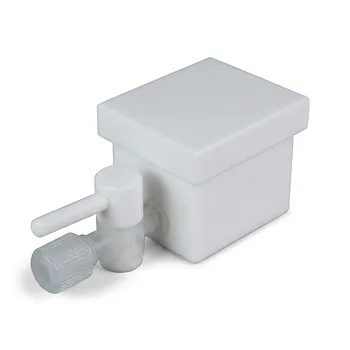
- Custom PTFE Laboratory Apparatus Corrosion Resistant Low Background Reaction Cells Precision CNC Fabrication
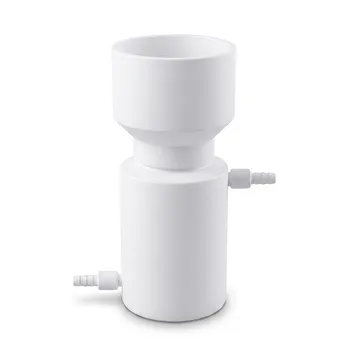
- High Purity PTFE Buchner Funnel Vacuum Filtration System Corrosion Resistant Low Trace Laboratory Suction Filter Apparatus
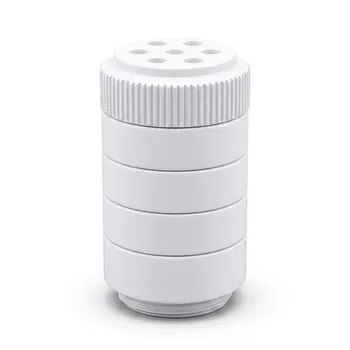
- Custom PTFE Multilayer Reaction Apparatus High Temperature Corrosion Resistant Threaded Modular Sieve System
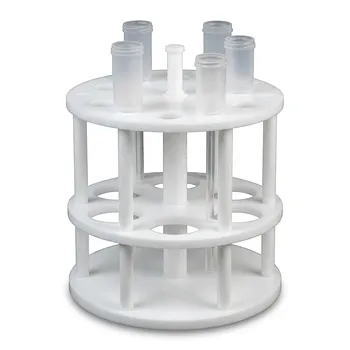
- Custom PFA Microcolumn Racks and PTFE Machined Low Background Corrosion Resistant Laboratory Fixtures
- Large Scale PTFE Beakers and Flasks for High Temperature Corrosion Resistant Laboratory Applications with Custom CNC Fabrication
People Also Ask
- How does PTFE's melting behavior affect custom lab apparatus? Key insights for manufacturing.
- What are the primary fabrication methods for PTFE laboratory apparatus? Expert Insights into Fluoropolymer Engineering
- What does the technological maturity of PTFE mean for the quality and reliability of standard laboratory apparatus? Achieve consistent lab results with mature PTFE tech.
- What is the chemical compatibility range for PTFE laboratory apparatus? Explore Near-Universal Chemical Resistance.
- What are the primary chemical resistance properties of PTFE laboratory apparatus? Unmatched Purity and Inertness