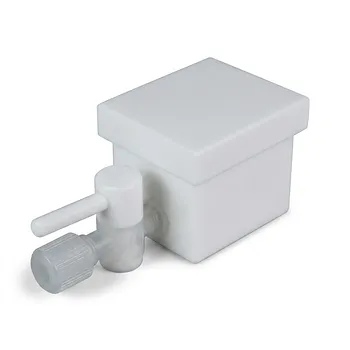
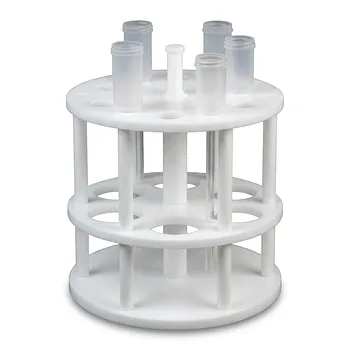
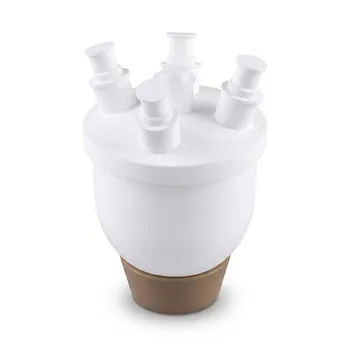
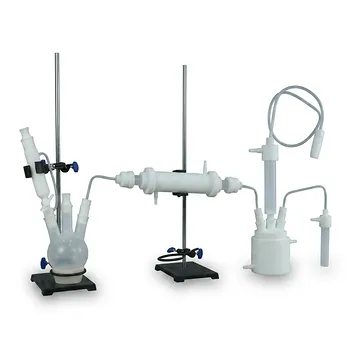
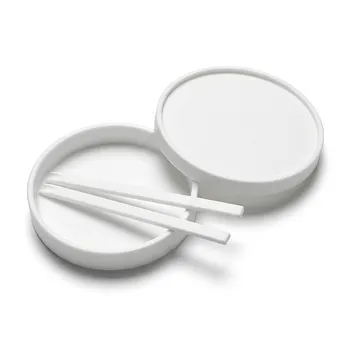
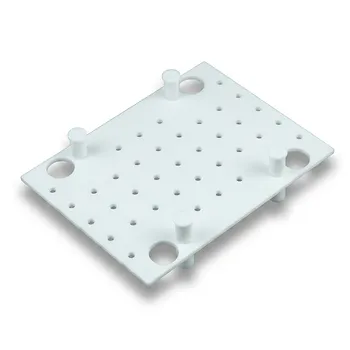
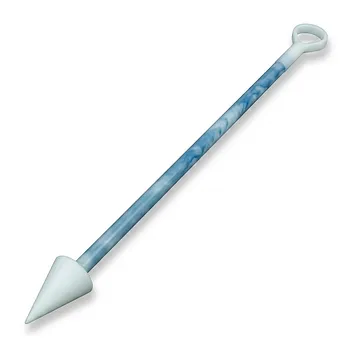
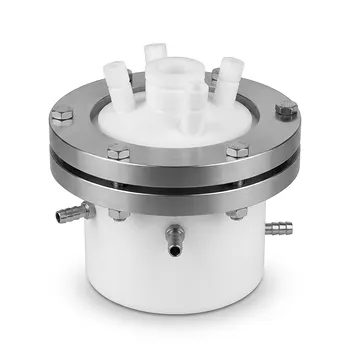
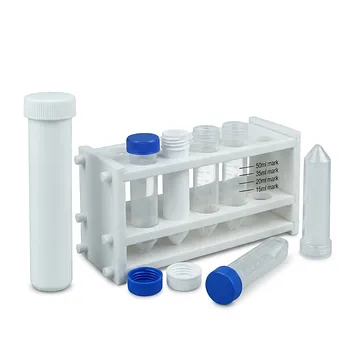
PTFE laboratory apparatus offers near-universal chemical inertness. It is effectively immune to degradation from strong acids, bases, and organic solvents across its entire operational temperature range. This makes it the gold standard for high-purity applications and the handling of the most aggressive corrosive reagents.
The primary chemical resistance of PTFE stems from its exceptionally strong carbon-fluorine bonds, which create a stable, non-reactive shield. This molecular structure ensures that the material neither reacts with nor contaminates the substances it contains.
The Foundation of Chemical Inertness
The Strength of Carbon-Fluorine Bonds
The unique molecular structure of PTFE is characterized by some of the strongest bonds in organic chemistry. These carbon-fluorine bonds create a highly stable material that is virtually impervious to chemical attack. Because the bonds are so difficult to break, the material does not easily engage in chemical reactions.
Resistance to Broad-Spectrum Reagents
PTFE remains stable when exposed to an exhaustive list of chemicals, including hydrofluoric acid, sulfuric acid, and sodium peroxide. It is also highly insoluble in most solvents, such as acetone and chloroform. This broad compatibility makes it a "universal" material for chemical processing and pharmaceutical research.
Non-Porous Surface Integrity
The surface of PTFE is non-porous, which minimizes the absorption of liquids. This characteristic ensures that the apparatus does not retain residues or "carry over" chemicals from previous use. Consequently, it is a premier choice for preventing cross-contamination in sensitive laboratory environments.
Protecting Sample Purity
Prevention of Ion Leaching
One of the most critical properties for trace analysis is PTFE’s ability to prevent the leaching of ions. Unlike glass or lower-grade plastics, PTFE will not release organic contaminants or metallic ions into a sample. This ensures the high purity of samples during long-term storage or aggressive reactions.
Thermal Stability and Resistance
The chemical resistance of PTFE is not a temporary state; it remains virtually total across its usable temperature range. It does not become brittle or lose its inert properties when moving from cryogenic temperatures to high-heat environments. This stability allows for consistent performance in diverse experimental conditions.
Understanding the Trade-offs and Limitations
Vulnerability to Alkali Metals
Despite its legendary resistance, PTFE is not invincible and can be damaged by molten or dissolved alkali metals. Substances like liquid sodium or potassium can strip fluorine atoms from the carbon backbone. This reaction destroys the material's integrity and can lead to structural failure.
Reactive Fluorinating Agents
PTFE is susceptible to attack by specific, highly reactive fluorinating agents such as chlorine trifluoride and oxygen difluoride. These chemicals, along with elementary fluorine gas at high pressures and temperatures, can cause the material to degrade. Users must exercise caution when working with these specific, high-energy oxidizers.
Mechanical Considerations
While chemically superior, PTFE is a soft fluoropolymer and may be prone to "creep" or cold flow under heavy mechanical loads. It lacks the structural rigidity of stainless steel or specialized ceramics. Therefore, its use is often focused on liners, coatings, and containers rather than structural load-bearing components.
How to Apply This to Your Project
Recommendations Based on Your Objectives
- If your primary focus is trace element analysis: Utilize PTFE containers to ensure zero ion leaching and maintain the highest possible sample purity.
- If your primary focus is handling hydrofluoric acid: Standardize on PTFE apparatus, as it is one of the few materials that remain completely unaffected by this highly corrosive acid.
- If your primary focus is preventing cross-contamination: Leverage PTFE’s non-porous surface to ensure thorough cleaning and zero residue retention between different chemical batches.
- If your primary focus is working with molten sodium or fluorine gas: Seek alternative materials like specific nickel alloys, as PTFE will fail when exposed to these specific reactive species.
By understanding the molecular stability of PTFE, you can confidently employ it to solve the most demanding corrosion and purity challenges in the laboratory.
Summary Table:
| Property | Advantage | Best For |
|---|---|---|
| C-F Bond Strength | Universal inertness | Handling aggressive acids (HF, H2SO4) |
| Non-Porous Surface | No residue retention | Cross-contamination prevention |
| Zero Ion Leaching | Maintains high sample purity | Trace element and organic analysis |
| Thermal Stability | Constant resistance | Cryogenic to high-heat applications |
Elevate your laboratory's performance with KINTEK’s high-performance fluoropolymer solutions. From everyday basic labware like PTFE beakers, digestion tubes, and high-purity trace analysis instruments to advanced custom reaction apparatus and electrochemical cells, KINTEK manufactures virtually all imaginable supplies crafted for extreme chemical resistance. Our end-to-end custom CNC fabrication ensures we deliver everything from standard consumables like O-rings and tubing to complex, non-standard machined parts tailored to your specific research needs. Partner with KINTEK for absolute material purity and engineering excellence—contact our experts today to discuss your custom lab requirements!
Related Products
- Custom PTFE Laboratory Apparatus Corrosion Resistant Low Background Reaction Cells Precision CNC Fabrication
- High Purity PTFE Buchner Funnel Vacuum Filtration System Corrosion Resistant Low Trace Laboratory Suction Filter Apparatus
- Custom PTFE Multilayer Reaction Apparatus High Temperature Corrosion Resistant Threaded Modular Sieve System
- Custom PFA Microcolumn Racks and PTFE Machined Low Background Corrosion Resistant Laboratory Fixtures
- Large Scale PTFE Beakers and Flasks for High Temperature Corrosion Resistant Laboratory Applications with Custom CNC Fabrication
People Also Ask
- How does PTFE's melting behavior affect custom lab apparatus? Key insights for manufacturing.
- What are the primary fabrication methods for PTFE laboratory apparatus? Expert Insights into Fluoropolymer Engineering
- What is the chemical compatibility range for PTFE laboratory apparatus? Explore Near-Universal Chemical Resistance.
- Why use PTFE or PFA for modified Cu-MOF synthesis? Ensure High Purity and Exceptional Chemical Stability
- What customization options are available for PTFE materials? Tailor Performance for Your Application