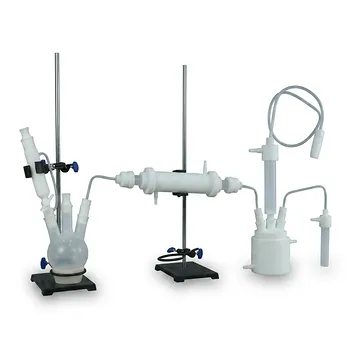
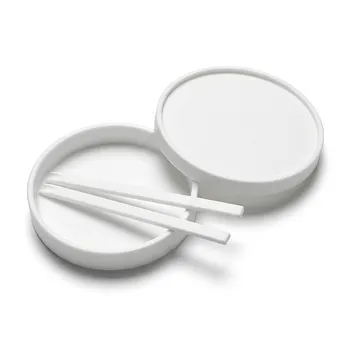
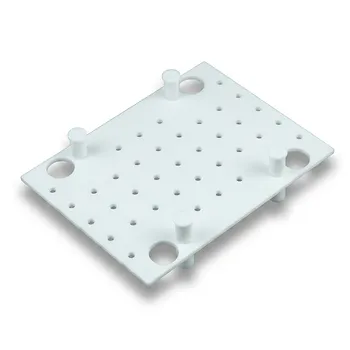
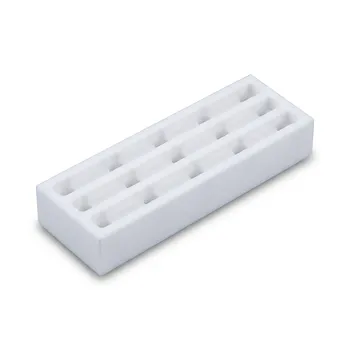
PTFE offers near-universal chemical resistance across an extremely broad pH and solvent range. It is effectively inert when exposed to almost all acids, bases, organic solvents, and powerful oxidizers, making it the definitive material for high-purity and aggressive laboratory applications. This resistance remains stable at continuous operating temperatures reaching up to 260°C (500°F).
PTFE is the most chemically resilient polymer used in laboratories, capable of withstanding everything from hydrofluoric acid to superacids. Its only significant vulnerabilities are molten alkali metals, elemental fluorine, and specific fluorinating agents at elevated temperatures.
The Scope of PTFE Chemical Resistance
Resistance to Acids and Superacids
PTFE is one of the few materials that can safely contain hydrofluoric acid (HF), which aggressively attacks glass. It is equally resistant to concentrated sulfuric acid, nitric acid, and even "superacids" such as fluoroantimonic acid.
Stability with Bases and Solvents
The polymer is unaffected by strong bases and nearly all categories of organic chemicals, including alcohols, ketones, and esters. Because it does not react with these substances, it prevents sample contamination and ensures the structural integrity of the apparatus.
Performance with Potent Oxidizers
PTFE maintains its properties when in contact with high-strength oxidizing agents. This makes it ideal for digestion vessels and storage containers where other plastics would undergo oxidative degradation or embrittlement.
Thermal and Environmental Constraints
Maximum Operating Temperature
PTFE remains chemically inert up to a maximum continuous service temperature of 260°C (500°F). Beyond this point, the physical properties of the material begin to decline, and the risk of off-gassing increases.
Impact of High-Temperature Fluorination
While PTFE is composed of carbon-fluorine bonds, it can be attacked by chemicals that release free fluorine at high temperatures. These reactions can compromise the polymer chain, leading to material failure in specialized high-heat environments.
Understanding the Trade-offs and Vulnerabilities
Reactivity with Alkali Metals
The most significant weakness of PTFE is its reaction with molten or dissolved alkali metals, such as sodium or potassium. These substances strip fluorine atoms from the polymer backbone, causing the material to char and lose all structural integrity.
Vulnerability to Specific Fluorinating Agents
PTFE is susceptible to damage from highly reactive fluorinating agents like chlorine trifluoride (ClF3) and oxygen difluoride (OF2). These reagents are aggressive enough to break the carbon-fluorine bond, especially when heat is applied.
Physical Limitations in Gaseous Environments
While chemically resistant to most gases, turbulent liquid or gaseous fluorine can cause physical and chemical erosion. In these extreme cases, the mechanical stress combined with high reactivity can lead to premature wear of the laboratory apparatus.
Making the Right Choice for Your Goal
How to Apply This to Your Project
- If your primary focus is handling concentrated mineral acids: PTFE is the gold standard and will provide indefinite service life without risk of corrosion.
- If your primary focus is high-temperature organic synthesis: Ensure your process remains below 260°C to maintain the mechanical and chemical integrity of your PTFE components.
- If your primary focus is working with alkali metals: Avoid PTFE entirely, as molten or dissolved sodium/potassium will aggressively destroy the material.
- If your primary focus is using specialized fluorinating agents: Cross-reference your specific reagent (like ClF3) with your operating temperature, as these can cause PTFE to fail.
PTFE provides the highest level of chemical security for the modern laboratory, provided you avoid the narrow range of highly reactive metals and fluorine-releasing agents.
Summary Table:
| Category | Compatibility & Performance | Key Details |
|---|---|---|
| Acids & Superacids | Excellent | Resists HF, Nitric, Sulfuric, and Fluoroantimonic acid. |
| Bases & Solvents | Excellent | Inert to strong bases, alcohols, ketones, and esters. |
| Oxidizing Agents | Excellent | Ideal for digestion vessels; resists oxidative degradation. |
| Thermal Limit | Up to 260°C (500°F) | Maintains stability and inertness at high temperatures. |
| Vulnerabilities | Critical Limitations | Reacts with molten alkali metals and elemental fluorine. |
Optimize Your Lab with KINTEK’s High-Performance Fluoropolymers
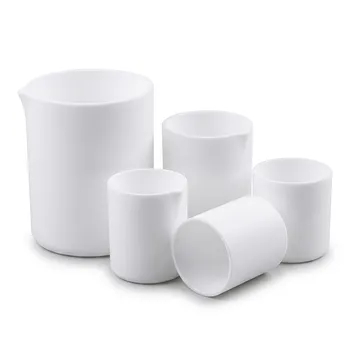
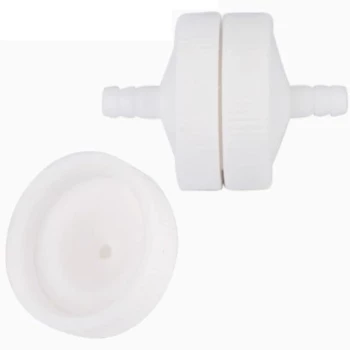
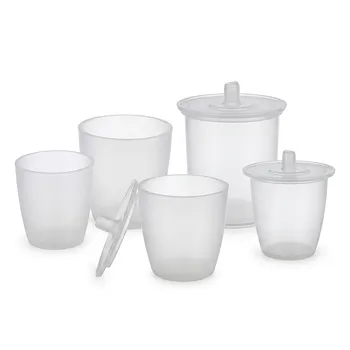
Ensure the integrity of your most aggressive chemical processes with KINTEK. We specialize in high-performance PTFE and PFA laboratory supplies, offering everything from everyday basic labware—like beakers, crucibles, and reagent bottles—to advanced fluid transfer components, including high-purity tubing, valves, and fittings.
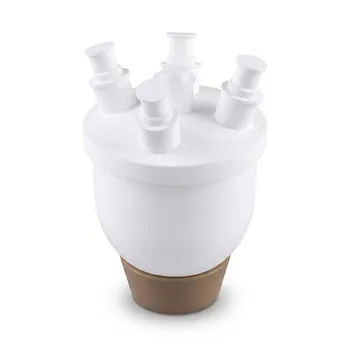
Whether you require standard sample prep tools or bespoke, non-standard machined parts, our end-to-end custom CNC fabrication delivers exactly what your research demands. From microwave digestion vessels and electrochemical cells to high-volume consumables, KINTEK provides the durability and chemical security essential for modern science.
Ready to upgrade your laboratory apparatus? Contact us today to discuss your custom requirements!
Related Products
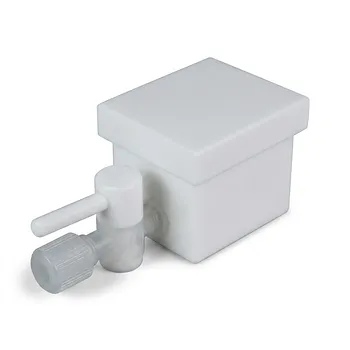
- Custom PTFE Laboratory Apparatus Corrosion Resistant Low Background Reaction Cells Precision CNC Fabrication
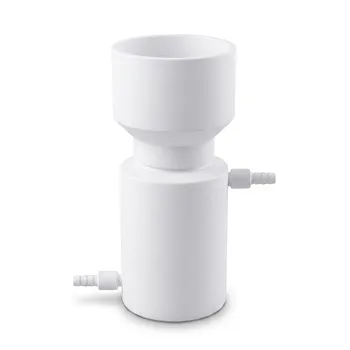
- High Purity PTFE Buchner Funnel Vacuum Filtration System Corrosion Resistant Low Trace Laboratory Suction Filter Apparatus
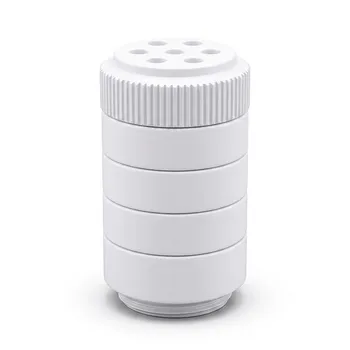
- Custom PTFE Multilayer Reaction Apparatus High Temperature Corrosion Resistant Threaded Modular Sieve System
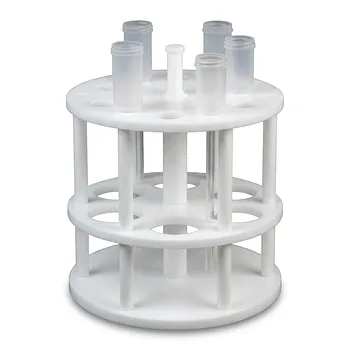
- Custom PFA Microcolumn Racks and PTFE Machined Low Background Corrosion Resistant Laboratory Fixtures
- Large Scale PTFE Beakers and Flasks for High Temperature Corrosion Resistant Laboratory Applications with Custom CNC Fabrication
People Also Ask
- How does PTFE's melting behavior affect custom lab apparatus? Key insights for manufacturing.
- What are the primary fabrication methods for PTFE laboratory apparatus? Expert Insights into Fluoropolymer Engineering
- Why use PTFE or PFA for modified Cu-MOF synthesis? Ensure High Purity and Exceptional Chemical Stability
- What are the primary chemical resistance properties of PTFE laboratory apparatus? Unmatched Purity and Inertness
- What customization options are available for PTFE materials? Tailor Performance for Your Application