Fabricating PTFE laboratory apparatus requires specialized thermal and mechanical processes because the material’s extreme melt viscosity makes standard plastic injection molding impossible. Instead, manufacturers rely on compression molding and sintering to create solid shapes, or precision machining from semi-finished stock to produce complex components like valves, stopcocks, and threaded fittings.
Because PTFE does not flow when melted, it must be treated more like a metal or ceramic—compacted into a "preform" and fused through a high-temperature sintering process—before it can be shaped into functional laboratory tools.
The Foundation of PTFE Shaping: Molding and Sintering
Compression and Isostatic Molding
The most common method for creating bulk PTFE parts is compression molding, where powdered resin is compacted into a mold at room temperature. For more complex or uniform shapes, isostatic molding applies equal pressure from all sides, ensuring a consistent density throughout the preform.
The Critical Sintering Stage
Once the powder is compacted into a "green" preform, it undergoes sintering at temperatures between 360°C and 380°C. This thermal treatment causes the individual particles to fuse into a solid, cohesive mass without the material ever becoming a flowable liquid.
Automatic and RAM Molding
For high-volume production of simple geometries, auto molding uses automated presses to speed up the compaction cycle. RAM extrusion is a specialized variant where PTFE powder is intermittently pressed through a heated die to create continuous lengths of rods or heavy-walled tubing.
Secondary Fabrication: From Stock to Finished Apparatus
Precision CNC Machining
Many laboratory components, such as threaded connectors, valves, and manifold blocks, are produced via CNC milling and turning. This process starts with semi-finished stock—molded sheets or extruded rods—which is then carved into high-precision shapes with tight tolerances.
Paste Extrusion for Tubing and Liners
When thin-walled laboratory tubing or flexible liners are required, manufacturers use paste extrusion. This involves mixing fine PTFE powder (produced via dispersion polymerization) with a lubricant to create a paste that can be forced through a die before the lubricant is evaporated and the tube is sintered.
Specialized Cutting and Finishing
For gaskets, diaphragms, and custom seals, fabricators use die cutting, stamping, or water jet cutting. These methods allow for rapid production of flat components from skived PTFE sheets—thin layers of material "peeled" from a large molded cylinder.
Understanding the Trade-offs
The Absence of Injection Molding
The primary limitation of PTFE is that it cannot be injection molded, which typically increases the cost per part compared to other plastics. Every complex laboratory item must either be molded into a near-net shape or machined, leading to longer production times.
Material Waste and Cost
Machining PTFE from solid blocks often results in significant material waste in the form of shavings and scrap. While PTFE is highly durable and chemically inert, the labor-intensive nature of machining and the energy required for sintering make these apparatus more expensive than disposable alternatives.
Dimensional Stability Challenges
PTFE has a high coefficient of thermal expansion and can "creep" or deform under constant load. This means that while it is excellent for chemical resistance, laboratory fittings must be designed with specific tolerances to ensure they remain leak-proof during temperature fluctuations.
Choosing the Right Method for Your Goal
How to Apply This to Your Project
Selecting the right fabrication method depends on the complexity of your apparatus and the performance requirements of your laboratory environment.
- If your primary focus is high-precision fittings or valves: Choose CNC machining from molded stock to ensure the tightest tolerances and reliable threading.
- If your primary focus is high-volume, simple shapes: Utilize compression or auto molding to minimize costs while maintaining material integrity.
- If your primary focus is thin-walled, flexible tubing: Specify paste extrusion using fine-powder PTFE to ensure structural flexibility and chemical purity.
- If your primary focus is large-scale containment or liners: Opt for isostatic molding to ensure uniform density and eliminate weak points in the material structure.
By understanding that PTFE is forged through pressure and heat rather than simple melting, you can better select the fabrication path that ensures the safety and longevity of your laboratory equipment.
Summary Table:
| Fabrication Method | Key Process Description | Best Used For |
|---|---|---|
| Compression Molding | Room temperature powder compaction followed by sintering | Beakers, dishes, and solid bulk shapes |
| CNC Machining | Precision milling and turning from solid molded stock | Valves, threaded fittings, and bespoke components |
| Paste Extrusion | Lubricated fine-powder extrusion for thin walls | Flexible laboratory tubing and vessel liners |
| Isostatic Molding | Multi-directional pressure for uniform density | Large tanks and complex, high-integrity shapes |
| RAM Extrusion | Continuous pressing through heated dies | Heavy-walled tubing and solid rods |
Precision-Engineered PTFE & PFA Solutions for Your Laboratory
At KINTEK, we specialize exclusively in high-performance fluoropolymers, providing an exhaustive range of laboratory supplies. From everyday essentials like beakers, measuring cylinders, crucibles, and reagent bottles to advanced research tools including electrochemical cells, battery testing fixtures, and hydrothermal synthesis liners, our products are built for extreme chemical resistance and thermal stability.
Leveraging our end-to-end custom CNC fabrication, we deliver everything from standard consumables—such as tubing, fittings, valves, and stirring bars—to complex, non-standard machined parts designed for your specific experimental needs. Whether you require high-volume orders or bespoke reaction apparatus like microwave digestion vessels and microchannel reactors, KINTEK ensures absolute material purity and precision.
Unlock the full potential of your research with expert-crafted labware.
Contact KINTEK Today to discuss your custom project or request a quote for our high-performance PTFE and PFA supplies.
Related Products
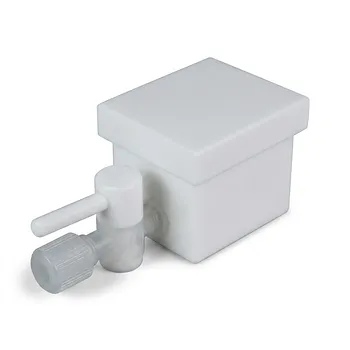
- Custom PTFE Laboratory Apparatus Corrosion Resistant Low Background Reaction Cells Precision CNC Fabrication
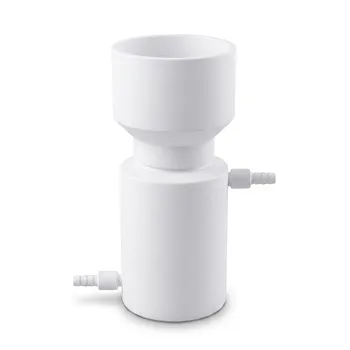
- High Purity PTFE Buchner Funnel Vacuum Filtration System Corrosion Resistant Low Trace Laboratory Suction Filter Apparatus
- Custom PTFE Multilayer Reaction Apparatus High Temperature Corrosion Resistant Threaded Modular Sieve System
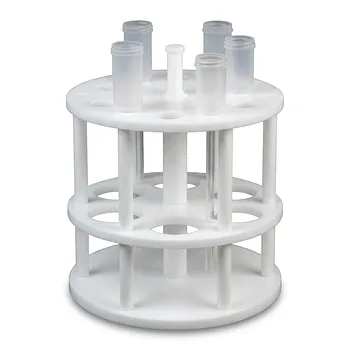
- Custom PFA Microcolumn Racks and PTFE Machined Low Background Corrosion Resistant Laboratory Fixtures
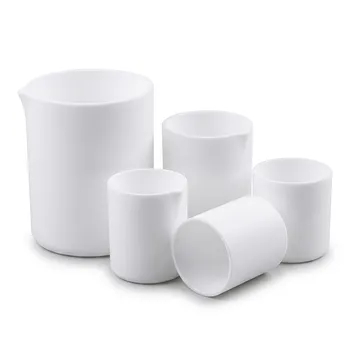
- Large Scale PTFE Beakers and Flasks for High Temperature Corrosion Resistant Laboratory Applications with Custom CNC Fabrication
People Also Ask
- How does PTFE's melting behavior affect custom lab apparatus? Key insights for manufacturing.
- What is the chemical compatibility range for PTFE laboratory apparatus? Explore Near-Universal Chemical Resistance.
- Why use PTFE or PFA for modified Cu-MOF synthesis? Ensure High Purity and Exceptional Chemical Stability
- What are the primary chemical resistance properties of PTFE laboratory apparatus? Unmatched Purity and Inertness
- What customization options are available for PTFE materials? Tailor Performance for Your Application