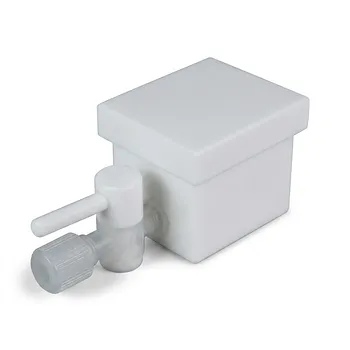
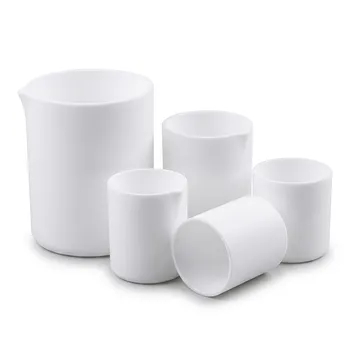
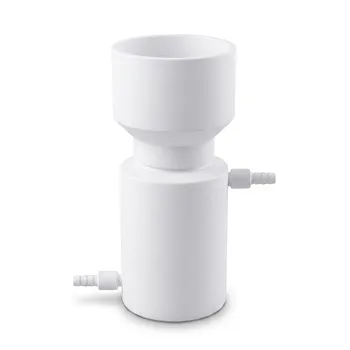
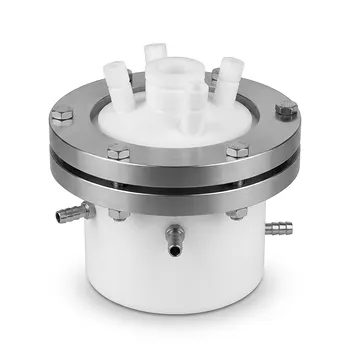
The critical requirement for high-quality PTFE equipment in MXene etching stems from the extreme corrosivity of fluoride-based reagents. During the synthesis of MXenes (such as $Ti_3C_2T_x$), researchers utilize high concentrations of hydrofluoric acid (HF) or mixtures of hydrochloric acid (HCl) and lithium fluoride (LiF) to selectively remove atomic layers from the MAX phase. Only polytetrafluoroethylene (PTFE) offers the necessary chemical inertness to withstand these aggressive etchants without compromising the purity of the resulting material or the safety of the laboratory environment.
Core Takeaway: PTFE is non-negotiable in MXene preparation because it provides a chemically inert barrier against hydrofluoric acid, which would otherwise dissolve glass containers and introduce contaminating ions into the high-purity MXene slurry.
The Chemical Challenge of MXene Synthesis
The Destructive Nature of Hydrofluoric Acid
The "top-down" synthesis of MXenes requires the selective etching of aluminum layers from a MAX phase precursor. This process typically involves hydrofluoric acid (HF), an agent that rapidly degrades and dissolves traditional laboratory materials like glass, ceramics, and most metals.
The Failure of Standard Borosilicate Glass
Standard laboratory glassware is primarily composed of silica, which reacts violently with fluoride ions to form silicon tetrafluoride gas and hexafluorosilicate ions. Using glass in this environment would result in the structural failure of the container and complete loss of the sample.
In-Situ HF Generation
Many modern protocols use a mixture of lithium fluoride (LiF) and high-concentration hydrochloric acid (HCl) to generate HF in situ. This creates an extremely aggressive, acidic environment that requires the specialized chemical resistance found in high-quality PTFE liners and reaction vessels.
Ensuring Material Purity and Experimental Integrity
Prevention of Ion Leaching
High-purity MXenes are highly sensitive to their chemical environment during the delamination process. Lower-quality plastics or metallic containers can leach metal ions or organic impurities into the MXene slurry when exposed to strong acids.
Impact on Photocatalytic and Electronic Research
The presence of even trace impurities from a reaction vessel can drastically alter the electronic properties or photocatalytic performance of the final MXene composite. Utilizing PTFE ensures that the experimental results reflect the properties of the MXene itself, rather than artifacts of container contamination.
Maintenance of Precursor Quality
The etching step is the foundation of the entire MXene preparation workflow. By using high-quality PTFE, researchers ensure that the precursor purity is maintained from the initial etching through to the final delamination, resulting in high-quality nanosheets.
Understanding the Trade-offs and Limitations
Temperature Constraints of PTFE
While PTFE is exceptionally inert, it is a thermoplastic with specific thermal limits. In high-pressure or high-temperature etching environments, researchers must ensure they do not exceed the maximum service temperature (typically around 260°C) to prevent vessel deformation.
The Risk of Low-Quality Fluoropolymers
Not all "Teflon" products are created equal; low-quality PTFE may contain fillers or recycled materials that can degrade or leach under extreme conditions. Using high-purity, virgin PTFE is essential to guarantee the chemical stability required for high-acid environments.
Maintenance and Cleaning Challenges
PTFE is porous at a microscopic level, meaning it can "absorb" certain chemicals if not cleaned rigorously. Cross-contamination between different MXene batches is a potential pitfall if the PTFE vessels are not subjected to specialized cleaning protocols between uses.
How to Apply This to Your Research
Implementing the Right Equipment Strategy
- If your primary focus is material purity: Always utilize virgin, high-purity PTFE or PFA (Perfluoroalkoxy) liners to eliminate the risk of trace metal ion leaching.
- If your primary focus is experimental safety: Ensure all closed-vessel reactions involving HCl/LiF are conducted in high-pressure PTFE-lined stainless steel autoclaves to prevent vessel rupture.
- If your primary focus is cost-efficiency: Reserve your high-quality PTFE consumables specifically for the etching and washing stages, where acid concentrations are highest, while using standard plastics for lower-risk processing steps.
The selection of high-quality PTFE is not merely a preference but a technical necessity to ensure the safety, purity, and reproducibility of MXene-based materials.
Summary Table:
| Key Factor | Why PTFE is Required | Impact on Research Success |
|---|---|---|
| Chemical Resistance | Withstands HF and HCl/LiF mixtures that dissolve glass. | Prevents container failure and sample loss. |
| Material Purity | Chemically inert with zero metal ion leaching. | Ensures high electronic and photocatalytic performance. |
| Thermal Limits | Handles reaction temperatures up to 260°C. | Guarantees safety during exothermic etching steps. |
| Contamination Control | Resists degradation and organic impurity release. | Maintains the integrity of high-purity nanosheets. |
Elevate Your Research with KINTEK’s Precision PTFE Solutions
From the critical acid etching of MXenes to complex fluid transfers, KINTEK provides the high-performance fluoropolymer equipment your laboratory demands. We maintain an exclusive focus on high-performance materials to ensure your results are never compromised by contamination or equipment failure.
Our extensive range of PTFE and PFA solutions includes:
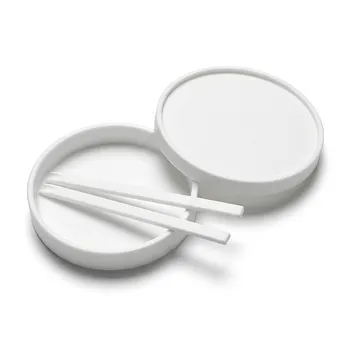
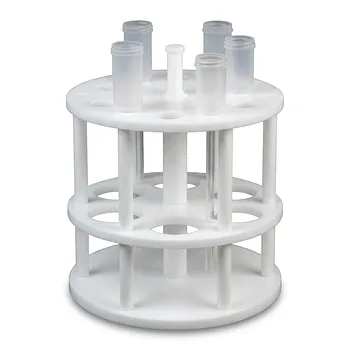
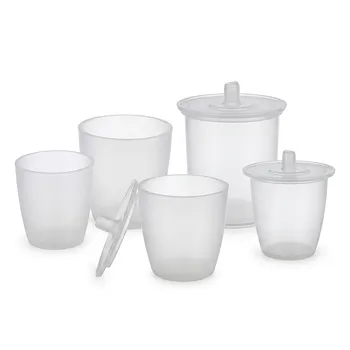
- Everyday Basic Labware: Beakers, measuring cylinders, crucibles, reagent/wash bottles, and digestion tubes.
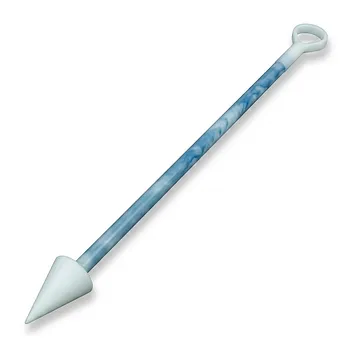
- Sample Prep & Filtration: Separatory funnels, filters, pipettes, tweezers, and spatulas.
- Fluid Transfer & Components: Tubing, fittings, valves, O-rings, and seal tapes.
- Advanced Reaction Apparatus: Custom electrochemical cells, hydrothermal synthesis liners, microwave digestion vessels, and microchannel reactors.
Backed by end-to-end custom CNC fabrication, KINTEK is equipped to deliver everything from high-volume standard orders to complex, non-standard machined parts tailored to your specific research setup.
Ready to upgrade your lab's performance? Contact us today to request a quote or discuss your custom fabrication needs!
References
- Jamil A. Buledi, Amber R. Solangi. MXene-integrated two-dimensional photo-catalysts: A new frontier in sustainable degradation of organic dyes. DOI: 10.15407/spqeo28.03.306
This article is also based on technical information from Kintek Knowledge Base .
Related Products
- Custom PTFE Laboratory Apparatus Corrosion Resistant Low Background Reaction Cells Precision CNC Fabrication
- PTFE PFA Vacuum Filtration System Corrosion Resistant Customizable Shatterproof Laboratory Device
- Heat Resistant Custom PTFE Laboratory Beaker for Hot Plate Heating and Trace Analysis
- Large Scale PTFE Beakers and Flasks for High Temperature Corrosion Resistant Laboratory Applications with Custom CNC Fabrication
- High Purity PTFE Buchner Funnel Vacuum Filtration System Corrosion Resistant Low Trace Laboratory Suction Filter Apparatus
People Also Ask
- How does PTFE's melting behavior affect custom lab apparatus? Key insights for manufacturing.
- What are the primary fabrication methods for PTFE laboratory apparatus? Expert Insights into Fluoropolymer Engineering
- What is the chemical compatibility range for PTFE laboratory apparatus? Explore Near-Universal Chemical Resistance.
- Why use PTFE or PFA for modified Cu-MOF synthesis? Ensure High Purity and Exceptional Chemical Stability
- What are the primary chemical resistance properties of PTFE laboratory apparatus? Unmatched Purity and Inertness