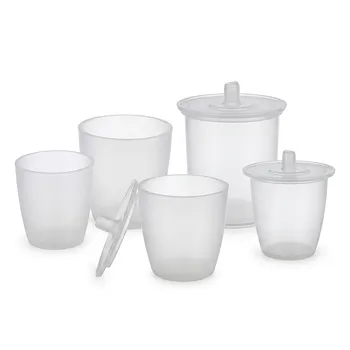
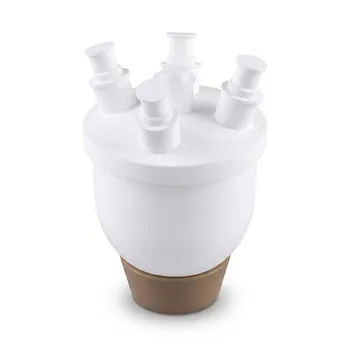
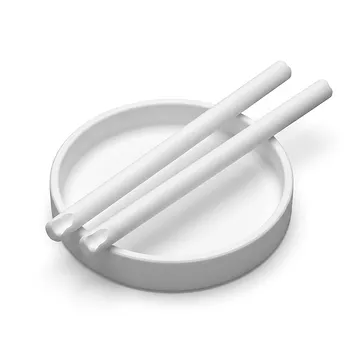
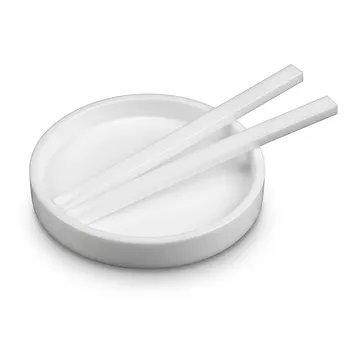
PTFE’s unusual melting behavior makes custom laboratory apparatus a powder-processing and machining challenge rather than a conventional molding project. When heated above its melting transition, PTFE forms a stiff, clear, extremely high-viscosity gel instead of a freely flowing liquid. As a result, standard injection molding is generally impractical, so custom electrochemical cells, reaction vessels, tubing fittings, and fluid-handling parts are typically made by powder compaction, sintering, and precision CNC machining.
PTFE does not become a normally moldable melt. Its exceptional chemical and thermal performance comes with a manufacturing constraint: designers must form and stabilize the material through specialized sintering methods, then machine it accurately to the required geometry.
Why PTFE Cannot Be Processed Like Ordinary Thermoplastics
The Melting Transition Does Not Produce Normal Flow
Standard thermoplastics become sufficiently fluid above their melting points to fill a mold under pressure. PTFE instead develops an extremely high-viscosity gel, so it does not flow through conventional injection gates or channels.
Reported transition temperatures vary with material grade and measurement method. Standard PTFE commonly undergoes its principal melting transition around 327°C to 340°C, while its processing behavior remains fundamentally different from that of ordinary melt-processable plastics.
Molecular Structure Creates the Processing Constraint
PTFE’s exceptionally high molecular weight and tightly packed, highly crystalline structure produce very high melt viscosity. Heating the polymer softens and transforms its structure, but does not reduce its viscosity enough for practical conventional melt molding.
PTFE also does not dissolve in ordinary organic solvents at room temperature. This removes solvent-based shaping as a simple alternative for producing complex laboratory components.
Geometry Must Be Designed Around Fabrication
Because PTFE cannot readily be injected into a detailed mold, engineers usually begin with granular or fine PTFE powder, pre-formed stock, tubing, or a sintered blank. The final geometry is then created through controlled forming and machining.
This is especially important for non-standard parts, where the cost and limitations of specialized tooling can make direct CNC machining more practical than attempting to create a dedicated mold.
How Custom PTFE Apparatus Is Manufactured
Powder Compaction Establishes the Basic Shape
PTFE powder is commonly cold-compacted into a preliminary shape. Compression molding or related forming methods create a “green” compact with enough dimensional stability to undergo thermal treatment.
The compact is not yet a finished component. Its strength, density, and final performance depend on the subsequent sintering cycle.
Sintering Develops Structural Integrity
During sintering, the compact is heated through a controlled thermal cycle. PTFE particles coalesce without becoming a freely flowing melt, producing a continuous material structure with the required density and mechanical integrity.
Careful control of heating and cooling affects crystallinity, shrinkage, dimensional stability, and permeability. These variables matter in digestion vessels, electrochemical cells, and high-purity fluid paths.
CNC Machining Produces the Final Tolerances
After sintering, the material can be machined using high-precision CNC equipment. Machining creates threads, ports, sealing surfaces, internal channels, wells, and other details that are difficult or impossible to form reliably through powder compaction alone.
This hybrid process is well suited to custom laboratory apparatus because it combines a stable bulk structure with the dimensional control needed for specialized interfaces and fluid connections.
Alternative Forming Routes Address Specific Part Types
Paste extrusion can produce PTFE tubing and other continuous profiles. Ram extrusion, powder coating, and machining from pre-formed solid blocks may also be appropriate, depending on the required shape, wall thickness, production volume, and surface finish.
The manufacturing route should therefore be selected from the part’s geometry and functional requirements, rather than assuming that every PTFE component should be molded in the same way.
What This Means for Laboratory Apparatus Performance
Chemical Resistance Is Preserved
The specialized process supports PTFE’s resistance to aggressive chemicals, including many reagents that would attack common engineering plastics. This makes the material suitable for reaction vessels, fluid fittings, and analytical equipment exposed to corrosive environments.
The final design still requires attention to seals, inserts, contamination sources, and any other materials joined to the PTFE. The PTFE body may be chemically resistant while an adjacent component is not.
Thermal Stability Supports Harsh Procedures
PTFE provides exceptionally high thermal stability, with a commonly cited continuous-use temperature near 260°C, subject to the specific grade, load, and exposure conditions. Sintering creates a consolidated structure capable of maintaining useful performance across demanding laboratory temperature cycles.
The processing history must be controlled because thermal exposure can influence crystallinity and dimensional change. A component that is chemically suitable may still fail if its tolerances shift during service.
Low Friction Helps Fluid Handling
PTFE’s low coefficient of friction and antiadhesive surface reduce sticking and can improve the operation of plungers, valves, stirrer components, and sliding interfaces. These properties are valuable where low contamination and easy cleaning are priorities.
Machining quality remains significant. Roughness, burrs, or poorly finished transitions can create retention points even when the underlying PTFE surface has strong nonstick behavior.
Purity and Low Permeability Depend on Consolidation
For high-purity laboratory applications, incomplete consolidation or unsuitable processing conditions can compromise density and increase permeability. Sintering must therefore be treated as a performance-critical step, not merely a way to harden the powder.
Material selection should also distinguish virgin PTFE from filled grades. Fillers may improve wear, stiffness, or dimensional performance, but they can alter chemical compatibility and introduce contaminants that are unacceptable in some analytical processes.
Understanding the Trade-offs
Customization Comes With Higher Manufacturing Effort
PTFE apparatus generally requires more processing stages than a standard injection-molded plastic component. Powder preparation, controlled sintering, machining, inspection, and sometimes post-processing all add time and cost.
For low-volume, high-value laboratory equipment, this trade-off is often justified. For high-volume parts with relatively simple geometry, another fluoropolymer may offer a more economical route.
Dimensional Change Must Be Managed
PTFE can shrink and change dimension during sintering and cooling. Designers must account for this behavior when specifying bores, threads, mating surfaces, and sealing features.
Machining from stabilized stock can improve control, but it does not eliminate the need to verify tolerances under the intended temperature and chemical conditions.
PTFE Is Not Always the Best Fluoropolymer
PFA has lower melt viscosity and can generally be processed using conventional injection molding and other melt-based techniques. It can therefore be preferable when a complex geometry must be produced repeatedly or when molded transparency and consistent thin sections are important.
PTFE remains attractive when maximum chemical resistance, low friction, high-purity performance, or a specialized machined geometry is the priority. The choice should be based on both service conditions and manufacturing constraints.
Repeated Thermal Exposure Requires Design Discipline
PTFE’s service temperature is high, but the material should not be treated as immune to thermal degradation or mechanical limitations. Loads, pressure, cycling frequency, wall thickness, and exposure duration all affect safe operation.
A custom vessel or fitting must be evaluated as a complete system, including joints, closures, reinforcement, and any pressure-relief provisions. Material resistance alone does not establish apparatus safety.
How to Apply This to Your Project
The most reliable design process starts by defining the operating chemistry, temperature, pressure, tolerances, cleanliness requirements, and expected production quantity.
- If your primary focus is chemical compatibility: Specify an appropriate PTFE grade and verify every wetted component, including seals, inserts, and fittings.
- If your primary focus is dimensional precision: Use sintered or stabilized PTFE stock followed by high-precision CNC machining, with shrinkage and thermal movement included in the tolerance plan.
- If your primary focus is a complex repeated geometry: Compare PTFE with a melt-processable fluoropolymer such as PFA before committing to specialized tooling and machining.
- If your primary focus is high-purity analytical work: Favor controlled consolidation, clean machining practices, and virgin material unless a filler is demonstrably compatible with the application.
- If your primary focus is a one-off or low-volume apparatus: Treat powder forming plus CNC machining as a practical custom-manufacturing route rather than forcing the design into a standard molded-part approach.
Understanding that PTFE forms a non-flowing gel is the key to designing laboratory apparatus that is both manufacturable and capable of delivering PTFE’s distinctive performance.
Summary Table:
| Aspect | Impact on Manufacturing |
|---|---|
| Melt behavior | High-viscosity gel, no flow; requires powder compaction and sintering |
| Molecular structure | High molecular weight, no solvent solubility; limits forming options |
| Geometry design | Must be designed around fabrication; often CNC machined |
| Powder compaction | Creates 'green' compact; initial shape forming |
| Sintering | Develops structural integrity; controls crystallinity, shrinkage, and density |
| CNC machining | Achieves final tolerances; enables complex details |
| Chemical resistance | Preserved; suitable for corrosive environments |
| Thermal stability | Continuous-use up to 260°C; requires controlled processing |
| Low friction | Antiadhesive and low coefficient; aids fluid handling |
| Purity | Depends on consolidation; virgin PTFE for high purity |
| Trade-offs | Higher manufacturing effort, dimensional change, compare with PFA |
Ready to leverage PTFE's unique properties for your custom lab apparatus? At KINTEK, we specialize in manufacturing high-performance fluoropolymer components tailored to your exact specifications. Whether you need custom electrochemical cells, reaction vessels, or intricate fluid-handling parts, our end-to-end PTFE and PFA capabilities—including powder compaction, sintering, and precision CNC machining—ensure superior chemical resistance, thermal stability, and dimensional accuracy. Contact us today at Contact Form to discuss your project and experience the KINTEK advantage.
Related Products
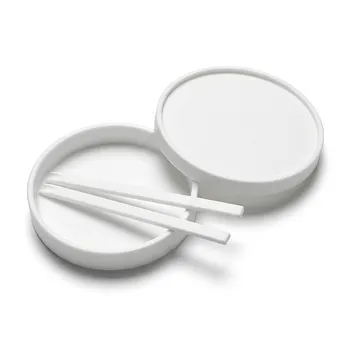
- Custom PTFE Laboratory Apparatus Corrosion Resistant Low Background Reaction Cells Precision CNC Fabrication
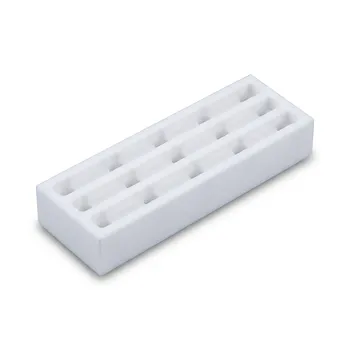
- Custom PTFE Multilayer Reaction Apparatus High Temperature Corrosion Resistant Threaded Modular Sieve System
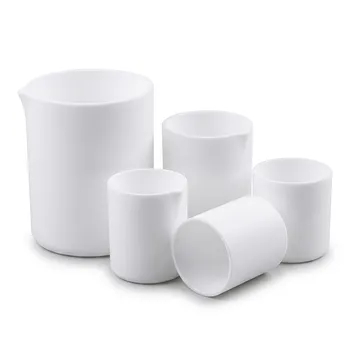
- Heat Resistant Custom PTFE Laboratory Beaker for Hot Plate Heating and Trace Analysis
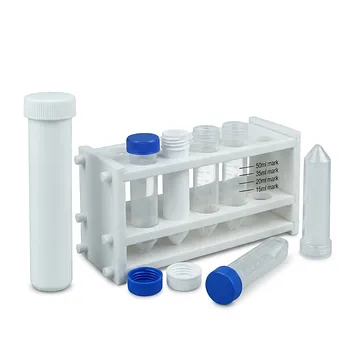
- Custom PFA Microcolumn Racks and PTFE Machined Low Background Corrosion Resistant Laboratory Fixtures
- Custom PTFE Condensation Reflux Distillation Purification System 500ml Corrosion Resistant Low Background
People Also Ask
- What are the primary fabrication methods for PTFE laboratory apparatus? Expert Insights into Fluoropolymer Engineering
- What is the chemical compatibility range for PTFE laboratory apparatus? Explore Near-Universal Chemical Resistance.
- Why use PTFE or PFA for modified Cu-MOF synthesis? Ensure High Purity and Exceptional Chemical Stability
- What are the primary chemical resistance properties of PTFE laboratory apparatus? Unmatched Purity and Inertness
- What customization options are available for PTFE materials? Tailor Performance for Your Application