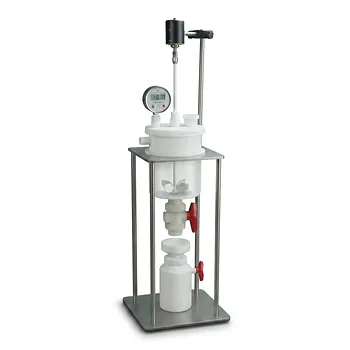
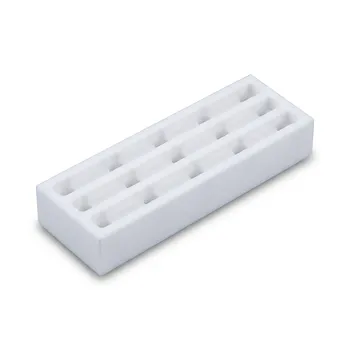
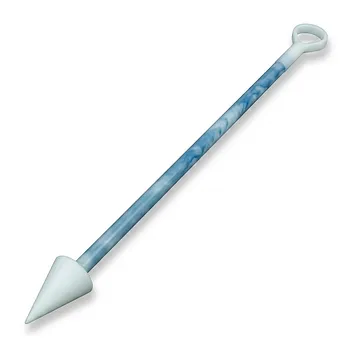
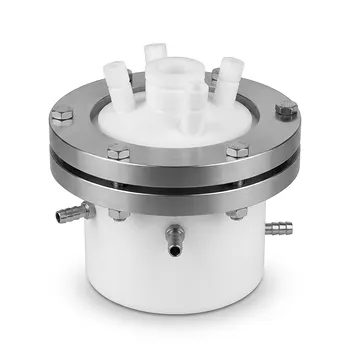
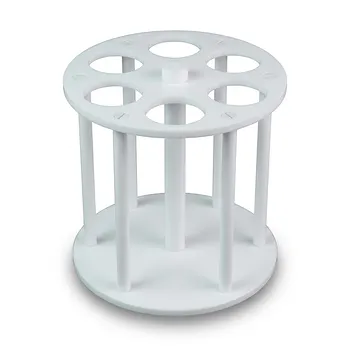
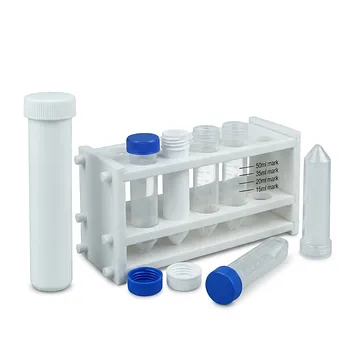
The recommendation of PTFE or PFA for synthesizing modified Cu-MOF is driven by their near-total chemical inertness and resistance to leaching. These materials ensure that the synthesis environment remains free from metal ion contamination while withstanding the aggressive organic solvents and fluorinated ligands required to modify the framework’s structure.
Using fluoropolymer vessels like PTFE and PFA is essential for ensuring the batch-to-batch consistency and high purity of modified Cu-MOF catalysts. By preventing chemical interactions between the container and the reactants, these materials protect the integrity of the MOF’s delicate crystalline structure.
Exceptional Chemical Inertness and Stability
Resistance to Fluorinated Ligands and Solvents
The synthesis of modified Cu-MOFs often involves fluorinated ligands and highly polar solvents like HFIP (hexafluoroisopropanol). These chemicals can be aggressive, causing standard laboratory plastics to swell or even react with the vessel walls. PTFE and PFA are virtually non-reactive, ensuring that the chemical environment remains exactly as intended by the researcher.
Stability Under High Synthesis Temperatures
MOF synthesis typically requires hydrothermal or solvothermal conditions where high temperatures are sustained for long periods. PTFE and PFA offer a wide operating temperature range, maintaining their structural integrity and chemical resistance even under the thermal stress required to crystallize the metal-organic framework.
Prevention of Contamination and Leaching
Eliminating Trace Metal Ion Interference
In the preparation of electrochemically active materials like Cu-MOFs, even trace amounts of metal ion leaching from glass or lower-grade plastics can catalyze unwanted side reactions. High-purity PFA and PTFE eliminate this risk, preventing background contamination that could skew experimental data or compromise the catalyst's performance.
Mitigating Permeability and Solvent Swelling
Unlike standard polymers, PFA and PTFE have excellent resistance to permeability, meaning the solvents and precursors do not soak into the material. This prevents "carry-over" contamination between batches and ensures that the vessel does not introduce impurities into the reaction under strong oxidative or acidic conditions.
Understanding the Trade-offs
Mechanical Limitations and Softness
While chemically superior, PTFE is a relatively soft material and can undergo cold flow or deformation under extreme pressure. Users must ensure that liners are properly supported by stainless steel autoclaves during high-pressure synthesis to prevent vessel failure.
Cost and Thermal Conductivity
PTFE and PFA apparatuses are significantly more expensive than standard borosilicate glass. Additionally, their low thermal conductivity means they heat up and cool down more slowly than glass or metal, which may require adjustments to heating protocols to ensure consistent reaction temperatures.
Making the Right Choice for Your Goal
Guidelines for Laboratory Selection
Selecting the right material depends on the specific requirements of your MOF synthesis and the nature of the ligands being used.
- If your primary focus is maximum purity for electrochemical testing: Use high-purity PFA vessels to eliminate any risk of trace metal leaching that could interfere with redox activity.
- If your primary focus is high-temperature solvothermal synthesis: Utilize PTFE liners within stainless steel autoclaves to provide the necessary chemical resistance at elevated pressures.
- If your primary focus is routine synthesis with non-corrosive ligands: Standard borosilicate glass may be sufficient, provided that the ligands and solvents used do not etch the glass surface.
By utilizing PTFE and PFA, researchers secure the chemical environment necessary to produce high-performance, high-purity modified Cu-MOFs with reproducible results.
Summary Table:
| Key Feature | Benefit for Cu-MOF Synthesis | Laboratory Advantage |
|---|---|---|
| Chemical Inertness | Resists aggressive fluorinated ligands and solvents (HFIP) | Prevents vessel degradation and reaction interference |
| High Purity | Zero trace metal ion leaching | Protects electrochemical activity and catalyst integrity |
| Thermal Stability | Sustains hydrothermal/solvothermal conditions | Reliable performance during long crystallization cycles |
| Low Permeability | No solvent absorption or "carry-over" | Ensures batch-to-batch consistency and high purity |
| Surface Quality | Non-stick and easy to clean | Minimizes sample loss and cross-contamination |
Elevate Your Synthesis Precision with KINTEK Fluoropolymer Solutions
Achieve uncompromising purity in your modified Cu-MOF research with KINTEK’s premium fluoropolymer laboratory supplies. We specialize in high-performance PTFE and PFA apparatuses designed to withstand the most aggressive chemical environments and thermal stresses.
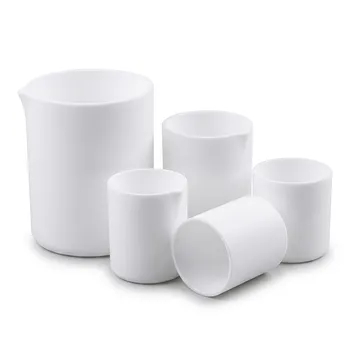
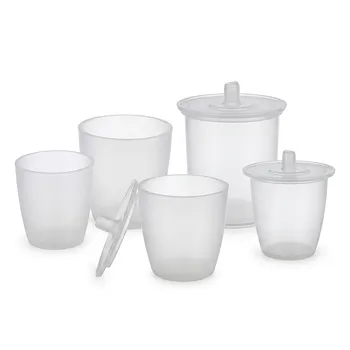
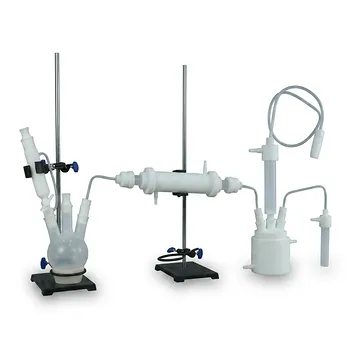
From everyday essentials like beakers, reagent bottles, centrifuge tubes, and crucibles to specialized high-purity trace analysis instruments and cleaning tanks, we provide the tools necessary for sensitive electrochemical applications. Need a custom solution? Our expertise extends to advanced reaction apparatus, including standard or custom electrochemical cells, battery testing fixtures, and microwave digestion vessels, all backed by our end-to-end custom CNC fabrication capabilities.
Whether you require complex non-standard machined parts or high-volume orders of standard consumables like tubing, valves, and stirring bars, KINTEK delivers absolute focus on high-performance materials.
Ready to optimize your lab's performance? Contact us today to discuss your custom requirements!
References
- Qianyi Li, Sheng Chen. Water Spillover to Expedite Two‐Electron Oxygen Reduction. DOI: 10.1002/adma.202412039
This article is also based on technical information from Kintek Knowledge Base .
Related Products
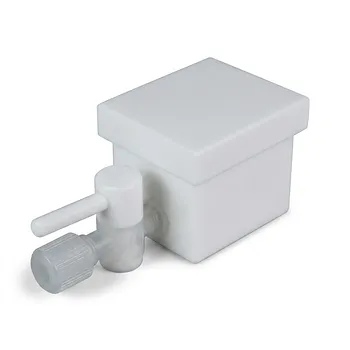
- Custom PTFE Laboratory Apparatus Corrosion Resistant Low Background Reaction Cells Precision CNC Fabrication
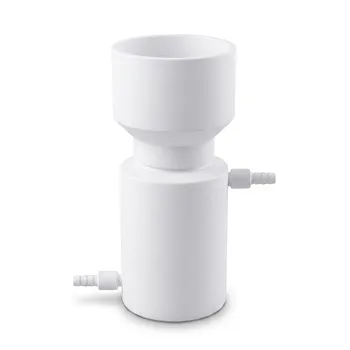
- High Purity PTFE Buchner Funnel Vacuum Filtration System Corrosion Resistant Low Trace Laboratory Suction Filter Apparatus
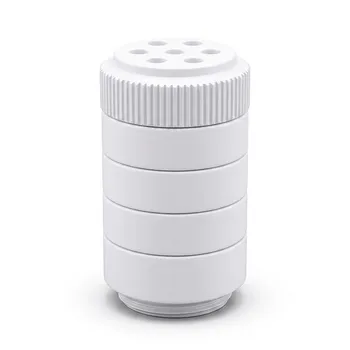
- Custom PTFE Multilayer Reaction Apparatus High Temperature Corrosion Resistant Threaded Modular Sieve System
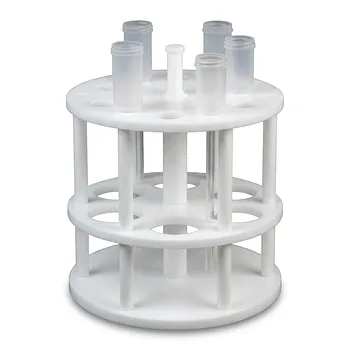
- Custom PFA Microcolumn Racks and PTFE Machined Low Background Corrosion Resistant Laboratory Fixtures
- Large Scale PTFE Beakers and Flasks for High Temperature Corrosion Resistant Laboratory Applications with Custom CNC Fabrication
People Also Ask
- How does PTFE's melting behavior affect custom lab apparatus? Key insights for manufacturing.
- What are the primary fabrication methods for PTFE laboratory apparatus? Expert Insights into Fluoropolymer Engineering
- What is the chemical compatibility range for PTFE laboratory apparatus? Explore Near-Universal Chemical Resistance.
- What are the primary chemical resistance properties of PTFE laboratory apparatus? Unmatched Purity and Inertness
- What customization options are available for PTFE materials? Tailor Performance for Your Application