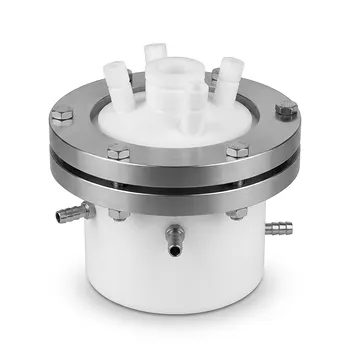
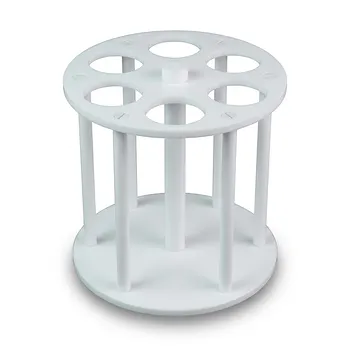
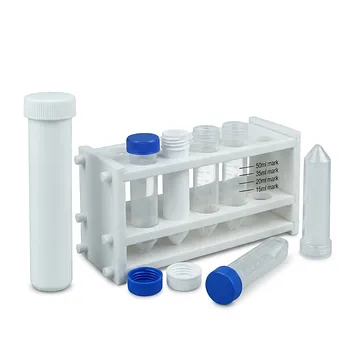
PTFE’s technological maturity means laboratory apparatus made from it can deliver highly consistent, predictable performance. Mature synthesis, powder control, and processing methods have established a reliable baseline for material purity, mechanical behavior, chemical resistance, and dimensional stability. This consistency allows manufacturers to concentrate on precision machining, tight tolerances, and clean surface finishes rather than compensating for unpredictable raw-material variation.
The main benefit is repeatability: mature PTFE technology makes standard laboratory components more dependable from batch to batch, provided the design and manufacturing process account for PTFE’s known limitations, especially creep under sustained load and temperature.
What Technological Maturity Means in Practice
Consistent material quality
Established PTFE production methods, including suspension polymerization and controlled powder handling, provide more uniform raw material. For laboratory users, this supports consistent purity, texture, density, and mechanical response across components such as tubing, beakers, crucibles, and centrifuge tubes.
This reduces the likelihood that two nominally identical parts will behave differently because of uncontrolled material variation.
Predictable chemical performance
PTFE has broad resistance to strong acids, bases, steam, and many other aggressive chemicals. Mature manufacturing helps ensure that this resistance is reliably present throughout the finished component rather than depending on inconsistent material quality.
That is particularly important when apparatus is used with corrosive reagents, hazardous samples, or chemically sensitive analytical methods.
Repeatable mechanical behavior
PTFE’s low friction, non-stick surface, and temperature resistance are well understood. Manufacturers can therefore design components with predictable performance for fluid handling, sample transport, sealing, and low-friction movement.
For example, PTFE tubing can convey reagents or mobile phases with minimal chemical interaction and low risk of analyte adsorption, supporting more repeatable analytical results.
How Maturity Improves Apparatus Reliability
More dependable dimensions and fit
When the material behaves consistently, fabricators can apply tighter dimensional controls during machining and forming. This improves the fit of lids, seals, tubing connections, sample holders, and other mating components.
Dimensional consistency is especially important in analytical equipment, where small leaks, poor alignment, or uncontrolled internal volume can affect measurements.
Cleaner and more reproducible surfaces
A mature material process allows manufacturers to focus on the surface finish rather than correcting major variations in the PTFE itself. Smooth, clean surfaces help reduce residue retention, carry-over, wetting, and contamination.
This is valuable in apparatus used for trace analysis, chromatography, and sample preparation.
Longer service life
PTFE’s chemical resistance, low friction, and temperature stability allow properly designed parts to operate for long periods in demanding environments. Reduced degradation can mean fewer replacements and less risk of interruptions during laboratory work.
The material’s resistance to environmental degradation, including ultraviolet exposure, can also support long-term storage and use where relevant.
Safer handling than fragile glassware
PTFE components are resistant to breakage under normal laboratory handling, unlike glass apparatus. This can reduce the risk of shards and accidental exposure when working with corrosive chemicals.
However, “unbreakable” should not be interpreted as indestructible: PTFE parts can deform, cut, or fail if subjected to excessive force, unsuitable temperatures, or unsupported pressure.
Why Standard Apparatus Benefits Most
Standardized products become more interchangeable
For common laboratory items, a mature material and processing baseline makes product performance more predictable across production batches. Users can reorder standard components with greater confidence that their chemical and mechanical behavior will remain comparable.
This supports routine laboratory operations, replacement planning, and method reproducibility.
Routine applications need consistency more than novelty
Standard apparatus generally does not require experimental PTFE formulations. It benefits more from proven grades, established processing conditions, and controlled inspection.
The maturity of the technology shifts the engineering challenge from “Can PTFE perform this function?” to “Has this part been manufactured to the required specification?”
Instrument interfaces become more reliable
In systems such as HPLC and mass spectrometry, tubing and seals must deliver fluids without significant reaction, adsorption, or leakage. Mature PTFE technology provides a well-characterized foundation for these components.
The result is more stable fluid handling, reduced carry-over risk, and more consistent low-flow delivery when the tubing geometry and installation are also properly controlled.
What Maturity Does Not Guarantee
Manufacturing quality still matters
A mature material does not automatically produce a high-quality apparatus. Poor machining, contamination, dimensional errors, weak connections, or inadequate inspection can still cause failure.
Reliability depends on the complete chain: material grade, design, processing, cleaning, dimensional control, and quality assurance.
PTFE is not suitable for every load
PTFE can experience creep, also called cold flow, when subjected to sustained pressure or mechanical stress, particularly at elevated temperatures. A component may slowly deform even when it has not visibly cracked or chemically degraded.
Designers must therefore account for load, temperature, support, wall thickness, and sealing conditions.
Temperature limits remain important
PTFE has a wide useful operating range, but its practical upper limit is approximately 250–260°C for many applications. Above this range, degradation and decomposition risks increase.
Temperature ratings should be based on the specific grade, design, exposure time, and operating environment rather than on a generic material label alone.
Microwave use requires application-specific evaluation
PTFE itself does not efficiently absorb microwave energy. A PTFE vessel may therefore remain relatively cool unless the sample contains microwave-absorbing components, such as suitable polar solvents.
The vessel, sample composition, pressure, and temperature must be evaluated together before microwave use.
Understanding the Trade-offs
Reliability versus mechanical rigidity
PTFE offers excellent chemical resistance and low friction, but it is softer and more prone to deformation than many metals or ceramics. It is highly reliable when used within its mechanical design limits, not when treated as a universal structural material.
Low contamination versus surface retention
PTFE’s non-wetting, non-stick surface and low extractables are valuable for clean laboratory work. Nevertheless, cleanliness depends on manufacturing, handling, cleaning, and storage as well as on the polymer itself.
Durability versus dimensional stability
PTFE may remain chemically intact for a long time while gradually changing shape under sustained load. Long service life therefore does not eliminate the need to check seals, compression fittings, and pressure-bearing parts.
Standardization versus application specificity
A standard PTFE component can be highly reliable for its intended use, but the same component may be unsuitable for high pressure, extreme temperature, or unusual chemical mixtures. “Standard” describes the product category, not every possible operating condition.
Making the Right Choice for Your Goal
The practical value of PTFE maturity is greatest when material selection and component design are matched to the laboratory task.
- If your primary focus is chemical compatibility: Choose well-characterized PTFE apparatus and verify its suitability for the specific reagents, concentration, temperature, and exposure time.
- If your primary focus is measurement repeatability: Prioritize precise dimensions, clean surfaces, low-extractable materials, and controlled tubing or sealing geometry.
- If your primary focus is long service life: Check sustained-load and temperature conditions carefully, because creep—not chemical attack—may be the limiting factor.
- If your primary focus is operator safety: Use PTFE where reduced breakage and strong chemical resistance provide an advantage over glass, while still observing pressure and temperature limits.
- If your primary focus is replacement consistency: Select suppliers that specify material grade, dimensional tolerances, cleanliness controls, and batch-level quality assurance.
Technological maturity makes PTFE a dependable foundation for laboratory apparatus, but reliable results still require a component designed and manufactured for its actual operating conditions.
Summary Table:
| Aspect | Impact of PTFE Maturity |
|---|---|
| Material Quality | Consistent purity, density, and mechanical response across batches |
| Chemical Resistance | Reliable resistance to aggressive chemicals, ensuring safety and integrity |
| Mechanical Behavior | Predictable low friction, non-stick, and temperature resistance |
| Dimensional Stability | Tighter tolerances and better fit for reliable sealing and connections |
| Surface Finish | Cleaner surfaces reduce contamination and carry-over in trace analysis |
| Service Life | Long-lasting in harsh environments, reducing replacements and interruptions |
| Safety | Less breakage than glass, lowering injury risk (but not indestructible) |
Ensure your lab's standard apparatus delivers consistent, reliable performance with KINTEK's premium PTFE and PFA products. From beakers and tubing to custom-machined components, our mature PTFE technology guarantees purity, precision, and durability. Contact us today to equip your lab with dependable solutions that enhance reproducibility and safety. Get in touch with KINTEK.
Related Products
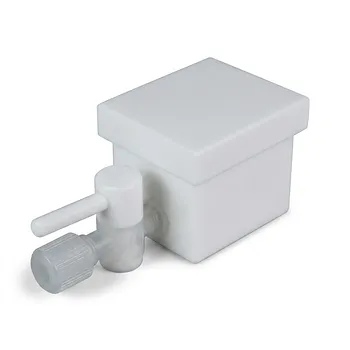
- Custom PTFE Laboratory Apparatus Corrosion Resistant Low Background Reaction Cells Precision CNC Fabrication
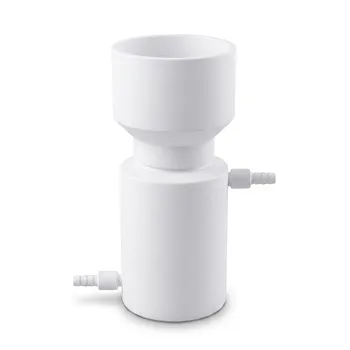
- High Purity PTFE Buchner Funnel Vacuum Filtration System Corrosion Resistant Low Trace Laboratory Suction Filter Apparatus
- Custom PTFE Multilayer Reaction Apparatus High Temperature Corrosion Resistant Threaded Modular Sieve System
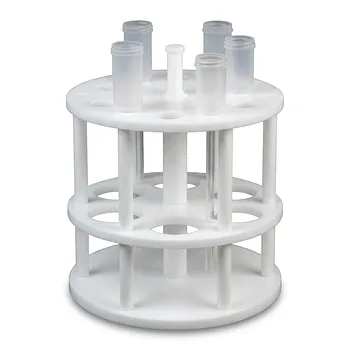
- Custom PFA Microcolumn Racks and PTFE Machined Low Background Corrosion Resistant Laboratory Fixtures
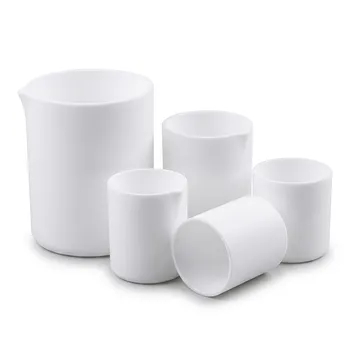
- Large Scale PTFE Beakers and Flasks for High Temperature Corrosion Resistant Laboratory Applications with Custom CNC Fabrication
People Also Ask
- How does PTFE's melting behavior affect custom lab apparatus? Key insights for manufacturing.
- What are the primary fabrication methods for PTFE laboratory apparatus? Expert Insights into Fluoropolymer Engineering
- What is the chemical compatibility range for PTFE laboratory apparatus? Explore Near-Universal Chemical Resistance.
- Why use PTFE or PFA for modified Cu-MOF synthesis? Ensure High Purity and Exceptional Chemical Stability
- What are the primary chemical resistance properties of PTFE laboratory apparatus? Unmatched Purity and Inertness