The regioselectivity of octafluorocyclopentene (OFCP) is governed by fluorine position and the chemical environment of the attached carbon. OFCP contains eight fluorine atoms distributed among three distinct environments in a 2:4:2 ratio. The vinylic fluorines at the (1,5) positions undergo nucleophilic substitution most readily, the allylic (2a, 4b) positions show intermediate reactivity, and the apex-carbon fluorines at (3a, 3b) are comparatively unreactive.
The reaction does not treat all C-F sites in OFCP equally. Position-dependent electronic activation and structural accessibility determine where nucleophilic addition-elimination occurs, while PTFE and PFA equipment preserve reaction purity and integrity under the basic, polar, fluoride-generating conditions required for the transformation.
Why OFCP Substitution Is Regioselective
OFCP Contains Three Distinct Fluorine Environments
Although OFCP has eight fluorine atoms, they are not chemically equivalent. Their distribution across three structural positions creates different carbon-fluorine environments that can be distinguished by 19F-NMR spectroscopy.
The reported 2:4:2 distribution reflects this asymmetry: two fluorines occupy the highly reactive vinylic sites, four occupy intermediate allylic environments, and two reside at the relatively inactive apex positions.
Vinylic Positions Are the Preferred Reaction Sites
The fluorines at the (1,5) positions display the highest reactivity toward nucleophiles. These sites are therefore the primary locations for nucleophilic addition-elimination during fluoropolymer synthesis.
The observed selectivity means that substitution can be directed preferentially toward these positions before the less reactive sites participate to a significant extent.
Allylic Positions Show Intermediate Reactivity
The (2a, 4b) fluorines are less reactive than the vinylic fluorines but more reactive than the apex fluorines. Their intermediate behavior creates a second level of substitution that may become important as reaction conditions, conversion, or substrate modification changes.
This difference is chemically important because it allows the reaction sequence to retain some positional control rather than producing indiscriminate substitution across the ring.
Apex-Carbon Fluorines Remain Largely Unreactive
The fluorines attached to the (3a, 3b) apex carbons are the least reactive positions identified in the reference data. They generally resist the nucleophilic substitution conditions that readily affect the (1,5) sites.
Their low reactivity helps define the structural limits of the transformation and can preserve fluorinated segments within the resulting polymer architecture.
How the Substitution Mechanism Controls Polymer Structure
Addition-Elimination Requires More Than a Nucleophile
Nucleophilic substitution of a fluoroalkene proceeds through an addition-elimination process. The nucleophile adds to the fluoroalkene system, followed by elimination of fluoride to restore the unsaturated structure.
Because the three fluorine environments respond differently to this sequence, the molecular structure of OFCP directly influences the regiochemistry of the reaction.
Site Selectivity Affects Polymer Functionality
The position at which substitution occurs determines where a new functional group is introduced into the monomer or intermediate. Repeated across a synthesis, this influences the connectivity, substitution pattern, and ultimately the properties of the fluoropolymer.
Controlling the preferred (1,5) sites is therefore not merely an analytical observation. It is part of controlling the chemical architecture of the material being produced.
Reaction Conditions Must Preserve Selectivity
The reaction commonly requires an organic base, a polar solvent such as DMF, and temperatures reaching approximately 80 °C. These conditions provide the environment needed for nucleophilic addition-elimination but also increase the demands placed on the reaction equipment.
Temperature, solvent compatibility, reagent purity, and containment must remain consistent so that the observed positional reactivity governs the reaction rather than equipment-derived contamination or uncontrolled side reactions.
Why PTFE and PFA Fluid Transfer Tools Are Necessary
The Reaction Environment Is Chemically Aggressive
Nucleophilic fluoropolymer synthesis can involve strong nucleophiles, alkaline catalysts, polar organic solvents, and fluoride by-products. Related fluorinated synthesis processes may also involve aggressive species such as anhydrous HF, carbonyl fluoride, and strong halide acids.
Glass and many metals can corrode or react under such conditions. Corrosion can damage equipment, introduce contaminants, and compromise the reaction.
PTFE and PFA Resist Chemical Attack
PTFE and PFA are fully fluorinated polymers with highly stable carbon-fluorine frameworks. Their chemical inertness makes them suitable for tubing, valves, reagent bottles, fittings, and reaction vessels exposed to strong nucleophiles, bases, solvents, and fluoride-containing mixtures.
This resistance supports long-term equipment integrity and reduces the risk that the apparatus will leach reactive or metallic contaminants into the synthesis.
Low Leaching Protects Regioselectivity and Purity
Trace contaminants can alter a highly reactive nucleophilic process. They may consume nucleophile, interfere with the base system, catalyze unwanted reactions, or complicate characterization of the polymer intermediates.
PTFE and PFA components minimize this source of variability by maintaining a chemically clean contact surface. This is particularly important when the goal is to reproduce a defined substitution pattern.
Low Surface Energy Reduces Intermediate Loss
The low surface energy of fluoropolymers reduces adsorption of highly active intermediates onto vessel walls and tubing surfaces. Less adsorption means less material is removed from the reaction mixture before it can participate in the intended reaction.
This helps maintain concentration control and improves the reproducibility of both synthesis and subsequent analytical measurements.
PTFE and PFA Support Volatile-Monomer Handling
OFCP has a low boiling point of approximately 26-27 °C and is toxic. A reaction performed near or above this temperature therefore requires reliable containment and leak-resistant fluid handling.
Sealed PTFE/PFA vessels, tubing, and fittings help limit monomer loss and vapor escape during heated processing. Their chemical stability also prevents the container from degrading while the volatile fluorinated material is being transferred or reacted.
Understanding the Trade-offs
Chemical Inertness Does Not Remove All Engineering Requirements
PTFE and PFA are highly resistant materials, but a complete system still requires appropriate seals, fittings, pressure control, and temperature ratings. Compatibility must be evaluated for the actual reagent mixture, temperature, pressure, and exposure time.
The polymer body may remain stable while an unsuitable gasket or connection fails.
Fluoropolymer Equipment Does Not Replace Process Control
Using inert labware does not by itself guarantee regioselective substitution. The reaction still depends on controlling the nucleophile, base, solvent, temperature, mixing, and exposure time.
Equipment selection protects the reaction environment; it does not determine the intrinsic reactivity order of the OFCP positions.
Volatility Creates a Containment Risk
Because OFCP boils near room temperature, open transfers or poorly sealed connections can cause evaporation, concentration changes, exposure hazards, and inaccurate stoichiometry.
Closed transfer paths and compatible vessels are therefore part of the synthesis design, not optional accessories.
Material Purity Matters in High-Sensitivity Analysis
Electrochemical and fluorinated synthesis workflows may be followed by sensitive analytical measurements, including mass spectrometry. Material leaching or adsorption can distort low-level measurements and reduce confidence in the reported reaction outcome.
PTFE and PFA reduce these risks, but the entire fluid path must still be cleaned, qualified, and maintained appropriately.
How to Apply This to Your Project
The correct design links OFCP site selectivity with chemical-compatible fluid handling:
- If your primary focus is regioselective substitution: Target the highly reactive (1,5) vinylic fluorines first, while treating the allylic and apex positions as progressively less reactive sites.
- If your primary focus is polymer architecture: Use the known substitution order to anticipate where functionality will be introduced and how that pattern may propagate through the synthesis.
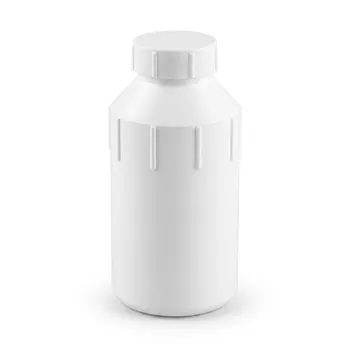
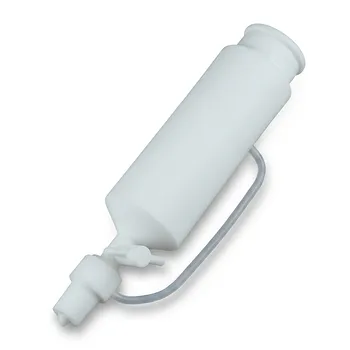
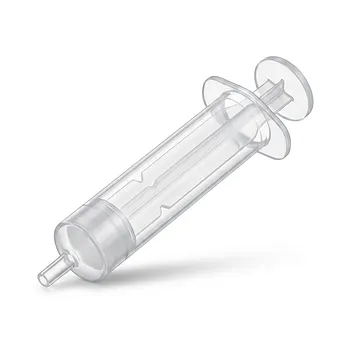
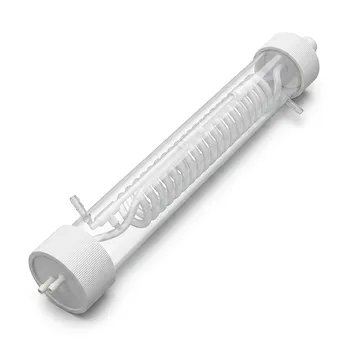
- If your primary focus is reaction purity: Use PTFE or PFA for wetted transfer components and vessels to minimize corrosion, leaching, and adsorption.
- If your primary focus is safe handling: Use sealed, leak-resistant PTFE/PFA fluid paths because OFCP is volatile, toxic, and processed under elevated-temperature conditions.
- If your primary focus is reproducibility: Control the organic base, polar solvent, temperature, containment, and material compatibility as one integrated process.
Reliable OFCP fluoropolymer synthesis depends on understanding both where the molecule reacts and how the equipment preserves that reaction environment.
Summary Table:
| Fluorine Position | Reactivity | Implications |
|---|---|---|
| (1,5) vinylic | High | Primary site for substitution; controls initial polymer structure |
| (2a,4b) allylic | Intermediate | Secondary substitutions; affects branching and crosslinking |
| (3a,3b) apex | Low | Usually retained; contributes to final polymer properties |
Role of PTFE/PFA Tools
| Requirement | Benefit |
|---|---|
| Chemical inertness | Resists attack by bases, nucleophiles, and HF |
| Low leaching | Prevents contamination that could alter selectivity |
| Low surface energy | Minimizes adsorption of intermediates |
| Sealed design | Contains volatile and toxic OFCP |
Ensure the purity and safety of your OFCP fluoropolymer synthesis with our premium PTFE/PFA labware and fluid transfer systems. From tubing and valves to custom reaction vessels, our high-performance products resist chemical attack, minimize contamination, and protect your process. Contact our experts today to find the perfect solution for your lab. Request a quote.
Related Products
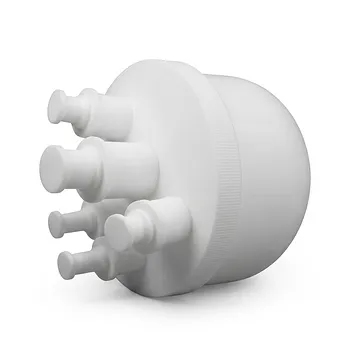
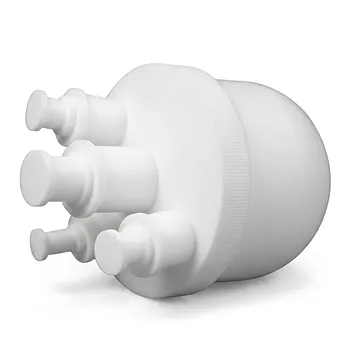
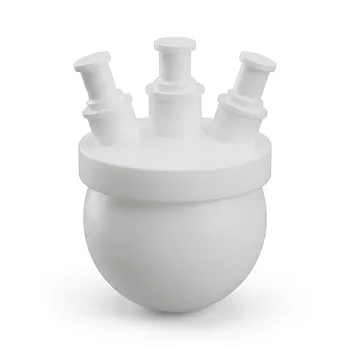
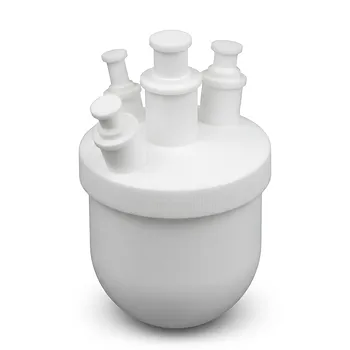
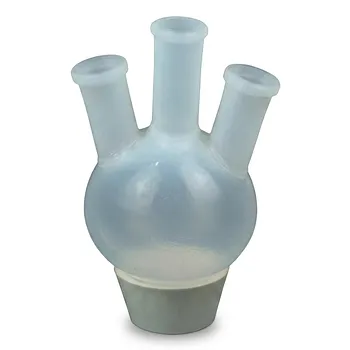
- Custom Multi Neck PTFE Round Bottom Flask for Chemical Synthesis and High Purity Laboratory Research
- Custom Multi Neck PTFE Flask 18L Laboratory Chemical Reactor Vessel for High Purity Synthesis and Stirring Applications
- High Temperature PTFE Reaction Flask 1000ml Single Neck Round and Flat Bottom Laboratory Bottle
- Large Capacity PTFE Reaction Flask 20L Custom Multi Neck Laboratory Boiling Flask Fluoropolymer Chemical Processing Vessel
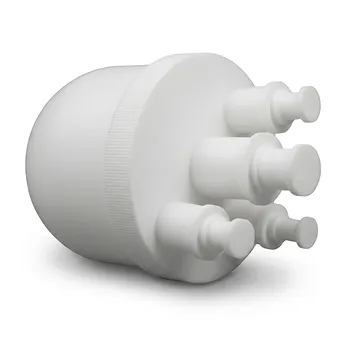
- Custom Multi Neck PTFE Flask for Chemical Engineering and High Purity Laboratory Synthesis Applications
People Also Ask
- What are the advantages of using high-precision PTFE valves and fittings? Optimize Chemical Purity and Fluid Control
- How does the addition of a steam diluent and control of residence time impact the synthesis yield of tetrafluoroethylene (TFE) used in PTFE fluoropolymer manufacturing? Optimize Your TFE Yield with Steam and Residence Time Control
- How do pyrolysis temperature and steam diluent ratios influence tetrafluoroethylene (TFE) conversion and yield in fluoropolymer monomer reaction apparatus? Optimize TFE yield with temperature and steam control
- How is tetrafluoroethylene (TFE) synthesized industrially? Key steps from fluorspar to PTFE monomer
- What corrosive chemical species are generated during TFE synthesis, and why do they dictate high-purity fluoropolymer equipment selection?