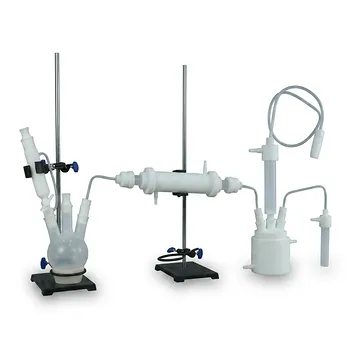
The corrosive species that matter most are hydrofluoric acid (HF) and hydrogen chloride (HCl), with chloroform and chlorodifluoromethane serving as aggressive halogenated process chemicals and TFE precursors. In the commercial route, chlorodifluoromethane is pyrolyzed at high temperature to form TFE and HCl: 2 CHClF2 ⇌ C2F4 + 2 HCl. These chemicals attack conventional metals, glass, and many standard polymers, so equipment selection must account for both chemical compatibility and thermal stability.
High-purity TFE production is simultaneously a corrosion-control and contamination-control problem. PTFE and PFA are commonly selected because they resist HF, HCl, and halogenated process streams while contributing fewer metallic or organic contaminants to the ultra-pure monomer system.
Which Species Are Generated or Handled?
Hydrofluoric Acid Is the Most Severe Wet-Corrosion Hazard
Hydrofluoric acid can attack many metals and aggressively etches glass and silica-containing materials. Its compatibility challenge is not limited to bulk corrosion: contact with wetted surfaces can introduce dissolved metals, particulates, or degradation products into downstream purification and polymerization streams.
HF may be present as a process reagent, reaction byproduct, or condensable contaminant depending on the specific commercial synthesis and purification configuration. Its presence requires equipment materials that maintain integrity across the expected concentration, temperature, and phase conditions.
Hydrogen Chloride Is Generated During Pyrolysis
The pyrolysis of chlorodifluoromethane produces high-temperature hydrogen chloride gas along with TFE. HCl is corrosive to many metals, particularly when moisture is present or when the gas later cools and forms an acidic condensate.
The risk therefore changes across the process. A dry, hot HCl gas stream, a cooled gas stream, and an aqueous or condensed HCl phase can impose different corrosion mechanisms on the same component.
Chloroform and Chlorodifluoromethane Are Aggressive Process Chemicals
Chloroform and chlorodifluoromethane are not equivalent to HF or HCl in corrosivity, but they remain important chemical-compatibility concerns because they are halogenated solvents or feedstock intermediates handled under demanding process conditions.
Chlorodifluoromethane is especially significant because it is the precursor used in the TFE-forming pyrolysis step. Equipment must tolerate the feedstock before the reaction and the hot, corrosive product mixture afterward.
Fluorinated and Chlorinated Trace Impurities Also Matter
TFE purity can approach 99.99995% for high-molecular-weight PTFE production. Trace hydrogen- or chlorine-bearing compounds, including trifluoroethylene, can act as chain-transfer impurities and disrupt polymer-chain growth.
These impurities may not be the primary corrosion hazard, but they make surface cleanliness and material selection part of product quality control. A component that releases trace metals, organics, or degraded polymer fragments can compromise both monomer purity and polymer performance.
Why Equipment Compatibility Determines Product Quality
Corrosion Creates Contamination, Not Just Maintenance Problems
Corrosion can release metal ions, particles, and surface residues into TFE or intermediate streams. In trace analysis and high-purity polymer production, these contaminants can be more damaging than visible equipment wear because they may alter polymerization behavior or create unacceptable leachable profiles.
The equipment must therefore preserve the chemistry of the process, not merely survive long enough to complete a batch.
Polymerization Requires Extremely Clean Monomer
TFE polymerization is sensitive to trace impurities. Telogenic compounds containing hydrogen or chlorine can terminate growing polymer chains; trifluoroethylene may need to be reduced below approximately 0.2–0.3 ppm.
Maintaining this specification requires clean reaction vessels, sampling systems, tubing, valves, and fittings. Materials that absorb process chemicals, shed contaminants, or react with the stream can defeat purification efforts downstream.
Surface Inertness Supports High-Molecular-Weight PTFE
High-molecular-weight PTFE depends on minimizing chain-transfer impurities during polymerization. Chemically inert fluoropolymer contact surfaces help reduce the risk that equipment contributes hydrogen-bearing organics, metallic residues, or other reactive contaminants.
This is why equipment selection is linked directly to the properties of the finished resin, including molecular weight, mechanical integrity, chemical resistance, and low extractables.
Why PTFE and PFA Are Common Choices
PTFE Provides Broad Chemical Resistance
PTFE is highly resistant to HF, HCl, halogenated chemicals, and many other aggressive reagents. It is therefore used for reaction vessels, liners, tubing, gaskets, fittings, and other wetted components where chemical inertness is the primary requirement.
Its low reactivity also helps limit contamination of purified monomer streams.
PFA Adds Fabrication and Transparency Advantages
PFA offers comparable fluoropolymer-level chemical resistance while generally providing better melt-processability and greater fabrication flexibility than PTFE. It is useful for tubing, vessels, sampling components, and assemblies that benefit from fluoropolymer transparency or more complex molded geometries.
The appropriate choice still depends on temperature, pressure, mechanical loading, permeability, and the exact chemical phase being handled.
Thermal Ratings Must Be Checked Separately
Chemical resistance alone is insufficient. The pyrolysis step generates high-temperature HCl, and a fluoropolymer suitable for a cooled transfer line may not be appropriate at the reactor outlet.
Equipment design must distinguish hot-zone containment from downstream handling. Metal alloys, corrosion-resistant linings, or specialized high-temperature construction may be required in areas where fluoropolymers cannot safely retain their mechanical properties.
Understanding the Trade-offs
Fluoropolymers Are Not Universally Suitable
PTFE and PFA have temperature, pressure, permeation, creep, and mechanical-strength limits. They should not be treated as interchangeable with high-temperature reactor materials simply because they resist the process chemicals.
Selection must be based on the actual operating envelope, including transient temperatures, pressure cycling, vacuum conditions, and exposure to dry versus wet HF or HCl.
Dry and Wet Corrosion Conditions Differ
A process that is noncorrosive to a material when completely dry may become severely corrosive after condensation or moisture ingress. HCl and HF are particularly important in this respect because cooling, leaks, cleaning, or atmospheric exposure can change the chemical phase and corrosion rate.
Sampling and vent systems deserve the same attention as primary reactors because they commonly experience cooling and condensation.
Purity and Safety Requirements Interact
TFE is highly reactive and can undergo hazardous decomposition under unfavorable pressure, temperature, or contamination conditions. Oxygen can promote unwanted autopolymerization, producing localized heating and potentially leading to explosive decomposition.
Containment, oxygen control, pressure relief, protective barriers, and remote handling must therefore be designed alongside materials compatibility. A chemically inert component is not automatically a complete process-safety solution.
Material Compatibility Data Must Match the Application
Generic chemical-resistance charts are useful for screening but do not replace application-specific evaluation. The relevant variables include concentration, temperature, exposure time, pressure, mechanical stress, surface finish, and whether the component is used in a high-purity or safety-critical service.
Testing should also consider extractables, permeation, particle generation, and cleaning compatibility.
Making the Right Choice for Your Goal
Equipment decisions should separate the hot reaction zone from the purified, temperature-controlled handling system.
- If your primary focus is corrosion resistance: Use PTFE or PFA for compatible wetted transfer, sampling, lining, and vessel components, while verifying performance against the actual HF and HCl phases and temperatures.
- If your primary focus is monomer purity: Select low-extractables, low-particle materials and control trace hydrogen-, chlorine-, oxygen-, metallic-, and organic contamination throughout synthesis and purification.
- If your primary focus is high-temperature containment: Evaluate specialized reactor materials and fluoropolymer-lined designs rather than assuming PTFE or PFA can withstand the pyrolysis zone directly.
- If your primary focus is process safety: Design for TFE decomposition hazards, oxygen exclusion, pressure relief, thermal control, and containment in addition to chemical compatibility.
The correct equipment strategy protects both the process from corrosive chemistry and the final fluoropolymer from contamination that would compromise its performance.
Summary Table:
| Corrosive Species | Source/Stage | Main Hazard | Equipment Implication |
|---|---|---|---|
| Hydrofluoric acid (HF) | Process reagent/byproduct | Severe corrosion, glass etching, contamination | PTFE/PFA wetted parts, avoid glass/silica |
| Hydrogen chloride (HCl) | Pyrolysis gas | Corrosive to metals, especially wet | Corrosion-resistant materials; dry/wet phase design |
| Chloroform | Solvent/intermediate | Halogenated chemical exposure | Chemical-compatible materials |
| Chlorodifluoromethane (CHClF2) | Feedstock | Halogenated, pre- and post-reaction | Resistant materials in reactor and lines |
| Trace impurities (e.g., trifluoroethylene) | Byproducts | Chain-transfer, affect polymer quality | Low-extractables surfaces, clean handling |
Ensure high-purity TFE production with KINTEK's PTFE/PFA equipment. Our fluoropolymer labware and custom parts resist HF/HCl corrosion and minimize contamination. From tubing to reactor liners, we deliver inert solutions. Contact us today to safeguard your process and product quality. Get in touch now.
Related Products
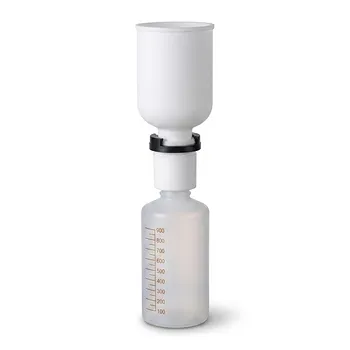
- PTFE PFA Vacuum Filtration System Corrosion Resistant Customizable Shatterproof Laboratory Device
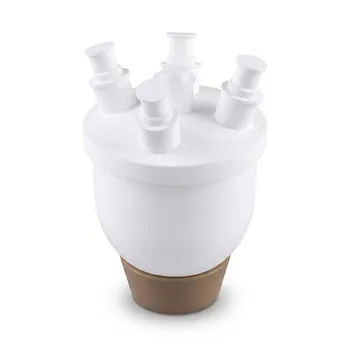
- High Performance Customizable PTFE Reaction Vessel and Corrosion Resistant Polytetrafluoroethylene Flask for Chemical Laboratory Use
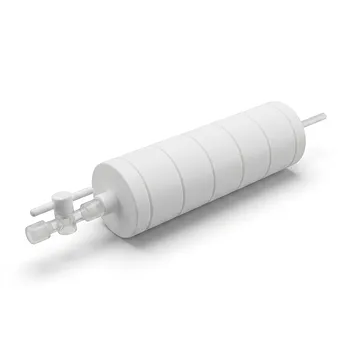
- PTFE Corrosion Resistant Filter with PFA Valve Connections and Integrated Sieve Plate
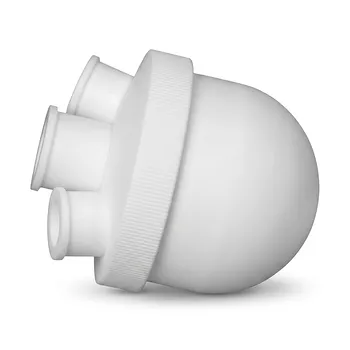
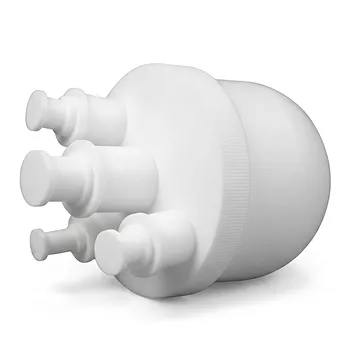
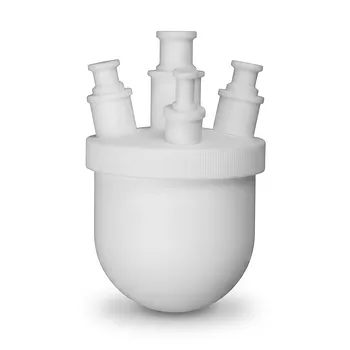
- Custom Multi Neck PTFE Round Bottom Flask for Chemical Synthesis and High Purity Laboratory Research
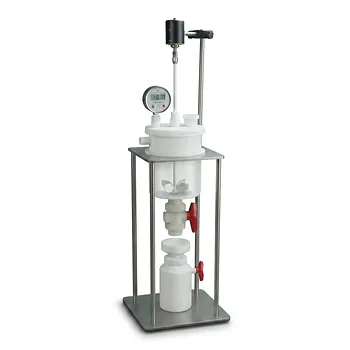
- Custom PTFE Reaction System with Hose Barb Fittings Corrosion Resistant High Sealing 2L 4L Lab Reactor with Separatory Funnel
People Also Ask
- What makes PTFE filtration systems advantageous for industrial and scientific use? Unmatched Chemical & Thermal Stability
- What temperature resistance do PTFE filters offer? Unmatched Thermal Stability from -200°C to +260°C
- How does the hydrophobicity of PTFE filters benefit their use? Ensure Uninterrupted Gas Flow and Solvent Filtration
- Which chemicals are fully compatible with PTFE filters? Discover Unmatched Chemical Resistance
- What steps are involved in selecting the proper PTFE filter? A 4-Step Guide to Optimal Filtration