Steam dilution and residence-time control can raise TFE synthesis yield substantially. In chlorodifluoromethane (CHClF₂) pyrolysis, adding steam lowers the reactant’s partial pressure and shifts the reversible reaction toward tetrafluoroethylene (TFE) formation. A steam-to-CHClF₂ molar ratio of approximately 7:1 to 10:1 can support TFE yields approaching 95% at about 80% CHClF₂ conversion. Shorter reactor residence times also improve selectivity by limiting the secondary reactions that form high-boiling byproducts.
The best TFE yield depends on two controls working together: sufficient steam dilution to favor the equilibrium conversion of CHClF₂ to TFE, and a residence time short enough to remove TFE from the high-temperature reaction environment before it undergoes unwanted secondary reactions.
How Steam Increases TFE Formation
Steam Lowers Reactant Partial Pressure
The principal pyrolysis can be represented as:
[ 2\text{CHClF}_2 \rightleftharpoons \text{C}_2\text{F}_4 + 2\text{HCl} ]
Steam acts primarily as an inert gaseous diluent. It reduces the partial pressure of CHClF₂ without requiring an increase in total mechanical pressure.
Equilibrium Shifts Toward TFE
Because the reaction is reversible, lowering the partial pressure of the reactant favors the forward direction under Le Chatelier’s principle. The result is greater formation of TFE relative to the undepleted CHClF₂ feed.
This approach improves equilibrium behavior while preserving the overall operating pressure of the reactor system. That distinction matters because dilution changes gas composition without imposing the mechanical and equipment burdens associated with pressurization.
Practical Dilution Range
The primary reference identifies a steam-to-CHClF₂ molar ratio of 7:1 to 10:1 as an effective operating range. Within this range, reported TFE yields can reach approximately 95%, with CHClF₂ conversion around 80%.
Supplementary data indicate that useful improvement begins at lower ratios, roughly 3:1, while ratios near 8:1 can produce more than 90% CHClF₂ conversion at temperatures around 750–800°C. The optimum ratio therefore depends on reactor design, temperature, feed composition, and the selected definition of yield.
Why Residence Time Changes Yield
Short Contact Times Preserve Selectivity
At approximately 700°C, a residence time of about 0.17 seconds produces reported TFE selectivity and yields of roughly 93.1–93.5%. This short exposure provides enough time for pyrolysis while limiting the time available for TFE and other reactive species to undergo further reactions.
Long Contact Times Promote Byproducts
Increasing residence time to approximately 0.64 seconds reduces the reported yield to about 84.5%. The additional high-temperature exposure promotes secondary reactions and the formation of unwanted high-boiling products.
In practical terms, the reactor must provide enough contact time for CHClF₂ conversion, but not so much that the newly formed TFE remains in the reaction zone and degrades or reacts further.
Residence Time Is a Selectivity Variable
Residence time is therefore not merely a throughput parameter. It directly affects the balance between primary TFE formation and secondary byproduct formation.
This is especially important when the TFE will be purified for PTFE manufacturing. High conversion alone is insufficient if the product stream contains impurities that are difficult to remove or that interfere with downstream polymerization.
How Steam and Residence Time Work Together
Dilution Favors the Forward Reaction
Steam increases the thermodynamic driving force for TFE formation by reducing CHClF₂ partial pressure. This can improve conversion at temperatures where undiluted pyrolysis would otherwise be less effective.
Short Residence Time Protects the Product
Residence-time control addresses a different problem. Once TFE has formed, rapid removal or quenching reduces its exposure to conditions that generate high-boiling compounds and other perfluorocarbon byproducts.
The two measures are complementary: steam supports formation, while short contact time protects selectivity.
Temperature Still Defines the Operating Window
Reported results span approximately 700–900°C, and some supplementary information indicates that TFE formation may be maximized at temperatures above 900°C. However, higher temperature does not automatically produce the best process outcome.
At temperatures above roughly 850°C, competing reactions can increase the formation of hexafluoropropylene (HFP) and other byproducts. The useful operating point must therefore balance temperature, steam ratio, and residence time rather than maximize any single variable.
What the Yield Improvement Means for PTFE Manufacturing
Better Raw Material Utilization
Higher TFE yield means more of the CHClF₂ feed is converted into the desired monomer instead of being lost to unreacted feed or side products. This improves raw material utilization and can reduce the separation burden.
Lower Impurity Load
TFE intended for high-molecular-weight PTFE must be purified to an exceptionally high level, with reported targets near 99.99995%. Chain-transfer impurities such as trifluoroethylene must be reduced to the sub-ppm range, and chlorine- or hydrogen-bearing impurities can interfere with polymerization.
A pyrolysis process that suppresses secondary products therefore supports purification, but it does not eliminate the need for rigorous downstream separation and quality control.
More Consistent Polymerization
Consistent TFE composition helps maintain stable polymerization behavior. In emulsion polymerization, purified TFE is converted into PTFE particles in an aqueous system containing initiators, surfactants, and stabilizers.
Feed impurities can affect molecular weight and product consistency, so controlling pyrolysis selectivity is part of controlling final PTFE performance.
Understanding the Trade-offs
Excessive Steam Increases Process Load
Steam improves dilution, but high steam ratios increase the volume of gas that must be heated, moved, cooled, and separated. The reported 7:1 to 10:1 range should therefore be treated as an optimization window rather than a universal requirement.
The most economical ratio is the lowest one that achieves the required conversion and selectivity for the specific reactor.
Very Short Residence Time Can Limit Conversion
Reducing residence time generally protects TFE selectivity, but an excessively short contact time may leave too much CHClF₂ unconverted. The process must achieve adequate conversion before quenching or product removal.
The correct target is not the shortest possible residence time; it is the shortest time that provides the required conversion without substantial secondary reaction.
Higher Temperature Can Increase Side Reactions
Higher temperature can accelerate CHClF₂ pyrolysis, but it can also accelerate competing pathways. The increase in HFP and other byproducts at elevated temperatures illustrates why conversion and product quality must be evaluated together.
A high CHClF₂ conversion figure does not necessarily indicate a high TFE yield.
Yield, Conversion, and Selectivity Are Different
These metrics should not be treated as interchangeable. Conversion measures how much CHClF₂ reacts, selectivity measures how much reacted material forms TFE, and yield reflects the desired TFE obtained from the feed.
A process can have high conversion but disappointing TFE yield if too much material forms side products.
Making the Right Choice for Your Goal
The operating strategy should be selected against the actual manufacturing objective:
- If your primary focus is maximum TFE yield: Start by evaluating a steam-to-CHClF₂ ratio near 7:1 to 10:1, then adjust temperature and residence time together to approach the required yield without increasing byproduct formation.
- If your primary focus is high TFE selectivity: Favor short residence times, such as approximately 0.17–0.2 seconds where reactor design permits, and rapidly remove the product from the high-temperature zone.
- If your primary focus is lower energy and separation cost: Use the minimum steam ratio that provides acceptable conversion and selectivity, because excess dilution increases the gas-handling and heat-duty requirements.
- If your primary focus is high-purity PTFE production: Optimize for low secondary-product formation as well as conversion, then apply rigorous purification to remove polymerization-inhibiting impurities.
The most reliable route to high-quality TFE is coordinated control of steam dilution, temperature, and residence time rather than maximizing conversion through temperature or contact time alone.
Summary Table:
| Factor | Influence on TFE Yield | Optimal Range/Value |
|---|---|---|
| Steam-to-CHClF2 molar ratio | Lowers reactant partial pressure, shifts equilibrium toward TFE | 7:1 to 10:1 (yield ~95% at 80% conversion) |
| Residence time | Short times limit secondary reactions; long times increase byproducts | ~0.17 sec (yield ~93%) vs. ~0.64 sec (yield ~84%) |
| Temperature | Higher temperature improves conversion but may increase side reactions | 700–900°C; >850°C increases HFP |
Maximize your TFE yield and PTFE quality with KINTEK's high-performance fluoropolymer solutions. Our PTFE and PFA labware and custom CNC-machined parts are designed to support your reactor and purification processes. For more information on optimizing your synthesis, contact us today — Get in Touch!
Related Products
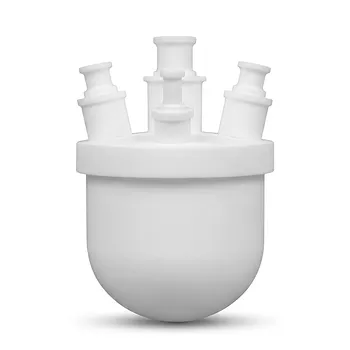
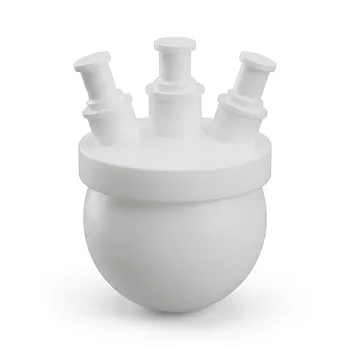
- High Purity PTFE Multi Neck Reaction Flask for Corrosive Chemical Processing and Custom Industrial Laboratory Synthesis
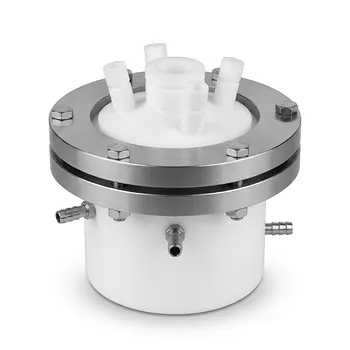
- Custom PTFE Reaction System with Hose Barb Fittings Corrosion Resistant High Sealing 2L 4L Lab Reactor with Separatory Funnel
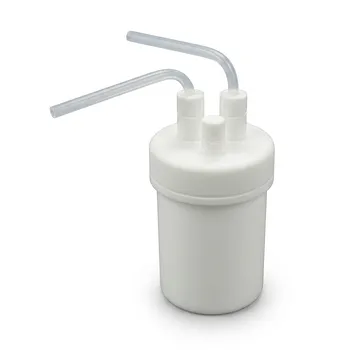
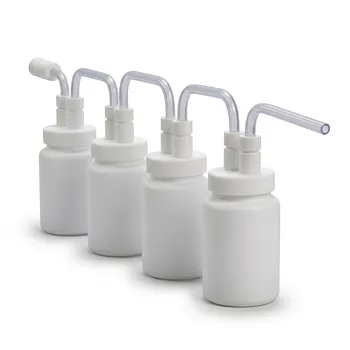
- Custom PTFE Continuous Reaction Bottles Virgin Fluoropolymer High Purity Low Background Synthesis Vessels
- Custom Multi Neck PTFE Flask 18L Laboratory Chemical Reactor Vessel for High Purity Synthesis and Stirring Applications
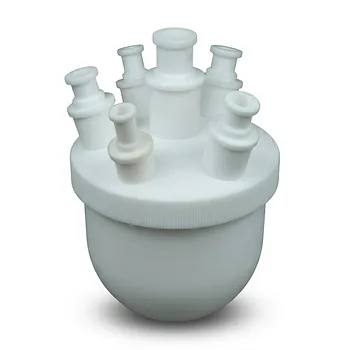
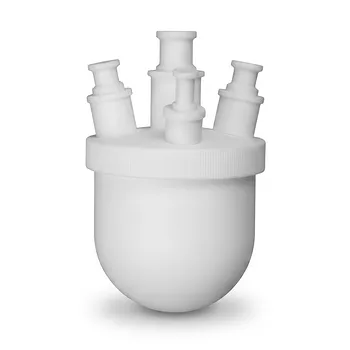
- Custom Multi Neck PTFE Round Bottom Flask for Chemical Synthesis and High Purity Laboratory Research
People Also Ask
- Why are PP or PTFE reactors preferred over glass in tribocatalysis? Maximize Charge Separation & Catalytic Efficiency
- What are the primary fabrication methods for capillary-based and monolithic PTFE reactors? Expert Production Insights
- What functional advantages do PTFE reactors provide over glass? Achieve Superior Purity and Safety in Synthesis
- Why is a Teflon-lined (PTFE) reactor vessel required for the hydrothermal synthesis of V2O5 and SnO2 nanomaterials?
- How do pyrolysis temperature and steam diluent ratios influence tetrafluoroethylene (TFE) conversion and yield in fluoropolymer monomer reaction apparatus? Optimize TFE yield with temperature and steam control