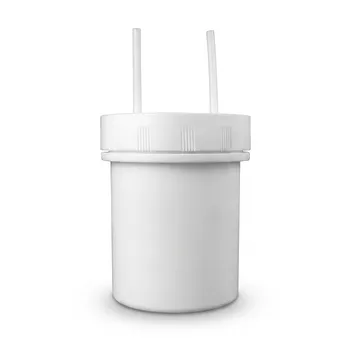
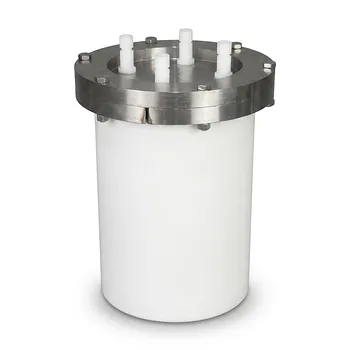
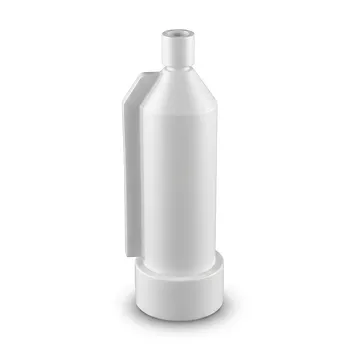
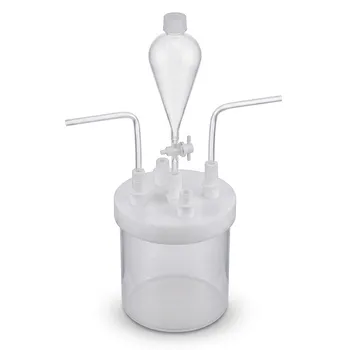
For high-purity chemical processing, select fluorinated coatings and PTFE/PFA vessels by evaluating chemical compatibility, actual temperature exposure, and mechanical life—not by relying on “chemically resistant” as a blanket claim. PTFE and PFA provide outstanding resistance to concentrated acids, strong bases, oxidizing media, and many organic solvents, while their low surface energy supports non-wetting and low-contamination operation. The final choice must also account for temperature cycling, pressure or vacuum, impact, abrasion, creep, coating adhesion, and purity requirements.
Core takeaway: Fluoropolymer performance depends on the complete system: polymer grade, construction method, substrate, operating conditions, and service history. Solid PFA or PTFE is generally more robust against coating defects, while a properly engineered fluorinated coating can provide excellent corrosion protection when adhesion, thickness, edges, and mechanical exposure are controlled.
Start With the Chemical Exposure
Identify every reagent and process condition
Evaluate the complete chemical environment, including concentration, temperature, exposure time, pressure, agitation, and cleaning cycles. A material that performs well against a reagent at room temperature may behave differently at elevated temperature or under prolonged exposure.
PTFE and PFA are highly resistant to concentrated acids such as sulfuric acid, strong bases such as sodium hydroxide, and aggressive organic solvents such as toluene. Their fully fluorinated backbones and strong carbon–fluorine bonds provide unusually high chemical inertia.
Check the exceptions, not only the strengths
Chemical resistance is not universal under every possible condition. Extreme environments involving molten alkali metals, elemental fluorine at elevated temperature or pressure, chlorine trifluoride, and certain specialized fluorinating systems require specific compatibility review.
Do not assume that a fluoropolymer is suitable merely because the reagent is classified as an acid, base, oxidizer, or solvent. The exact chemical combination and process temperature determine the real risk.
Consider permeation and contamination control
Chemical attack is only one failure mode. Some chemicals can permeate fluoropolymer components without visibly damaging them, potentially affecting the substrate beneath a coating or contaminating adjacent materials.
For trace analysis and high-purity processing, evaluate extractables, leachables, residual processing aids, pigments, fillers, and cleanliness. Virgin, high-purity PFA is often preferred for fluid containment and analytical vessels where contamination control is critical.
Match the polymer to the function
PTFE and PFA both offer top-tier chemical resistance, but their physical and processing characteristics differ.
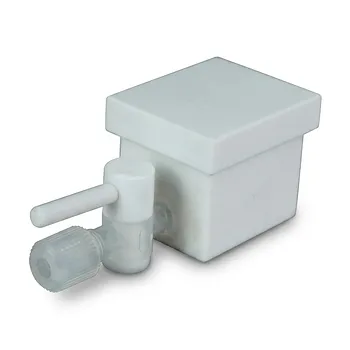
- PTFE: Provides extremely low friction and strong non-stick performance. It is suitable for solid stock shapes, custom-machined vessels, seals, stopcocks, and specialized labware.
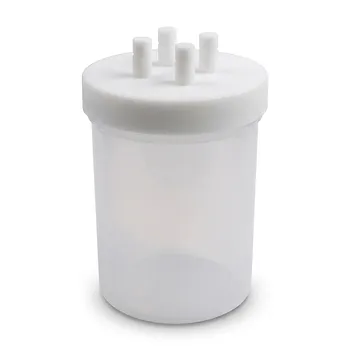
- PFA: Combines PTFE-like chemical resistance with melt-processability. It is well suited to seamless or complex molded vessels, tubing, fittings, valves, and high-purity containers.
- FEP: Also offers strong chemical resistance and useful dielectric properties, but its friction and processing characteristics differ from PTFE and PFA.
Confirm the Thermal Operating Window
Use the actual process temperature
Assess the highest continuous temperature, peak temperature, heating rate, dwell time, and number of thermal cycles. For many PTFE and PFA applications, operating temperatures around 200–260°C are relevant, but the allowable limit depends on grade, geometry, load, and exposure duration.
Claims of stability up to 400°C should not be treated as a general continuous-service rating for ordinary PTFE or PFA vessels. Such values may refer to specialized conditions, short exposures, or thermal stability before significant degradation rather than a safe design temperature.
Account for thermal cycling
Repeated heating and cooling can cause dimensional changes, fatigue, loss of coating adhesion, and stress at joints or interfaces. This is particularly important for microwave digestion, heated cleaning tanks, autoclave-like cycles, and rapid temperature transitions.
The vessel or coated assembly must tolerate the combined expansion of the fluoropolymer and any supporting substrate. Differences in thermal expansion can generate interfacial stress even when the polymer itself remains chemically stable.
Evaluate load at elevated temperature
Fluoropolymers retain chemical resistance at high temperature, but mechanical stiffness and dimensional stability can decline as temperature rises. PTFE and PFA may deform, creep, or cold-flow under sustained load even when they show no chemical degradation.
Therefore, pressure, vacuum, clamp force, vessel stacking, and support conditions must be evaluated at the maximum operating temperature, not only at room temperature.
Design for heat transfer and hot spots
Localized overheating can be more damaging than a lower uniform temperature. Examine heating-element placement, vessel wall thickness, fluid level, agitation, and the possibility of dry-out or concentrated residues.
For coated equipment, inspect corners, edges, welds, and thin sections where temperature gradients can be highest and coating damage may initiate.
Evaluate Mechanical Durability
Assess impact and drop resistance
Laboratory vessels may experience accidental drops, contact with tools, clamp loading, and repeated handling. Continuous or repeated impact can produce cracks, chips, deformation, or hidden damage even when the fluoropolymer remains chemically intact.
Solid PTFE or PFA components generally avoid the delamination risk associated with a thin coating. For vessels exposed to frequent handling or impact, wall thickness, geometry, protective supports, and replacement procedures matter as much as polymer selection.
Consider abrasion and surface wear
Agitation, particulate slurries, scraping, repeated insertion of tools, and cleaning brushes can abrade a fluorinated surface. Abrasion may expose the underlying substrate in a coated system, creating a corrosion path or a contamination source.
The low surface energy and low friction of fluoropolymers help reduce adhesion and friction, but they do not make the material immune to mechanical wear. Specify cleaning methods that remove residues without mechanically damaging the surface.
Account for creep and cold flow
PTFE and PFA can deform slowly under sustained stress, especially at elevated temperature. This is important for flanges, threaded closures, gaskets, valve seats, clamped liners, and vessel supports.
Designs should limit concentrated loads and avoid relying on fluoropolymer components alone to maintain high structural loads over long periods. Use appropriate backing structures, compression control, and periodic inspection.
Check pressure, vacuum, and structural support
A chemically compatible vessel may still be unsuitable for pressure or vacuum service. Review wall thickness, unsupported span, geometry, closure design, thermal conditions, and the consequences of collapse or rupture.
Coatings are not pressure vessels. They protect a substrate but do not replace the mechanical design of the underlying tank, pipe, or vessel.
Distinguish Solid Fluoropolymer From Coated Construction
Understand the advantages of solid PTFE and PFA
Solid components eliminate many interface-related failure modes. They are not vulnerable to coating pinholes, substrate exposure through wear, or adhesion loss between polymer and metal.
PTFE can be compression-molded, sintered, or machined from solid stock. PFA can be melt-processed into complex, seamless, translucent components, making it particularly useful for high-purity fluid systems and trace-analysis vessels.
Evaluate coating adhesion and substrate preparation
A fluorinated coating is only as reliable as its bond to the substrate. Selection must include substrate chemistry, surface preparation, coating thickness, application method, curing conditions, and thermal-expansion compatibility.
Poor preparation, contamination, inadequate curing, sharp edges, or excessive thickness can cause blistering, cracking, peeling, or pinholing. These defects may remain unnoticed until aggressive chemicals reach the substrate.
Inspect edges, seams, and penetrations
Coating failures often begin at edges, corners, welds, fasteners, openings, and areas of mechanical contact. Specify how these features will be coated and inspected rather than evaluating only a flat test panel.
For high-purity service, the surface should also be smooth, cleanable, and free of discontinuities that can trap residues or support cross-contamination.
Verify Purity and Cleanability
Prioritize non-wetting and low adhesion
Fluoropolymers have low surface energy, which helps reduce wetting, fouling, and residue retention. This can improve liquid recovery and simplify cleaning after acid digestion or aggressive chemical treatment.
However, non-wetting does not eliminate contamination risk. Poorly designed joints, scratched surfaces, dead legs, and damaged coatings can still retain residues.
Control manufacturing and handling contamination
High-purity service requires more than a chemically inert polymer. Review resin purity, fabrication environment, machining lubricants, cleaning procedures, packaging, and trace-metal or organic extractables.
For critical analytical work, obtain supplier data for extractables and leachables and establish an appropriate pre-use cleaning and blank-testing protocol.
Preserve surface integrity during cleaning
Cleaning procedures should be compatible with both the fluoropolymer and the complete assembly. Avoid methods that introduce scratches, gouges, embedded particles, or thermal shock.
The practical goal is a surface that remains chemically inert, mechanically intact, and easy to rinse completely over the expected service life.
Understanding the Trade-offs
Coatings can reduce cost but add failure interfaces
A coating may provide effective corrosion protection while using less fluoropolymer and preserving the strength of a metal structure. Its limitation is that performance depends on adhesion, continuity, thickness, and resistance to impact and abrasion.
Solid PTFE or PFA is usually more tolerant of surface damage, but it may require greater material volume, specialized fabrication, additional support, or higher initial cost.
PTFE offers lubricity but is difficult to process
PTFE provides exceptionally low friction and strong non-stick behavior. Its extremely high melt viscosity prevents conventional melt molding, so it is commonly produced through sintering, compression molding, paste extrusion, or machining.
This can limit complex seamless geometries and increase fabrication effort for custom designs.
PFA enables complex high-purity components but still requires mechanical design
PFA is melt-processible, allowing complex, seamless, and translucent molded components. It is therefore advantageous for high-purity tubing, fittings, valves, bottles, and vessels.
It remains subject to thermal expansion, creep, impact damage, and load-related deformation. Chemical resistance does not remove the need for structural support.
“Universal resistance” can lead to poor decisions
Fluoropolymers are among the most chemically resistant engineering materials, but compatibility tables are not substitutes for process-specific review. Temperature, stress, exposure duration, chemical mixtures, and impurities can alter performance.
The most common mistake is selecting a polymer based only on the reagent name while ignoring mechanical loads and the construction method.
Making the Right Choice for Your Goal
Use the following priorities to align the material with the actual process:
- If your primary focus is maximum chemical resistance: Choose a high-purity PTFE or PFA grade after reviewing the exact reagent mixture, concentration, temperature, pressure, and exposure duration.
- If your primary focus is trace-analysis purity: Favor virgin, high-purity PFA or PTFE with documented extractables, controlled fabrication, smooth surfaces, and validated cleaning procedures.
- If your primary focus is impact and abrasion durability: Prefer a robust solid component or a mechanically protected fluoropolymer system, and specify resistance to drops, tools, agitation, and cleaning wear.
- If your primary focus is complex geometry or seamless fluid handling: Consider melt-processible PFA, while checking thermal expansion, creep, support, and dimensional stability at operating temperature.
- If your primary focus is corrosion protection for a structural tank or vessel: Consider a fluorinated coating only after verifying substrate preparation, adhesion, thickness, edge coverage, inspection, and repairability.
- If your primary focus is high-temperature operation: Design from the supplier’s continuous-use and load-at-temperature data, and treat broad claims such as “up to 400°C” as requiring specific qualification rather than as a universal service rating.
A sound selection combines chemical compatibility, thermal qualification, mechanical design, coating integrity, and contamination control into one service-life assessment.
Summary Table:
| Durability Factor | Key Considerations | PTFE | PFA |
|---|---|---|---|
| Chemical Resistance | Reagent type, concentration, temperature, exposure time; exceptions like molten alkali metals, elemental fluorine, ClF3 | Excellent across most acids, bases, solvents | Same as PTFE with melt-processability advantage |
| Thermal Stability | Continuous service temperature, peak temperature, thermal cycling, load at temperature | Up to ~260°C continuous; avoid 400°C blanket claims | Comparable to PTFE, with good melt processability |
| Mechanical Durability | Impact, abrasion, creep, pressure/vacuum, coating adhesion | Good impact/abrasion when solid; prone to creep | Similar; better for complex geometries |
| Purity & Cleanability | Extractables, leachables, non-stick, ease of cleaning | High purity grades available | High purity preferred for analytical work |
| Construction Trade-offs | Coating vs. solid; adhesion, edges, seams | Solid offers robustness; coating saves cost but adds failure modes | Melt-processible for seamless, high-purity flow components |
Need expert guidance on selecting high-purity fluoropolymer vessels or coatings? At KINTEK, we specialize in PTFE and PFA laboratory supplies, from basic labware to advanced electrochemical cells and custom CNC machined parts. Our products are engineered for exceptional chemical, thermal, and mechanical performance, backed by comprehensive purity documentation and OEM/ODM support. Contact us today to discuss your requirements and get a tailored solution that ensures reliability and efficiency in your high-purity processing. Get in touch now!
Related Products
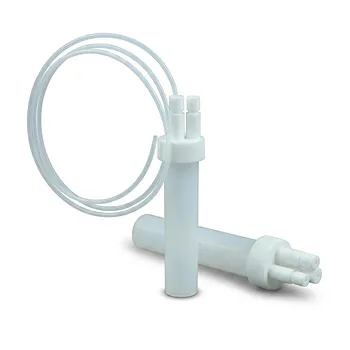
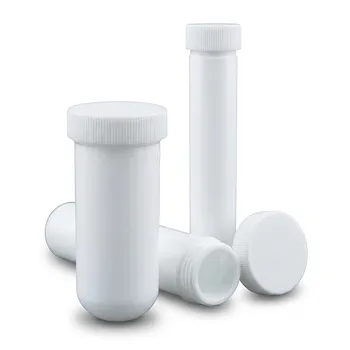
- Custom PFA Reaction Bottles High Purity PTFE Reaction Vessels Corrosion Resistant Petrochemical Containers
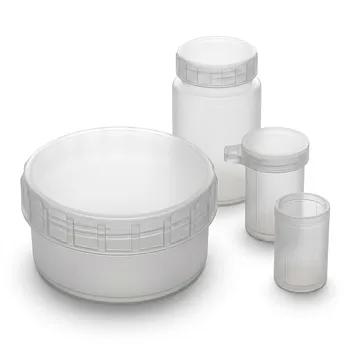
- PFA Reaction Jar Corrosion Resistant Wide Mouth PTFE Lab Bottle High Purity Chemical Vessel
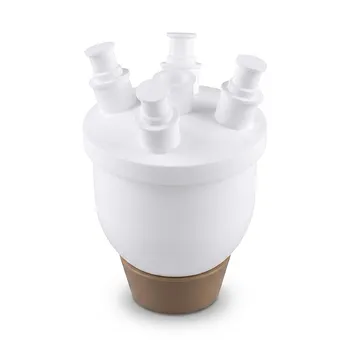
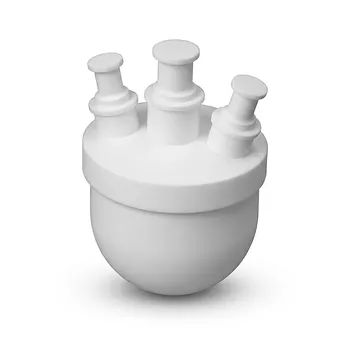
- High Performance Customizable PTFE Reaction Vessel and Corrosion Resistant Polytetrafluoroethylene Flask for Chemical Laboratory Use
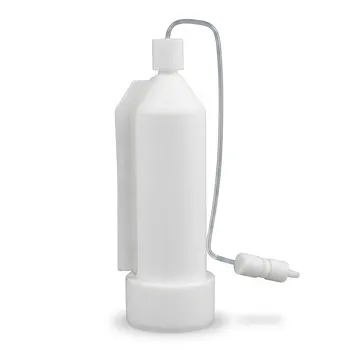
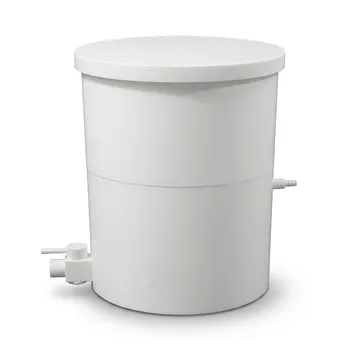
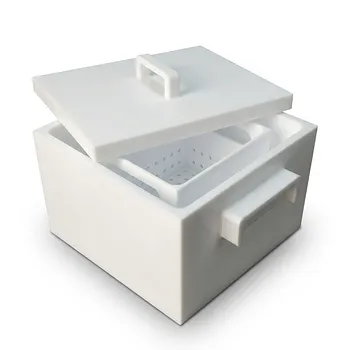
- Custom High Purity PTFE Microwave Digestion Vessels and Graphite Block Compatible Acid Evaporation Tanks for Trace Metal Analysis
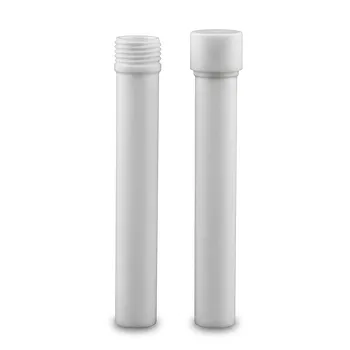
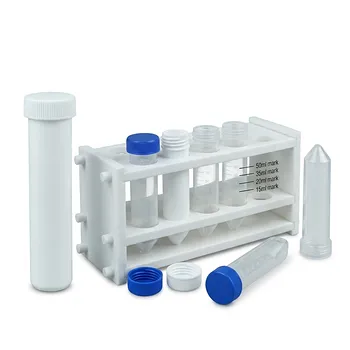
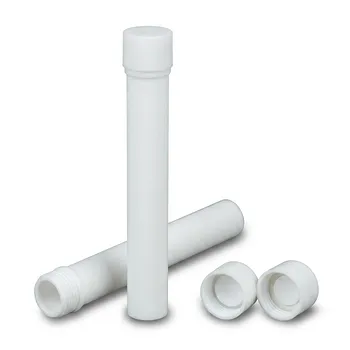
- Custom PTFE Digestion Tubes and High Purity Polytetrafluoroethylene Centrifuge Vessels 60ml for Trace Analysis
People Also Ask
- What is the function of corrosion-resistant reaction vessels in the acid hydrolysis process of molasses for microalgae culture media?
- Why are well-sealed reaction vessels necessary for superacid-promoted Friedel-Crafts polycondensation? Optimize Synthesis
- Role of reaction vessels in alkali treatment for oil palm waste: Achieve High-Purity Cellulose with PTFE Vessels
- How do the material choice and sealing integrity of the reaction vessel affect the growth of NiFe-LDH? Optimize Synthesis
- Why are corrosion-resistant vessels needed for alkaline cellulose extraction? Ensure Purity and Process Safety