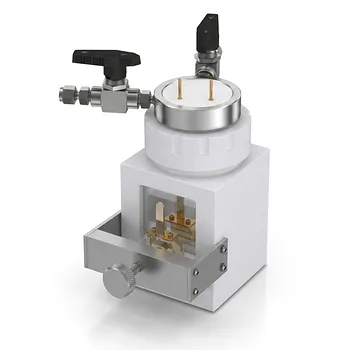
PVDF’s relatively low processing temperature and strong weldability make it well suited to custom fluoropolymer laboratory equipment and piping assemblies. Its thermoplastic melt-processing range, commonly treated as approximately 200–250°C depending on grade and fabrication method, is substantially lower than the processing temperature associated with fully fluorinated materials such as PTFE. This allows fabricators to form, modify, and join PVDF components using controlled thermal techniques that produce precise, leak-tight assemblies while preserving chemical resistance and cleanliness.
PVDF combines fluoropolymer chemical performance with practical thermoplastic fabrication. Its weldability simplifies the construction of custom tanks, manifolds, fluid distribution systems, and laboratory apparatus, but material compatibility must still be confirmed for the specific chemicals and temperatures involved.
Why PVDF Is Easier to Fabricate
Lower Processing Temperatures Expand Fabrication Options
PVDF can be processed using conventional thermoplastic methods because it can be heated into a workable melt before significant thermal degradation occurs. This is a major practical advantage over PTFE, which has an extremely high melt temperature and very high melt viscosity that make ordinary melt molding and welding impractical.
The lower processing range also reduces the thermal demands placed on fabrication equipment, tooling, and surrounding components. Fabricators can therefore produce custom parts and assemblies with more accessible equipment and tighter process control.
Thermoplastic Behavior Supports Rework and Joining
PVDF can be reheated and fused because it is a thermoplastic material. This allows separate sheets, pipe sections, fittings, and molded components to become part of a continuous polymer structure rather than relying solely on mechanical fasteners or adhesives.
That behavior is particularly valuable when equipment must be built around a non-standard footprint, unusual connection arrangement, or specialized laboratory workflow.
Complex Laboratory Geometries Are Practical
PVDF can be fabricated into dense structural parts, films, porous structures, and fluid-handling components. Depending on the design and performance requirements, fabrication may include thermal forming, machining, membrane processing, or welded assembly.
This flexibility supports custom items such as reagent tanks, drain systems, manifolds, sample-handling components, filtration parts, and specialized vessels.
How Weldability Benefits Custom Assemblies
Butt Fusion Creates Continuous Pipe Runs
In butt fusion, prepared pipe ends are heated and pressed together under controlled pressure. Once cooled, the joined section forms a continuous PVDF wall with no separate gasket at the primary fusion interface.
This is useful for custom fluid distribution systems where long-term leak prevention, chemical cleanliness, and minimal internal obstruction are important.
Socket Welding Simplifies Compact Connections
Socket welding joins a pipe and fitting by heating their mating surfaces and inserting one into the other. It is well suited to compact assemblies with frequent branches, elbows, tees, valves, and instrument connections.
For laboratory piping, socket welding can help create space-efficient routing around equipment and within constrained enclosures.
Hot Gas Welding Supports Sheet Fabrication
Hot gas welding uses a heated gas stream to soften PVDF surfaces and, where required, a compatible filler rod. It is commonly useful for fabricating tanks, trays, covers, ductwork, and other sheet-based equipment.
This method allows fabricators to join flat or formed sheets into custom shapes that would be difficult to obtain from standard molded parts.
Extrusion Welding Handles Larger Welds
Extrusion welding introduces heated PVDF filler material into a prepared joint. It is useful for larger sheet assemblies and applications requiring more substantial weld volumes than a conventional hot gas weld can provide.
This technique can support the construction of large custom tanks, containment structures, and process equipment while maintaining a PVDF-compatible joint.
Why Welded PVDF Helps Laboratory Performance
Leak-Tight Construction Protects Processes
A properly designed and executed PVDF weld can create a strong, continuous connection that reduces dependence on seals, threaded joints, and mechanical couplings. Fewer potential leak paths can improve reliability when handling corrosive reagents, purified fluids, or hazardous laboratory chemicals.
The result is a more dependable assembly for containment and controlled fluid transfer.
Welded Designs Reduce Contamination Risks
Welded joints can eliminate some gasket materials, sealants, lubricants, and adhesive systems that might otherwise introduce extractables or contamination. Smooth, chemically resistant PVDF surfaces can also support easier cleaning and controlled fluid contact.
However, cleanroom or high-purity compatibility is not guaranteed by welding alone. Resin grade, filler material, surface preparation, fabrication environment, cleaning procedure, and validation requirements must all be considered.
Customization Preserves System Function
Because PVDF components can be cut, routed, fitted, and welded into application-specific designs, equipment can be configured around actual laboratory requirements. This may include dedicated ports, internal partitions, drain points, sampling connections, sensor mounts, and customized pipe routing.
Customization can improve maintainability and reduce the need for adapters that add volume, dead legs, or additional connection points.
Thermal and Chemical Performance in Service
Thermal Stability Supports Demanding Laboratory Use
PVDF has greater thermal endurance than conventional vinyl polymers such as PVC and PVDC. It retains useful structural performance under elevated-temperature exposure that would severely degrade those materials.
Its processing temperature should not be confused with its continuous operating limit, however. The allowable service temperature depends on the PVDF grade, mechanical loading, chemical environment, pressure, and duration of exposure.
Mechanical Strength Supports Piping and Equipment
PVDF provides a useful balance of strength, toughness, and elongation. These properties help fabricated tanks, piping, fittings, and machined components tolerate handling, vibration, pressure-related loads, and moderate mechanical stress.
Designers must still account for temperature-dependent softening, creep, wall thickness, support spacing, and weld-joint performance.
Chemical Compatibility Must Be Application-Specific
PVDF is resistant to many acids, bases, salts, and aggressive process chemicals, which makes it valuable for laboratory fluid handling. It is not universally inert to every solvent or operating condition.
PVDF can dissolve or swell in certain organic solvents, including some aromatic and chlorinated solvents. Applications involving hot chlorinated or aromatic chemicals may require a fully fluorinated material such as PTFE or PFA instead.
Understanding the Trade-offs
Weld Quality Depends on Process Control
PVDF welds require correct temperature, pressure, alignment, surface preparation, cooling, and operator technique. Excessive heat can damage the polymer, while insufficient heat or pressure can produce weak, incomplete fusion.
Critical systems may require documented welding procedures, qualified operators, visual inspection, dimensional checks, pressure testing, and, where appropriate, destructive or non-destructive weld evaluation.
Thermal Processing Is Not Suitable for Every Geometry
PVDF is easier to melt-process than PTFE, but that does not mean every custom shape should be molded. Large, one-off, highly intricate, or tightly toleranced components may still be better produced through machining, forming, or a combination of fabrication methods.
A hybrid design may use machined PVDF blocks, standard pipe and fittings, formed sheet, and welded sections in the same assembly.
Temperature and Solvent Exposure Limit Material Choice
PVDF’s processing advantages do not override its chemical limitations. A fabrication method may be technically straightforward while the finished component remains unsuitable for a particular reagent, solvent, pressure, or temperature profile.
Material selection should therefore begin with the complete service envelope rather than weldability alone.
Welded Joints Still Require Design Attention
A weld does not automatically provide the same performance as the parent material under every load. Joint geometry, internal bead formation, stress concentration, thermal cycling, and access for inspection can affect the finished assembly.
Good designs minimize unnecessary joints, provide adequate support, and make critical welds accessible for inspection and testing.
Making the Right Choice for Your Goal
PVDF is most effective when its processing convenience is evaluated together with service chemistry, temperature, pressure, cleanliness, and inspection requirements.
- If your primary focus is custom laboratory tanks and apparatus: Use PVDF’s hot gas or extrusion welding capability to create application-specific sheet assemblies with chemically resistant, cleanable construction.
- If your primary focus is fluid distribution piping: Use butt fusion and socket welding to build compact, leak-tight pipe networks with fewer gasketed or mechanically coupled interfaces.
- If your primary focus is fabrication efficiency: Select PVDF when its lower thermoplastic processing range can simplify forming, joining, and modification compared with fully fluorinated polymers.
- If your primary focus is aggressive solvent service: Verify compatibility carefully, and specify PTFE or PFA when hot chlorinated or aromatic solvents exceed PVDF’s resistance.
- If your primary focus is high-purity or cleanroom operation: Control the resin, filler, welding process, surface finish, cleaning, and validation program as one integrated system.
PVDF gives designers a practical route to custom fluoropolymer equipment by combining chemical resistance and mechanical durability with controllable thermal fabrication and reliable welding.
Summary Table:
| Fabrication Method | Primary Use | Key Advantage |
|---|---|---|
| Butt Fusion | Long pipe runs | Leak-tight, continuous joints |
| Socket Welding | Compact connections | Space-efficient, frequent branch points |
| Hot Gas Welding | Sheet fabrication | Flexible custom tank/duct construction |
| Extrusion Welding | Large sheet assemblies | High-strength, large-volume welds |
| Benefit | Impact on Custom Equipment |
|---|---|
| Lower processing temperature | Easier fabrication with conventional equipment |
| Thermoplastic reworkability | Enables joining, modification, and repair |
| Leak-tight construction | Enhances reliability and safety |
| Reduced contamination risk | Eliminates gaskets/adhesives, improves cleanliness |
Looking to leverage PVDF's fabrication advantages for your custom lab equipment?
At KINTEK, we specialize in high-performance fluoropolymers, offering a comprehensive range of PTFE and PFA products backed by end-to-end custom CNC machining. Whether you need custom electrochemical cells, microwave digestion vessels, or complex piping assemblies, our expertise ensures precision, chemical compatibility, and reliability.
Contact us today to discuss your project and discover how our solutions can enhance your lab's efficiency and performance.
Related Products
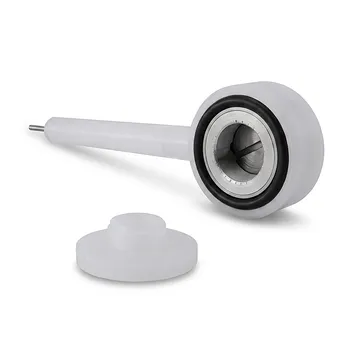
- PVDF Sample Support Body for Corrosion Testing and Electrochemical Analysis
- Custom PFA Tubing 1/4 Inch High Purity Corrosion Resistant Fluoropolymer Tube with Welding and Machining Services
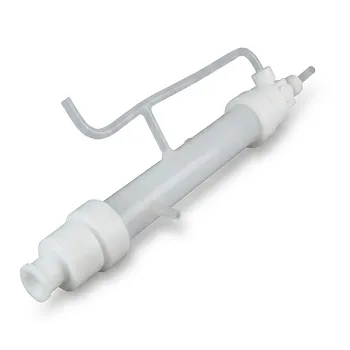
- Corrosion Resistant High Purity PFA Valve and Weldable Transparent Tubing for Semiconductor Fluid Transfer
- PFA Eggplant Flask Custom Molded Pear Shaped Laboratory Flask Corrosion Resistant Glass Alternative
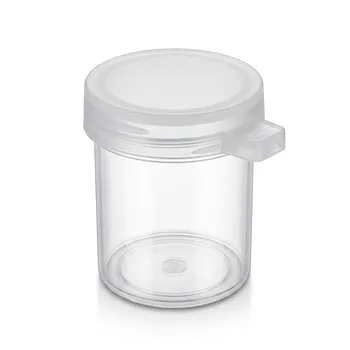
- High Purity PFA Sample Vials Acid Resistant Trace Analysis Digestion Cups with Lids
People Also Ask
- How does the gas permeability of PVDF compare with PTFE and PFA? Discover lower gas ingress for sensitive fluids
- How do PVDF, PTFE, and PFA compare in thermal resistance and chemical solubility for lab apparatus?
- How do the mechanical properties and creep resistance of PVDF compare to perfluorinated polymers like PTFE for structural fluoropolymer components? Discover PVDF's superior strength and lower creep, while PTFE excels in extreme environments.
- How do PVDF, PTFE, and PFA compare for chemical process and filtration applications?
- What are the chemical compatibility capabilities and key limitations of PVDF? Discover Critical Data for Safe Fluid Handling