Fluoropolymers are ideal for high-performance reaction vessels because their carbon-fluorine-rich structures combine exceptional chemical inertness, thermal stability, low surface energy, and mechanical durability. These properties allow materials such as PTFE and PFA to withstand aggressive acids, bases, oxidizing reagents, and many organic solvents while minimizing corrosion, sample adhesion, leaching, and cross-contamination. Their performance comes from the interaction between strong molecular bonds, chemically shielded polymer backbones, and stable macroscopic structures.
The central advantage of fluoropolymers is chemical separation: the material resists reacting with the process chemistry, resists releasing contaminants, and remains usable across demanding temperature and solvent conditions.
Why Fluoropolymers Resist Chemical Attack
Strong Carbon-Fluorine Bonding
The carbon-fluorine bond is one of the principal sources of fluoropolymer durability. Fluorine strongly shields the polymer backbone, making it difficult for many chemical species to attack or degrade the underlying carbon structure.
This is why PTFE, PFA, and related materials are widely used with aggressive acids, bases, oxidizing agents, and solvents. Chemical compatibility still depends on the specific reagent, concentration, temperature, exposure time, and mechanical stress.
Chemically Inert Polymer Backbones
Many high-performance fluoropolymers have saturated backbones with few chemically reactive sites. Their low reactivity reduces the likelihood that the vessel wall will participate in a reaction or become degraded by the contents.
For laboratory work, this helps preserve sample purity and reduces the risk that the apparatus will alter reaction chemistry through corrosion or reactive contamination.
Low Absorption and Low Leaching
Fluoropolymers generally absorb very little water and many solvents compared with more polar or porous materials. This limits the storage of chemicals within the vessel wall and reduces the potential for later release into another sample.
The result is particularly valuable in trace analysis, high-purity reagent handling, and procedures where even small contamination levels can affect results.
How Their Structure Supports Thermal Performance
Stable Molecular Structure
Fluoropolymer structures remain stable across a broad temperature range, allowing vessels and components to handle elevated-temperature reactions, digestion procedures, and aggressive cleaning cycles.
Specific limits vary considerably by polymer and product design. For example, PFA and PTFE products may support working temperatures around 260°C in appropriate applications, while short-term or decomposition temperatures should not be treated as normal operating limits.
Crystallinity and Chain Packing
The arrangement of polymer chains affects stiffness, dimensional stability, permeability, and resistance to deformation. Fluoropolymer crystallinity and dense chain packing can help maintain structural integrity when the material is exposed to heat and chemicals.
However, the exact packing motif depends on the polymer. Claims about universal backbone planarity, fluorine-sulfur interactions, hydrogen bonding, or reduced pi-pi stacking distances do not broadly describe common saturated fluoropolymers such as PTFE and PFA.
Resistance to Thermal Degradation
Fluoropolymers resist many forms of thermal degradation because their backbones are chemically robust and fluorine provides substantial molecular shielding. This reduces embrittlement, chemical breakdown, and contamination during high-temperature use.
Temperature resistance is not unlimited. Prolonged overheating can still cause decomposition, loss of mechanical properties, or hazardous fumes, so the manufacturer’s operating limits remain authoritative.
Why Their Surfaces Protect Samples and Simplify Cleaning
Extremely Low Surface Energy
Fluoropolymers have very low surface energy, which gives them their familiar non-stick behavior. Many chemicals, residues, and reaction products have less tendency to spread across or bond strongly to the vessel wall.
This reduces retained material and makes cleaning easier, especially when changing between chemically different samples.
Hydrophobic and Lipophobic Behavior
Many fluoropolymer surfaces resist wetting by both water-based and oil-based substances. This combination of hydrophobicity and lipophobicity helps limit sample adhesion across a wide range of laboratory chemistries.
The practical benefit is lower carryover and reduced cross-contamination, although no material eliminates the need for validated cleaning procedures.
Low Friction and Wear
Fluoropolymers have an exceptionally low coefficient of friction and good resistance to many forms of wear. These properties are useful in valves, stopcocks, seals, tubing, fittings, and moving interfaces connected to reaction vessels.
Lower friction can improve handling and reduce mechanical damage, but filled or reinforced grades may be needed when high load-bearing or abrasion resistance is required.
How Fluoropolymers Maintain Apparatus Integrity
Resistance to Corrosion
Unlike metals that can corrode or react with strong reagents, fluoropolymer vessels and liners remain substantially less affected by many aggressive chemical environments. This makes them suitable for digestion vessels, reaction containers, tubing, valves, and custom fittings.
Their corrosion resistance is a material advantage, but fittings, supports, closures, and embedded components may be made from different materials and can remain compatibility bottlenecks.
Low Permeability and Dense Construction
Dense, homogeneous fluoropolymer products provide a continuous barrier between the chemical contents and the surrounding equipment. Low absorption and relatively low permeability help protect both the sample and the external system.
Permeation can still occur with some small molecules, gases, or solvents, particularly at elevated temperatures. Vessel wall thickness, polymer grade, and exposure duration therefore matter.
Electrical Insulation and Flame Resistance
Fluoropolymers also provide strong electrical insulation and, in many formulations, favorable flame-retardant or self-extinguishing behavior. These characteristics can improve safety and reliability around heated, electrically controlled, or solvent-handling equipment.
They complement chemical resistance but do not replace appropriate ventilation, pressure control, grounding, or fire-safety practices.
The Role of Electronic Properties
Fluorine Changes Molecular Polarity
Fluorine substitution changes the distribution of electron density within a polymer and can alter its dipole behavior and surface interactions. These changes contribute to the low surface energy and unusual wetting characteristics associated with many fluoropolymers.
The effect is not simply “more fluorine equals more inertness.” Polymer architecture, comonomers, crystallinity, additives, and processing history also influence final performance.
Electronic Energy Levels
Fluorine can modify electronic properties such as frontier orbital energies and bandgap-related behavior. These effects are important in electronic and optoelectronic fluorinated materials.
For ordinary laboratory reaction vessels, however, electronic energy tuning is a secondary consideration. Chemical inertness, thermal stability, low absorption, and surface non-adhesion are the properties that most directly determine practical performance.
Understanding the Trade-offs
Limited Mechanical Rigidity at High Temperatures
PTFE and similar fluoropolymers can creep or deform under sustained load, especially at elevated temperatures. A chemically compatible vessel may therefore require external support, thicker walls, or a different fluoropolymer grade.
Permeation and Pressure Limitations
Chemical resistance does not automatically make a fluoropolymer vessel suitable for pressurized service. Some chemicals can permeate the polymer, and polymer components may not provide the same pressure strength as glass or metal.
Pressure, temperature, wall thickness, and chemical exposure must be evaluated together.
Processing and Dimensional Constraints
Fluoropolymers can be more difficult and expensive to process than conventional plastics. Their low surface energy also makes bonding, coating, and adhesive attachment challenging.
These limitations may favor molded, machined, lined, or mechanically sealed designs rather than permanently bonded assemblies.
Compatibility Is Application-Specific
No fluoropolymer is universally resistant to every chemical condition. Strong alkali metals, highly reactive fluorinating systems, molten materials, radiation, and extreme temperature combinations can create exceptions.
A compatibility chart is a useful starting point, but final selection should consider concentration, temperature, exposure time, stress, purity requirements, and the complete assembly.
Making the Right Choice for Your Goal
Select the material and vessel design according to the actual operating conditions, not chemical resistance alone.
- If your primary focus is chemical purity: Choose a high-purity, low-absorption fluoropolymer and validate cleaning, extractables, and leachables for the specific analytical method.
- If your primary focus is high-temperature processing: Confirm the continuous operating temperature, pressure, support requirements, and thermal cycling limits for the exact product.
- If your primary focus is aggressive chemical compatibility: Evaluate the reagent, concentration, temperature, exposure duration, and mechanical stress against manufacturer-specific compatibility data.
- If your primary focus is low carryover: Use fluoropolymer surfaces for their low adhesion and smoothness, while still applying a documented cleaning and inspection process.
- If your primary focus is fluid transfer reliability: Consider low friction, flexibility, permeation, valve compatibility, and the chemical resistance of every fitting and seal.
When the chemistry, temperature, pressure, and mechanical design are evaluated together, fluoropolymers provide a reliable foundation for demanding laboratory apparatus and reaction vessels.
Summary Table:
| Property | Benefit for Lab Apparatus |
|---|---|
| Strong C-F bonds | High chemical resistance |
| Low surface energy | Non-stick, easy cleaning |
| Thermal stability | Withstands high temperatures |
| Low absorption/leaching | Prevents contamination |
| Low friction | Smooth operation in valves/fittings |
| Corrosion resistance | Long-lasting performance |
| Electrical insulation | Safe for electronic components |
Upgrade Your Lab with KINTEK Fluoropolymer Solutions
At KINTEK, we specialize in high-performance PTFE and PFA labware, from beakers and digestion vessels to custom CNC-machined parts. Our products are designed to withstand harsh chemicals and temperatures, ensuring purity and reliability. Whether you need standard apparatus or bespoke solutions, our expertise delivers. Contact us today to discuss your requirements and get a quote tailored to your application.
Related Products
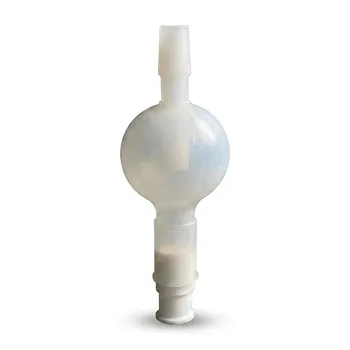
- High Purity PFA Chromatography Column with Collection Bottle Corrosion Resistant Fluoropolymer Filtration System for Trace Analysis
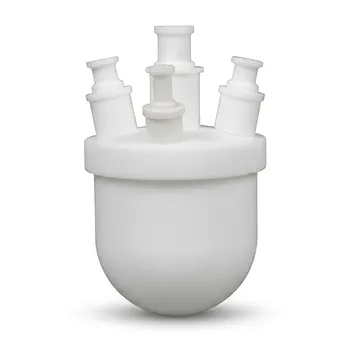
- Custom PTFE Flask 250ml High Purity Fluoropolymer Laboratory Vessel for Chemical Research
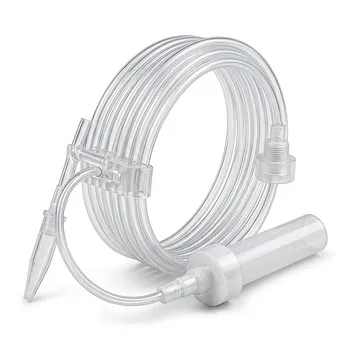
- Custom PFA Tubing 1/4 Inch High Purity Corrosion Resistant Fluoropolymer Tube with Welding and Machining Services
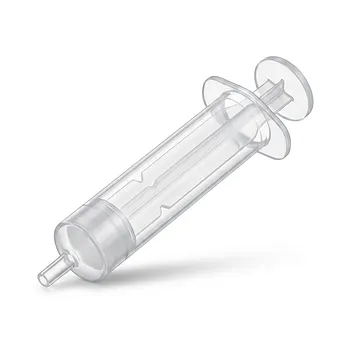
- Corrosion Resistant PFA Syringe Translucent Visual Fluoropolymer Labware 10ml Chemical Handling Tool
- Custom PTFE Reaction Tank Corrosion Resistant Fluoropolymer Chemical Processing Barrel 10L 20L 30L
People Also Ask
- What are the primary functional and temperature differences between PFA and FEP when selecting melt-processible fluoropolymers for custom laboratory apparatus?
- How does PPVE modify PTFE to make melt-processable PFA? Discover key benefits and applications.
- Why is the chemical stability of polymer endgroups critical when selecting melt-processible fluoropolymers like PFA for high-purity laboratory apparatus? Choose Stable Endgroups for Reliable Performance
- What are the characteristics of PFA material? A Guide to Its High-Performance Balance
- Why is Perfluoroalkoxy alkane (PFA) preferred over glass or stainless steel in pharmaceutical process development? Pure Yield