The chemical structure of fluorinated side-groups can raise or lower a fluoropolymer’s glass transition temperature (Tg) by changing backbone mobility, steric crowding, and molecular free volume. In alternating fluorinated copolymers, increasing side-group bulk from chlorine to trifluoromethyl (-CF3) and trifluoromethoxy (-OCF3) generally increases steric hindrance and backbone stiffness, shifting Tg upward across an observed range of approximately 16°C to 66°C. However, size alone is not decisive: flexible fluorinated ether groups can create additional free volume and lower Tg, while rigid cyclic or highly substituted groups can raise it substantially.
Tg reflects the balance between restricted segmental motion and the free volume available for that motion. Bulky, rigid side-groups tend to increase Tg by stiffening the chain, whereas flexible side-groups, irregular structures, and internal defects can lower Tg by acting as internal plasticizers.
How Side-Groups Control Segmental Mobility
Steric bulk restricts backbone rotation
A polymer enters the glass transition when its segments gain enough thermal energy to move cooperatively. A fluorinated side-group that occupies substantial space near the backbone can hinder bond rotation and make these motions more difficult.
This steric crowding increases the chain’s effective stiffness and generally raises Tg. In the cited alternating copolymers, the progression from chlorine to -CF3 and then -OCF3 illustrates how increasing substituent volume can shift Tg from the lower end of the range toward approximately 66°C.
Rigidity matters as much as size
A large side-group does not automatically produce a high Tg. Its shape, flexibility, and connection to the backbone determine whether it behaves primarily as a rigid obstruction or as a mobile appendage.
Cyclic substituents and dimethyl-substituted units impose strong geometric restrictions on the chain. In perfluorodioxolane polymers, these structures can produce Tg values around 165°C to 185°C because they substantially limit segmental rearrangement.
Flexible groups can increase free volume
Pendant fluorinated ether groups, including groups such as -CF2OCF3, may be relatively large but flexible. Their internal motions and irregular geometry can increase the free volume of the polymer, giving nearby backbone segments more room to move.
That additional mobility lowers the energy required for the glass transition. Perfluorodioxolane structures containing flexible dialkylether substituents have been reported with Tg values near 93°C, well below polymers containing more rigid, sterically hindered substituents.
Why Free Volume Changes the Result
Tg depends on available molecular space
Free volume is the unoccupied space that permits polymer segments to rearrange. Greater free volume generally increases molecular mobility and lowers Tg, while tightly constrained structures reduce mobility and raise Tg.
Fluorinated side-groups influence this balance through their size, branching, flexibility, and packing efficiency. Two groups with comparable chemical composition can therefore produce different Tg values if one packs efficiently and the other creates a more open structure.
Branching can disrupt regular packing
Branching and bulky substitution may prevent neighboring chains from packing closely. This can produce two opposing effects: steric hindrance may stiffen the backbone, while inefficient packing may increase free volume.
The observed Tg is the result of these competing influences. A rigid, compact substituent usually favors a higher Tg; a flexible or poorly packing substituent may offset steric stiffening and produce a lower Tg.
Side-chain mobility can dominate behavior
Short fluorinated side-chains can remain mobile near room temperature. In some fluoropolymers, Tg values between approximately 243 K and 271 K place the material near or below room temperature, allowing substantial local rearrangement.
Longer side-chains may instead form ordered or crystalline domains. Their side-chain melting temperatures can reach approximately 348 K to 403 K, restricting mobility even when the backbone itself has not undergone a glass transition.
How Copolymer Design Tunes Tg
Monomer ratios provide a practical control
Copolymers allow engineers to combine rigid and flexible fluorinated units. Increasing the fraction of a sterically hindered monomer can raise Tg and improve resistance to thermal deformation.
Increasing the fraction of a flexible ether-containing unit can lower Tg and improve compliance or toughness. The resulting transition is not determined by either monomer in isolation; sequence distribution, composition, and phase behavior also matter.
Backbone regularity affects the transition
Regio-defects, such as head-to-head or tail-to-tail insertions, disturb the regular structure of the polymer chain. These defects increase local chain mobility and can lower Tg by acting as internal plasticizers.
This is particularly relevant to materials such as PVDF, where chemical regularity influences not only Tg but also crystalline-phase behavior and melting characteristics.
Fluorination is not equivalent to high Tg
Fluorination can improve chemical and oxidative stability, but it does not guarantee a high glass transition temperature. The absence of hydrogen and the strength of carbon-fluorine bonds primarily address degradation resistance, whereas Tg is strongly controlled by segmental mobility and packing.
A fully fluorinated polymer may therefore have excellent high-temperature chemical stability while still requiring careful Tg and phase-behavior analysis for mechanical design.
What Tg Means in High-Performance Applications
Mechanical flexibility changes across Tg
Below Tg, amorphous polymer regions are relatively rigid and glass-like. Above Tg, those regions become more compliant because cooperative segmental motion becomes accessible.
Designers use this transition to determine whether a material will remain flexible, resist deformation, or become brittle under a specified temperature range. The relevant property is the relationship between Tg and the actual service temperature, not Tg as an isolated ranking.
Sealing performance requires more than a Tg comparison
For tubing, fittings, and sealing components, Tg can indicate when amorphous regions become less compliant and more vulnerable to cracking. Operating near a transition can reduce strain recovery and compromise sealing reliability.
However, many fluoropolymers are semicrystalline, so crystallinity, melting behavior, creep resistance, load, and thermal history must also be evaluated. Tg alone cannot establish a safe operating limit or guarantee leak-free performance.
High-temperature service depends on multiple transitions
A material with a high Tg may resist segmental softening, but its maximum service temperature is also governed by chemical degradation, melting, oxidation, crystallization, and mechanical load.
Fully fluorinated materials generally offer stronger resistance to high-temperature chemical degradation than fluoropolymers with hydrogen in the backbone. That distinction is important in severe thermal environments, but it should not be confused with the molecular factors that set Tg.
Understanding the Trade-offs
Higher Tg can reduce flexibility
Rigid and highly crowded side-groups commonly increase Tg and dimensional stability. The same restriction on molecular motion can reduce low-temperature flexibility and increase brittleness under impact or strain.
A high Tg is advantageous when deformation resistance is the priority, but it may be undesirable for dynamic seals or components that must flex repeatedly.
Bulky groups can create contradictory effects
A bulky group may stiffen the backbone while simultaneously increasing free volume. Treating “larger side-group” as a universal rule can therefore lead to incorrect material selection.
The group’s rigidity, attachment chemistry, conformational freedom, and effect on chain packing must be considered together.
Crystallinity can mask or modify Tg
In semicrystalline fluoropolymers, crystalline regions constrain the amorphous phase and can dominate mechanical behavior. A measured Tg may not fully predict dimensional stability if crystallinity, crystallite size, or side-chain ordering changes during processing or service.
Testing should therefore account for the actual grade, thermal history, and morphology of the component.
Thermal resistance is not the same as flexibility
Strong carbon-fluorine bonding supports chemical and thermal durability, while Tg describes the onset of cooperative segmental motion. A fluoropolymer can resist chemical attack at high temperature yet become mechanically unsuitable because of softening, embrittlement, creep, or phase transitions.
Application qualification should examine all of these failure modes.
Making the Right Choice for Your Goal
The most reliable design approach is to match side-group structure and polymer morphology to the required combination of temperature, flexibility, chemical exposure, and mechanical load.
- If your primary focus is high-temperature rigidity: Favor rigid, sterically hindered, cyclic, or highly substituted fluorinated units that restrict segmental motion and can produce Tg values in the 165°C to 185°C range.
- If your primary focus is flexibility and toughness: Consider flexible fluorinated ether-containing units that increase free volume and lower Tg, while verifying creep and strength at the intended service temperature.
- If your primary focus is dimensional stability: Evaluate Tg together with crystallinity, melting behavior, side-chain ordering, and thermal history rather than relying on side-group size alone.
- If your primary focus is severe chemical and thermal exposure: Prefer fully fluorinated structures where chemical stability is critical, but separately confirm Tg, mechanical retention, and the material’s actual continuous-use limits.
- If your primary focus is precision component design: Control copolymer composition and monomer regularity, because composition, sequence distribution, and regio-defects can materially shift segmental mobility.
The correct fluoropolymer is the one whose side-group structure places Tg, free volume, crystallinity, and chemical stability within the complete operating envelope of the application.
Summary Table:
| Side-Group Type | Example Structures | Effect on Tg | Typical Tg Range |
|---|---|---|---|
| Small halogen (chlorine) | Chlorotrifluoroethylene | Low to moderate | ~16°C |
| Bulky but rigid (trifluoromethyl) | -CF3 substituted | Increases Tg | ~66°C |
| Flexible ether (trifluoromethoxy) | -OCF3 substituted | Increases but less than rigid | ~66°C |
| Flexible dialkylether | -CF2OCF3 | Decreases Tg (more free volume) | ~93°C |
| Rigid cyclic | Perfluorodioxolane rings | Significant increase | 165–185°C |
Ready to Optimize Your Fluoropolymer Performance?
At KINTEK, we specialize in high-performance fluoropolymers (PTFE & PFA) for demanding applications. Whether you need custom components, labware, or fluid handling systems, our expertise ensures the right material selection and design. Contact us today to discuss your requirements and benefit from our custom CNC machining and comprehensive product range tailored to your unique application.
Related Products
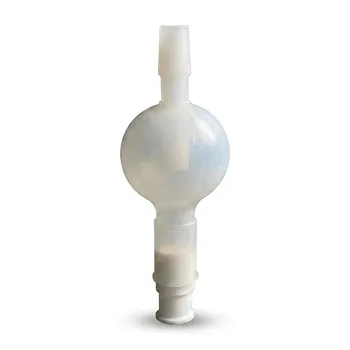
- High Purity PFA Chromatography Column with Collection Bottle Corrosion Resistant Fluoropolymer Filtration System for Trace Analysis
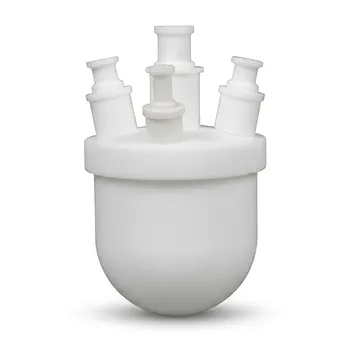
- Custom PTFE Flask 250ml High Purity Fluoropolymer Laboratory Vessel for Chemical Research
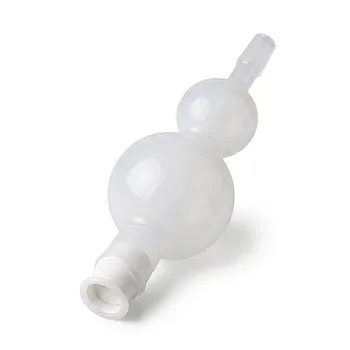
- High Purity PFA Chromatography Columns and Collection Bottles Corrosion Resistant Fluoropolymer Filtration Systems for Trace Analysis
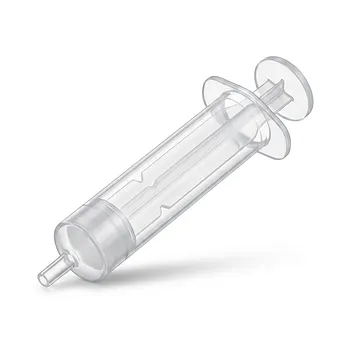
- Corrosion Resistant PFA Syringe Translucent Visual Fluoropolymer Labware 10ml Chemical Handling Tool
- Custom PFA Tubing 1/4 Inch High Purity Corrosion Resistant Fluoropolymer Tube with Welding and Machining Services
People Also Ask
- What are the primary functional and temperature differences between PFA and FEP when selecting melt-processible fluoropolymers for custom laboratory apparatus?
- How does PPVE modify PTFE to make melt-processable PFA? Discover key benefits and applications.
- Why is the chemical stability of polymer endgroups critical when selecting melt-processible fluoropolymers like PFA for high-purity laboratory apparatus? Choose Stable Endgroups for Reliable Performance
- What are the characteristics of PFA material? A Guide to Its High-Performance Balance
- Why is Perfluoroalkoxy alkane (PFA) preferred over glass or stainless steel in pharmaceutical process development? Pure Yield