Fluoropolymers such as PTFE and PFA are preferred when fluid compatibility, purity, and long-term reliability matter more than low material cost. Their exceptionally strong carbon-fluorine bonds provide virtually complete resistance to fuels, synthetic oils, coolants, solvents, strong acids, alkalis, and oxidizing fluids. Compared with conventional elastomers, they also offer a broader temperature range, lower permeation, low friction, and better resistance to chemical aging, thermal cycling, and contamination.
Conventional elastomers provide useful flexibility and elastic recovery, but they can swell, harden, crack, permeate, or leach compounds when exposed to aggressive fluids. PTFE and PFA are selected because they preserve chemical integrity and sealing performance under severe chemical, thermal, and cleanliness requirements.
Why Conventional Elastomers Reach Their Limits
Chemical swelling and degradation
Elastomers rely on polymer networks that provide elasticity, but aggressive fluids can penetrate those networks. The result may be swelling, softening, embrittlement, cracking, or loss of mechanical strength.
PTFE and PFA are far less susceptible to this type of chemical attack. Their fluorinated molecular structure creates a protective sheath around the carbon backbone, limiting access by solvents and reactive chemicals.
Permeation and contamination
Many elastomers allow some fluids, vapors, or dissolved gases to migrate through the material. Over time, this can cause fluid loss, odor transmission, pressure instability, or contamination outside the fluid path.
PFA and PTFE offer very low permeation relative to conventional materials, with PFA particularly suited to applications requiring clean, controlled fluid containment. They also minimize leaching into high-purity fluids.
Aging under heat, light, and chemical stress
Conventional polymers can degrade under ultraviolet exposure, elevated temperature, and prolonged chemical contact. Elastomers may also lose elasticity as they age, which reduces their ability to maintain contact pressure in a gasket or seal.
Fluoropolymers retain their structural stability across severe temperature changes and extended chemical exposure. This supports long service life in hoses, gaskets, vessel linings, and laboratory fluid-handling systems.
The Molecular Basis of Fluoropolymer Performance
Strong carbon-fluorine bonds
The performance of PTFE and PFA begins with the carbon-fluorine bond, which is stronger and more chemically resistant than the carbon-hydrogen bonds common in conventional plastics.
The fluorine atoms also surround the carbon backbone, making it difficult for solvents and reactive species to reach or disrupt the polymer structure. This explains why fluoropolymers remain stable in contact with many corrosive and organic fluids.
Low surface energy and friction
PTFE and PFA have low surface energy and low coefficients of friction. These properties reduce fluid drag, material buildup, and adhesion to internal surfaces.
For hoses, valves, pipe liners, and gaskets, low friction supports smooth flow and can reduce the tendency of residues or deposits to remain attached to the fluid path.
Resistance to fire and thermal cycling
Fluoropolymers provide high flame retardance and tolerate a broad operating temperature range. They are therefore suitable where components experience repeated heating and cooling or must resist ignition and thermal degradation.
This is particularly important for systems exposed to both aggressive fluids and demanding thermal conditions, where chemical resistance alone would not be sufficient.
Why PTFE and PFA Work Well in Fluid Transfer
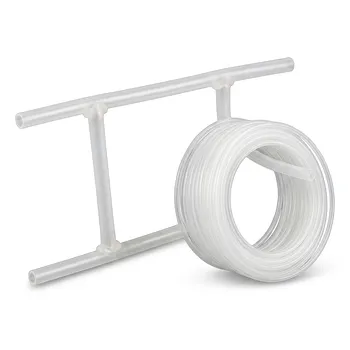
Reliable hoses and tubing
PTFE-lined hoses and tubing can handle fuels, synthetic oils, coolants, solvents, acids, alkalis, and other aggressive fluids without the rapid degradation associated with less resistant materials.
Their structural stability also helps them withstand mechanical vibration and repeated thermal cycling while maintaining the integrity of the fluid path.
Low contamination in critical systems
In laboratory, pharmaceutical, electrochemical, and high-purity applications, the hose must do more than contain the fluid. It must avoid introducing impurities that could alter a reaction, poison a catalyst, or compromise test results.
PTFE and PFA are valuable because they resist degradation and solvent leaching. This is important in systems such as electrolyzers and electrochemical cells exposed to alkaline electrolytes, oxidative intermediates, or reduction products over extended test periods.
Practical storage stability
Fluoropolymer hoses and components can have a practically unlimited storage life when stored appropriately. They do not depend on the same long-term elastic behavior required of many elastomeric seals, which can age even when not in service.
That makes fluoropolymers useful for replacement parts, emergency equipment, and systems that may remain idle for long periods before deployment.
Why PFA Is Valuable for Gaskets and Vessels
Melt-processable precision
Standard PTFE has excellent chemical resistance but is difficult to process using conventional melt-forming methods. PFA combines comparable chemical inertness with melt processability.
This allows manufacturers to produce more complex, precise, or transparent components while preserving the chemical resistance required for severe-duty service.
High-purity seals and containment
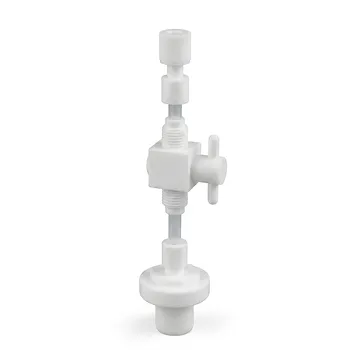
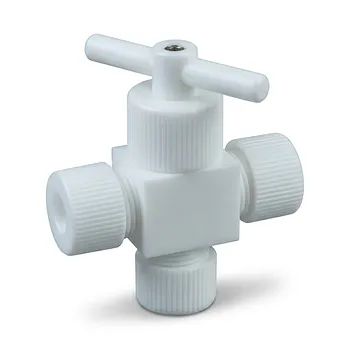
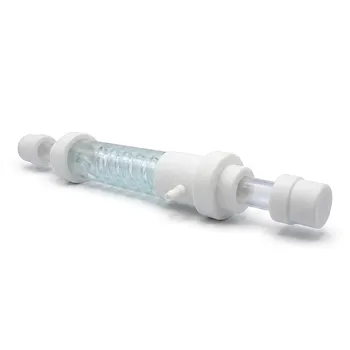
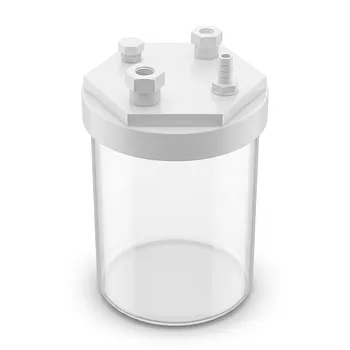
PFA is well suited to high-purity fluid seals, gaskets, tubing, fittings, and custom containment vessels. Its low permeation and resistance to chemical attack help maintain the composition and cleanliness of the contained fluid.
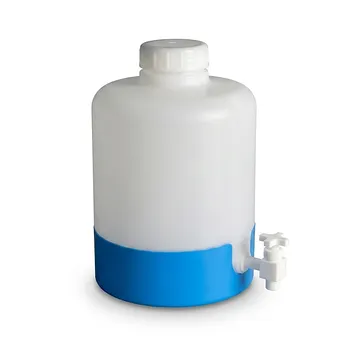
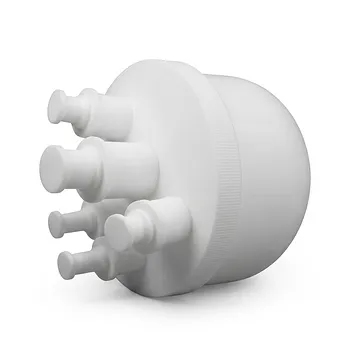
For custom reaction vessels and fluid-contact components, PFA can provide durable containment without the solvent interaction or leaching associated with many conventional plastics.
Corrosion-resistant vessel linings
A fluoropolymer lining separates the process fluid from the structural material of a vessel. This protects the underlying equipment from corrosive chemicals while providing a chemically inert internal surface.
The approach is useful when a vessel requires mechanical support from another material but needs a highly resistant fluid-contact layer.
Understanding the Trade-offs
Fluoropolymers are not always the most economical choice
PTFE and PFA generally cost more than common elastomers and conventional plastics. Fabrication, machining, and installation may also require specialized processes.
The additional cost is most defensible when failure would cause leakage, contamination, downtime, safety exposure, or expensive process disruption.
PTFE has limited elastic recovery
PTFE is chemically excellent but is not an elastomer. It does not provide the same inherent flexibility or elastic recovery as a rubber seal.
Designers must account for this by using an appropriate gasket geometry, controlled compression, backup structures, or an engineered PTFE-based sealing solution.
Mechanical and pressure requirements still matter
Chemical resistance does not automatically guarantee suitability for every pressure, temperature, load, or flexing condition. Hose reinforcement, wall thickness, creep behavior, installation geometry, and pressure cycling must be evaluated separately.
Material selection should therefore consider the complete operating envelope rather than chemical compatibility alone.
PFA and PTFE are not interchangeable in every design
PFA may be preferable when melt processing, transparency, or complex geometry is important. PTFE may be preferable when very low friction, broad chemical resistance, or a machined or lined component is required.
The correct choice depends on the fluid, temperature, pressure, purity requirement, mechanical loading, and manufacturing method.
Making the Right Choice for Your Goal
Select the material based on the failure mode you most need to prevent.
- If your primary focus is chemical compatibility: Choose PTFE or PFA after verifying compatibility with the specific fluid, concentration, temperature, and exposure duration.
- If your primary focus is high-purity fluid handling: Favor PFA or PTFE components designed to minimize leaching, permeation, and contamination.
- If your primary focus is gasket or seal reliability: Use a fluoropolymer design that accounts for compression, creep, elastic recovery, pressure, and thermal cycling.
- If your primary focus is complex containment geometry: Consider PFA when melt-processable fabrication and precise shaping are important.
- If your primary focus is long-term storage and service life: Fluoropolymer hoses and components offer strong resistance to aging, chemical attack, vibration, and temperature cycling.
For severe fluid-handling environments, PTFE and PFA provide a durable balance of chemical inertness, thermal stability, low permeation, low friction, and low contamination that conventional elastomers often cannot sustain.
Summary Table:
| Property | Fluoropolymers (PTFE/PFA) | Conventional Elastomers |
|---|---|---|
| Chemical Resistance | Virtually complete resistance to aggressive fluids | Susceptible to swelling, cracking, degradation |
| Temperature Range | Broad (-200°C to +260°C) | Limited (-40°C to +150°C) |
| Permeation | Very low, minimizes contamination | Higher, can lead to vapor/fluid loss |
| Aging & Storage | Resistant to heat/UV, virtually unlimited storage life | Age, lose elasticity, may crack over time |
| Friction & Surface Energy | Low friction, non-stick, smooth flow | Higher friction, prone to build-up |
| Purity / Leaching | Minimal leaching, high-purity | Possible leaching, contamination |
| Processability | PFA melt-processable; PTFE machined | Easy molding but limited chemical compatibility |
Need superior chemical resistance for your fluid handling systems? At KINTEK, we specialize in high-performance PTFE and PFA lab supplies, from custom hoses and gaskets to complete vessels and tubing. Our expert team can help you select the right fluoropolymer for your application. Contact us today to discuss your requirements and get a custom quote!
Related Products
- Corrosion Resistant High Purity PFA Valve and Weldable Transparent Tubing for Semiconductor Fluid Transfer
- Corrosion Resistant PFA Tubing 1/4 Inch Custom Molded Welded Fluid Transfer Components
- High Purity PFA PTFE Flare Stop Valves Customizable 2-Way 3-Way Reducing Fluoropolymer Fluid Control Solutions
- Custom PTFE Valve 2-Way 3-Way Corrosion Resistant Low Background Virgin Fluoropolymer Industrial Fluid Control
- Custom PFA Tubing 1/4 Inch High Purity Corrosion Resistant Fluoropolymer Tube with Welding and Machining Services
People Also Ask
- Why are high-purity PFA fluid transfer components required for OSDAs and silica? Ensure Precision in Zeolite Synthesis
- Why are high-purity PFA fluid transfer components preferred for battery electrolytes? Ensure Purity & Data Accuracy
- How does high-purity PFA tubing maintain reagent purity? Achieve Ultra-Smooth, Zero-Contamination Fluid Transfer
- How do high-precision PFA fluid transfer components, such as tubing and fittings, affect the results of continuous-flow synthesis?
- How do PFA fluid transfer components contribute to chemical research precision? Achieve high-purity results today.