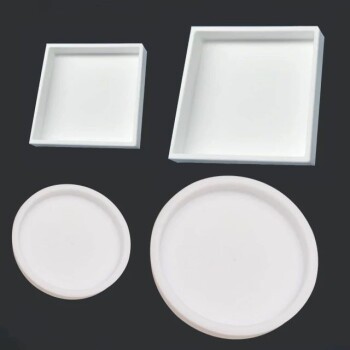
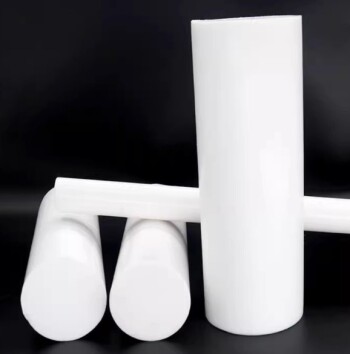
PTFE’s molecular structure gives it exceptional thermal stability because a carbon backbone is fully shielded by tightly bound fluorine atoms. The fluorine atoms form a dense, helical sheath around the carbon chain, while the strong C–F bonds resist bond breaking, chemical attack, and internal rearrangement. This combination helps PTFE laboratory equipment and custom machined components retain their chemical inertness and useful dimensions when exposed to aggressive reagents and elevated temperatures, although PTFE is not mechanically rigid in the same way as metals or engineering ceramics.
PTFE’s thermal performance comes primarily from its fully fluorinated, tightly packed molecular architecture and strong C–F bonds. Its structural stability under service conditions is real, but component designers must also account for PTFE’s comparatively low stiffness, thermal expansion, and tendency to creep under sustained load.
How PTFE’s Molecular Architecture Creates Stability
The Fluorinated Carbon Backbone
PTFE is a linear polymer made from a carbon-carbon backbone in which each carbon is bonded to two fluorine atoms. Unlike hydrocarbon polymers, it contains no hydrogen atoms along the chain.
The large fluorine atoms form a nearly continuous protective sheath around the carbon skeleton. This sheath shields the carbon-carbon bonds from chemical agents and reduces the ability of surrounding substances to interact with the polymer chain.
Helical Fluorine Packing
The fluorine atoms do not arrange the chain as a simple planar zigzag. Their size and geometry favor a twisted, helical conformation, commonly described for PTFE as a 13/6 helical arrangement under relevant solid-state conditions.
This dense helical packing creates a compact molecular structure. It restricts rotation and movement within the chain more effectively than in many conventional hydrocarbon polymers, contributing to resistance against thermally induced rearrangement.
Strong Carbon-Fluorine Bonds
The C–F bond has exceptionally high dissociation energy, commonly reported in the approximate range of 485 to 507 kJ/mol, depending on the reference and measurement basis. Breaking or abstracting fluorine from the chain therefore requires substantial energy.
The bond strength does not mean that PTFE cannot degrade at any temperature. Rather, it raises the energy threshold for chemical decomposition and helps explain why PTFE remains stable across a broad operating range.
Why This Matters for Thermal Stability
Resistance to Chain Rearrangement
Heat can cause polymer chains to rotate, move, or chemically react. PTFE’s compact fluorine sheath and strong C–F bonds limit these processes under normal service conditions.
The result is high resistance to thermal and chemical degradation compared with many non-fluorinated plastics. PTFE melts at approximately 327°C, but its practical service temperature is lower and depends on load, geometry, exposure time, and the specific design.
Protection of the Carbon Skeleton
Fluorine’s high electronegativity produces highly stable C–F bonds and a chemically protected molecular surface. Because most of the carbon chain is covered, reagents have limited access to the backbone.
This protective arrangement supports PTFE’s resistance to many acids, bases, solvents, and corrosive laboratory chemicals. It is especially valuable where equipment must avoid reacting with samples or introducing contaminants.
Retention of Useful Dimensions
Molecular stability helps PTFE maintain its shape and functional properties during repeated exposure to heat and aggressive chemicals. This is important for vessels, tubing, seals, liners, and machined parts whose dimensions affect fit, sealing, fluid control, or sample handling.
However, dimensional stability is not absolute. PTFE has a relatively high coefficient of thermal expansion, so temperature changes can produce measurable dimensional movement even when the polymer is not chemically degrading.
How the Structure Supports Machined Components
Predictable Chemical Contact Surfaces
The fluorine-rich outer surface is chemically inert and has low surface energy. This reduces wetting, adhesion, and interaction with many laboratory substances.
For custom machined components, that can preserve surface cleanliness and reduce the risk that process fluids, reagents, or analytical samples will react with the part.
Low Friction and Nonstick Behavior
The same fluorinated surface that protects the carbon backbone also produces low friction. PTFE components can therefore move, slide, or guide fluids with limited adhesion.
This property benefits valve seats, bushings, bearing surfaces, vessel liners, and fluid-transfer components. It does not eliminate wear, particularly when PTFE is exposed to abrasive particles or high contact pressure.
Chain-Level Rigidity Versus Component-Level Stiffness
The molecular chain is relatively resistant to internal rearrangement, which contributes to PTFE’s thermal and chemical stability. That should not be interpreted as high bulk stiffness.
Unfilled PTFE is softer and more compliant than many metals and rigid engineering plastics. Its molecular stability helps it resist chemical attack and high-temperature decomposition, while its mechanical behavior still includes deformation, creep, and cold flow.
Understanding the Trade-offs
Thermal Stability Is Not Unlimited
PTFE tolerates elevated temperatures well, but prolonged exposure near its melting or decomposition range can alter its properties. At sufficiently high temperatures, it can decompose and release hazardous fumes.
Component specifications should distinguish between melting point, short-term temperature tolerance, and continuous service temperature. These are different engineering limits.
Creep Can Affect Structural Performance
PTFE’s long molecular chains and relatively weak intermolecular restraint allow the material to deform gradually under sustained stress. This behavior is known as creep or cold flow.
A machined PTFE part may therefore lose dimensional accuracy or sealing force when continuously compressed, especially at elevated temperature. Loads, tolerances, support geometry, and exposure time must be considered together.
Thermal Expansion Requires Design Allowance
PTFE expands and contracts more than many metals and rigid plastics as temperature changes. A tight-fitting component can bind, loosen, distort, or lose sealing performance if thermal expansion is ignored.
Designers often address this through clearances, compliant seals, backing structures, restrained geometries, or material selection for the surrounding components.
Fillers Change the Performance Profile
Filled PTFE compounds can improve stiffness, wear resistance, creep resistance, or dimensional stability. Common filler choices alter the material’s friction, chemical compatibility, electrical behavior, machinability, and contamination profile.
For laboratory applications, the filler must be evaluated as carefully as the PTFE itself. A filled grade may provide better mechanical performance but may not be appropriate where maximum chemical purity or electrical insulation is required.
Making the Right Choice for Your Goal
PTFE’s molecular structure is most valuable when the application requires chemical inertness and thermal resistance, with mechanical requirements designed around its limitations.
- If your primary focus is chemical compatibility: Use PTFE where the fluorine sheath and strong C–F bonds can isolate the component from acids, bases, solvents, and reactive laboratory media.
- If your primary focus is high-temperature service: Evaluate the complete temperature profile, including continuous exposure, thermal cycling, mechanical load, and the distinction between melting and usable service limits.
- If your primary focus is dimensional precision: Account for thermal expansion and consider a filled PTFE grade, external support, or a different engineering material where creep and stiffness are critical.
- If your primary focus is sample integrity: Select an appropriate unfilled or laboratory-qualified grade and assess the entire component, including fillers, machining residues, surface finish, and cleaning process.
PTFE delivers dependable thermal and chemical stability when its strong molecular structure is matched with a realistic understanding of its mechanical behavior.
Summary Table:
| Property | Contribution to Thermal Stability & Structural Rigidity |
|---|---|
| Carbon-Fluorine Backbone | Strong C-F bonds resist degradation, providing high thermal stability. |
| Helical Fluorine Packing | Dense packing limits chain movement, enhancing stability. |
| Protective Fluorine Sheath | Shields carbon backbone from chemical attack, preserving structure. |
| Low Surface Energy | Reduces adhesion and friction, beneficial for lab equipment. |
| High Melting Point | ~327°C, allowing use at elevated temperatures. |
| Creep & Thermal Expansion | Must be accounted for in design, as they affect dimensional stability. |
Looking for PTFE lab equipment that leverages this molecular stability? KINTEK offers high-performance PTFE and PFA products, including custom machined components. Our solutions ensure chemical inertness and thermal resistance for your most demanding applications. Contact us today to discuss your requirements and discover how we can enhance your lab's efficiency.
Related Products
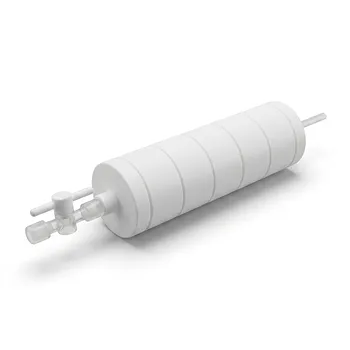
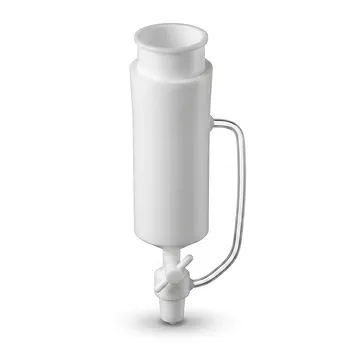
- Custom PTFE Filtration System Acid Resistant High Purity Semiconductor Grade Chemical Processing Filter
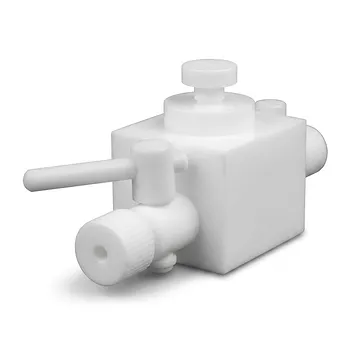
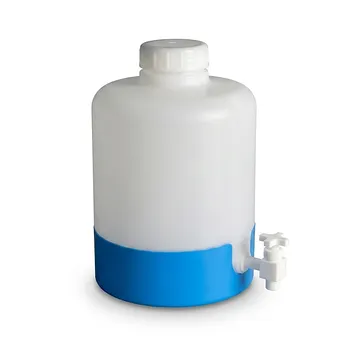
- High Corrosion Resistant PTFE Faucet Polytetrafluoroethylene Valve for Chemical Storage Drums and Fluid Transfer Systems Customizable Industrial Grade
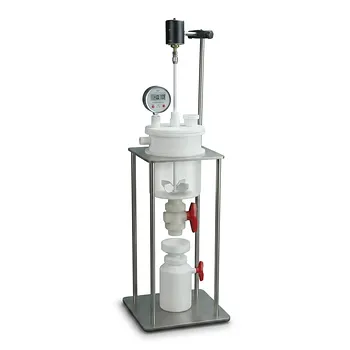
- PTFE PFA Vacuum Filtration System Corrosion Resistant Customizable Shatterproof Laboratory Device
- PTFE Corrosion Resistant Filter with PFA Valve Connections and Integrated Sieve Plate
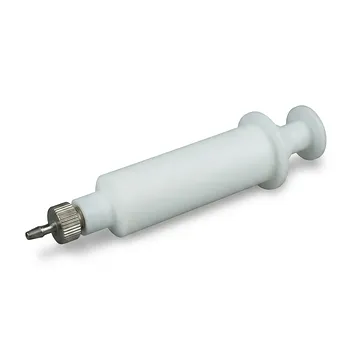
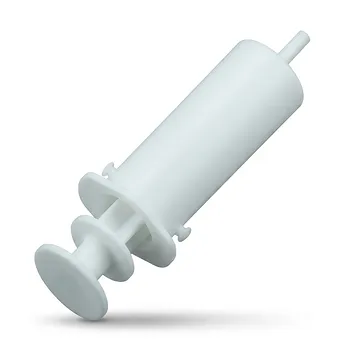
- High Temperature Chemical Resistant 50ml PTFE Syringe Customized Teflon Injector with Threaded Seal for Trace Analysis
People Also Ask
- What makes PTFE filtration systems advantageous for industrial and scientific use? Unmatched Chemical & Thermal Stability
- What steps are involved in selecting the proper PTFE filter? A 4-Step Guide to Optimal Filtration
- What sizes and pore options are available for PTFE filters? Choose the Right Filter for Your Application
- What temperature resistance do PTFE filters offer? Unmatched Thermal Stability from -200°C to +260°C
- How does the hydrophobicity of PTFE filters benefit their use? Ensure Uninterrupted Gas Flow and Solvent Filtration