Trifluoromethyl (-CF3) groups improve fluoropolymer durability by making chemical attack more difficult and water penetration less consequential. Their highly fluorinated C-F bonds resist oxidation, free-radical attack, and thermal scission, while the bulky -CF3 structure shields nearby backbone atoms and limits chain mobility. In demanding chemical apparatus, these effects help maintain strength and dimensional stability during exposure to oxidants, hot aqueous media, aggressive acids, solvents, and repeated thermal cycling.
The main structural effect of -CF3 groups is protective and architectural: they combine strong, low-polarizability C-F bonding with steric shielding, hydrophobicity, restricted chain motion, and altered chain packing. Together, these features delay oxidative, hydrolytic, and thermal degradation, although the final performance still depends on the complete polymer backbone and operating conditions.
Why -CF3 Groups Resist Chemical Degradation
Strong C-F bonds raise the chemical stability of the chain
The C-F bond has high bond dissociation energy and low polarizability. This makes fluorinated segments less susceptible to bond cleavage and reduces their tendency to participate in reactions initiated by oxidants, acids, radicals, or heat.
The effect is not simply that fluorine forms a stronger version of an ordinary hydrocarbon polymer. Fluorination also changes the electronic environment around the chain, making the polymer backbone less chemically reactive.
Pendant -CF3 groups provide steric shielding
A trifluoromethyl group is both fluorine-rich and bulky. When positioned near the backbone, it can shield reactive sites from approaching oxidants, nucleophiles, water, and radical species.
This protection is especially valuable when the polymer contains chemically vulnerable linkages elsewhere. The -CF3 group does not make every bond invulnerable, but it can reduce the accessibility and reactivity of sites where degradation would otherwise begin.
Fluorinated surfaces are difficult for aggressive reagents to wet
The low surface energy and hydrophobicity associated with fluorinated groups reduce water uptake and limit interaction with many polar chemical species. Less absorbed water means fewer opportunities for hydrolysis, plasticization, swelling, and transport of reactive species through the material.
This is a kinetic advantage: degradation depends not only on whether a reaction is chemically possible, but also on whether the reactants can reach the susceptible bonds.
How the Structure Improves Oxidative Resistance
The polymer becomes less vulnerable to radical attack
Oxidative degradation often proceeds through free-radical pathways. Radicals abstract atoms from the polymer, create oxygen-containing intermediates, and trigger chain scission or crosslinking.
Fluorinated structures suppress this process by presenting fewer easily abstracted hydrogen atoms and by stabilizing the surrounding molecular framework. The strong C-F environment also lowers the likelihood that oxidative reactions will propagate rapidly along the chain.
Backbone protection matters more than fluorine content alone
The benefit of -CF3 groups depends on their location and on the other groups connected to them. A highly fluorinated pendant group can improve protection, but the weakest linkage in the polymer may still determine its ultimate oxidative lifetime.
For this reason, backbone composition, aromatic content, ether or ester linkages, end groups, and processing history must be evaluated together with nominal fluorine concentration.
Resistance becomes measurable under severe oxidizing conditions
The primary reference reports that incorporating -CF3 groups can extend resistance to Fenton's reagent from approximately 7 hours to more than 19 hours. This illustrates the scale of improvement possible when fluorinated structural design reduces radical-driven attack.
Such test results are useful for comparison, but they should not be treated as universal service-life predictions. Fenton's reagent is a specific accelerated environment, and real apparatus may experience different oxidants, temperatures, stresses, and exposure times.
Why Hydrolysis Is Delayed
Hydrophobicity limits water absorption
Hydrolysis requires water to reach a susceptible chemical linkage. Bulky fluorinated groups increase hydrophobicity and generally reduce moisture uptake, limiting the amount of water available within the polymer.
Reported moisture absorption for high-performance fluorinated polymers can be very low, approximately 0.29% to 3.20%, depending on the polymer structure. Lower uptake helps preserve mechanical properties and reduces dimensional changes during hot aqueous service.
Restricted chain mobility slows molecular transport
The -CF3 group increases steric bulk and can restrict local chain motion. Reduced segmental mobility makes it harder for water and dissolved reactants to diffuse through the material and reach hydrolytically sensitive bonds.
This effect is particularly important during long exposure to hot water or aqueous acids, where diffusion and temperature would otherwise accelerate degradation.
Reduced swelling preserves dimensional stability
Water absorption can cause swelling, softening, and loss of permeation control in tubing, membranes, seals, and machined components. Fluorinated structures reduce these effects by combining low moisture uptake with chemical inertness.
The primary reference identifies hydrolytic stability exceeding 8,000 hours in hot aqueous environments for relevant fluorinated structures. As with oxidative testing, the result is material- and test-specific, but it demonstrates why these polymers are selected for prolonged aqueous chemical service.
How -CF3 Groups Support Thermal Stability
Fluorination raises the threshold for chain scission
Thermal degradation begins when polymer bonds break or rearrange rapidly enough to cause measurable mass loss and loss of properties. Strong C-F linkages and the chemically deactivated fluorinated environment raise the energy required for many degradation pathways.
The result is a higher temperature range in which the polymer can retain its structure. Some fluorinated polymers maintain structural integrity above 300°C, while specially engineered systems report 10% weight-loss temperatures above 400°C to 460°C and 5% weight-loss thresholds above approximately 480°C to 500°C under specified conditions.
Bulky groups alter packing without eliminating heat resistance
A -CF3 group disrupts close interchain packing and reduces strong chain-to-chain interactions. This increases fractional free volume and can improve processability or solubility in selected solvents.
Importantly, disrupted packing does not necessarily mean poor thermal performance. Rigid aromatic backbones or other thermally stable structural units can preserve high glass-transition and decomposition temperatures while the -CF3 groups reduce moisture uptake and unwanted intermolecular interactions.
Thermal cycling produces less cumulative damage
Chemical apparatus often experiences repeated heating, cooling, drying, and chemical exposure rather than one brief high-temperature event. A polymer that resists thermal scission and absorbs little water is less likely to develop progressive embrittlement, swelling, cracking, or dimensional drift during these cycles.
This makes fluorinated materials useful for digestion vessels, reaction vessels, high-temperature tubing, electrochemical components, and custom machined laboratory parts.
The Broader Structural Effects
Free volume can improve processing and chemical performance
Bulky -CF3 and hexafluoroisopropylidene groups create additional free volume by preventing efficient chain packing. This can improve solubility in selected processing solvents and reduce charge-transfer interactions in certain aromatic polymers.
The same structural feature can also affect permeability, dielectric behavior, optical transparency, and gas or solvent transport. These are design variables, not universally positive or negative properties.
Backbone rigidity determines solvent resistance
The chemical resistance of a -CF3-functionalized polymer is governed by the entire repeating structure. Rigid, linear aromatic linkages, including approximately 180-degree catenation geometries, generally pack more tightly and restrict chain motion.
Such polymers may resist swelling and remain insoluble in common laboratory solvents, sometimes requiring aggressive polar solvents such as NMP for processing. Less linear linkages, such as 1,3-phenylene units with approximately 120-degree catenation, can increase chain mobility and improve solubility in solvents such as THF, DMAc, or chloroform.
Hydrophobicity and low polarizability reduce secondary failure modes
Fluorinated groups reduce polarizability and water affinity. In addition to slowing direct chemical degradation, this can reduce moisture-driven changes in dielectric properties, contamination risk, swelling, and interfacial instability.
These secondary effects are important in high-purity fluid handling and specialized electrochemical or electronic apparatus, where small changes in moisture or surface chemistry can affect system performance.
Understanding the Trade-offs
Fluorination does not guarantee resistance to every reagent
A fluoropolymer can be highly resistant to oxidants, acids, and solvents while still being vulnerable to particular conditions, defects, radiation environments, molten alkali metals, or chemically specific attack. Compatibility must therefore be verified for the actual reagent, concentration, temperature, pressure, and exposure duration.
Free volume can increase permeability
The same bulky groups that disrupt chain packing can increase fractional free volume and molecular transport. This may improve processability but can increase permeability to selected gases or solvents and may affect barrier performance.
A material optimized for low moisture uptake and solvent resistance may not be optimal for every filtration, membrane, or containment application.
Solubility and fabrication can conflict with rigidity
Rigid backbones provide strong resistance to swelling and solvent degradation, but they can be difficult to dissolve, process, weld, or machine. Introducing non-linear linkages or bulky groups may improve fabrication while changing mechanical strength, permeability, and long-term solvent behavior.
Material selection should therefore consider the complete manufacturing route, not only decomposition temperature.
Accelerated tests require careful interpretation
Values such as more than 19 hours in Fenton's reagent, more than 8,000 hours in hot water, or decomposition temperatures above 400°C describe defined test conditions. They establish comparative performance, but they do not directly specify a safe operating lifetime for every apparatus design.
Stress concentration, surface defects, thermal gradients, cyclic loading, and chemical mixtures can all reduce practical service life.
Making the Right Choice for Your Goal
The appropriate fluoropolymer structure depends on whether the dominant requirement is chemical containment, hydrolytic durability, thermal endurance, or manufacturability.
- If your primary focus is oxidative resistance: Select a highly fluorinated structure in which -CF3 groups and strong C-F-rich segments shield the backbone from radical and oxidant attack, then validate it against the specific oxidizing medium.
- If your primary focus is hydrolytic stability: Favor hydrophobic, low-moisture-uptake polymers with restricted chain mobility and few hydrolytically sensitive linkages.
- If your primary focus is thermal service: Choose a rigid fluorinated backbone with documented decomposition and glass-transition data at the intended temperature, including the relevant atmosphere.
- If your primary focus is solvent containment: Favor tightly packed, rigid aromatic fluoropolymer structures when low swelling and low permeability matter more than easy solution processing.
- If your primary focus is fabrication: Consider bulky or non-linear fluorinated structures that improve solubility and processability, while checking whether the added free volume changes permeability or solvent resistance.
The central design principle is to use -CF3 groups as part of a complete molecular architecture that combines strong C-F bonding, steric protection, low water uptake, and an appropriate backbone rigidity for the apparatus's actual service conditions.
Summary Table:
| Mechanism | Role of -CF3 Groups | Resulting Benefit |
|---|---|---|
| Strong C-F bonds | High bond energy and low polarizability | Resistance to bond cleavage and chemical attack |
| Steric shielding | Bulky -CF3 groups protect vulnerable backbone sites | Reduced reactivity with oxidants, nucleophiles, and water |
| Hydrophobicity | Low surface energy and reduced water uptake | Delayed hydrolysis and minimized swelling |
| Restricted chain mobility | Reduced segmental motion due to steric bulk | Slower diffusion of water and reactants |
| Thermal stabilization | High thermal scission threshold, disrupted packing | Retains integrity at high temperatures (up to 500°C) |
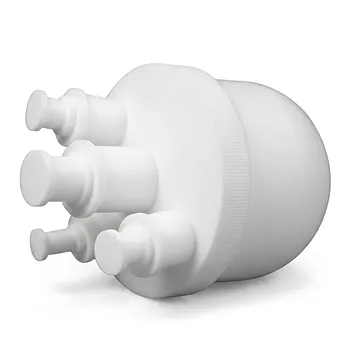
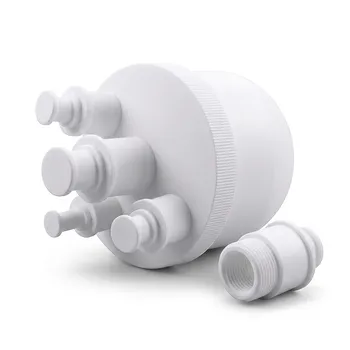
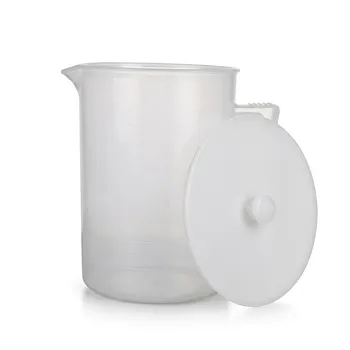
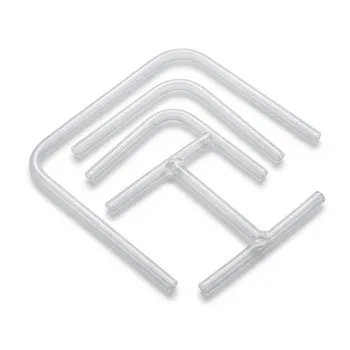
Optimize your chemical apparatus with high-performance fluoropolymers from KINTEK. Our PTFE and PFA labware, custom CNC machined parts, and fluid handling components are engineered to withstand extreme oxidative, hydrolytic, and thermal conditions. Whether you need standard beakers, digestion vessels, or tailored electrochemical cells, our expertise ensures reliability and longevity. Contact us today to discuss your requirements and discover how our solutions can enhance your lab's performance.
Related Products
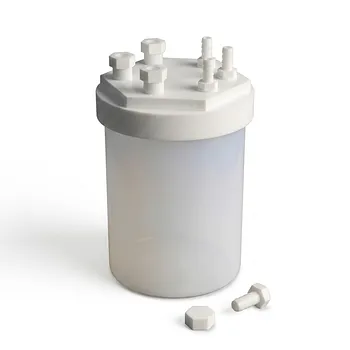
- PFA Chemical Reaction Tank with Customizable Fittings for Corrosive Solvent Synthesis and High Purity Lab Applications
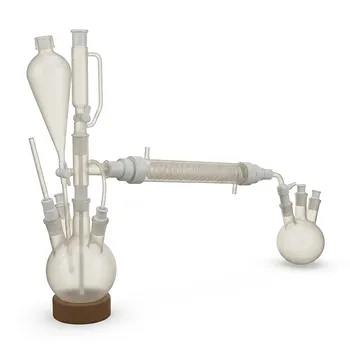
- PTFE Distillation Condensation Apparatus High Temperature Hydrofluoric Acid Resistant Fluorination Reaction Flask
- High Purity PFA Chromatography Column with Collection Bottle Corrosion Resistant Fluoropolymer Filtration System for Trace Analysis
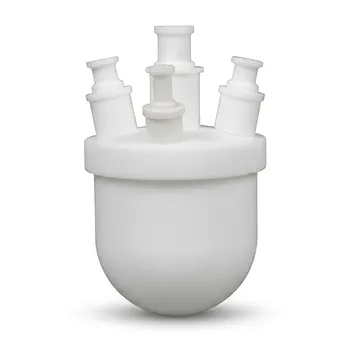
- Custom PTFE Flask 250ml High Purity Fluoropolymer Laboratory Vessel for Chemical Research
- Custom PTFE Condenser Tube 100ml Serpentine and Straight Fluoropolymer Laboratory Heat Exchanger with Flask Adapters
People Also Ask
- How does the molecular structure of fluorinated polymers contribute to the extreme thermal stability and chemical resistance required for high-performance laboratory reaction vessels and digestion containers? Discover the science behind PTFE and PFA for your lab.
- How can re-entrant surface geometry enable fluoropolymer vessels to repel organic solvents? Learn the design rules for stable, low-adhesion surfaces that resist wetting and contamination.
- What are the key material and operational challenges for fluoropolymer vessels in direct gas fluorination?
- How do choice of solvent and chain transfer activity affect molecular weight during vinylidene fluoride (VDF) radical polymerization? Learn Key Factors for High-MW PVDF
- What are the thermodynamic properties and heat of polymerization of tetrafluoroethylene (TFE), and how do they influence fluoropolymer reaction vessel design? Discover key design principles for safe and efficient TFE polymerization reactors.