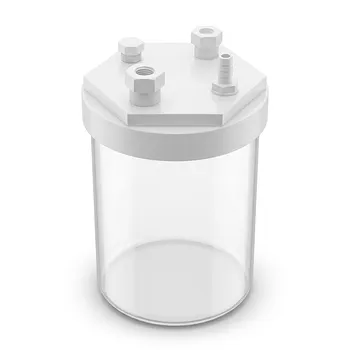
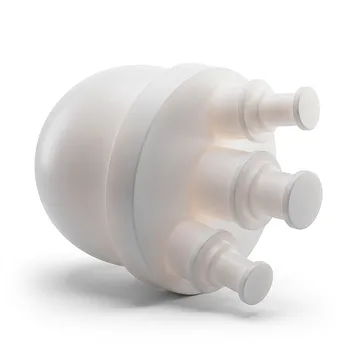
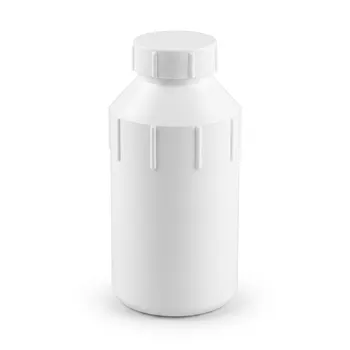
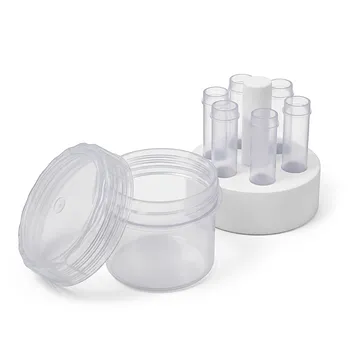
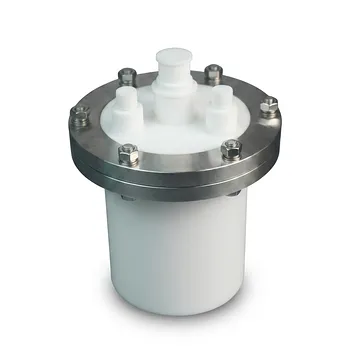
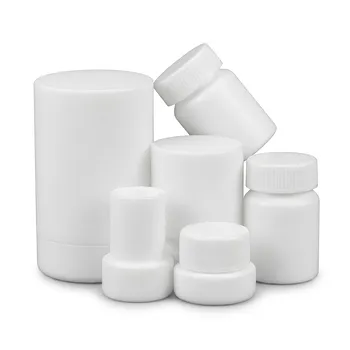
Fluorinated polymers remain stable under extreme laboratory conditions because fluorine creates a highly protective chemical environment around the polymer chain. The strong carbon–fluorine bond resists thermal cleavage, while fluorine’s high electronegativity and low polarizability reduce the polymer’s susceptibility to attack by acids, bases, oxidants, and organic solvents. In fully fluorinated materials such as PTFE and PFA, the absence of hydrogen further limits high-temperature degradation, making these polymers suitable for demanding reaction vessels, crucibles, and digestion containers.
The key structural advantage is a fluorine-rich shield around the carbon backbone: it protects the chain from chemical attack and thermal breakdown, while low surface energy reduces contamination, wetting, and sample adhesion.
Why Fluorinated Polymers Resist Thermal Degradation
Strong Carbon–Fluorine Bonds Stabilize the Backbone
The carbon–fluorine bond is exceptionally strong. Breaking this bond requires substantial energy, so heat is less likely to initiate the chain-scission reactions that cause ordinary polymers to soften, decompose, or lose mechanical integrity.
The C–F bond also has low electronic polarizability compared with a conventional C–H bond. Its electron distribution is relatively difficult to distort, which limits many chemical pathways involved in oxidation and thermal degradation.
Fluorine Forms a Protective Molecular Sheath
Fluorine atoms positioned along the polymer chain create an electron-dense outer layer around the carbon backbone. This structure makes it more difficult for reactive species to reach and attack the underlying carbon framework.
The protective effect is especially pronounced in perfluorinated polymers, where most or all available hydrogen has been replaced by fluorine. The backbone is therefore shielded without relying on less stable carbon–hydrogen sites.
The Absence of Hydrogen Improves High-Temperature Performance
Hydrogen-containing fluoropolymers can undergo dehydrofluorination at elevated temperatures, particularly in the presence of metal oxides. This process can remove hydrogen fluoride and initiate chemical changes that weaken the polymer.
Fully fluorinated polymers avoid this specific degradation route because they contain no hydrogen in the polymer backbone. Depending on the material and operating conditions, perfluoropolymers can support continuous service temperatures above approximately 300°C, with some commonly cited limits near 315°C.
Polymer Architecture Also Controls Stability
Chemical composition is not the only factor determining performance. Molecular weight, molecular-weight distribution, crystallinity, branching, and the arrangement of fluorinated groups influence strength, dimensional stability, and resistance to thermal deformation.
For example, PTFE offers outstanding chemical and thermal resistance, while PFA provides similar fluorinated chemistry with improved melt processability. The appropriate choice depends on whether the vessel must prioritize purity, flexibility, fabrication, pressure resistance, or dimensional control.
How Molecular Structure Produces Chemical Resistance
Fluorine Reduces Access to Reactive Sites
Aggressive reagents can degrade polymers by attacking chemically vulnerable bonds or extracting additives and degradation products. The fluorine-rich surface and backbone make those vulnerable sites less accessible and less reactive.
This is why fluoropolymer vessels can tolerate many mineral acids, strong bases, oxidizing environments, and organic solvents that would rapidly damage conventional plastic containers.
Perfluoroalkyl and Trifluoromethyl Groups Increase Protection
Bulky groups such as perfluoroalkyl and trifluoromethyl, or -CF3, groups add fluorinated material around the polymer structure. They increase fluorine content and further reduce the ability of reactive molecules to interact with the carbon chain.
These groups can also raise resistance to thermal and oxidative degradation. In specialized fluorinated polymers containing suitable cross-linkable structures, reported degradation-onset temperatures in air can reach approximately 480°C to 530°C, although such values are material-specific and should not be treated as operating temperatures.
Low Surface Energy Limits Wetting and Sorption
Fluorinated surfaces have very low surface energy. Liquids tend not to spread across them easily, and many analytes or reaction products have little tendency to adhere strongly to the vessel wall.
This non-wetting behavior is valuable in trace analysis and digestion workflows because it can reduce sample retention, chemical sorption, carryover, and contamination. It also supports easier cleaning and more reliable recovery of dissolved samples.
Chemical Inertness Protects Sample Integrity
A reaction vessel must resist attack itself, but it must also avoid altering the sample. High-purity fluoropolymers generally have low chemical reactivity and low extractables when properly selected and processed.
That reduces the risk of leaching, reagent consumption, and contamination during acid digestion, solvent exposure, or high-temperature preparation of trace samples.
Why These Properties Matter in Digestion Containers
Acid Digestion Requires Both Heat and Chemical Resistance
Microwave and other digestion methods combine elevated temperature with concentrated acids or oxidizing reagents. A suitable container must retain its shape, resist permeation and chemical attack, and avoid releasing contaminants into the digest.
The fluorinated molecular structure addresses these requirements simultaneously: strong bonds resist thermal degradation, the fluorine sheath limits chemical attack, and the low-energy surface reduces sample adhesion.
Dimensional Stability Supports Pressure Control
Closed digestion vessels can experience elevated internal pressure as temperature rises. A polymer that softens excessively, embrittles, or undergoes chemical degradation can compromise vessel geometry and sealing performance.
Fluoropolymers provide useful dimensional and thermal stability, but the vessel design remains equally important. Wall thickness, reinforcement, closure design, pressure rating, and temperature history must be evaluated alongside the polymer chemistry.
Low Contamination Is Critical in Trace Analysis
At trace concentrations, even minor leaching or sample loss can affect the result. Fluoropolymer containers help preserve analytical accuracy by minimizing interaction between the sample and the vessel surface.
Their low surface energy also reduces the retention of target analytes, although no material eliminates contamination risk under every reagent, temperature, or cleaning condition.
Choosing Between Fully and Partially Fluorinated Materials
Fully Fluorinated Polymers Maximize Inertness
Perfluoropolymers are the preferred option when the main requirements are maximum chemical resistance, high-temperature performance, low contamination, and resistance to aggressive solvents.
PTFE and PFA are common examples for high-purity laboratory vessels, tubing, beakers, and digestion components. PFA is often selected when fabrication or transparency-related requirements make it more practical than PTFE.
Partially Fluorinated Polymers Can Improve Mechanical Performance
Adding fluorine improves chemical and thermal resistance, but fully fluorinated structures are not automatically superior in every mechanical application. Higher fluorine content can reduce mechanical strength, solubility, and processability.
Partially fluorinated polymers may provide greater rigidity, strength, or structural control when the chemical environment and temperature are less severe. The choice is therefore a balance between molecular inertness and the mechanical demands of the apparatus.
Understanding the Trade-offs
Temperature Ratings Are Material- and Design-Specific
A polymer’s decomposition temperature is not the same as its recommended continuous operating temperature. Pressure, load, exposure time, heating rate, chemical environment, and the presence of metal surfaces can all reduce practical limits.
Manufacturers’ temperature and pressure ratings should govern vessel use, particularly for sealed microwave digestion or high-pressure reactions.
Chemical Resistance Is Not Absolute
Fluoropolymers resist a very broad range of chemicals, but extreme conditions can still cause degradation, permeation, or loss of mechanical performance. Certain highly reactive fluorinating agents, molten alkali metals, and specialized high-temperature chemical systems require separate compatibility evaluation.
Compatibility charts are useful screening tools, not substitutes for testing under the actual concentration, temperature, pressure, and exposure duration.
Mechanical Strength Can Be Lower Than Conventional Engineering Plastics
The same molecular characteristics that produce low friction and chemical inertness can limit stiffness, adhesion, or load-bearing performance. PTFE, in particular, can deform under sustained load through creep.
Where dimensional rigidity or pressure resistance is critical, fluoropolymer components may need geometric reinforcement, a supporting structure, or a different fluoropolymer grade.
Processing and Purity Affect Real-World Performance
Molecular structure establishes the material’s potential, but fillers, pigments, processing residues, surface damage, and manufacturing cleanliness affect laboratory performance. High-purity applications require grades and fabrication processes appropriate for trace analysis.
A chemically resistant polymer can still compromise an experiment if it contains extractable contaminants or has been exposed to unsuitable cleaning agents.
How to Apply This to Your Project
The correct selection should match the polymer’s molecular structure to the vessel’s thermal, chemical, mechanical, and analytical requirements.
- If your primary focus is maximum chemical inertness: Choose a high-purity perfluoropolymer, such as PTFE or PFA, and verify compatibility with the specific acids, oxidants, solvents, and temperatures involved.
- If your primary focus is extreme-temperature digestion: Favor a fully fluorinated material with a documented continuous-use rating that covers the actual temperature, pressure, and exposure duration.
- If your primary focus is trace analytical accuracy: Select a low-extractable, low-sorption grade and control cleaning, handling, and surface-contact conditions to minimize contamination and analyte loss.
- If your primary focus is dimensional rigidity or pressure resistance: Evaluate creep, wall thickness, reinforcement, sealing design, and partially fluorinated alternatives rather than relying on chemical resistance alone.
- If your primary focus is manufacturability: Compare PTFE and melt-processable materials such as PFA, while confirming that fabrication methods preserve purity and dimensional tolerances.
Fluorinated polymers achieve high-performance laboratory stability by combining strong, chemically protected molecular backbones with low-energy surfaces that preserve both the vessel and the sample under demanding conditions.
Summary Table:
| Property | Contribution from Fluorinated Structure |
|---|---|
| Thermal Stability | Strong C-F bonds resist thermal cleavage; absence of H in perfluoropolymers prevents dehydrofluorination. |
| Chemical Resistance | Fluorine sheath shields backbone; low polarizability reduces attack by acids, bases, oxidants, solvents. |
| Low Contamination | Low surface energy reduces wetting, sorption, and extractables, preserving sample integrity. |
| Dimensional Stability | Molecular architecture influences creep, strength, and resistance to deformation under heat and pressure. |
Enhance your lab's performance with KINTEK's high-purity PTFE and PFA vessels, designed for extreme thermal and chemical resistance. Our custom CNC machining ensures precision for any labware need. Contact us today to discuss your requirements and get a quote—Contact us now!
Related Products
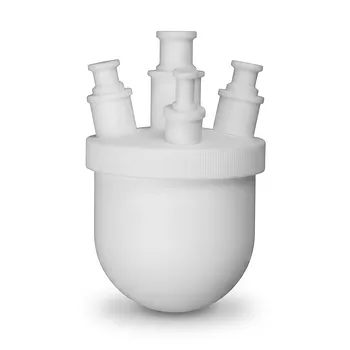
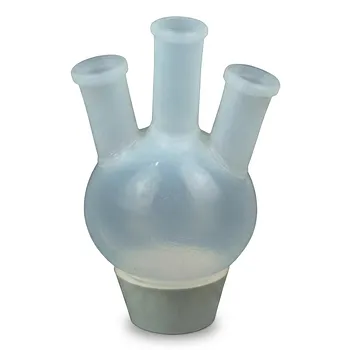
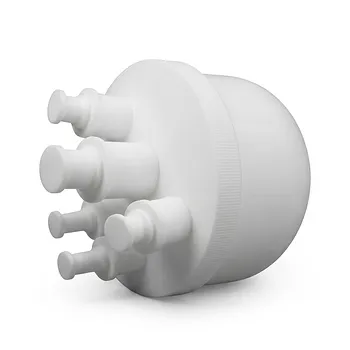
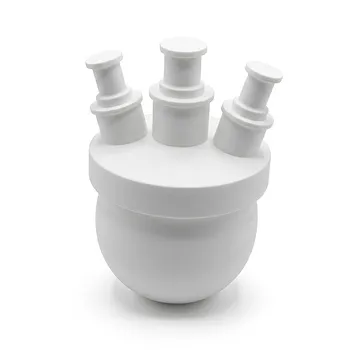
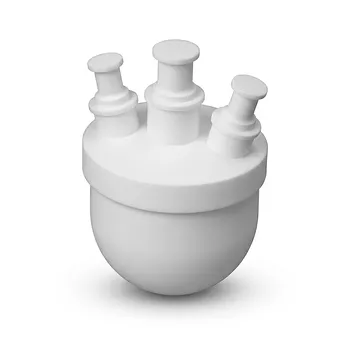
- Laboratory PTFE Three Neck Reaction Flask Corrosion Resistant 2000ml Low Background Fluoropolymer Vessel
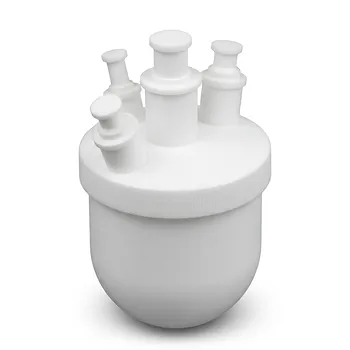
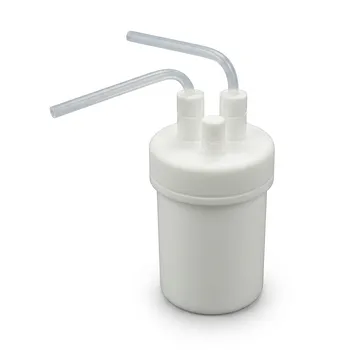
- Custom PTFE Flask 250ml High Purity Fluoropolymer Laboratory Vessel for Chemical Research
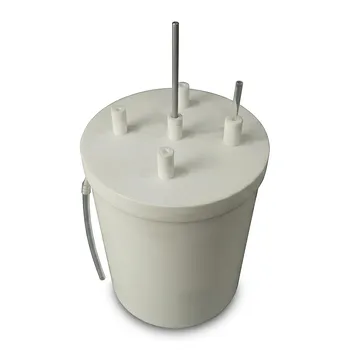
- PFA Chemical Reaction Tank with Customizable Fittings for Corrosive Solvent Synthesis and High Purity Lab Applications
- Large Capacity PTFE Reaction Flask 20L Custom Multi Neck Laboratory Boiling Flask Fluoropolymer Chemical Processing Vessel
- High Temperature Corrosion Resistant PTFE Reaction Flask Custom Multi Neck Laboratory Vessel with Flat or U Bottom
People Also Ask
- What are the key steps for structural integrity in molded PTFE lab reaction vessels? Master fine powder processing.
- What reaction vessel and fluid handling considerations are necessary for living cationic polymerization of fluorinated monomers involving Lewis acid catalysts? Key design and safety tips
- Ion Activation Reaction Vessel Requirements: Why PTFE is Critical for Membrane Performance
- Why are fluoroplastic (PTFE) reaction vessels recommended for Methylene Blue (MB) adsorption kinetic experiments?
- Why is a PTFE reaction vessel required for Ti3C2Tx MXene synthesis? Ensure Safe HF Etching & High Purity