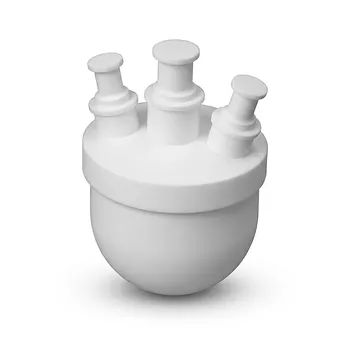
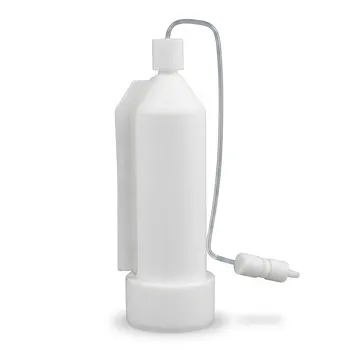
Tetrafluoroethylene (TFE) polymerization is a severe heat- and pressure-management problem. TFE has a molecular weight of 100.02 g/mol, a normal boiling point of −76.3 °C, a critical temperature of 33.3 °C, and a critical pressure of 39.2 MPa. Its conversion to PTFE releases approximately −172.0 kJ/mol, or 41.12 kcal/mol, making heat removal, oxygen exclusion, pressure relief, and chemically compatible construction central to fluoropolymer reaction vessel design.
The key design issue is not simply containing TFE—it is removing polymerization heat quickly enough to prevent localized temperature escalation, pressure excursions, decomposition, or deflagration. The reactor must combine controlled heat transfer, reliable pressure containment, strict oxygen control, and materials that resist fluorinated chemicals without contaminating the polymer.
The Thermodynamic Properties That Matter
Molecular weight and heat-release basis
TFE has a molecular weight of 100.02 g/mol. Its polymerization heat of approximately 172.0 kJ per mole of TFE corresponds to roughly 1.72 MJ per kilogram of monomer.
That energy release is unusually high compared with several conventional vinyl monomers. The cited heats of polymerization are approximately 23–26 kcal/mol for vinyl chloride and 16.7 kcal/mol for styrene, compared with 41.12 kcal/mol for TFE.
Volatility and boiling point
At 101.3 kPa, TFE boils at approximately −76.3 °C. Under normal ambient conditions, it is therefore a highly volatile gas rather than a stable liquid.
This affects charging, storage, metering, and isolation. Reactor systems must be designed for gaseous or pressurized TFE service, with carefully controlled valves, transfer lines, instrumentation, and containment.
Critical temperature and pressure
TFE has a critical temperature of approximately 33.3 °C and a critical pressure of 39.2 MPa. These values define the boundary above which distinct liquid–vapor phase behavior no longer applies in the conventional sense.
Typical aqueous PTFE polymerization conditions cited for TFE are approximately 40–80 °C and 0.7–2.8 MPa. These temperatures are above TFE’s critical temperature, but the reactor pressure is far below its critical pressure; in an aqueous process, TFE behavior is therefore governed by its interaction with the liquid phase, gas feed, pressure, temperature, and evolving polymer dispersion—not by critical-point data alone.
Why the Heat of Polymerization Drives Vessel Design
Heat generation can accelerate itself
Polymerization releases heat, and increasing temperature can accelerate free-radical reaction rates. This creates a potential positive-feedback loop:
- TFE conversion generates heat.
- Reactor temperature rises if heat removal is inadequate.
- Reaction rate increases.
- More TFE converts in a shorter period.
- Heat generation can exceed the cooling system’s capacity.
This is the mechanism that makes uncontrolled heat accumulation capable of producing thermal runaway or violent deflagration.
Heat removal must be continuous
A reactor designed only for the average heat load may still be unsafe. The cooling system must address the maximum credible rate of heat release, including initiator addition, monomer feed, mixing limitations, fouling, loss of cooling, and localized hot spots.
Aqueous polymerization provides a heat-transfer medium, but it does not eliminate the need for engineered cooling. The vessel should provide effective jacket or internal heat-transfer capability, accurate temperature measurement, and control logic that can reduce or stop monomer and initiator feeds when temperature behavior becomes abnormal.
Temperature affects product quality as well as safety
Reaction temperature influences polymerization rate, molecular weight, dispersion behavior, and the consistency of the resulting PTFE. Excessive temperature excursions can therefore create two simultaneous problems:
- Process safety risk, through runaway heat generation and pressure escalation.
- Product-quality risk, through changes in molecular structure, molecular weight, or contamination from degradation and corrosion.
Thermal control is consequently a process-quality requirement, not merely an emergency safeguard.
Pressure and Containment Requirements
TFE is a pressurized reactive monomer
Because TFE is gaseous at ordinary conditions and highly volatile, the reaction vessel must accommodate pressure changes caused by:
- TFE charging and consumption.
- Temperature increases.
- Gas expansion during upset conditions.
- Changes in phase distribution.
- Possible decomposition or deflagration events.
The pressure boundary, closures, fittings, valves, and connected piping must be rated for the operating pressure and the applicable credible overpressure scenarios.
Design for the reaction system, not just the nominal set point
The cited polymerization pressure range of 0.7–2.8 MPa should not be treated as the vessel’s maximum design pressure. The vessel must also account for abnormal conditions, including loss of cooling, blocked outlets, excessive monomer feed, uncontrolled initiator addition, and decomposition.
Pressure relief and vent systems must discharge to a controlled, compatible handling system. Vent routing should prevent exposure of personnel and avoid sending reactive fluorinated material into unsuitable equipment.
Avoid relying on a polymer lining as the pressure vessel
PTFE and PFA offer excellent chemical resistance, but they should not automatically be treated as the primary structural pressure boundary. Their mechanical strength, creep behavior, thermal expansion, and temperature-dependent load capacity must be evaluated for the actual service.
A common engineering approach is to use a suitable structural pressure vessel with a chemically resistant PTFE or PFA wetted surface where appropriate. The structural shell provides mechanical containment, while the fluoropolymer lining or components limit chemical attack and contamination.
Materials Selection for Fluoropolymer Reactors
Chemical resistance is essential
TFE polymerization systems may include water, radical initiators, surfactants, fluorinated additives, and aggressive cleaning or processing chemicals. The selected wetted materials must resist these environments without swelling, embrittlement, corrosion, chain transfer, or extractable contamination.
PTFE and PFA are valuable for wetted components because of their strong carbon–fluorine bonds and highly fluorinated structures. They are commonly used in high-purity laboratory equipment, transfer components, digestion vessels, tubing, containers, and fluid-handling assemblies.
Material compatibility is not the same as structural suitability
A material can be chemically resistant yet unsuitable for a pressure-bearing or high-temperature mechanical application. PTFE and PFA must therefore be assessed for:
- Temperature-dependent strength.
- Creep and cold flow.
- Seal compression behavior.
- Thermal expansion.
- Permeation and leakage.
- Dimensional stability.
- Compatibility with mechanical loads and pressure cycling.
Metallic pressure boundaries, fluoropolymer linings, engineered gaskets, and machined fluoropolymer components may each serve different functions. The design should assign each material a role based on both chemistry and mechanics.
Design for purity and cleanability
Fluoropolymer production and high-purity laboratory applications are sensitive to contamination. Crevices, dead legs, rough surfaces, incompatible elastomers, and corroding metallic surfaces can trap residues or release impurities.
A reactor should therefore minimize stagnant zones, use cleanable geometries, and select seals and fittings that tolerate the intended reagents and temperature cycles. CNC-machined PTFE or PFA components can be useful where a chemically inert, low-contamination wetted geometry is required, but their pressure and thermal limitations must still be included in the design review.
Safety Controls Beyond the Vessel Wall
Oxygen control is a primary protection layer
TFE can form hazardous mixtures with oxygen, and elevated temperature and pressure can create especially severe consequences. The supplementary material identifies strict oxygen control, including a cited target below 20 ppm, as part of safe TFE handling.
The exact acceptance limit must be established from the applicable process hazard analysis, equipment standards, and operating procedure. In practice, the system should control oxygen ingress through inerting, leak prevention, purge verification, compatible instrumentation, and validated gas analysis.
TFE decomposition is a distinct hazard
TFE may undergo violent deflagration or decomposition under elevated temperature and pressure, including conditions without ordinary air. Therefore, eliminating oxygen does not remove every hazard; it primarily addresses one important class of reactive mixtures.
The vessel and controls must also protect against excessive temperature, pressure, residence time, and uncontrolled reaction conditions.
Instrumentation must detect the early stages of an upset
Temperature and pressure should be measured at locations that represent the actual reaction zone. A single sensor can miss stratification or localized hot spots, particularly in a poorly mixed or fouled system.
Useful safeguards include independent high-temperature and high-pressure trips, controlled initiator and monomer feeds, cooling-system monitoring, reliable agitation, and fail-safe isolation. These safeguards should be designed as layers rather than relying on one control loop.
Understanding the Trade-offs
More cooling area can create mechanical complexity
Increasing heat-transfer area improves temperature control, but jackets, coils, internal tubes, and baffles can complicate cleaning, increase crevice risks, and create additional potential leak paths.
The best configuration balances heat removal against cleanability, agitation, inspection access, and pressure-boundary integrity.
Fluoropolymer linings improve compatibility but complicate design
PTFE and PFA linings can protect the process from corrosion and contamination. However, thermal expansion differences between the lining and structural shell can produce buckling, gaps, stress, or seal problems during temperature cycling.
Lined equipment should be designed for the full temperature range, including startup, shutdown, cleaning, and upset conditions—not only the steady-state polymerization temperature.
Higher pressure can improve monomer handling but increases consequences
Pressure may support controlled TFE transfer and process operation, but higher pressure increases stored energy and the severity of a loss-of-containment or decomposition event.
Pressure should therefore be minimized consistent with the required reaction rate, mass transfer, and product specifications, while the vessel and relief system are rated for credible worst-case conditions.
Material resistance does not replace process control
A chemically inert vessel will not prevent thermal runaway if the reaction heat exceeds cooling capacity. Likewise, a robust pressure shell cannot compensate for poor oxygen control, inadequate relief protection, or uncontrolled initiator addition.
Safe design requires the combined performance of materials, heat transfer, instrumentation, operating procedures, and emergency safeguards.
Making the Right Choice for Your Goal
The design should be developed from a process hazard analysis and a heat-and-mass balance rather than from material selection alone.
- If your primary focus is thermal safety: Size cooling and emergency response systems for the maximum credible TFE heat-release rate, not merely the average operating load.
- If your primary focus is pressure containment: Design the vessel, closures, piping, and relief system for operating conditions plus credible decomposition, blocked-outlet, and loss-of-cooling scenarios.
- If your primary focus is chemical compatibility: Use PTFE, PFA, or other validated materials for wetted components, while separately verifying their temperature, creep, seal, and pressure performance.
- If your primary focus is product purity: Minimize dead legs and contamination sources, use compatible high-purity components, and control additives, initiators, oxygen, and cleaning residues.
- If your primary focus is reliable operation: Combine redundant temperature and pressure protection with controlled TFE and initiator feeds, effective agitation, oxygen monitoring, and documented operating limits.
A well-designed TFE reactor treats heat release, pressure, oxygen control, and materials compatibility as one integrated engineering problem.
Summary Table:
| Property | Value |
|---|---|
| Molecular Weight | 100.02 g/mol |
| Normal Boiling Point | -76.3 °C |
| Critical Temperature | 33.3 °C |
| Critical Pressure | 39.2 MPa |
| Heat of Polymerization | -172.0 kJ/mol (-41.12 kcal/mol) |
| Typical Polymerization Conditions | 40-80 °C, 0.7-2.8 MPa |
| Key Design Considerations | Heat removal, pressure containment, oxygen control, material compatibility |
Ensure your TFE polymerization reactor meets the highest safety and performance standards. At KINTEK, we specialize in high-performance PTFE and PFA labware and custom-machined components, designed to handle the extreme conditions of fluoropolymer reactions. From heat transfer components to corrosion-resistant vessels, our products are engineered for reliability and purity. Contact us today to discuss your specific reactor requirements and benefit from our expertise in fluoropolymer applications.
Related Products
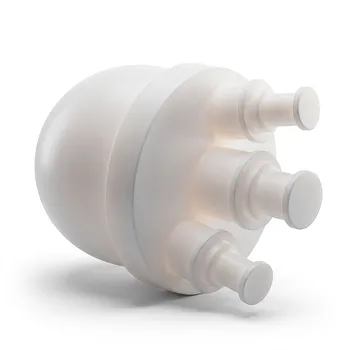
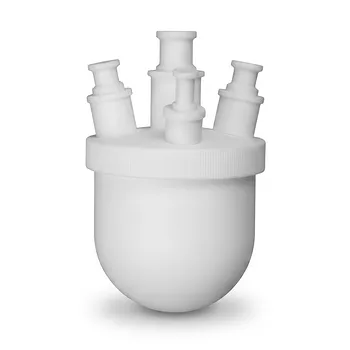
- High Purity Custom PTFE Large Volume 15L Flask Corrosion Resistant Low Trace Background Fluoropolymer Reaction Vessel
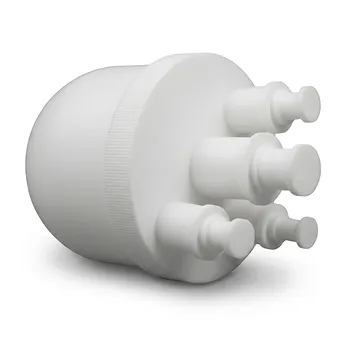
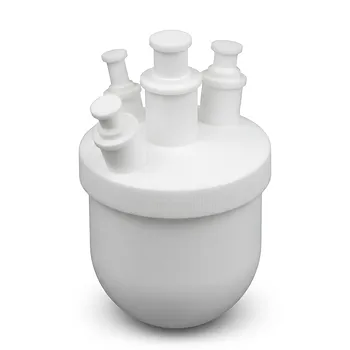
- Laboratory PTFE Three Neck Reaction Flask Corrosion Resistant 2000ml Low Background Fluoropolymer Vessel
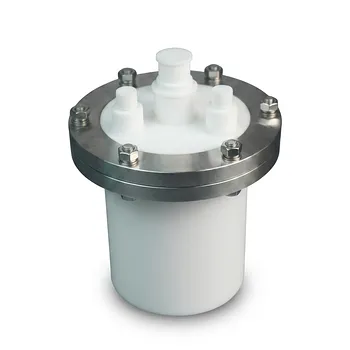
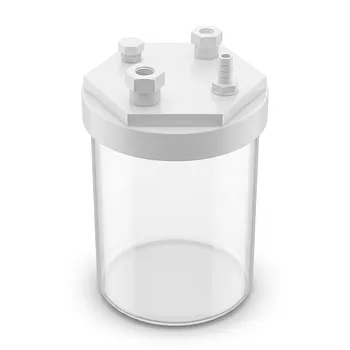
- Custom PTFE Reaction Kettle 2L Flanged Fluoropolymer Reactor Tank Acid and Alkali Resistant Polytetrafluoroethylene Vessel
- Custom PTFE Flask 250ml High Purity Fluoropolymer Laboratory Vessel for Chemical Research
- Large Capacity PTFE Reaction Flask 20L Custom Multi Neck Laboratory Boiling Flask Fluoropolymer Chemical Processing Vessel
People Also Ask
- What toxicological hazards and safe handling protocols must be established when PTFE fluoropolymer reaction vessels are subjected to pyrolysis temperatures? Learn essential safety measures now.
- Why are high-purity PTFE or PFA reaction vessels recommended for the synthesis of PANI-TiC hybrid materials? - Guide
- How do perfluorinated solvent environments influence the selection of reaction vessels and fluid handling components in nonaqueous emulsion polymerizations? Choose fluoropolymer materials.
- What reaction vessel and fluid handling considerations are necessary for living cationic polymerization of fluorinated monomers involving Lewis acid catalysts? Key design and safety tips
- Ion Activation Reaction Vessel Requirements: Why PTFE is Critical for Membrane Performance