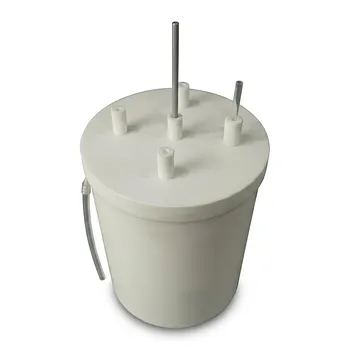
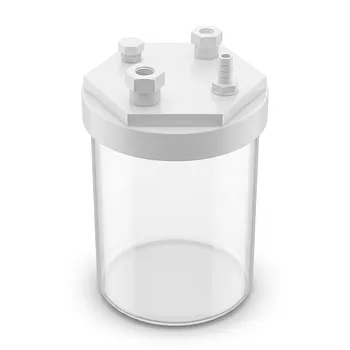
Fluoropolymers improve high-purity laboratory supplies primarily by resisting chemical attack and maintaining performance at elevated temperatures. Strong carbon–fluorine bonds and the fluorine-rich surface shield the polymer backbone from many acids, bases, organic solvents, and oxidizing reagents. In practical terms, PTFE and PFA vessels can reduce contamination, leaching, corrosion, and sample adhesion during demanding digestion and reaction procedures, including applications operating near 260°C when the specific grade and design permit it.
The value of a fluoropolymer vessel is not simply that it survives harsh chemistry. Its chemical inertness, thermal stability, low surface energy, and low extractables help preserve sample integrity while maintaining predictable vessel performance. However, material selection must still account for temperature, pressure, mechanical load, permeability, and reagent compatibility.
Why Fluoropolymers Resist Laboratory Chemistry
The Carbon–Fluorine Bond Provides a Strong Chemical Barrier
Fluoropolymers contain highly stable carbon–fluorine bonds and a fluorine-rich molecular structure. Fluorine’s high electronegativity and relatively low polarizability help create an electron-dense protective sheath around the polymer backbone.
This structure makes many fluoropolymers resistant to chemical reactions that would degrade conventional plastics. As a result, vessels, tubing, crucibles, and transfer components can remain stable when exposed to aggressive acids, bases, solvents, and other corrosive reagents.
Chemical Inertness Reduces Sample Contamination
A vessel that reacts with a reagent or sample can introduce impurities, consume analytes, or change the chemistry being measured. Fluoropolymer labware minimizes these risks because the material generally does not participate in the reaction under its intended operating conditions.
This is especially important in trace analysis and digestion workflows, where contamination at very low concentrations can compromise an otherwise valid result.
Low Surface Energy Limits Adhesion
PTFE, PFA, and related materials have low surface energy and low coefficients of friction. Samples and reaction by-products therefore have less tendency to adhere to the vessel wall than they would on many conventional materials.
Lower adhesion supports more complete sample recovery, reduces polymer or residue build-up, and simplifies cleaning. Hydrophobic behavior can also reduce retention of aqueous contaminants, although it does not eliminate the need for validated cleaning procedures.
How Thermal Stability Affects Vessel Performance
Thermal Resistance Preserves Structural Integrity
High-performance fluoropolymers can tolerate elevated temperatures without rapid chemical degradation. PTFE and PFA are commonly associated with continuous-use temperatures around 260°C, but the applicable limit depends on the grade, exposure time, mechanical load, pressure, and equipment design.
At appropriate temperatures, this stability allows fluoropolymer vessels to support acid digestion, heated reactions, and other severe-service laboratory processes without rapid embrittlement, corrosion, or loss of chemical resistance.
Stable Materials Protect Analytical Purity
Thermal degradation can release volatile compounds, create residues, or alter the surface chemistry of a vessel. A thermally stable fluoropolymer reduces the likelihood of these effects during properly controlled heating.
This matters in microwave and acid digestion, where the vessel may experience simultaneous exposure to heat, pressure, concentrated reagents, and reactive sample components.
Temperature Resistance Is More Than a Maximum Number
A published service-temperature limit does not mean that a vessel can safely operate at that temperature under every condition. Mechanical strength, creep resistance, wall thickness, pressure, heating rate, and cooling cycle all affect real-world performance.
The correct question is whether the specific vessel design remains chemically compatible and mechanically reliable throughout the entire process profile.
Why Fluorine Content and Polymer Structure Matter
Perfluoropolymers Offer Broad Resistance
Increasing fluorination generally strengthens the properties most valuable in severe laboratory service, including chemical resistance, thermal endurance, low surface energy, weather resistance, and flame resistance.
Fully fluorinated materials such as PTFE and PFA are therefore often preferred for high-purity vessels and fluid-handling components exposed to aggressive reagents. Their surfaces also tend to minimize adhesion and facilitate cleaning.
PTFE and PFA Serve Different Design Needs
PTFE provides exceptional chemical resistance and high-temperature performance, but it is difficult to process through conventional melt-forming methods. PFA retains much of PTFE’s chemical and thermal resistance while offering melt processability, which supports molded vessels, tubing, linings, and more complex geometries.
The choice is consequently influenced by both chemical performance and manufacturing requirements. A complex custom vessel may favor PFA, while a component requiring maximum inertness and established PTFE fabrication methods may use PTFE.
Molecular Architecture Influences Mechanical Behavior
Polymer architecture, molar mass, crystallinity, and processing history affect strength, dimensional stability, and resistance to deformation. These factors matter because a chemically inert material is still unsuitable if it creeps, distorts, or loses its seal under operating loads.
For laboratory supplies, the material formulation and manufacturing process must therefore be matched to the vessel’s geometry, temperature, pressure, and expected service life.
Performance Benefits in Laboratory Equipment
Digestion Vessels
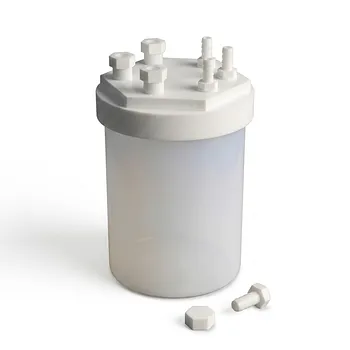
During acid digestion, the vessel must resist concentrated reagents while retaining its shape and avoiding contamination. Fluoropolymers provide a chemically resistant barrier that supports reliable sample preparation under severe conditions.
Their low-adhesion surfaces can also improve recovery and reduce the amount of residue left after digestion.
Reaction Vessels and Crucibles
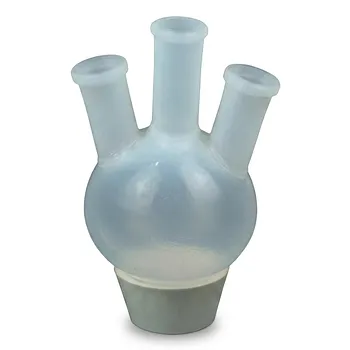
Reaction vessels require stability against both the reagents and the thermal cycle. Fluoropolymers help maintain a nonreactive container surface when the process involves elevated temperatures, corrosive chemicals, or aggressive solvents.
They are particularly useful where corrosion of metal vessels or leaching from less-resistant plastics could alter the reaction or analytical result.
Tubing and Fluid-Transfer Components
In fluid-transfer systems, chemical inertness helps prevent tubing degradation and reduces extractables entering the process stream. Low friction can also support smoother handling and reduce material adhesion inside components.
These advantages are valuable in high-purity chemical delivery, sampling, and laboratory circulation systems.
Understanding the Trade-Offs
Thermal Stability Does Not Eliminate Mechanical Limits
Fluoropolymers can soften, creep, or deform under sustained load even when they remain chemically intact. Pressure, clamping force, vessel weight, and thermal cycling must be evaluated separately from chemical compatibility.
A vessel that survives a reagent exposure may still be unsafe if its geometry or mechanical support is inadequate at operating temperature.
Chemical Inertness Is Not Universal
Fluoropolymers are broadly resistant, but no polymer is compatible with every chemical and condition. Certain highly reactive substances, molten alkali metals, elemental fluorine, and severe radiation environments can present specific risks depending on the material and exposure.
Compatibility should be confirmed for the exact polymer grade, reagent concentration, temperature, exposure time, and stress condition.
Low Permeability and Low Extractables Are Different Properties
A material can resist chemical attack while still allowing some gases, vapors, or small molecules to permeate through it. Permeation may matter in long-duration storage, volatile-solvent service, or applications requiring strict containment.
High-purity use therefore requires evaluation of extractables, cleanliness, permeability, and surface history, not chemical resistance alone.
Pressure and Thermal Cycling Require Design Validation
Heating can increase internal pressure, and repeated heating and cooling can produce dimensional changes or fatigue at joints and seals. The vessel, closure system, liner, and support structure must be validated as a complete assembly.
Published temperature capability should never be treated as a substitute for process-specific pressure and safety validation.
Making the Right Choice for Your Goal
The best material choice depends on the interaction between chemistry, temperature, mechanical loading, purity requirements, and manufacturing constraints.
- If your primary focus is trace analytical purity: Choose a high-purity PTFE or PFA product with controlled extractables, validated cleaning procedures, and low sample adhesion.
- If your primary focus is aggressive chemical resistance: Favor a fully fluorinated material and verify compatibility with the exact reagents, concentrations, temperatures, and exposure times.
- If your primary focus is heated digestion or reaction work: Confirm the continuous-use temperature, pressure rating, thermal-cycle limits, and mechanical support of the complete vessel assembly.
- If your primary focus is complex geometry or fluid-transfer fabrication: Consider PFA when melt processability, molded features, or welded fluoropolymer components are important.
- If your primary focus is long-term service life: Evaluate creep, dimensional stability, permeability, cleaning history, and repeated thermal and chemical cycling in addition to initial chemical resistance.
Understanding both the chemical barrier and the mechanical limits of fluoropolymers is what turns their inherent stability into dependable high-purity laboratory performance.
Summary Table:
| Property | Influence on Labware Performance |
|---|---|
| Chemical Inertness | Resists acids, bases, solvents; reduces contamination and leaching |
| Thermal Stability | Maintains integrity at high temps (up to 260°C for PTFE/PFA) |
| Low Surface Energy | Prevents sample adhesion; simplifies cleaning and improves recovery |
| Low Extractables | Preserves sample purity in trace analysis |
| Mechanical Limits | Requires design validation for pressure, load, and thermal cycling |
| Permeability | May allow gas/vapor passage; relevant for containment applications |
Enhance Your Lab's Performance with KINTEK's High-Purity Fluoropolymer Supplies
At KINTEK, we specialize in manufacturing premium PTFE and PFA labware specifically designed for demanding applications. Our products, from digestion vessels to custom machined components, offer exceptional chemical resistance and thermal stability to ensure your results are accurate and reliable. Whether you need standard beakers or bespoke reaction apparatus, our end-to-end CNC machining capabilities guarantee a perfect fit for your requirements.
Ready to upgrade your lab with dependable fluoropolymer solutions? Contact us today to discuss your needs and discover how KINTEK can support your high-purity processes.
Related Products
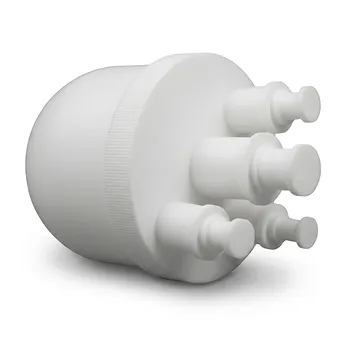
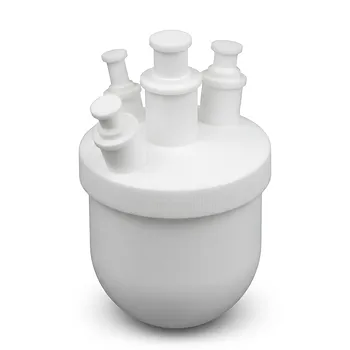
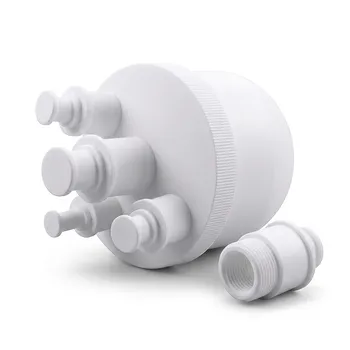
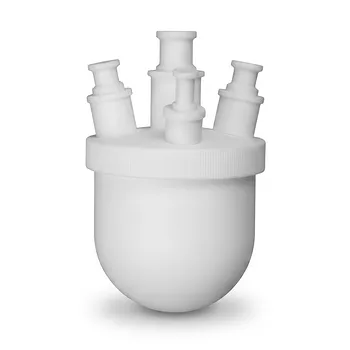
- Custom PTFE Flask 250ml High Purity Fluoropolymer Laboratory Vessel for Chemical Research
- Laboratory PTFE Three Neck Reaction Flask Corrosion Resistant 2000ml Low Background Fluoropolymer Vessel
- Custom 12L PTFE Multi Neck Reaction Flask Laboratory Fluoropolymer Chemical Vessel with Stirrer Compatibility
- Large Capacity PTFE Reaction Flask 20L Custom Multi Neck Laboratory Boiling Flask Fluoropolymer Chemical Processing Vessel
- High Temperature Corrosion Resistant PTFE Reaction Flask Custom Multi Neck Laboratory Vessel with Flat or U Bottom
People Also Ask
- What are the key steps for structural integrity in molded PTFE lab reaction vessels? Master fine powder processing.
- What toxicological hazards and safe handling protocols must be established when PTFE fluoropolymer reaction vessels are subjected to pyrolysis temperatures? Learn essential safety measures now.
- When synthesizing TFVE monomers involving reactive organometallic reagents and aggressive polar solvents, what material performance characteristics are required? Ensure purity with PTFE/PFA.
- Why Are High-Purity Fluoropolymer Vessels and Tubing Critical for Trace Analysis? Prevent Contamination Reliably
- How does pressure management influence molar mass distribution and reaction rate in the iodine transfer emulsion polymerization of vinylidene fluoride, and how do custom fluoropolymer reaction vessels support this process?