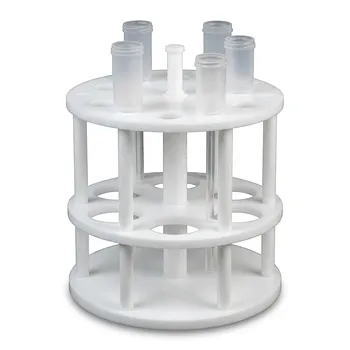
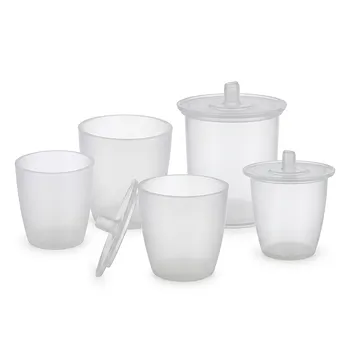
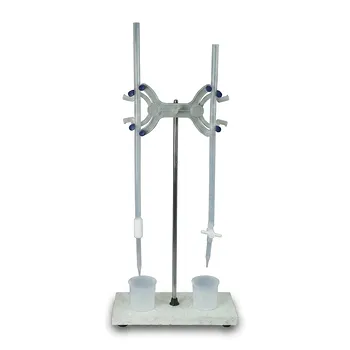
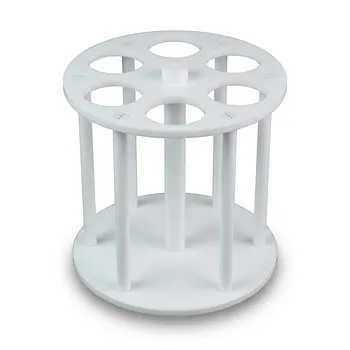
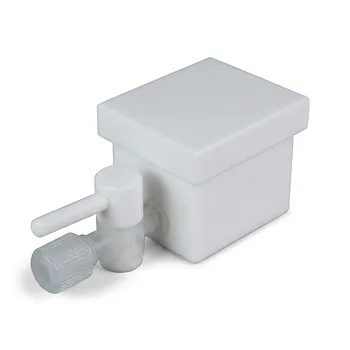
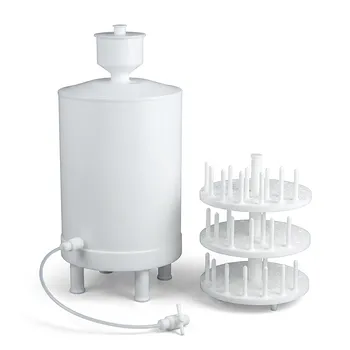
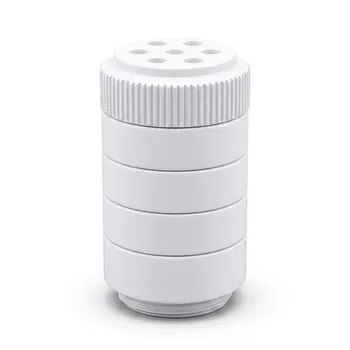
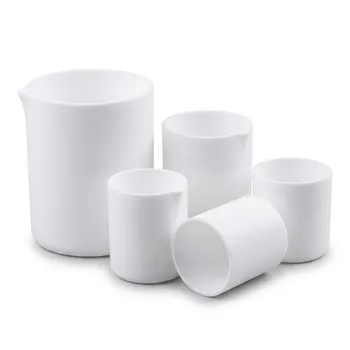
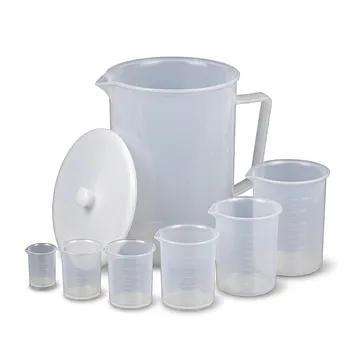
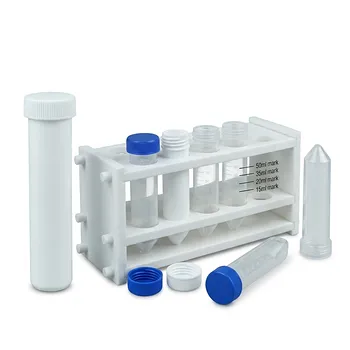
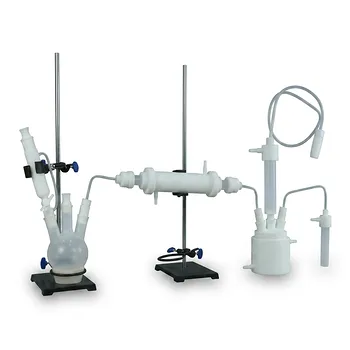
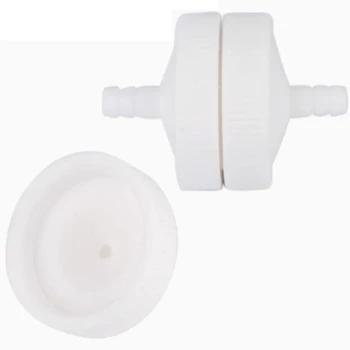
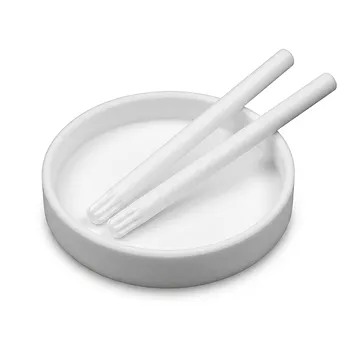
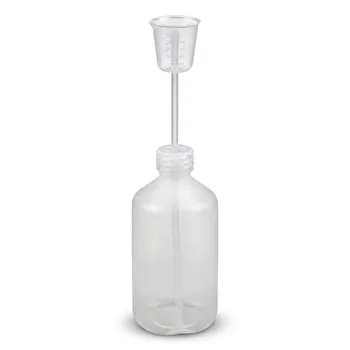
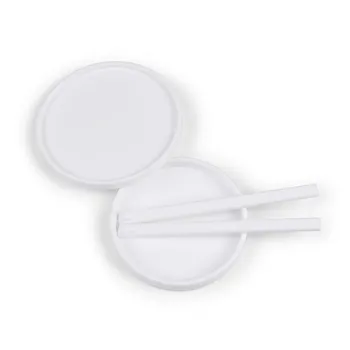
Chemical-resistant PTFE and PFA apparatus improves fluoropolymer purification by protecting both the product and the process. These materials tolerate aggressive solvents such as acetone, methanol, pentane, and fluorinated solvents without the swelling, degradation, or leaching associated with some conventional plastics. Their low-surface-energy, non-stick surfaces also reduce polymer adhesion during precipitation, washing, filtration, transfer, and vacuum drying—improving recovery and helping preserve product purity.
PTFE and PFA labware provide a chemically clean, low-adhesion process path for fluoropolymer isolation. They reduce contamination risks from the apparatus while making sticky or finely divided polymer easier to recover from vessels and transfer components.
Why Fluoropolymer Isolation Is Materially Demanding
Aggressive solvents challenge conventional labware
Fluoropolymer workups may involve solvents including acetone, methanol, pentane, and fluorinated organic solvents. Depending on the material, conventional plastic equipment can swell, become brittle, deform, or release extractable components during repeated exposure.
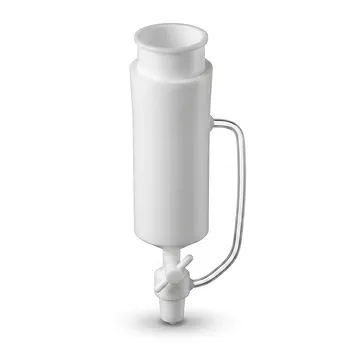
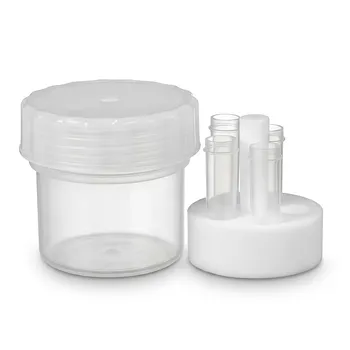
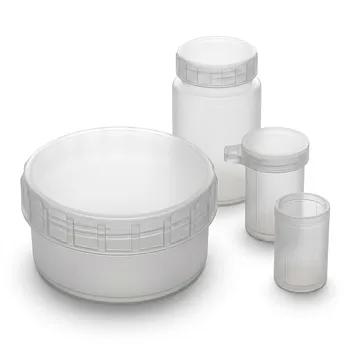
PTFE and PFA have highly fluorinated molecular structures that provide broad resistance to many organic solvents and reagents. This makes them suitable for precipitation dishes, wash bottles, transfer funnels, reaction vessels, and drying containers used in the workup.
The product can be difficult to handle
Synthesized fluoropolymers may appear as viscous liquids, sticky precipitates, films, or fine powders. These forms can coat vessel walls, adhere to funnels, or remain trapped in transfer and filtration equipment.
The problem is not merely inconvenient. Material left behind represents product loss and can make recovery estimates, yield calculations, and downstream characterization less reliable.
How PTFE and PFA Improve Purification and Recovery
They reduce contamination from the process path
High-purity PTFE and PFA introduce very low levels of extractable material compared with many conventional plastics or metallic equipment. They also avoid the risk of metal-ion contamination that may arise from direct contact with metal surfaces.
This matters when trace impurities could affect polymer characterization, residual-monomer analysis, thermal measurements, or subsequent application testing.
They support repeated precipitation and washing cycles
Precipitation often requires multiple additions of nonsolvent, decanting steps, washing cycles, and solvent exchanges. Equipment must tolerate changing chemical environments without degrading or contributing contaminants.
PTFE and PFA maintain their integrity across these operations, helping keep the purification sequence reproducible rather than making each cycle dependent on the condition of the apparatus.
They improve product release from surfaces
The very low surface energy of PTFE and PFA gives them non-stick and anti-adhesive properties. Polymer deposits are therefore less likely to remain permanently attached to vessel walls, funnel surfaces, or transfer components.
This is particularly valuable for viscous products and fine powders, where scraping or aggressive rinsing can increase handling losses or introduce contamination.
They help during vacuum drying
Fluoropolymer products may be dried under vacuum at moderately elevated temperatures, such as approximately 50–70 °C in the described workflow. PTFE and PFA apparatus can provide a chemically resistant, low-adhesion container during this stage.
The benefit is twofold: the equipment remains compatible with residual solvents, and the dried polymer is easier to remove for weighing, packaging, or characterization.
PTFE and PFA Serve Different Practical Roles
PTFE is useful for robust, non-stick components
PTFE is widely valued for its strong chemical resistance and exceptionally low friction and surface energy. It is well suited to components such as funnels, tubing elements, transfer tools, seals, and precipitation or drying vessels where non-stick behavior is central.
Its relatively low surface energy helps minimize residue retention during decanting and transfer.
PFA is useful where transparency and process visibility matter
PFA provides comparable high chemical resistance while offering advantages for some laboratory vessel designs, including greater translucency or transparency than standard PTFE. That can help operators observe precipitation, phase separation, deposits, and liquid levels.
The appropriate choice depends on the apparatus geometry, temperature, mechanical demands, and need for visual inspection—not simply on chemical compatibility alone.
How These Benefits Affect Data Quality
Higher recovery improves yield assessment
When less polymer remains attached to equipment, the isolated mass more closely represents the material actually produced. This improves the usefulness of yield comparisons between batches or purification conditions.
Reduced hold-up is especially important when the synthesis produces small quantities or when the polymer is highly viscous.
Cleaner isolation supports characterization
Trace metals, plasticizers, degraded vessel material, or other extractables can complicate polymer analysis. Low-leaching fluoropolymer labware helps maintain a cleaner sample for measurements such as molar mass, residual solvent content, thermal behavior, and compositional analysis.
The apparatus cannot eliminate impurities already present in the synthesis, but it reduces one avoidable source of contamination.
Reproducible handling supports process development
Consistent surface behavior makes transfers, washes, and drying less dependent on operator technique. That supports more reliable comparisons when optimizing solvent choice, precipitation conditions, washing volume, or drying time.
In practical terms, PTFE and PFA help make the workup a controlled operation rather than a sequence of unpredictable material losses.
Understanding the Trade-offs
“Chemical resistant” does not mean universally indestructible
PTFE and PFA are highly resistant to many aggressive chemicals, but compatibility remains dependent on chemical identity, concentration, temperature, exposure time, pressure, and mechanical stress. A compatibility chart and supplier data should be checked for unusual reagents, elevated temperatures, or long-term contact.
The term “inert” should therefore be understood as a strong practical advantage, not an absolute guarantee under every condition.
Mechanical performance can limit the design
PTFE is soft and can deform or creep under sustained load, while some fluoropolymer components may be less rigid than glass or metal. Apparatus may require mechanical support, appropriate clamping, or careful handling during vacuum operations.
The chemical resistance of the material does not automatically ensure that every vessel design is suitable for pressure, impact, or high mechanical loads.
Cleanliness remains essential
Low leaching does not mean that a component is automatically clean. Residual polymer, solvent, dust, or contamination from previous experiments can still compromise a purification.
PTFE and PFA equipment should be cleaned using procedures compatible with the material and the chemistry, then inspected for retained deposits before reuse.
Non-stick surfaces do not replace process control
Poor precipitation conditions, inadequate mixing, incomplete washing, or insufficient drying can still reduce purity and recovery. Fluoropolymer apparatus reduces equipment-related losses; it does not correct an ineffective purification protocol.
How to Apply This to Your Project
Select the apparatus around the actual solvent system, product form, temperature, and recovery method.
- If your primary focus is chemical compatibility: Use high-purity PTFE or PFA for vessels and transfer components exposed to acetone, methanol, pentane, fluorinated solvents, and repeated precipitation cycles, after verifying the specific operating conditions.
- If your primary focus is maximum polymer recovery: Prioritize low-surface-energy PTFE or PFA surfaces in precipitation dishes, funnels, drying containers, and transfer tools where viscous or finely divided polymer can adhere.
- If your primary focus is analytical purity: Minimize contact with ordinary plastics and metals, use clean fluoropolymer components, and control cleaning and handling procedures to reduce leachables and trace contamination.
- If your primary focus is process reproducibility: Standardize the same fluoropolymer equipment, washing sequence, transfer method, and drying conditions across batches so that equipment-related losses remain consistent.
- If your primary focus is visual process monitoring: Consider PFA designs where greater transparency or translucency helps observe phase separation, precipitation, and residue formation.
Using PTFE and PFA does not replace sound purification chemistry, but it removes two major sources of uncertainty: contamination from the apparatus and product lost to its surfaces.
Summary Table:
| Benefit | Description |
|---|---|
| Chemical Resistance | Withstands aggressive solvents like acetone, methanol, and fluorinated solvents without degradation. |
| Low Leaching | Minimizes extractables, preventing contamination of the polymer product. |
| Non-Stick Surface | Reduces adhesion of sticky or powdery polymers, improving recovery and yield. |
| High-Temperature Compatibility | Suitable for vacuum drying at 50-70°C and other thermal processes. |
| Reproducibility | Consistent surface behavior ensures reliable process development and scale-up. |
| PFA Transparency | Enables visual monitoring of precipitation and phase separation. |
Elevate your fluoropolymer purification with KINTEK's high-purity PTFE and PFA labware. Our products are exclusively dedicated to high-performance fluoropolymers, offering everything from beakers, funnels, and digestion vessels to custom CNC-machined parts. Whether you're a researcher or a distributor, our solutions minimize contamination and maximize recovery, ensuring accurate analysis and efficient production. Benefit from our end-to-end custom machining capabilities and OEM/ODM support. Enhance your lab's efficiency and data quality — contact us today to discuss your specific needs!
Related Products
- Custom PFA Microcolumn Racks and PTFE Machined Low Background Corrosion Resistant Laboratory Fixtures
- PTFE PFA Vacuum Filtration System Corrosion Resistant Customizable Shatterproof Laboratory Device
- High Purity PFA Crucible and Corrosion Resistant PTFE Beaker for Trace Analysis and Custom Laboratory Applications
- High Purity PTFE PFA Burette Translucent Acid Base Resistant Reusable Laboratory Titration Equipment
- Custom PFA Separatory Funnel Rack PTFE Machined Laboratory Support Stand Corrosion Resistant Low Background Fluoropolymer Fixture
People Also Ask
- What other PTFE lab accessories are commonly used? Essential Tools for Chemical Resistance & Purity
- Why are customized PTFE testing fixtures required for electrochemical testing and battery research? Boost Data Accuracy
- How does high fluorination in perfluorinated polymers improve chemical resistance and thermal stability of lab apparatus? Discover the science behind PTFE and PFA's superior performance.
- What inherent material characteristics of non-melt-processable PTFE make it suitable for manufacturing high-purity laboratory containers and custom-machined apparatus?
- How do extreme temperatures and harsh chemical environments affect PTFE and PFA lab apparatus? Achieve Reliable Performance in Demanding Conditions