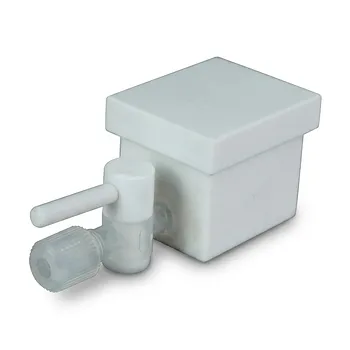
Non-melt-processable PTFE is suitable for high-purity laboratory containers because its chemical inertness, thermal stability, low surface energy, and purity protect both the apparatus and the sample. Strong carbon-fluorine bonds allow PTFE to resist virtually all common organic solvents, concentrated acids, and strong bases without dissolving, corroding, or readily degrading. Although PTFE cannot be shaped by conventional melt injection molding, its stiff-gel behavior enables specialized sintering and compression molding, while solid PTFE stock can be precision-machined into custom laboratory apparatus.
PTFE’s manufacturing limitation is directly connected to its usefulness: the same molecular structure that prevents melt flow also provides exceptional resistance to chemical attack, contamination, adhesion, and heat. This combination makes PTFE valuable for both standardized high-purity containers and custom-machined components used in severe analytical environments.
Why PTFE Protects Sample Purity
Strong Carbon-Fluorine Bonds Resist Chemical Attack
PTFE consists of a carbon backbone surrounded by fluorine atoms. The resulting carbon-fluorine bonds are exceptionally strong and shield the polymer from attack by aggressive chemicals.
This allows PTFE to withstand concentrated acids, strong bases, and many organic solvents without dissolving or losing its basic structural integrity. That resistance is essential when containers are exposed to digestion reagents, corrosive samples, or reactive laboratory chemicals.
Low Leaching Reduces Contamination Risk
A high-purity container must avoid becoming an unintended source of trace contamination. PTFE’s chemical inertness minimizes the risk that the material will degrade, dissolve, or release unwanted constituents into a sample.
This is particularly important in trace analysis, ultra-pure reagent storage, and microwave digestion, where even small amounts of contamination can affect results.
Low Surface Energy Minimizes Sample Retention
PTFE has an exceptionally low surface energy and strong non-stick behavior. Liquids and residues are less likely to adhere strongly to its surface than to many conventional materials.
For laboratory containers, this can improve sample recovery and reduce liquid retention in beakers, vessels, tubing, and fittings. It also makes PTFE easier to clean between uses, although cleaning procedures must still be validated for the application.
Why PTFE Performs Under Severe Conditions
Broad Thermal Stability
PTFE maintains useful performance across a broad temperature range, including cryogenic conditions and elevated laboratory temperatures. Its high thermal stability makes it suitable for vessels and components exposed to heating, thermal cycling, and aggressive chemical reactions.
This is one reason PTFE is used in microwave digestion vessels and other apparatus where chemical resistance must be maintained while samples are heated.
Non-Flammability Supports Laboratory Safety
PTFE is non-flammable under ordinary use conditions. This characteristic adds a safety advantage in environments involving heated equipment, reactive chemicals, or processes where ignition resistance matters.
Non-flammability does not mean that PTFE can be exposed to unlimited temperatures. The complete operating range must account for the specific design, load, exposure time, and potential decomposition products at excessive temperatures.
Low Friction and Non-Adhesive Behavior
PTFE has a very low coefficient of friction. This reduces resistance in moving interfaces, valves, seals, plungers, and fluid-handling components.
Its low friction also complements its non-stick surface, helping prevent deposits and making custom apparatus easier to operate and maintain when chemical exposure and cleanability are both important.
Why the Processing Limitation Matters
PTFE Does Not Form a Conventional Flowing Melt
Unlike ordinary thermoplastics, PTFE does not become a freely flowing liquid when heated above its melting point. It forms a stiff, clear gel with extremely high melt viscosity.
As a result, conventional injection molding and other standard melt-processing methods cannot generally produce PTFE parts. This is a processing constraint, but it does not compromise the material’s chemical performance.
Specialized Forming Preserves the Material’s Advantages
Manufacturers typically use cold powder compaction, compression molding, sintering, or ram extrusion to create PTFE shapes and stock. Sintering consolidates the compacted powder into a solid component without requiring the polymer to flow like a conventional molten plastic.
The resulting material retains the properties that matter in laboratory service: chemical inertness, low friction, low surface energy, thermal stability, and high purity.
CNC Machining Enables Custom Laboratory Designs
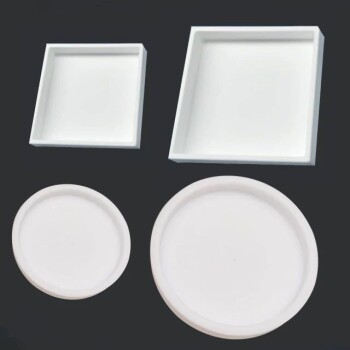
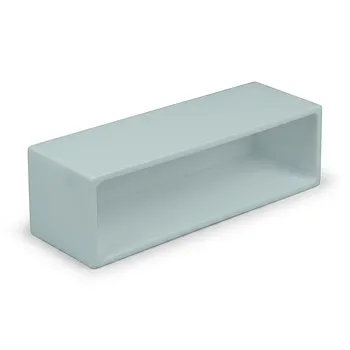
Once PTFE has been sintered into billets, rods, plates, or other stock forms, it can be precision-machined. CNC machining is therefore especially useful for non-standard vessels, reaction chambers, electrochemical cells, fluid fittings, manifolds, and specialized instrument components.
This approach supports exact dimensions, drilled passages, threaded features, grooves, ports, and other geometries that may be impractical to produce through standard molding.
Where These Characteristics Provide the Most Value
Trace Analysis Containers
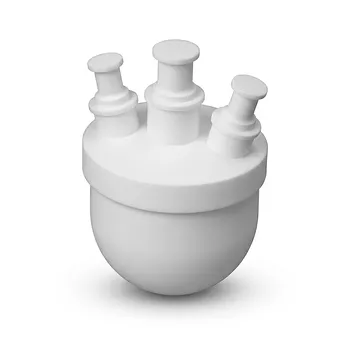
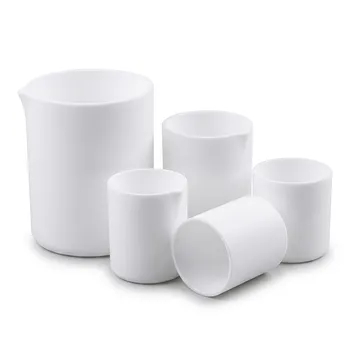
Trace analysis requires materials that will not contribute measurable contaminants or retain significant amounts of the sample. PTFE’s chemical resistance and low surface energy make it well suited to beakers, sample vessels, digestion containers, and related laboratory supplies.
The material’s low adhesion can also help improve transfer efficiency and reduce losses from residual films on container walls.
Microwave Digestion Vessels
Microwave digestion exposes vessels to heat and highly corrosive chemical mixtures. PTFE provides a combination of thermal stability and resistance to acids and bases that is well suited to this environment.
The vessel design must still be matched to the pressure, temperature, chemical mixture, and microwave system. Material suitability alone does not determine whether a particular vessel is safe for every digestion protocol.
Reagent Bottles and Fluid-Handling Components
PTFE reagent bottles, tubing, seals, and fittings can maintain chemical integrity when storing or transferring aggressive reagents. Its low friction is also useful in valves and interfaces that require smooth movement.
For complex geometries or transparent components, PFA may be more appropriate because it is melt-processable and can be molded or extruded. PTFE is particularly strong when maximum chemical resistance and custom machining are the priorities.
Understanding the Trade-offs
Manufacturing Is More Specialized
PTFE’s non-melt-processability increases manufacturing complexity compared with conventional plastics. Sintering, compression molding, and CNC machining require specialized equipment, process control, and tooling.
Custom-machined PTFE parts can therefore involve higher costs and longer production times, especially for small quantities or intricate designs.
Mechanical Design Requires Attention to Creep
PTFE is chemically robust, but it is relatively soft compared with many metals and engineering plastics. Under sustained load, it can deform gradually through creep, which may affect seals, threaded parts, dimensional tolerances, and pressure-bearing designs.
Designers must account for load, temperature, wall thickness, support, and long-term dimensional stability rather than treating PTFE as a universally rigid structural material.
Chemical Resistance Is Not Absolute in Every Condition
PTFE resists virtually all common laboratory chemicals, but compatibility should still be checked for unusual reagents, extreme temperatures, radiation exposure, and specialized operating conditions. The surrounding hardware, seals, machining residues, and cleaning process can also become contamination sources.
The correct assessment concerns the complete system, not only the PTFE polymer.
How to Apply This to Your Project
PTFE is most appropriate when the application prioritizes chemical purity, resistance, and custom geometry.
- If your primary focus is sample purity: Choose PTFE for containers and contact surfaces where low leaching, low sample adhesion, and resistance to aggressive cleaning chemicals are critical.
- If your primary focus is thermal and chemical exposure: Use PTFE for vessels and components that must retain integrity during heated digestion, corrosive reactions, or demanding fluid transfer.
- If your primary focus is custom apparatus: Specify sintered PTFE stock and precision CNC machining for non-standard reaction vessels, electrochemical cells, manifolds, fittings, and instrument components.
- If your primary focus is complex molded geometry or transparency: Evaluate PFA, which offers comparable fluoropolymer resistance with conventional melt-processing capabilities that PTFE does not provide.
- If your primary focus is long-term mechanical loading: Include creep, dimensional stability, support, and temperature effects in the design review before selecting PTFE.
PTFE is powerful not because it is easy to process, but because its difficult-to-process structure delivers the chemical purity and durability that demanding laboratory work requires.
Summary Table:
| Characteristic | Benefit for Laboratory Use |
|---|---|
| Strong C-F bonds | Resists acids, bases, solvents |
| Low leaching | Minimizes contamination |
| Low surface energy | High sample recovery, easy cleaning |
| Broad thermal stability | Withstands heating and thermal cycling |
| Non-flammability | Enhances safety |
| Low friction | Smooth moving parts, non-stick |
| Non-melt processability | Enables precision CNC machining |
Enhance your lab's purity and performance with PTFE/PFA solutions from KINTEK. Our expertise in CNC machining and custom fabrication ensures precise components for trace analysis, digestion, and fluid handling. Contact us today to discuss your project and discover how our high-purity fluoropolymer products can optimize your workflows. Get in touch with our specialists.
Related Products
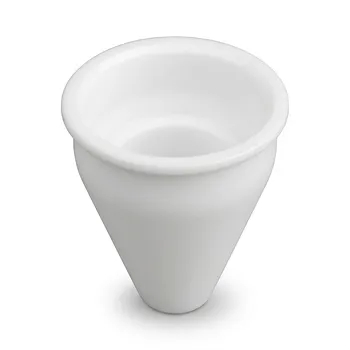
- Custom Machined PTFE Conical Sample Cell Corrosion Resistant Triangular Fluoropolymer Container for Trace Analysis
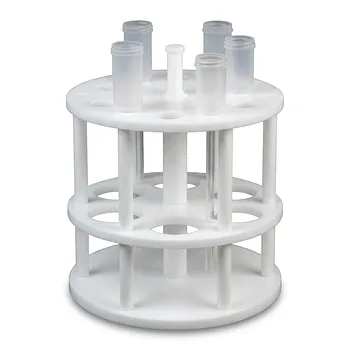
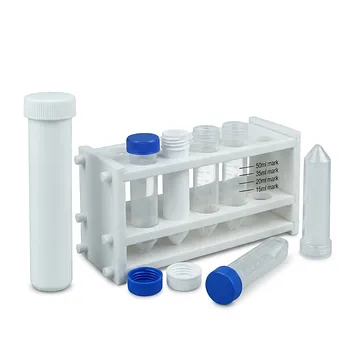
- Custom PFA Microcolumn Racks and PTFE Machined Low Background Corrosion Resistant Laboratory Fixtures
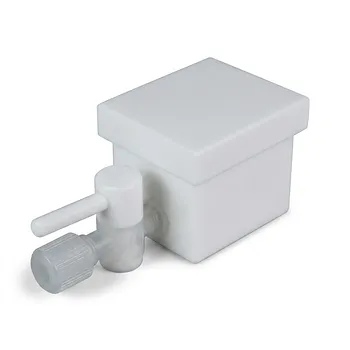
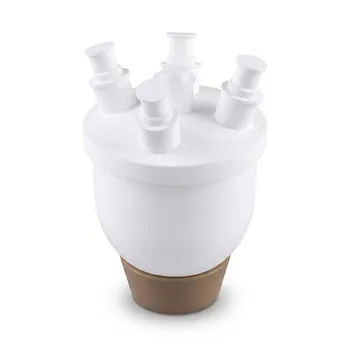
- Custom PTFE Laboratory Apparatus Corrosion Resistant Low Background Reaction Cells Precision CNC Fabrication
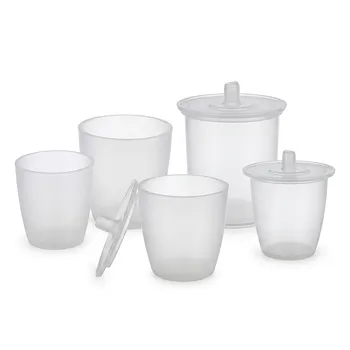
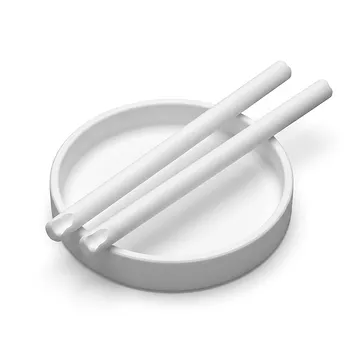
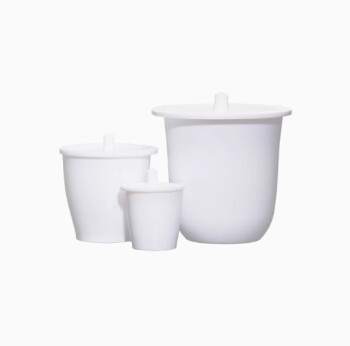
- High Purity PFA Crucible and Corrosion Resistant PTFE Beaker for Trace Analysis and Custom Laboratory Applications
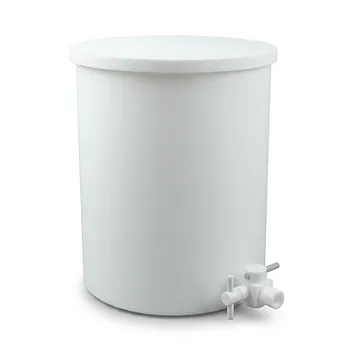
- Custom PTFE Flask Large Volume 18L Corrosion Resistant Low Background High Purity Chemical Vessel
People Also Ask
- What customization options are available for PTFE materials? Tailor Performance for Your Application
- How do Polytetrafluoroethylene (PTFE) containers perform regarding gas permeation? Expert Insights on Solvent Absorption
- What are some common applications of machined PTFE? Leverage its Unique Properties for Demanding Applications
- How are PTFE laboratory containers and apparatus typically manufactured? Inside the Precision Machining Process
- What are the advantages of machining PTFE over other materials? Unlock Superior Performance in Harsh Environments