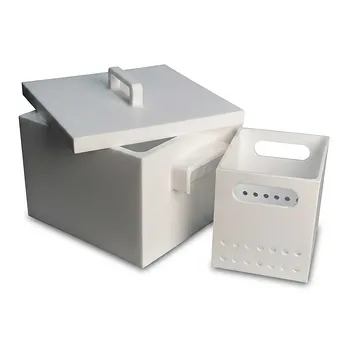
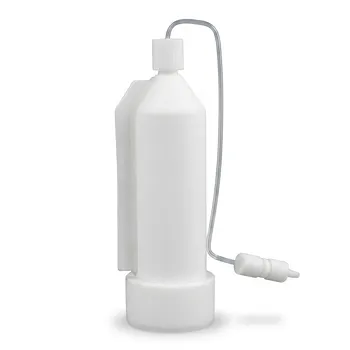
Polytetrafluoroethylene (PTFE) offers exceptional chemical resistance, but it is not a 100% impermeable barrier. While it is chemically inert to almost all reagents, its semi-crystalline structure allows for the slow diffusion of small-molecule gases and the minor absorption of certain halogenated organic solvents. In most laboratory settings, these effects are successfully mitigated by manufacturing containers with increased wall thickness.
Core Takeaway: PTFE is the industry standard for chemical inertness, yet it remains naturally susceptible to gas permeation and solvent absorption due to its molecular structure. For high-precision or vacuum applications, users must account for these migration rates by utilizing thicker-walled designs or secondary barrier layers.
Mechanisms of Gas Permeation in PTFE
The Role of Semi-Crystalline Structure
PTFE is classified as a semi-crystalline thermoplastic, which means its molecular chain consists of both highly ordered and disordered regions. These microscopic gaps in the polymer matrix provide pathways through which small-molecule gases can slowly migrate.
Performance in High-Vacuum and UHP Systems
In standard applications, gas permeation is negligible; however, in ultra-high-purity (UHP) or vacuum systems, it can become a critical failure point. Small molecules diffusing through the matrix can introduce contaminants or compromise the integrity of a vacuum.
Diffusion Mitigation Strategies
To address these inherent structural gaps, engineers often specify additional barrier layers for tubing and containers. These layers act as a secondary defense, ensuring that the chemical resistance of PTFE is maintained without the downside of gas migration.
Interaction with Organic Solvents
Absorption of Halogenated Solvents
While PTFE does not react chemically with most substances, it can experience minor absorption when in prolonged contact with certain halogenated organic solvents. This is a physical process where the solvent molecules lodge within the polymer structure.
Impact on Dimensional Stability
Significant absorption can lead to slight swelling or dimensional changes in the container or seal. While this rarely compromises the material's chemical integrity, it can affect the fit and seal of high-tolerance components.
Wall Thickness as a Solution
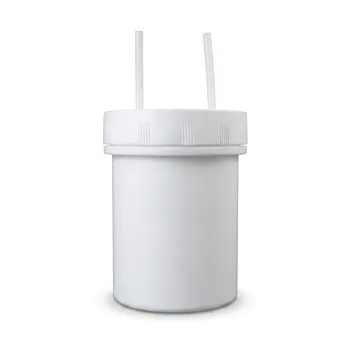
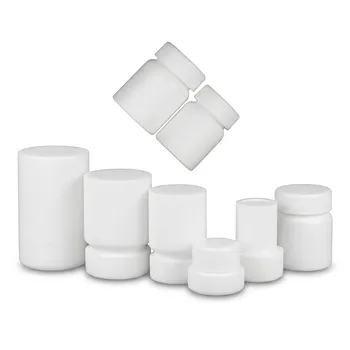
Laboratory-grade PTFE containers are typically manufactured with thicker walls than standard plasticware. This increased mass creates a longer path for solvents to travel, effectively slowing down absorption and permeation to levels comparable to other high-performance thermoplastics.
Understanding the Trade-offs and Limitations
Chemical Inertness vs. Porosity
The primary trade-off when selecting PTFE is its unmatched chemical universalism versus its gas-barrier properties. While it survives environments that would destroy other plastics, it cannot provide the absolute hermetic seal found in glass or specialized metals.
Mechanical Softness and Cold Flow
PTFE is a relatively soft and formable material, which makes it an excellent choice for gaskets and bushings. However, this softness means it can "creep" or deform under heavy, sustained loads, a phenomenon known as cold flow.
UV Degradation and Chain Scission
Despite its weathering resistance, prolonged exposure to high-energy UV radiation can trigger chain scission. This breaks the polymer bonds and degrades mechanical properties, necessitating the use of opaque jacketing for outdoor or high-radiation environments.
Making the Right Choice for Your Goal
Selecting the correct grade and configuration of PTFE ensures that the material's benefits outweigh its physical limitations.
- If your primary focus is general laboratory storage: Standard heavy-walled PTFE containers are sufficient, as permeation rates are low enough to not compromise the functionality of most labware.
- If your primary focus is ultra-high-purity gas delivery: You should utilize PTFE components that feature integrated barrier layers to prevent trace gas diffusion.
- If your primary focus is high-load mechanical applications: Opt for high PV (Pressure-Velocity) grades of PTFE, which are specifically engineered to handle higher speeds and loadings in bushings or bearings.
- If your primary focus is extreme hygiene or corrosive vapors: Expanded PTFE (ePTFE) is the ideal choice, as it remains unaffected by the most corrosive liquids and gases while maintaining a high degree of purity.
By understanding the molecular behavior of PTFE, you can leverage its world-class chemical resistance while proactively managing its permeability.
Summary Table:
| Property | Performance Detail | Mitigation Strategy |
|---|---|---|
| Gas Permeation | Semi-crystalline structure allows slow diffusion of small molecules. | Increase wall thickness or add secondary barrier layers. |
| Solvent Absorption | Minor absorption of halogenated organic solvents over time. | Use heavy-walled designs to slow migration paths. |
| Dimensional Stability | Potential swelling or "cold flow" under sustained loads. | Specify high PV grades for mechanical applications. |
| Chemical Resistance | Exceptional; inert to almost all reagents and acids. | Standard PTFE is sufficient for most corrosive storage. |
| UV Resistance | High-energy UV can cause polymer chain scission. | Use opaque jacketing or PFA for outdoor/high-radiation environments. |
Precision-Engineered Fluoropolymer Solutions for Your Lab
Maximize your research integrity with KINTEK’s high-performance PTFE and PFA laboratory supplies. We understand the nuances of gas permeation and solvent absorption, which is why our products are crafted with optimized wall thicknesses and superior material purity to ensure unmatched chemical resistance.
Whether you require everyday basic labware (beakers, measuring cylinders, crucibles, reagent bottles, centrifuge tubes) or advanced reaction apparatus (hydrothermal synthesis liners, microwave digestion vessels, electrochemical cells), KINTEK provides the absolute highest standard in fluoropolymer manufacturing. Our capabilities include:
- Comprehensive Fluid Transfer: High-purity tubing, fittings, and valves.
- Sample Prep & Filtration: Separatory funnels, burettes, filters, and high-precision tweezers.
- Custom CNC Fabrication: Bespoke laboratory setups and complex non-standard machined parts tailored to your specific vacuum or UHP requirements.
- General Consumables: High-tolerance stirring bars, O-rings, gaskets, and seal tapes.
Don't let trace contamination or material degradation compromise your high-precision applications. Contact KINTEK today to discuss your custom requirements and discover how our end-to-end fabrication expertise can enhance your laboratory’s performance.
Related Products
- High Purity Corrosion Resistant PTFE Raw Material Barrel 4L Screw Seal Low Background Feed Tank
- PTFE Small Reaction Bottle Corrosion Resistant Teflon Sample Dissolution Tank One Piece Molded Fluoropolymer Storage Container
- Custom High Purity PTFE Storage Barrel with Corrosion Resistant Threaded Sealing Lid and Low Background Properties 15L
- Custom PTFE Parts Manufacturer for Teflon Containers and Components
- High Purity PTFE Reaction Vessel Polyfluortetraethylene Cylindrical Tank Petrochemical Reaction Container
People Also Ask
- What resin properties are critical when selecting PTFE raw material for manufacturing high-performance micro-porous ePTFE filtration media?
- Why is SSG used for PTFE molecular weight? Unlock Quality Control with Standardized Density Testing
- How does thixotropic flow behavior affect liquid formulation storage in PTFE chemical storage tanks and containers? Maximize Stability with PTFE
- Are PTFE Laboratory Containers and Fluid Fittings Resistant to All Chemical Solvents? Discover Key Exceptions and Safe Handling Tips
- What materials are used to manufacture PTFE bars? A Guide to Virgin & Filled PTFE